The Aldrin Prophecy: Did the Man on the Moon Leave Us a Secret Map to Mars?
You think you know the story of the space race. A story of brave men, Cold War tension, and one giant leap for mankind. But what if that was just chapter one? What if the man who planted his boots in the lunar dust, the legendary Buzz Aldrin, spent the rest of his life trying to tell us about the *real* mission?
Forget the grainy black-and-white footage. Forget the history books. Aldrin wasn’t looking back at the Earth. He was looking forward. Outward. To a tiny red dot in the sky.
He had a plan. A detailed, audacious, and frankly mind-bending blueprint to put humans on Mars. Not just to visit. To stay. And he set a deadline: 2039.
Why that year? Was it just a random number? No. Nothing with Buzz was ever random. 2039 would mark the 70th anniversary of his own historic moonwalk. A passing of the torch. A closing of one giant chapter and the explosive beginning of another. But as we dig deeper into his “master plan,” you have to start asking questions. Was this just an old astronaut’s dream? Or was it a warning? A desperate push to get humanity off this rock for a reason he couldn’t quite say out loud?

A Vision Forged in Starlight: Aldrin’s Grand Design
This wasn’t some back-of-the-napkin sketch. Back in 2015, Aldrin, then a sharp 85-year-old, wasn’t just dreaming. He was building. He formally teamed up with the Florida Institute of Technology, taking on the serious roles of research professor of aeronautics and senior faculty adviser. This wasn’t a publicity stunt. He was creating a brain trust. A think tank. The “Buzz Aldrin Space Institute” became the command center for designing humanity’s next great adventure.
His vision was a direct counter-punch to the prevailing ideas of the time. Remember the Mars One project? The controversial, high-profile plan that proposed a one-way ticket to the Red Planet? To many, it sounded like a suicide mission disguised as exploration. A reality TV show with a grim finale.
Aldrin hated it.
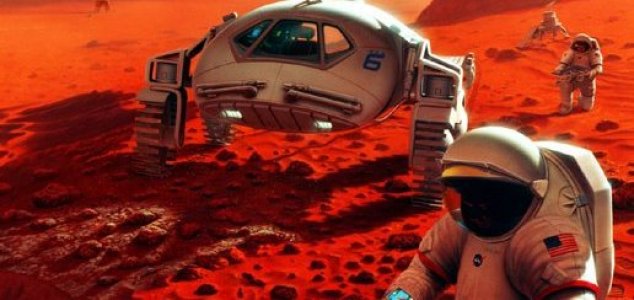
His plan was different. Sustainable. Smart. It was about settlement, not sacrifice. He envisioned astronauts serving tours of duty, living and working on Mars for up to ten years before coming home. It was a career, not a coffin. But how could they possibly do that? The fuel requirements for round trips were seen as a massive barrier. Aldrin had an answer. A brilliant, elegant solution that is still considered revolutionary.
Deep Dive: The Aldrin Cycler, Humanity’s Interplanetary Highway
The secret wasn’t a bigger rocket. It was a smarter route. Aldrin championed a concept known as the “Aldrin Cycler.”
Picture this. Not one massive ship that blasts off from Earth, lands on Mars, and then somehow has to blast off again. That’s brutishly inefficient. Instead, imagine a space station. A permanent vessel, or a set of connected vessels, in a constant, looping orbit between Earth and Mars. It never stops. It just glides through the cosmos on a predictable path, swinging past Earth, then swinging past Mars, over and over again. A cosmic bus route.
Think of it like a ski lift on a mountain. The lift never stops moving. You just need a small chair (a “taxi” vehicle) to get you from the ground to the moving cable. In this case, smaller, more efficient “taxi” spacecraft would launch from Earth to meet the Cycler as it flew by. Astronauts and cargo would transfer over for the long, months-long journey to Mars. When they arrive in Mars’s orbit, another taxi would detach, take them down to the surface, and later bring them back up to catch the Cycler on its next pass for the trip home.
This changes everything. You only need to burn massive amounts of fuel for the short taxi rides, not for the entire interplanetary cruise. The Cycler itself, once in its stable orbit, would require very little propulsion. It could be huge, shielded from radiation, with artificial gravity from rotation. It wouldn’t be a cramped capsule; it would be a true spaceship. A home in the void. A permanent bridge between two worlds.
The Secret Stepping Stones: Why Mars’ Moons are the Real Prize
But Aldrin’s plan had another layer of strategic genius. He wasn’t just focused on Mars itself. He was looking at its strange, lumpy little moons: Phobos and Deimos.
To most people, they’re just asteroids that got snagged by Mars’ gravity. Oddly shaped potatoes tumbling through space. But Aldrin saw them for what they truly were. They were the key. The perfect staging area. A cosmic harbor floating just above the target.
Why? Simple physics. Mars, while smaller than Earth, still has significant gravity. Blasting off from its surface to return to orbit requires a ton of energy and fuel. But launching from a tiny moon like Phobos? Its gravity is almost non-existent. You could practically jump into orbit. It’s a thousand times easier.
Aldrin’s plan proposed using Phobos and Deimos as our initial foothold. We’d land there first. Build a base. A “Camp David” in the Martian system. From this staging post, we could:
- Assemble and Refuel: Landers and equipment could be sent from Earth and assembled at the moon base, away from the harsh Martian atmosphere and gravity well.
- Mine for Resources: There’s strong evidence that these moons, particularly Phobos, might contain water ice. Water is the gold of the solar system. You can drink it, use it to grow food, and split it into hydrogen and oxygen—the two primary components of rocket fuel. These moons aren’t just rocks; they’re gas stations.
- Operate Robots Remotely: Before sending humans to the surface of Mars, we could control rovers and drones from Phobos in real-time. The communication delay from Earth is minutes long, making direct control impossible. From Phobos, it’s milliseconds. It would be like playing a video game. We could explore vast regions and identify the safest, most resource-rich landing sites without risking a single human life.
This approach is safer, cheaper, and more sustainable. It was a masterstroke of celestial strategy. But it also leads us to a darker, more speculative path. Why was Aldrin so interested in Phobos specifically?
The Conspiracy Corner: Did Aldrin See Something Out There?
This is where the story pivots from established science to the fringe. You have to remember who Buzz Aldrin was. He wasn’t just an engineer. He was a man who had been *there*. He had stood on another world and looked into the blackness with his own eyes. And sometimes, he said things that made people lean in a little closer.
During the Apollo 11 mission, Aldrin and the crew reported seeing an object they couldn’t identify. For years, it was chalked up to being a detached panel from their own rocket. But Aldrin himself remained coy, never fully accepting the official explanation. He knew it wasn’t one of their panels. He admitted they saw… something.
Then there’s Phobos. In a now-famous 2009 interview on C-SPAN, Aldrin was talking about humanity’s future in space. He casually, almost off-handedly, said:
“We should visit the moons of Mars. There’s a monolith there. A very unusual structure on this little potato-shaped object that goes around Mars once in seven hours. When people find out about that, they’re going to say ‘Who put that there? Who put that there?’ Well, the universe put it there. Or if you choose, God put it there.”
Deep Dive: The Phobos Monolith
He wasn’t making it up. Not entirely. An image taken by the Mars Global Surveyor in 1998 clearly shows a large, rectangular object on the surface of Phobos. It’s a huge boulder, estimated to be about 85 meters tall, casting a long, sharp shadow across the dusty surface. Geologists say it’s almost certainly just a freak of nature—a massive piece of ejecta from an impact crater elsewhere on the moon.
But come on.
A nearly perfect rectangular “monolith” on a moon that many scientists believe is a captured asteroid? The name “Phobos” means “fear.” Coincidence? For a mystery blogger, there are no coincidences.
When the man who walked on the Moon singles out this specific object on this specific moon—the very same moon he designated as the critical staging point for his Mars colonization plan—you have to wonder. Was his public plan a cover for a different mission? Was the real goal to get to Phobos and investigate this anomaly up close? Was his urgency about establishing a human presence on Mars driven by the knowledge that we are not, and perhaps have never been, alone?
The internet, of course, has run wild with this. Theories range from the monolith being an alien artifact, a marker, or even a piece of defunct technology, to the even more wild idea that Phobos itself is artificial—a hollow, ancient space station, and the monolith is an antenna or an entrance.
Reality Check: The Aldrin Plan vs. Today’s New Space Race
Aldrin’s original proposal was laid out in 2015. A lifetime ago in the world of space exploration. Sadly, Buzz Aldrin passed away in 2023, leaving his grand vision as his legacy. So, is his 2039 deadline still a dream, or is it on track?
The landscape has shifted dramatically. A new cast of characters has taken the stage.
First, there’s Elon Musk and SpaceX. In many ways, Musk is the spiritual successor to Aldrin’s ambition, but with a Silicon Valley attitude. He’s not waiting for government committees. He’s building the rockets *now*. His Starship is designed to be the very kind of reusable vehicle that could make trips to Mars routine. His goal is not just a colony, but a self-sustaining city of a million people. He shares Aldrin’s urgency, often stating that humanity must become a multi-planetary species to ensure our long-term survival. He’s effectively taking Aldrin’s “why” and putting it on hyper-drive.
Then there’s NASA’s Artemis Program. The official government plan is more methodical. It’s a “Moon first” approach. Establish a permanent base on the Moon (the “Artemis Base Camp”) and use it as a testing ground and launching point for the much longer journey to Mars. This strategy echoes Aldrin’s “stepping stone” concept, but uses our own Moon instead of Phobos. Is it a smarter, safer path, or a bureaucratic delay that Aldrin would have found frustrating?
And let’s not forget the new players. China has landed rovers on Mars and has its own ambitious plans for a crewed Martian base. We are in a new space race, whether we admit it or not. The finish line is the red dust of Mars.
The 2039 goal is… plausible. But incredibly difficult. The technology for the journey is getting there. Starship could be the game-changer. But the challenges of long-term survival on Mars—the thin atmosphere, the deadly radiation, the psychological toll—are immense hurdles we have not yet solved. Aldrin’s plan was the blueprint. We’re still figuring out how to manufacture the parts.
What If He Was Right? A Glimpse of Mars, 2039
Let’s imagine for a moment. Let’s say his dream comes true. Close your eyes. It’s 2039.
The “Aldrin Cycler” flagship, the *Tranquility*, is on its regular six-month transit between the worlds. On the surface of Mars, nestled in a crater shielded from the worst of the winds, is Aldrin Base. It’s not a few flimsy tents. It’s a sprawling complex of interconnected, 3D-printed habitats made from Martian regolith. Tunnels connect pressurized domes where scientists in simple shirtsleeves tend to hydroponic farms, glowing green under artificial lights. The first child born on Mars is celebrating her fifth birthday.
Overhead, two “stars” move across the thin pink sky. The bases on Phobos and Deimos, glittering hubs of activity, managing the traffic of cargo landers and robotic mining rigs. And perhaps, just perhaps, a small, classified expedition is making its way across the surface of Phobos toward a strange, rectangular shadow. On the 70th anniversary of one man’s small step, humanity is finally investigating the secrets he might have been pointing to all along.
Buzz Aldrin gave us the map. He drew the lines, connected the dots, and set the date. He did everything but build the ship himself. He may be gone, but his challenge hangs in the air, silent and profound. His plan wasn’t just an engineering proposal. It was a prophecy. A dare.
The question is no longer if we can go to Mars. The question is what we’ll find when we get there. And will we be ready for the answers?