Forget the Comic Books: Was the Real Thor an Extraterrestrial Warrior?
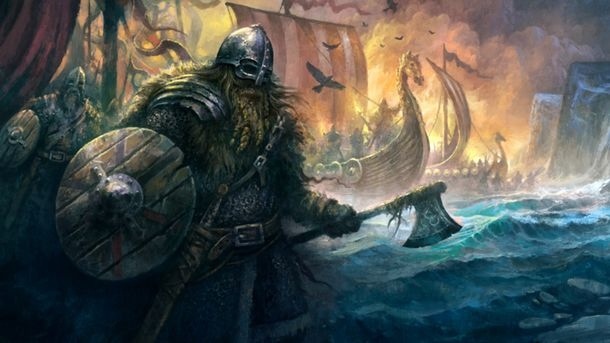
We all know the story. Or, we think we do. A muscle-bound god with a flowing blonde mane, a booming voice, and a hammer that smashes anything in its path. Thor. The God of Thunder. A hero from Norse mythology, repackaged for Saturday morning cartoons and billion-dollar blockbusters.
But what if that’s just the cover story? What if the epic sagas of the Vikings weren’t just campfire tales, but a desperate attempt to describe events and technologies so advanced, so utterly alien, that “god” was the only word they had?
Strip away the fantasy. Look at the raw data. The evidence, hidden in plain sight within the ancient texts, doesn’t point to a magical being from a spiritual realm. It points to a powerful, technologically superior being from somewhere else entirely. It points to the stars.
This isn’t just a theory. For those willing to look, it’s a terrifying and mind-bending possibility. The story of Thor isn’t the story of a god. It’s the story of an ancient alien, and his devastating war fought right here, on our planet.
The Official Story vs. The Unspoken Truth
Let’s get the basics straight. According to the Norse Eddas, Thor is the son of Odin, the All-Father, and a sworn protector of both the gods’ celestial home, Asgard, and our world, Midgard (Earth). His primary mission? To defend us from the Jötnar—the “giants”—a race of chaotic and destructive beings.
He rides a chariot pulled by two goats, Tanngrisnir and Tanngnjóstr. He’s famously strong, a bit hot-headed, but ultimately beloved by the Norse people. He was their champion. A divine bodyguard.
But that’s where the comfortable story ends and the unsettling questions begin. The ancient astronaut theory proposes a radical alternative: What if the Æsir, the pantheon of Norse gods, were not divine? What if they were a race of highly advanced extraterrestrials who visited Earth thousands of years ago? And if Odin was their leader, their king or fleet commander, then Thor was his top soldier. His chief enforcer. His most powerful warrior, armed with technology that to a Viking, seemed like pure, world-shattering magic.
Deep Dive: Mjölnir, the Ultimate Alien Weapon
At the very heart of the Thor mystery is his weapon. Mjölnir. The “Crusher.” The story says it was forged by two dwarf brothers, Brokkr and Eitri, in the heart of a dying star. Sounds mythic, right? Or… does it sound like a primitive culture’s description of a sophisticated manufacturing process in an off-world, high-energy forge?
Let’s break down the supposed “magical” properties of this hammer. One by one, they start to look less like magic and more like a spec sheet for a piece of military hardware from a civilization light-years ahead of our own.

Property 1: The Infallible Return
The sagas are clear: whenever Thor threw Mjölnir, it would strike its target and return to his hand without fail. Every single time. Magic? Or a guidance system? We have boomerangs, sure, but they don’t level mountains. Think about it in modern terms. We have GPS-guided smart bombs and drones that can be recalled to their point of origin. Is it so hard to believe an advanced race could integrate that same technology—a homing beacon and propulsion system—into a handheld weapon? The hammer never missed and always came back. That’s not sorcery; that’s engineering.
Property 2: Command Over “Lightning”
Thor is the God of Thunder. He doesn’t just appear *with* the storm; he *is* the storm. Mjölnir could summon lightning bolts from a clear sky, directing them with pinpoint accuracy to incinerate his enemies. To the Vikings, this was the ultimate expression of divine power over nature itself.
But what if the “lightning” wasn’t atmospheric electricity at all? What if Mjölnir was a directed-energy weapon? A plasma cannon? An incredibly powerful device capable of drawing ambient energy from the atmosphere and discharging it as a focused, devastating blast. The flash, the thunderous boom, the resulting destruction… it would be indistinguishable from a lightning strike to the naked eye of an Iron Age human. They described what they saw, using the only words they knew.
Property 3: The Unbearable Weight
Here’s where it gets really interesting. A key part of the legend is that Mjölnir is impossibly heavy. So heavy that no one but Thor himself can lift it from the ground. Only he is “worthy.” This has been interpreted as a moral or spiritual quality. A classic fantasy trope.
What a load of nonsense.
Let’s throw out the fantasy and think physics. What if the weapon wasn’t just heavy, but was coded to its user? Think of a firearm with a biometric lock, responding only to the owner’s fingerprint. Now, scale that concept up by a few thousand years. Could Mjölnir be keyed to Thor’s specific DNA, biology, or even a device he wore? When anyone else tried to lift it, the weapon could be activating an internal system that dramatically increases its mass and density, or perhaps a localized gravity manipulator that binds it to the ground with immense force. It’s not about worthiness. It’s about authorization. A security feature for a weapon of mass destruction.
The Asgardian Power Suit: More Than Just Accessories
The hammer wasn’t Thor’s only piece of advanced kit. The legends mention two other critical items he required to wield his full power. And just like the hammer, they sound a lot less like accessories and more like essential components of a sophisticated combat system.
Megingjörð: The Strength-Doubling Belt
Thor wore a belt named Megingjörð, which was said to double his already immense strength. A magic belt? Come on. This is one of the most obvious technological clues in the entire saga. What does this sound like? It’s a power pack. An energy source. A device that, when activated, surges power to an integrated suit or even directly to the user’s muscles, creating an effect we would describe today as a force-multiplying exoskeleton. It didn’t magically make his muscles bigger; it supplied the raw power needed for his superhuman feats and, perhaps, for the hammer itself.
Járngreipr: The Iron Gauntlets
To handle the raw power of Mjölnir, even with his belt, Thor needed a pair of special iron gloves, the Járngreipr. The myths say he needed them to “grip” the powerful weapon. But why? If you’re strong enough to lift it, you should be able to hold it. Unless… the gloves weren’t for grip at all. What if they were the interface? The control system? Perhaps the hammer discharged immense energy, heat, or radiation that would destroy any unprotected user. The gauntlets could have served as heat-sinks, energy regulators, or the very control interface that allowed him to aim and fire the weapon’s energy blasts. The hammer, the belt, the gloves—they aren’t separate magical items. They are a single, integrated weapons system.
Enemies of the State: Giants, Serpents, and Rival Species
Every story needs a villain, and Thor had his hands full. His primary foes were the Jötnar, or the giants. But were they really just oversized humans? The texts describe them as chaotic, primeval, and often from a different “world” called Jötunheimr. Some were depicted with monstrous features. This wasn’t a fight against big people. This was a war.
Could the Jötnar have been a rival alien species? Perhaps a species the Æsir were at war with across the galaxy, and Earth was just one of many battlegrounds. Or, in a darker twist, what if the “giants” were the original intelligent life on Earth, and Thor and the Æsir were the invaders, casting the natives as monstrous villains to justify their own colonization? History, after all, is written by the victors.
And then there’s Thor’s ultimate nemesis. The World Serpent. Jörmungandr.
A serpent so colossal it encircled the entire globe, biting its own tail. It sounds absurd, a creature of pure fantasy. But what if it wasn’t a creature at all? What if it was a machine? A planetary defense system? An orbital weapon of devastating power left behind by another, even older civilization? An AI-controlled terraforming device gone rogue? The metaphor of a snake eating its own tail perfectly describes a system in a fixed, geosynchronous orbit around the planet. Its “venom” could be the radioactive fallout or biological agent unleashed upon its destruction.
Asgard and The Bifröst: A Mothership and Its Teleporter
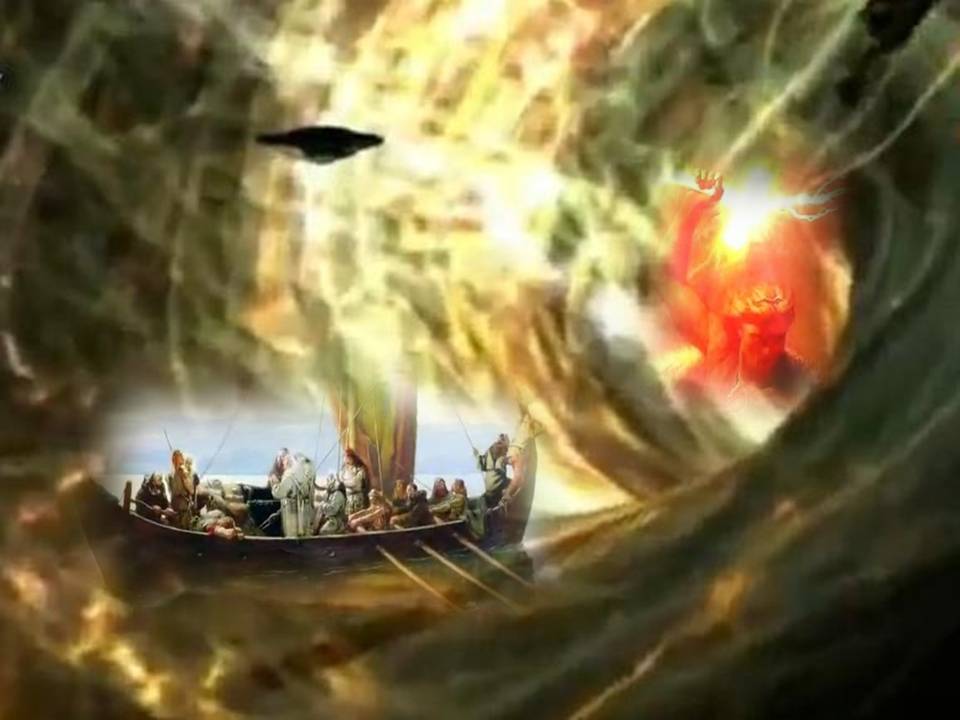
Where did these “gods” come from? The sagas say Asgard, a golden city in the heavens, separated from Earth. It was connected to our world by the Bifröst, a shimmering, unstable rainbow bridge that only the gods could traverse.
Let’s be blunt. This is a perfect description of a massive orbital space station or mothership (Asgard) and its primary method of transport to the planet’s surface (the Bifröst). A rainbow that shimmers and burns? It’s an almost poetic attempt to describe an energy beam. A teleporter. A plasma conduit. Something like a wormhole. It’s how they got here. It’s how they traveled between their ship and our world.
Ragnarök: Not Prophecy, but History
The most terrifying part of Norse mythology is its ending. Ragnarök. The Twilight of the Gods. It’s not a happy story. It’s a detailed account of a final, apocalyptic battle where nearly everyone dies and the world is destroyed, only to be reborn.
Prophecy is for mystics. For a soldier, this reads like a pre-battle briefing or a historical record of the war that ended everything.
Think about the events. The sun turns black. The stars vanish from the sky. The Earth sinks into the sea. This isn’t myth; it sounds like a vivid description of nuclear winter. Or the aftermath of a weapon so powerful it fractured the planet’s crust and caused a polar shift.
In this final battle, Thor finally confronts the Midgard Serpent, Jörmungandr. He succeeds in killing it, smashing its head with Mjölnir. But as the colossal “creature” dies, it spews its deadly venom all over him. Thor takes nine steps and then falls dead. Mutual destruction. He destroyed the enemy orbital weapon, but its death throes—the radioactive fallout, the release of a biological agent—killed him in turn. It is the perfect, tragic endpoint of a technological arms race.
The Echoes Remain
So where does that leave us? With a collection of quaint fairy tales about a thunder god? Or with a fragmented, misunderstood history of a devastating interstellar war fought in our skies and on our soil? A war whose combatants were so powerful, their weapons so destructive, that our ancestors could only describe them as gods and monsters.
The evidence is there, if you dare to connect the dots. The “hammer” is a directed-energy weapon. The “belt” is a power pack. The “gloves” are an interface. “Asgard” is a mothership. The “Bifröst” is a teleporter. And “Ragnarök” was the final, cataclysmic battle that wiped the slate clean.
The next time you see a storm cloud gather and hear the rumble of thunder in the distance, ask yourself. Is it just the weather? Or is it an echo? A faint memory of a time when alien ships tore through our skies, and a warrior from another world fought a war for the fate of our planet with a weapon that could shatter mountains.
The truth is out there. It’s written in the old words. You just have to be willing to read between the lines.