Home Weird World Strange Stories Amazing Hijacks – American Airlines Flight 119

Amazing Hijacks – American Airlines Flight 119

0
67
American Airlines Flight 119

The Skyjacker, The Trombone Case, and The Cadillac Kamikaze: The Insane Saga of Flight 119

Picture the year 1972. It was a different universe. You could smoke in a hospital waiting room. Seatbelts were optional. And airport security? It was practically a handshake and a smile. This lax environment birthed a bizarre phenomenon: The Golden Age of Skyjacking.

Every week, it seemed, someone was commandeering a Boeing 727. Some did it for politics. Some for Cuba. But after a mysterious man named D.B. Cooper jumped out of a plane with a bag full of cash in 1971, the game changed. Suddenly, hijacking wasn’t just about making a statement. It was a get-rich-quick scheme.

Enter Martin J. McNally.

In the grand, chaotic timeline of aviation crime, McNally’s attempt stands out. Not just because he was the ninth copycat to try and mimic Cooper. But because his heist spiraled into a comedy of errors involving a trombone case, a confused groundhog, and a businessman who decided to attack a commercial airliner with a Cadillac.

Buckle up. This story gets bumpy.

The Man with the Musical Luggage

On a humid afternoon in mid-1972, a man calling himself Robert W. Wilson walked into the terminal at Lambert-St. Louis International Airport. He looked like any other traveler. Unremarkable. Quiet. He was carrying a trombone case.

Today, if you try to bring a bottle of water larger than three ounces onto a plane, you get tackled. In 1972? “Go right ahead, sir. Enjoy your flight.” No X-rays. No metal detectors. Just a ticket and a dream.

Inside that musical instrument case, there was no brass slide. There was no spit valve. McNally had packed a .45-caliber submachine gun. That is not a typo. A machine gun.

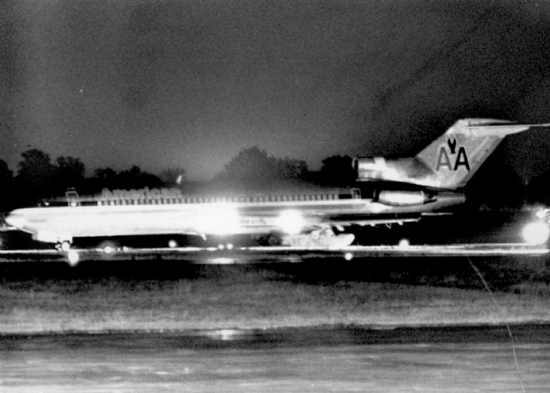
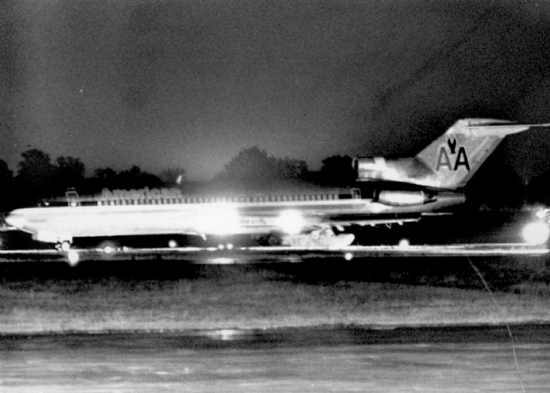
He boarded American Airlines Flight 119, a Boeing 727 bound for Tulsa, Oklahoma. As the jet climbed into the sky, leaving the Gateway Arch behind, McNally made his move. He didn’t pass a polite note like D.B. Cooper. He pulled out the heavy artillery.

The $502,500 Question

Panic. Chaos. The flight attendants froze. The passengers gasped. McNally took control of the cabin with the cold aggression of a man who had nothing to lose.

His demands were specific. He didn’t want a nice, round number like a million dollars. He demanded exactly $502,500.

Why the extra $2,500? This is where the story gets psychological. McNally had been studying the news. He was mimicking another famous hijacker, Garrett Trapnell, who had theorized that asking for odd amounts of money made the authorities take you more seriously. It was a strange bit of criminal logic, but McNally bought into it.

He ordered the pilots to turn around. No, wait. Go to Tulsa. No, back to St. Louis. He was indecisive. The pilots were forced to fly a holding pattern, burning fuel, banking back and forth between Missouri and Oklahoma while the FBI scrambled on the ground to gather the cash.

Imagine the tension in that cockpit. You have a guy with a military-grade weapon behind you, and he can’t decide where he wants to go. The air traffic controllers were sweating bullets. The FBI was counting bills. And the passengers? They were terrified hostages in a metal tube at 30,000 feet.

The Standoff at St. Louis

McNally finally made a decision. They would land in St. Louis. He wanted the money, and he wanted a parachute. He also needed instructions on how to use the parachute. This wasn’t a seasoned skydiver. This was a guy winging it.

The plane touched down. The heat on the tarmac was oppressive. McNally, perhaps feeling a pang of mercy or just wanting fewer variables to manage, released 91 of the 92 passengers. He kept one hostage, the crew, and the pilots.

This was the FBI’s opening. Two agents, disguised as airline personnel, approached the aircraft. They brought the money. They brought the parachute. Their mission was simple: get on board, teach him how to jump, and grab him if he blinked.

One agent began the surreal task of giving a skydiving lesson inside the cabin of a hijacked 727. “Pull this cord. Don’t pull it too early.” It was a high-stakes tutorial. But McNally wasn’t stupid. He kept the muzzle of that submachine gun trained on a flight attendant the entire time. The agents couldn’t move. If they lunged, the attendant died. They had to back off.

They handed over the cash. They handed over the chute. McNally was ready to go.

Enter the Vigilante: The Cadillac Attack

This is the part of the story that sounds fake. If you saw this in a movie, you would roll your eyes and say the director was trying too hard. But history is stranger than fiction.

While McNally was negotiating inside the plane, a 30-year-old businessman named David Hanley was sitting in a motel bar near the airport. He was watching the news coverage on a fuzzy TV screen. He was watching the drama unfold just a few miles away.

Hanley wasn’t law enforcement. He wasn’t a pilot. He was a regular guy having a drink. But something in him snapped. Maybe it was the audacity of the crime. Maybe it was the alcohol. Maybe he just wanted to be a hero.

He turned to his friend and dropped one of the greatest lines in history: “Turn on the radio in a few minutes and you’ll hear something that will rock the world.”

Hanley walked out of the bar, got into his 1972 Cadillac—a car he had bought as a Mother’s Day present for his wife—and floored it.

A 90 MPH Collision Course

Hanley didn’t drive to the observation deck. He drove to the perimeter fence. He smashed through the gate, debris flying everywhere. He was now on the active runway of an international airport.

In the distance, he saw Flight 119. The engines were spooling up. The pilot was preparing to taxi for takeoff. McNally was inside, thinking he had won.

Hanley pushed the Cadillac to its limit. That massive American V8 engine roared. The speedometer climbed. 60. 70. 80. 90 miles per hour.

He wasn’t trying to drive alongside the plane. He was playing chicken with a jet. He drove to the end of the runway, spun the car around, and headed straight for the nose of the Boeing 727.

The pilots must have been hallucinating. A car? On the runway? Coming right at them?

CRASH.

Hanley’s Cadillac slammed into the nose gear, ricocheted, and smashed violently into the main landing gear. The sound was deafening. Metal screamed against metal. The car was instantly demolished, reduced to a twisted heap of steel and glass.

The plane shuddered. The impact was massive. Hanley was critically injured, crushed inside the wreckage of his wife’s Mother’s Day gift. He had successfully stopped the plane. It wasn’t going anywhere with a busted landing gear.

It was a heroic act of absolute insanity.

The Switch and The Escape

Inside the plane, McNally was furious. But he wasn’t done. The plane was broken, but he still had the gun. He still had the hostages. And he still had the money.

He demanded a new plane. American Airlines, desperate to end the standoff without bloodshed, complied. They pulled up a new Boeing 727. McNally forced the crew and his hostages to transfer from the disabled aircraft to the new one.

They took off. The Cadillac wreckage smoked on the runway below. McNally ordered the pilot to head north toward Toronto, then back toward New York’s JFK Airport. He was zigzagging again, trying to confuse the radar and the chase planes.

But McNally never intended to land in New York. He knew the FBI would be waiting with snipers. He was going to pull a D.B. Cooper.

Somewhere over the dark, flat farmlands of Peru, Indiana, McNally ordered the rear airstair lowered. The cabin depressurized. The wind howled like a banshee. It was loud, freezing, and terrifying.

He strapped the money bag to his body. He clutched his machine gun. And he jumped.

The Groundhog and The Farmer

Gravity is a harsh mistress. Skydiving at night, from a jetliner, with zero experience, is a recipe for disaster. McNally tumbled into the black void. The slipstream ripped at him.

During the violent descent, disaster struck. The bag of money—$502,500—ripped loose. The machine gun tore away from his grip. McNally was falling, but his loot and his weapon were gone.

He managed to pull the ripcord. The chute opened. He drifted down and landed in a field near Peru, Indiana. He was alive. He was free. But he was broke and unarmed.

The next morning, the sun rose over the quiet fields of Indiana. Farmer Lowell Elliott was out checking his crops. He saw something strange in the dirt. It was a lumpy, canvas sack.

Elliott squinted. “I thought it was a groundhog in the field,” he later told reporters. He poked it. It didn’t scurry away. He opened it up. It wasn’t a rodent. It was half a million dollars in cash.

Five miles away, another farmer, Ronald Miller, was driving his liquid fertilizer distributor. He heard a clank. The blades of his machine had tilled up something metal. He hopped down to look. It was a grease gun—a jagged, dirty submachine gun. At first, he thought it was a toy. It wasn’t.

The FBI swooped in. They recovered the money. They recovered the gun.

The Manhunt Ends

McNally was alive, but his plan had disintegrated. He tried to lay low, but he had made a critical error. Before he jumped, he left something behind on the plane. Fingerprints.

The FBI crime lab went to work. They matched the prints found on the aircraft to McNally’s military records. The manhunt didn’t last long. They tracked him down to a hideout in a suburb near Detroit. The skyjacker was in cuffs.

The courts had no sense of humor about the incident. McNally was sentenced to two life terms in prison for air piracy. The judge wanted to make sure he never saw the inside of an airplane—or the outside of a cell—ever again.

The Second Chapter: Prison Break

You might think the story ends there. Bad guy goes to jail. The end. But men like McNally don’t sit still.

He was sent to Marion Federal Prison, a supermax facility designed to hold the worst of the worst. And guess who his cellmate was?

Garrett Trapnell.

The very man whose “odd money amount” theory had inspired McNally’s $502,500 demand. The two hijackers became thick as thieves. They spent their days plotting. They weren’t going to rot in prison. They were going to fly out.

In 1978, years after the Cadillac crash, a woman named Barbara Oswald hijacked a charter helicopter. She forced the pilot to fly to the prison yard at Marion. Her plan? To pick up McNally, Trapnell, and another inmate.

It was bold. It was cinematic. It was also a failure. The helicopter pilot, a Vietnam veteran, wrestled the gun away from Oswald mid-flight and shot her. The helicopter crashed in the prison yard, but the escape attempt was thwarted. McNally and Trapnell watched their ride to freedom burn from behind the fence.

The Legacy of Flight 119

When we look back at the hijacking of Flight 119, it feels like a fever dream. It has all the elements of a blockbuster thriller, yet it’s a forgotten chapter of American history. It reminds us of a time when the world was looser, more dangerous, and undeniably stranger.

David Hanley, the Cadillac vigilante, recovered from his injuries. His car was a total loss, but his story became legend. He proved that sometimes, the only thing that can stop a bad guy with a gun is a good guy with a V8 engine.

As for McNally? He serves as a cautionary tale. You can have the gun. You can have the plan. You can even get the money. But if you don’t account for the chaotic variable of a drunk guy in a Cadillac or the aerodynamics of a money bag, gravity will always win.

Originally posted 2013-03-18 20:27:33. Republished by Blog Post Promoter