Friday, April 10, 2026
HomeAlien LifeAlien life found in Antarctic Ice?

Alien life found in Antarctic Ice?

EP-150329203

February 2012. A remote outpost in the wildest, coldest place on Earth. A team of Russian scientists holds their breath. They are standing on top of 12,365 feet of solid, crushing ice. But it’s what lies beneath that ice that has kept them awake for weeks.

Sensors spike. The drill breaks through. Contact.

They didn’t just hit water. They breached a time capsule. This isn’t just a frozen puddle. It is Lake Vostok—a massive, liquid freshwater “alien” world buried under two miles of the Antarctic shield. When the news broke that the team had successfully pierced the shield to reach this ancient reservoir, the scientific community didn’t just clap. They freaked out. Why? Because Vostok isn’t normal. It’s a monster.

The Lost World Under the Ice

Imagine a lake the size of Lake Ontario. Now, bury it under a glacier so heavy it warps the crust of the Earth. Turn out the lights. Leave it there for 15 million years. That is Vostok.

For decades, we thought Antarctica was just a dead rock covered in snow. Boring, right? Wrong. Dead wrong. Radar scans in the 1990s changed everything. They showed us that the continent is actually hiding a massive network of rivers, lakes, and flowing water systems that have been completely cut off from our atmosphere since before modern humans even existed. Vostok is the king of them all. It is the deepest, most isolated subglacial lake on the planet.

The water down there is under immense pressure. It is supersaturated with oxygen—about 50 times more than a normal lake. In theory, this environment should be toxic to life. Too much pressure. Too much oxygen. No sunlight. No food.

But life? Life is stubborn. And that is where things get really, really interesting.

Not Just Cold Water: A Mirror to Jupiter

While the Russian team was popping champagne (or vodka) in the freezing cold, another group of people was watching with intense, sweaty-palmed interest. NASA.

Why does the space agency care about a hole in the ground in Antarctica? Because Vostok is the closest thing we have to an alien planet right here in our backyard. Look up at the night sky. Look at Jupiter. Look at Saturn. Their moons—Europa and Enceladus—are covered in thick shells of ice. But beneath that ice? Oceans. Massive, dark, salty oceans kept warm by tidal forces.

Scientists believe those moons are the best bet for finding extraterrestrial life in our solar system. If bacteria, or jellyfish, or some nightmare squid-thing can survive in Lake Vostok, cut off from the sun for millions of years, then they can survive on Europa.

They don’t expect the water samples from Vostok to hold little green men. But they do expect surprises. Any life found down there will have taken a radically different evolutionary path than anything walking, swimming, or crawling on the surface today. We are talking about organisms that feast on minerals, huge pressure, and darkness.

AlienOcean

The Taylor Valley Discovery: The “Blood” Veins of Antarctica

While all eyes were on Vostok, another shockwave hit the community. An airborne survey over what was supposed to be a “dry” Antarctic valley revealed something stunning. It wasn’t rock. It wasn’t ice. It was a massive, interconnected subsurface briny aquifer.

Think about that. Deep beneath the frozen tundra, about 200 miles underground in a region known as Taylor Valley, there is a flowing network of saltwater. This isn’t just a damp patch. This aquifer is widespread. It extends from the Ross Sea’s McMurdo Sound more than 11 miles into the eastern part of the valley. A second system connects the Taylor Glacier with the ice-covered Lake Bonney.

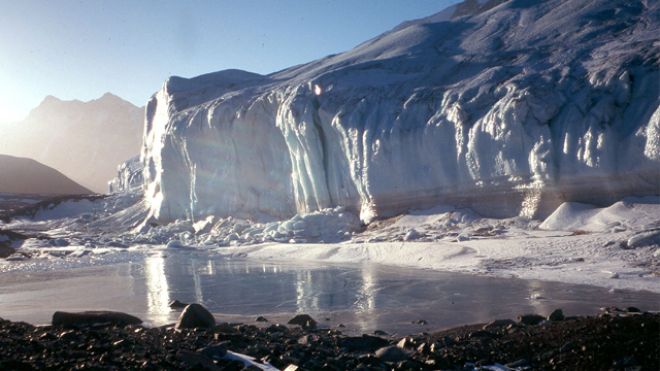
This liquid is about twice as salty as seawater. That saltiness acts like antifreeze, keeping the water liquid even at temperatures that would freeze your blood solid in seconds. This discovery cracked the door open on the “Blood Falls” mystery—a creepy geological feature where red, iron-rich water oozes out of a glacier like an open wound. For years, people thought it was algae. Now we know. It’s ancient, salty water from a hidden underground world, rusting as soon as it hits the air.

The survey covered 114 square miles, but researchers admit they may have just uncovered the proverbial tip of the iceberg. If these aquifers are everywhere, the entire continent might be alive underneath.

The “Organism 46-B” Rumor: Internet Myth or Whistleblower Leak?

Okay, let’s take off the lab coats and put on the tinfoil hats for a second. You cannot talk about Vostok without talking about the whispers. The rumors. The stuff that doesn’t make it into the official press release.

Shortly after the Russians breached the lake, a story exploded across the alternative news underground. A supposed “defector” or “leaker” from the Russian team claimed that the drilling operation wasn’t just about water samples. They claimed the team encountered something. Something big.

The internet calls it “Organism 46-B.”

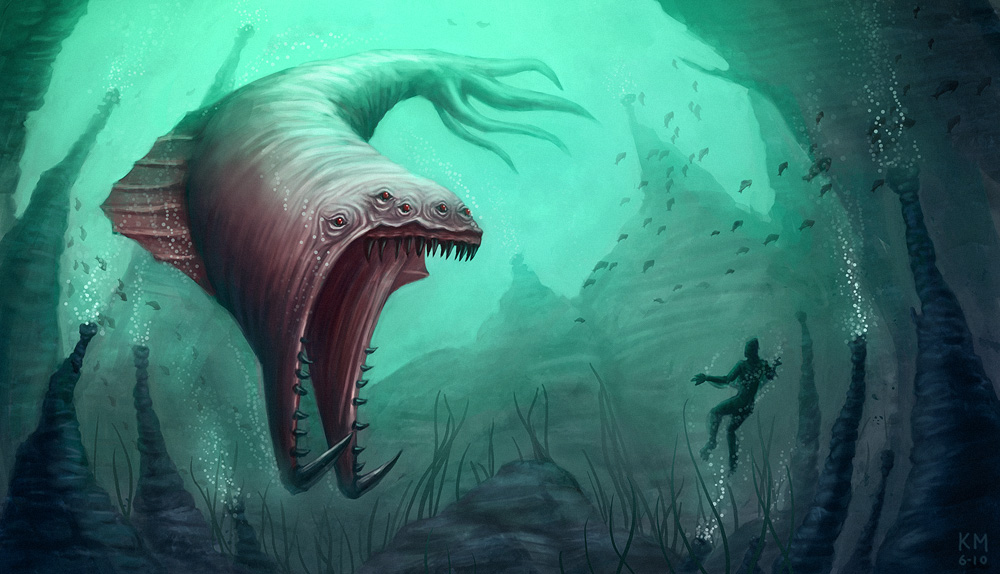
According to this wild legend, the team encountered a highly intelligent, 14-tentacled octopus-like creature that could shapeshift and induce hallucinations. The story goes that this creature killed several scientists by jamming their radios and mimicking the shape of a human diver. Is it true? Almost certainly not. It reads like the script of the movie The Thing mixed with a Lovecraft novel. But why do these stories persist?

Because the secrecy surrounding Antarctica is real. The continent is on lockdown. You can’t just buy a plane ticket and hike wherever you want. Governments control the access points. When you combine extreme isolation, military-grade secrecy, and a lost world buried for 15 million years, the human brain fills in the gaps with monsters. It’s natural.

The Nazi Connection: Operation Highjump

You want to get weird? Let’s go back to 1947. Admiral Richard E. Byrd, an American hero, led a massive naval task force to Antarctica. It was called Operation Highjump. Officially, it was a training mission. They brought aircraft carriers, destroyers, submarines, and thousands of troops. To “train” in the snow?

Conspiracy theorists have screamed about this for decades. Why bring an armada to an empty block of ice? The rumors state that the Nazis had established a base there—Base 211—in Neuschwabenland (New Swaziland). The theory claims the Germans discovered warm geothermal pockets under the ice (similar to the volcanic vents some scientists think might heat Lake Vostok) and built a fortress.

Did Byrd find something? His diary (or alleged diary) speaks of lush green lands beyond the ice pole and aircraft that could fly “pole to pole” at incredible speeds. When the task force returned early, having lost a destroyer and several planes, questions were asked. Byrd gave a cryptic interview to a Chilean newspaper, warning that in the next war, the U.S. would be attacked by “flying objects that could fly from pole to pole with incredible speed.”

Are the Russians at Vostok just drilling for water? Or are they looking for what others left behind?

The “Ark” Anomaly and Modern Detectives

Fast forward to today. The internet has changed the game. We don’t need to wait for a whistleblower; we have Google Earth. Thousands of digital detectives scour satellite imagery of the South Pole every day. And they find things.

Just recently, a massive “heat signature” was detected under the ice. Not a volcano. Something structured. Then there was the “Pyramid” controversy—a mountain that looks a little too perfectly shaped to be natural. And let’s not forget the 2020 theory that went viral on TikTok, claiming a massive “ship” or “ark” was visible melting out of a glacier.

Most of these are tricks of light and shadow. Pareidolia. Our brains want to see patterns. But the Taylor Valley discovery proves one thing: we don’t know what is down there. We thought the dry valleys were solid rock. We were wrong. They were full of water.

The Pandemic Risk: What If We Woke It Up?

Let’s step back to hard science, which is actually scarier than the fiction. The water in Lake Vostok has been isolated for millions of years. This means any bacteria or viruses in that water have not encountered a human immune system… ever.

When the Russian team pulled up their drill bit, it was coated in a goop of unknown biological material. They have identified DNA that doesn’t match known databases. While most scientists say these are likely just strange, harmless extremophiles, there is a catastrophic “What If” scenario.

What if a prehistoric pathogen is released? We worry about the permafrost melting in Siberia releasing anthrax (which has happened, by the way). But Vostok is older. Much older. If there is a biological agent down there that life on surface Earth has forgotten how to fight, that drill hole could be Pandora’s Box.

The Future of the Deep

The Russian project is ongoing. The Americans are drilling elsewhere. The British are scanning the surface. The race for the Antarctic underworld is heating up. They tell us it’s about climate change. They tell us it’s about studying the history of the ice ages. And it is.

But deep down, every single one of those scientists is looking for the anomaly. The thing that shouldn’t be there. The biological signature that proves we aren’t alone, or the geological feature that rewrites history.

Whether it’s a giant octopus, a Nazi UFO, or just a microscopic bacterium that eats sulfur and poops oxygen, Antarctica is hiding secrets. The ice is miles thick, but our curiosity is sharper. We punctured the seal. Now we just have to wait and see what crawls out.

Stay frosty.

Amit Ghosh
Amit Ghoshhttps://coolinterestingnews.com
Aloha, I'm Amit Ghosh, a web entrepreneur and avid blogger. Bitten by entrepreneurial bug, I got kicked out from college and ended up being millionaire and running a digital media company named Aeron7 headquartered at Lithuania.
RELATED ARTICLES

1 COMMENT

- Advertisment -

Most Popular

Recent Comments

Warren Pan Abbott on The legend of the Devil Monkey !
chris davies on The McPherson Tape Mystery
Reed Reedly on ET has Internet!
Bea Houseoffashion on Proof Of Time Travellers – Gallery
Marcus2012 on ET has Internet!
Reed Reedly on ET has Internet!
LaughsAtConspiracyNuts on The 9/11 Conspiracy – Myths and Facts
Alex Sliverman on Did the ancients fly?
Doctor Wholigan on Time Traveler in 1938 film
chris davies on The McPherson Tape Mystery
Archie1954 on 10 secret UFO hideouts
chris davies on Ghosts of flight 401
Marcus2012 on ET has Internet!
jason Macdonald on Proof of Time Travel? – China
chris davies on Long-Lost Pyramids Found?
Reed Reedly on ET has Internet!
Milkman on Connected Universe
Tenmiles on Baigong Pipes Mystery
Simon Foster on Sirius – The Documentary
From the 1st April on 2013 – Alien Contact date ?
SkyWatcher on Is ET ignoring us?
I Come From The Future on Obama to make UFO Alien disclouser soon ?
Just another person on 2013 – Alien Contact date ?
Malcolm Windowcleaner on The strange case of Rudolph Fentz
Mason Servio on Strange Things on Mars
Marke Wisdom Seeker on What will we find as arctic melts?
Andrea A Elisabeth Levyne on Aliens Captured in Varginha, Brazil
Mitch Grouyeki on Amazing Space Shuttle pictures