Look up at the night sky. Go on, do it. What do you see?
Pinpricks of light. Ancient fusion reactors burning billions of miles away. A vast, overwhelming blackness. But what you don’t see is what keeps me up at night. What you don’t see—and more importantly, what you don’t hear—is the thing that drives the greatest minds on this planet to the brink of obsession.
Silence.
Absolute, terrifying silence.
For decades, we have been pointing our ears at the cosmos, waiting for a whisper, a beep, a static hiss that follows a prime number sequence. Anything to prove we aren’t orphans in this cold, infinite void. And for decades? Nothing. Just the cosmic background radiation laughing at us.
But that is about to change. The game is shifting. The United Kingdom is stepping into the ring, and they aren’t bringing a knife to a gunfight—they are bringing the heavy artillery of astrophysics.
The British Invasion of the Cosmos
Forget what you know about the American dominance of space. Yes, NASA is huge. Yes, the SETI Institute in California has been the big dog in the yard for a long time. But the British are coming, and they are bringing a level of prestige and desperation that this hunt has been missing.
A massive coalition has formed. This isn’t just a couple of guys in a shed with a ham radio. We are talking about academics from 11 top-tier institutions. They have banded together to form the UK SETI Research Network (UKSRN).
This is a coordinated strike against the unknown.
And look who is leading the charge as patron. Sir Martin Rees. The Astronomer Royal himself. When a man with that title puts his name on a project, you stop scrolling and you pay attention. This isn’t fringe science anymore. This is the establishment admitting that the question of “Are we alone?” is the only question that actually matters.
The Million Pound Gamble
Here is where it gets gritty. You’d think finding the answer to the biggest mystery in human history would command a budget visible from orbit. You’d think governments would be pouring billions into this.
Wrong.
The group is scraping by. They are asking funding agencies for what amounts to pocket change in the grand scheme of things: £1 million a year.
Think about that. One million pounds. That’s less than a star football player makes in a month. It’s a rounding error in the military budget. For that tiny sum, they want to buy listening time on some of the world’s most powerful radio telescopes. They want to crunch data that could rewrite our history, our religion, and our biology overnight.
Alan Penny, the coordinator from the University of St Andrews, put it bluntly. He’s not asking for the moon. He’s asking for a fighting chance.
“If we had one part in 200—half a percent of the money that goes into astronomy at the moment—we could make an amazing difference,” Penny told the press. “We would become comparable with the American effort.”
Half a percent. That is all that stands between us and potentially making First Contact. It’s frustrating. It makes you want to scream. Why is the establishment so tight-fisted with this? Are they afraid of what we might find?
The American Shadow
For years, the Search for Extra-Terrestrial Intelligence (SETI) has been viewed as an American pastime. It’s funded largely by private donations in the States. Tech billionaires and visionaries throw cash at it because the government largely pulled out years ago.
But the UK has a different flavor of expertise. Britain has a long history of radio astronomy. They have the brains. They have the hardware. They just need the fuel.
Alan Penny and his team at the UKSRN believe they have the “expertise keen to play its part.” They aren’t trying to beat the Americans; they are trying to double the ears we have on the sky. Because right now? We are trying to find a needle in a haystack the size of a galaxy, and we are doing it while looking through a straw.
The “Wow!” Signal and the Ghost of Contact
Why is this push happening now? To understand the urgency, you have to look at the history of “near misses.”
1977. The “Wow!” signal. A 72-second burst of radio waves detected by the Big Ear telescope in Ohio. It came from the constellation Sagittarius. It bore all the hallmarks of artificial origin. It was loud. It was focused. It was impossible.
The astronomer Jerry Ehman circled it on the printout and wrote “Wow!” in the margin. It has never been heard again. Gone.
Was it a glitch? A secret military satellite? Or was it a lighthouse beam sweeping past Earth, a brief hello from a civilization that died a million years ago?
The British team knows that we might have missed thousands of “Wow!” signals simply because we weren’t listening on the right channel at the right time. The universe is chatting, but our radio is turned off.
The Dark Forest Theory: Should We Be Shouting?
This brings us to the terrifying flip side of the coin. The UKSRN wants to listen. But some scientists want to talk back. This is where the debate turns into a horror movie script.
Have you heard of the Dark Forest Theory?
It suggests that the universe is a dark forest prowled by silent hunters. If you are a baby bird in that forest, the stupidest thing you can do is chirp. If you chirp, the predators find you. And they eat you.
Some theorists believe the reason we haven’t heard anyone else is that every other civilization is smart enough to keep their mouths shut. They are hiding. And here we are, Earth, blasting our TV signals, our radar, and our “We Are Here” messages into the void like a toddler banging a drum in a tiger cage.
By asking for funding to “consider new ways to find aliens,” this British network is stepping into dangerous territory. If we find them, do we say hello? Or do we hide under the bed?
The Modern UFO Renaissance
We cannot ignore the timing. While this initial push started years ago, look at what has happened since. The conversation has exploded. We have the Pentagon releasing videos of Tic-Tac UFOs defying physics. We have whistleblowers in the US Congress talking about “non-human biologics.”
The stigma is dead.
For decades, if you talked about aliens, you were a crackpot in a tinfoil hat. Now? You are a defense analyst. You are a pilot. You are Sir Martin Rees.
This shift in culture is the wind in the sails for the UKSRN. The public is hungry. We are tired of being told “it’s just a weather balloon.” We want data. We want hard, radio-telescope-verified proof. And that is exactly what this £1 million investment proposes to buy.
The Technosignature Hunt
So, how do they actually do it? They aren’t just holding a microphone up to the sky.
They are looking for Technosignatures.
Think about Earth. If you looked at our solar system from ten light-years away with a powerful telescope, you wouldn’t see the Great Wall of China. But you might pick up the rhythmic pulse of our radar systems. You might see the spectral chemicals in our atmosphere that only industry can produce—CFCs, pollutants, artificial light.
The British scientists want to upgrade the search. It’s not just radio waves anymore. It’s lasers. Optical SETI. They are looking for flashes of light that act as communication beacons. They are looking for massive megastructures—Dyson Spheres—that advanced civilizations might build around their stars to harvest energy, blocking the light in unnatural patterns.
It’s detective work on a galactic scale.
The Philosophy of “The Alone”
But let’s strip away the tech. Let’s strip away the money. Let’s get to the heart of why this matters. Alan Penny gave a quote to the BBC that literally sent shivers down my spine. It is the most profound thing I have read in years.
He said: “I don’t know whether [aliens] are out there, but I’m desperate to find out. It’s quite possible that we’re alone in the Universe. And think about the implications of that: if we’re alone in the Universe then the whole purpose in the Universe is in us. If we’re not alone, that’s interesting in a very different way.”
Read that again.
“The whole purpose in the Universe is in us.”
That is a heavy burden to carry. If we are it—if this tiny blue marble is the only place where life, consciousness, and love exist—then we are the guardians of the universe’s soul. If we destroy ourselves, the universe goes blind. It goes back to being just rocks and gas. No one to observe it. No one to marvel at it.
That thought is almost more terrifying than an alien invasion.
Option A: The Cosmic Zoo
If we aren’t alone, then we are just one exhibit in a massive zoo. We are the ants in the ant farm. Maybe they are watching us right now. Maybe the silence isn’t empty space; maybe it’s just that we are quarantined. We are the dangerous, violent species that hasn’t learned to play nice, so the adults are keeping us isolated until we grow up.
Option B: The Great Filter
Or maybe there is a wall. The Great Filter. A hurdle in evolution that is almost impossible to jump over. Maybe civilizations pop up all the time, but they nuked themselves or cooked their planets before they could invent interstellar radio. Maybe we are walking through a graveyard, shouting “Hello?” at tombstones.
Why Britain? Why Now?
The UK has a legacy of punching above its weight in science. Newton. Darwin. Hawking. It is fitting that the next giant leap in understanding our place in reality comes from this island. The UKSRN is trying to unify the fragmented efforts of the past.
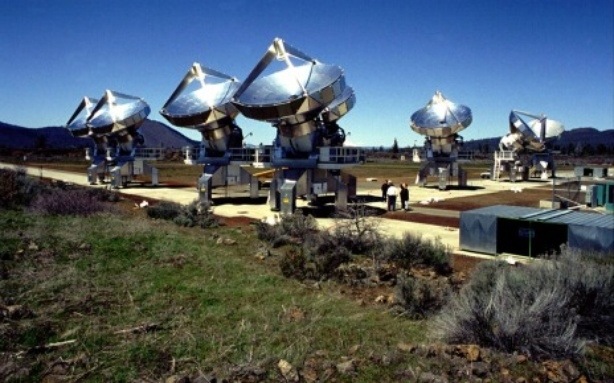
They want to use the e-MERLIN array of radio telescopes. This is a network of seven telescopes spread across England that work together to act as one giant zoom lens. They want to pivot these massive dishes toward the most likely candidates—stars that look like our Sun, planets that look like our Earth.
But without that funding, those dishes stay pointed at quasars and black holes. Interesting stuff, sure. But not life.
The Clock is Ticking
Here is the reality check. Our radio bubble—the sphere of broadcast signals we have sent out since the invention of TV and radio—is only about 100 light-years wide. The Milky Way is 100,000 light-years across.
We have barely scratched the surface. We haven’t even walked out the front door; we’ve just opened the mail slot and peeked out.
The British scientists know this. They know the odds are stacked against them. They know that £1 million is a pitiful amount to try and answer the ultimate question. But they are doing it anyway. Because the alternative is not knowing.
The alternative is staring up at the stars and seeing nothing but cold fusion.
What Can You Do?
Keep watching. Keep reading. The mainstream media often buries these stories under political scandals and celebrity gossip. But this? This is the story of our species.
If Sir Martin Rees and his team get their funding, if they turn those dishes to the right patch of sky, everything could change tomorrow. One signal. One pattern. One “Hello.”
And if they don’t find anything? If the silence stretches on for another century? Then Alan Penny is right. The purpose is us. And we better start acting like it.
The universe is waiting. Are we brave enough to pick up the phone?
Originally posted 2013-07-07 12:43:14. Republished by Blog Post Promoter

Aloha, I’m Amit Ghosh, a web entrepreneur and avid blogger. Bitten by entrepreneurial bug, I got kicked out from college and ended up being millionaire and running a digital media company named Aeron7 headquartered at Lithuania.