Home Alien Life Did Aliens bring the moon to earth?

Did Aliens bring the moon to earth?

0
77

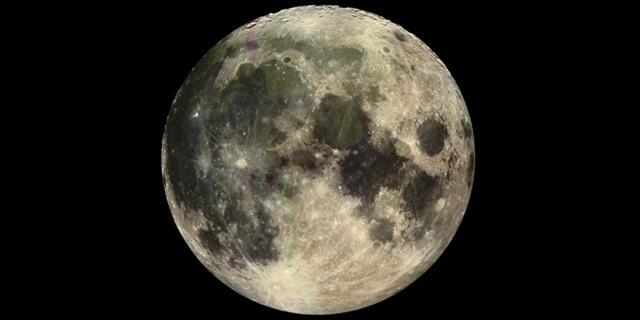
Look up at the night sky. Go on, do it. What do you see? A glowing orb? A romantic satellite? A dead rock floating in the void? If you ask modern science, that’s all it is. A dusty, cratered ball of basalt and regolith. But what if everything we’ve been told about that pale guardian in the sky is a lie? A comfortable fiction designed to keep us from asking the terrifying questions.

There is a feeling that hits you when you look at the evidence. A sinking feeling in your gut. Because the more you look at the data, the less “natural” the Moon seems. It’s too big. It’s too light. It’s in the wrong place.

And it rings.

We are going to rip apart the standard textbook narrative. We aren’t just looking at rocks and craters today. We are looking at what might be the greatest cover-up in human history. Is our moon a natural satellite? or is it an ancient, derelict construct parked in our orbit by an intelligence we can’t even begin to comprehend?

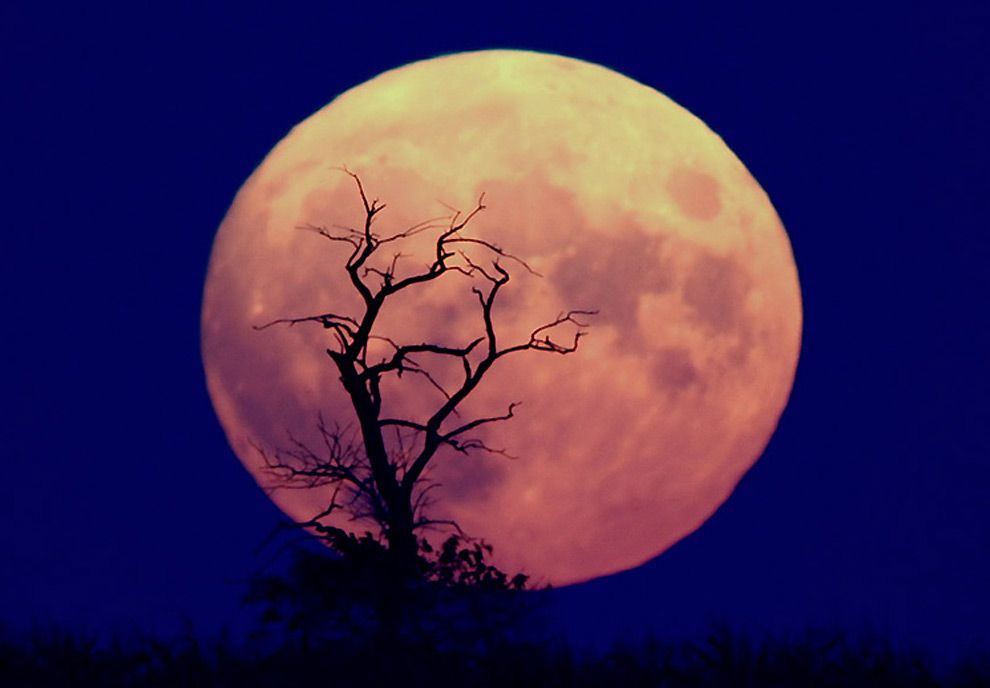
blue-moon-new-years-eve_11722_990x742really it is possible?

The Statistical Impossibility

Let’s start with the math. The numbers don’t lie, but they certainly don’t make sense. The Moon is the fifth-largest natural satellite in the Solar System. That sounds normal until you look at the planet it orbits. Earth.

Relative to the size of the planet it orbits, our Moon is huge. Massive. It’s a quarter of the size of Earth. No other planet in our solar system has a moon this big in proportion to the host. Jupiter and Saturn have tiny moons compared to their massive bulk. Mars has two pathetic little asteroids, Phobos and Deimos, which are basically captured rocks. But Earth? We have this giant monster locking us in a gravitational embrace.

Isaac Asimov, one of the greatest minds in science fiction and biochemistry, was bothered by this. He pointed out that the Moon lacks a reason to be here. By all laws of cosmic physics, the Earth shouldn’t have enough gravity to hold a moon of that mass. It should have drifted away eons ago. Or crashed into us.

But it stays. It sits in a stationary, near-perfect circular orbit. And that is weird. Most natural orbits are elliptical—shaped like ovals. They speed up and slow down. The Moon? It’s locked. It’s precise. Almost like it was put there on purpose.

The Density Problem: Is it Empty?

Here is where things get really strange. If the Moon were a solid chunk of rock that broke off from Earth billions of years ago—which is the “Giant Impact Theory” or “The Big Whack” that schools teach—it should have the same density as Earth. It should be heavy.

It isn’t.

Earth has a density of about 5.5 grams per cubic centimeter. The Moon? Only 3.34. That is a massive difference. Where is the rest of the weight? Where is the iron core? Astronomy data screams that the internal regions of the Moon are far less dense than the outer shell. Science tries to explain this away with complex models of cooling rock, but the alternative theory is much simpler, and much scarier.

It’s hollow.

If you take a metal sphere and hollow it out, the overall density drops. Dr. Gordon MacDonald, a top scientist at NASA in the early days, stated back in 1962 that if you look at the astronomical data, it suggests the interior of the Moon is less dense than the exterior. He said it seemed like a hollow sphere. He didn’t want to say “spaceship,” but the math was pointing that way.

The Day the Moon Rang Like a Bell

You might think the “Hollow Moon” idea is just internet chatter. A fun story for campfires. But in 1969, NASA ran an experiment that terrified the engineers in Houston.

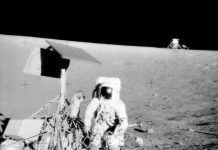
During the Apollo 12 mission, astronauts Pete Conrad and Alan Bean returned to the command module. They didn’t need the Lunar Module (the lander) anymore. So, they jettisoned it. They crashed it back onto the Moon’s surface to test the seismic equipment they had left behind.

They expected a “thud.” A short tremor. That is what happens when you hit a solid rock. The energy dissipates quickly.

That is not what happened.

20140207-173319More specifically, when the Apollo crew, on November 20, 1969, released the lunar module, the impact caused their seismic equipment to register a continuous reverberation like a bell for more than an hour. The shockwaves didn’t stop. They bounced back and forth, vibrating the entire structure of the moon.

Ken Johnson, a supervisor at the Data and Photo Control department, later described the reaction in the room. People were stunned. A solid planet does not vibrate like a gong for 60 minutes. A hollow titanium hull, however? That would ring. That would echo.

NASA did it again with Apollo 13. They crashed the heavier third stage of the booster rocket into the surface. This time, the ringing lasted for over three hours. The vibrations traveled 25 miles deep. The data indicated there is no core. Or if there is, it is vastly different from anything we understand.

The Soviet Bombshell: Spaceship Moon

While Americans were walking on the surface, the Russians were thinking about what lay beneath. In July 1970, two brilliant members of the Soviet Academy of Sciences, Michael Vasin and Alexander Shcherbakov, published an article that shattered the scientific community. It wasn’t in a fringe tabloid. It was titled: “Is the Moon the Creation of Alien Intelligence?”

They didn’t mince words. They proposed the Spaceship Moon Theory.

Vasin and Shcherbakov argued that the Moon is not a natural object at all. They theorized it is a hollowed-out planetoid. Imagine a civilization far older and more advanced than ours. They find a small planet, or a large asteroid. They use colossal machines to melt the rock and hollow out the center. They reinforce the hull.

Why? To create a massive ark. A starship disguised as debris.

According to their thesis, the Moon consists of two main layers. An inner hull—a rigid, armored shell about 20 miles thick—and an outer covering of rocky slag. This outer layer is the “camouflage.” It’s the dust and rocks we see. It protects the hull from meteorite impacts and hides the true nature of the craft from prying eyes (like ours).

This explains everything. It explains why the density is wrong (it’s hollow). It explains why it rings like a bell (it’s a metal hull). It explains why the craters are weird.

The Impossible Armor of the Surface

Let’s talk about those craters. The Moon is pockmarked with billions of years of cosmic abuse. Meteors slam into it constantly. But there is a glaring anomaly that astronomers whisper about.

The craters are too shallow.

When a massive rock traveling at 20,000 miles per hour hits a planet, it should dig a deep hole. The bigger the rock, the deeper the hole. But on the Moon, that doesn’t happen. You have massive craters like the Gagarin Crater, which is 186 miles wide. By all physics calculations, it should be dozens of miles deep. It should have cracked the moon open.

But it’s only about 4 miles deep.

It’s as if the meteor smashed through the dusty outer layer and then hit something impenetrable. Something that stopped it cold. Vasin and Shcherbakov argued this is the inner armored hull. The floor of these craters is often convex (curving outward) rather than concave. That defies the mechanics of impact. Unless, of course, the impactor hit a resilient, spherical shield beneath the dust that bounced back.

And what is this shield made of? When NASA drilled into the surface, they found metal shavings. Pure titanium. Uranium 236. Neptunium 237. These are not elements that you find occurring naturally in these quantities. These are the byproducts of nuclear reactions and advanced metallurgy. The moon’s crust is harder than it has any right to be.

Older Than The Earth? Older Than The Sun?

If your brain isn’t hurting yet, let’s look at the timeline. Standard science says the Moon was formed from the Earth about 4.6 billion years ago. But when we brought back moon rocks, the carbon dating results were a disaster for the standard model.

Some of the rocks were dated at 5.3 billion years old. That is older than the Earth. Some samples were dated at nearly 20 billion years old. That is older than the Sun. That is older than the estimated age of the universe itself in some models.

How can a satellite be older than the planet it orbits? How can it be older than the star system it lives in?

The only answer is that it isn’t from here. It was moved here. The chemical composition of the dust on the surface is completely different from the rocks sitting on top of it. This implies the rocks and the dust didn’t form together. The “dust” might be the local debris gathered over billions of years of parking in different solar systems, while the “rocks” are the original hull material.

The “400” Coincidence: Intelligent Design?

There is a cosmic coincidence that is so perfect, it makes mathematicians uncomfortable. It’s about the eclipse.

We are the only planet in the known universe where a total solar eclipse is possible in this specific way. The Moon is exactly 400 times smaller than the Sun. However, the Moon is also exactly 400 times closer to Earth than the Sun is.

Because of this perfect 400/400 ratio, when the Moon passes in front of the Sun, it covers it perfectly. Not a little bit. Not too much. It fits like a key in a lock, leaving only the corona visible.

What are the odds of this happening by accident? Astronomers say it’s just a fluke. A one-in-a-trillion roll of the dice. But if you were an alien architect, or a future human civilization building a monitoring station, wouldn’t you build it with a signature? A mathematical message to the creatures below? “We are here. This isn’t nature. This is engineering.”

Lights in the Dark: Transient Lunar Phenomena

If the Moon is a dead rock, why does it light up? For over 1,000 years, humans have reported strange things happening on the lunar surface. These are called Transient Lunar Phenomena (TLP).

Monks in the Middle Ages recorded seeing the Moon “split in two” and spew fire. Modern astronomers have reported red glows, blue mists, and bright flashes of light that last for minutes. In 1958, Russian astronomer Nikolai Kozyrev photographed a gaseous eruption near the Alphonsus crater. NASA has reported “bridges” appearing and disappearing inside craters.

A dead world doesn’t have eruptions. It doesn’t have shifting lights. Unless those lights aren’t volcanic. Unless they are artificial. Engine tests? Venting gasses? Repairs?

Even the Apollo astronauts saw things. There are transcripts of the astronauts talking about “bogies” (UFOs) watching them. During the Apollo 10 mission, the crew heard strange, otherworldly “music” over their radio headsets while on the far side of the Moon. It was a whistling, electronic sound. It spooked them so badly they debated whether or not to tell Mission Control.

The “Watcher” Scenario

Why would someone park a hollowed-out starship next to Earth? There are a few theories, and none of them are comforting.

Theory 1: The Zoo. We are an experiment. The Moon is the observation post. The advanced race that built it is watching our evolution, nudging us when necessary, and ensuring we don’t destroy the planet—or perhaps, ensuring we don’t leave it before we are ready.

Theory 2: The Ark. The Moon is a lifeboat. Maybe it brought life to Earth billions of years ago. Maybe the ancestors of humanity arrived in the hollow hull of the Moon, landed, and colonized the surface, eventually forgetting their origins and descending into the stone age.

Theory 3: The Quarantine. We are dangerous. The Moon is a guard tower. It suppresses our spiritual or technological growth. Some obscure theories suggest the Moon emits frequencies that affect human consciousness, keeping us in a state of fear and division.

The Verdict

We have a satellite that is the wrong size, in the wrong place, made of the wrong materials, and older than the planet it orbits. It rings like a bell when hit. It has a hard metallic shell underneath the dust. It fits perfectly over the sun. And the government stopped going back there 50 years ago.

Why did we stop? We had plans for moon bases. We had plans to go to Mars launching from the Moon. Then, suddenly, Apollo 17 ended, and the lights went out at NASA. Did we find something there? Or were we told to leave?

Next time you walk outside at night, look up. Really look at it. It hangs there, silent and watchful. A silver eye in the dark. Is it a rock? Or is it a machine, humming silently, waiting for us to figure it out?

The truth is up there, but it might not be what you want to hear.

Originally posted 2014-02-07 16:36:40. Republished by Blog Post Promoter