The Film That Broke the Internet and Questioned Everything You Were Told About 9/11
Do you remember where you were? Everyone does. It’s the question that defines a generation. September 11, 2001. A day of fire, smoke, and falling steel that seared itself into the global consciousness. We were told a story. A simple story. A clear story. Nineteen men, armed with box cutters and hate, brought a superpower to its knees. Al-Qaeda. Osama bin Laden. It was the official narrative, carved in stone before the dust had even settled.
But what if that story… isn’t the whole story?
What if it’s not even close?
In 2005, long before social media algorithms dictated our reality, a grainy, low-budget documentary appeared on the fledgling internet. It wasn’t on TV. It wasn’t in theaters. It spread through forums, through emails, through downloaded files on a platform called Google Video. It felt dangerous. Forbidden. It was called Loose Change, and for millions, it was the first crack in the foundation of the official 9/11 story.
It didn’t ask for your permission. It just showed you things. And once you saw them, you couldn’t unsee them.
From a Bedroom Project to a Global Phenomenon
This wasn’t some high-dollar Hollywood production. Far from it. Loose Change was born from the raw curiosity of a few young men—Dylan Avery, Korey Rowe, and Jason Bermas. Using a laptop and editing software, they started pulling at the threads of the official account. They didn’t have access to classified documents or secret sources. They just had the news footage. The scientific reports. The eyewitness accounts that everyone else seemed to ignore.
The first version, released in 2005, was rough. It was raw. It felt like a piece of digital samizdat passed from user to user in the dark corners of the web. But its power was undeniable. It spread like a contagion of doubt.
They kept refining it. Polishing it. The 2nd Edition in 2006 was a massive leap forward, and then came the 2nd Edition Recut. With each version, the arguments got sharper, the production quality improved, and the audience grew exponentially. By the time Loose Change: Final Cut dropped in 2007, it had become an underground legend. Vanity Fair, a pillar of the mainstream media, was forced to acknowledge its power, calling it potentially the “first internet blockbuster.”
Think about that. A movie made for a few thousand dollars, seen by tens of millions, completely bypassing the traditional gatekeepers. It was a revolution in information warfare. And its central thesis was terrifying: the attacks of September 11th were not what they seemed. They were, the film argued, a false flag operation. An inside job.
DEEP DIVE: The Towers That Fell Too Fast
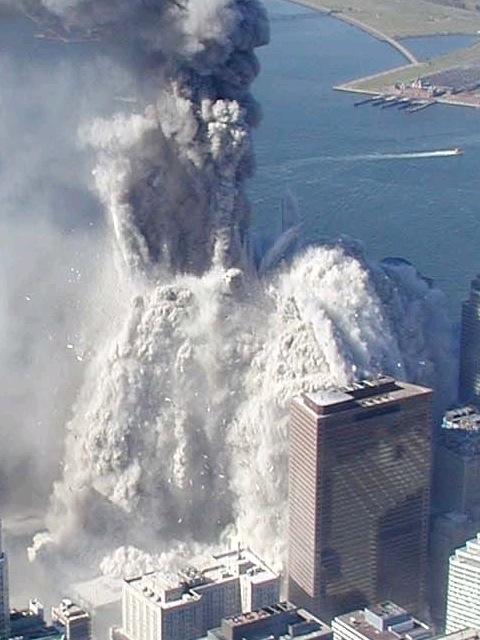
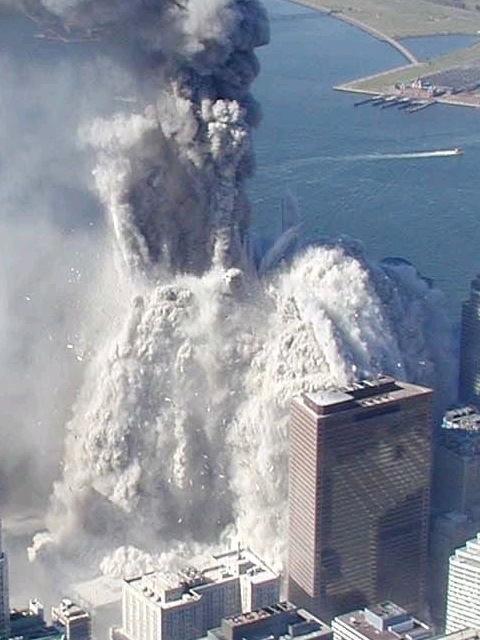
The core of the Loose Change argument, the part that still keeps people up at night, centers on the destruction of the World Trade Center complex. The official story is simple: intense jet fuel fires weakened the steel support columns, causing a progressive “pancaking” collapse. Floor by floor. A tragic, but understandable, structural failure.
Loose Change looked at the footage of the towers falling and asked a question so simple it was profound: Does it look like that to you?
The Problem of Free-Fall Speed
A building collapsing due to random structural failure should be messy. It should be slow. It should offer resistance. Floors should pile up, slowing the descent of the floors above. But the Twin Towers didn’t do that. They disintegrated. They plummeted at nearly the speed of gravity, as if every one of their 110 floors offered no resistance whatsoever. The North Tower fell in about 11 seconds. The South Tower in 9.
How is that possible? For an object to fall at free-fall speed, there can be nothing beneath it. Nothing. The filmmakers argued that the only way to achieve this kind of symmetrical, rapid, total collapse is through a controlled demolition, where explosives systematically sever the building’s support columns from the bottom up, ensuring a neat and tidy implosion.
Puffs of Smoke and Molten Metal
Then they tell you to watch the videos again. But this time, don’t look at the top. Look at the sides. Dozens of floors below the so-called “pancaking” collapse, you can see distinct puffs of smoke shooting out of the windows. Geysers of pulverized concrete and dust blasting outwards. In the world of demolition, these are called “squibs”—the tell-tale sign of explosive charges detonating in sequence to cut through steel supports.

And what about the aftermath? For weeks after the attacks, first responders and cleanup crews reported seeing rivers of molten metal flowing beneath the rubble. Flowing like lava. Jet fuel, a hydrocarbon fire, burns at around 1,500°F in open air—nowhere near hot enough to melt steel, which requires temperatures of about 2,750°F. So what was melting in the wreckage of the world’s most famous skyscrapers?
Loose Change introduced millions to a new word: Thermite. An incendiary compound that can be used to cut through steel like a hot knife through butter, burning at over 4,000°F. The film presented this as the only logical explanation for the molten metal and the near-total pulverization of the towers’ concrete into fine dust.
The Smoking Gun: The Unthinkable Collapse of WTC 7
If the Twin Towers are the mystery, then World Trade Center Building 7 is the confession. Even today, a surprising number of people have never even heard of it.
WTC 7 was a 47-story steel-framed skyscraper located across the street from the main complex. It was not hit by a plane. It suffered some office fires on a few floors, fueled by paper and office furniture. And then, at 5:20 PM on the afternoon of September 11th, it did something no steel-framed high-rise in history has ever done before or since because of fire.
It collapsed. Perfectly. Symmetrically. Straight down into its own footprint at free-fall speed for over two seconds. It looked, for all the world, like a textbook controlled demolition.
“Pull It”
The owner of the building, Larry Silverstein, even said in a 2002 PBS documentary that in the chaos of the afternoon, he remembered speaking to the fire department commander and suggesting that “maybe the smartest thing to do is pull it.” “Pull it” is common industry slang for a controlled demolition. Silverstein later clarified he meant pulling the firefighters out of the building, but for those who had seen the footage of the collapse, the phrase was a bombshell.
The official report on WTC 7’s collapse wouldn’t come out for another seven years. In 2008, the National Institute of Standards and Technology (NIST) finally concluded that normal office fires caused a critical failure of a single column, leading to a chain reaction that brought the whole building down. A unique, one-time-only event. A miracle of physics that has never been replicated.
Loose Change presented WTC 7 as the ultimate smoking gun. The evidence that could not be explained away. How could a building not hit by a plane collapse so perfectly? And why was its collapse reported by the BBC… twenty minutes before it actually happened?
What Hit the Pentagon?
While the world’s eyes were fixed on the inferno in New York, another drama was unfolding in Arlington, Virginia. At 9:37 AM, American Airlines Flight 77, a Boeing 757, supposedly slammed into the western face of the Pentagon.
The problem? For a long time, there was almost no public evidence to support it.
The initial photos from the scene were baffling. They showed a relatively small, neat, round hole in the building’s facade. There was no widespread wreckage of a 100-ton airliner. No giant wings. No tail section. No massive engines. The lawn was remarkably intact. Where did the plane go?
The Pentagon is one of the most heavily surveilled buildings on the planet. Yet, for years, the government refused to release clear video of the impact. The few frames that were eventually made public were grainy and inconclusive, showing a blurry object and a fireball, but nothing that was definitively a Boeing 757.
Loose Change jumped on these anomalies. The film explored the explosive theory that it wasn’t a commercial airliner that hit the Pentagon at all. Was it a missile? A military drone like a Global Hawk? Something much smaller that could explain the precise damage and the lack of debris? The questions hung in the air, fueled by the official secrecy surrounding the event. For many, the idea that the US military would stand down and allow an airliner to fly unchallenged into its own headquarters was simply unbelievable. Something else, they argued, must have happened.
The Legacy of Doubt
The official account, of course, has answers for all these questions. The “squibs” were just air and debris being forced out of the windows as the floors above collapsed. The “molten metal” was likely aluminum from the planes mixed with other materials. The Pentagon wreckage was there, it was just obscured by the crash and firefighting efforts. WTC 7’s collapse was a unique, but plausible, fire-induced failure.
Organizations like NIST and magazines like Popular Mechanics have published extensive reports and articles aiming to debunk every claim made by the 9/11 truth movement. They are the defenders of the official record.
But for millions of people, those answers ring hollow. They feel too neat. Too convenient. They don’t match what their eyes see in the videos.
That is the ultimate legacy of Loose Change. It didn’t prove a conspiracy. It weaponized doubt. It taught a generation of internet users to stop taking official stories at face value. To look at the source material for themselves. To ask uncomfortable questions and demand better answers.
In a world now saturated with “alternative facts” and debates over “fake news,” it’s easy to look back at Loose Change as a harbinger of our current chaotic information landscape. It showed that a compelling narrative, even a flawed one, could spread faster than an official press release. It proved that once trust in institutions is broken, it’s almost impossible to get back.
Was it all a lie? Was 9/11 an inside job, a pretext for war in the Middle East? Or was Loose Change just a masterclass in suggestive editing and compelling storytelling that preyed on a nation’s grief and confusion?
Watch the film. Look at the evidence. The official story is out there. But so are the questions. And more than two decades later, those questions still echo, refusing to be silenced.