Seven Man-Made Tsunamis of Greed: The Financial Disasters They Don’t Want You to Forget
Money. It’s a promise. A dream. For most, it’s a tool for survival. But for a select few, it’s a game. A grand illusion. And when that illusion shatters, the shockwave can bring empires to their knees and ruin millions of lives overnight. We’re told these events are “black swans,” unpredictable acts of God. A lie.
They are not accidents. They are patterns. They are blueprints of human psychology, meticulously engineered by con artists or accidentally inflated by mass delusion. They are stories of greed, hope, and the catastrophic moment when the two collide. From the smoky parlors of the 18th century to the glowing screens of the digital age, the playbook remains terrifyingly the same. Today, we’re not just looking at history; we’re looking in a mirror. Because the next great bubble is already growing. The question is, are you inside it?
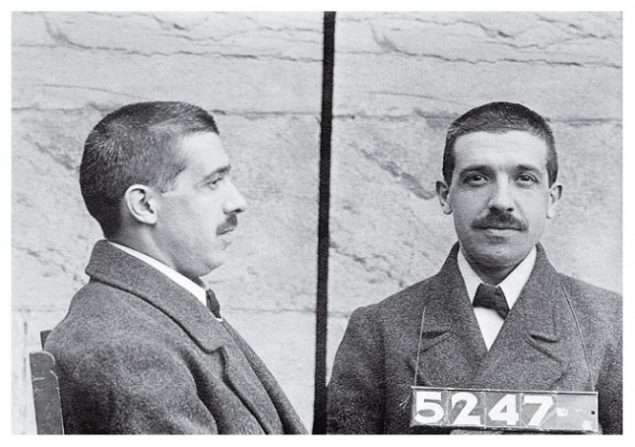
Charles Ponzi: The Man Who Built a Nightmare on Postage Stamps
Immortality is a strange thing. Some achieve it through art, others through science. And then there’s Charles Ponzi. A man so brazen, so fantastically deceptive, that his very name became the label for a specific brand of financial poison.
It was the Roaring Twenties. Hope was in the air, a heady cocktail of post-war relief and industrial fire. Anything felt possible. And into this world stepped a dapper, fast-talking Italian immigrant with a smile that could charm a snake and a plan that sounded like pure genius. His pitch was simple. Seductive. He promised investors a 50% return in 45 days. A full 100% in 90. In a world of 5% bank interest, this wasn’t just a good offer. It was a miracle.

Deep Dive: The Postal Coupon Ruse
But how? Ponzi couldn’t just be printing money. He needed a plausible story, a secret mechanism that only he, the genius, understood. He found it in something mind-numbingly boring: International Reply Coupons (IRCs).
Think of them as vouchers for postage. You could buy an IRC in one country and exchange it for stamps in another. Due to the chaos of post-WWI currency fluctuations, an IRC bought cheaply in, say, Italy, could be exchanged for stamps worth significantly more in the United States. Ponzi claimed he was using agents to buy mountains of these coupons overseas, ship them to the U.S., redeem them for stamps at a profit, and then sell the stamps. This was his “engine.” It was arbitrage. It sounded complicated, official, and just clever enough to be true.
There was only one problem.
It was a complete fabrication. To generate the returns he was paying, he would have needed to traffic over 160 million coupons. The total number of IRCs in circulation worldwide at the time? About 27,000. He barely touched any of them. The real engine was far simpler: he was just paying early investors with money from new investors. A house of cards built on borrowed time.
The money poured in. Thousands of trusting people, many of them fellow immigrants, lined up outside his “Securities and Exchange Company” (a name chosen with pure, audacious irony) to hand over their life savings. For a while, the miracle was real. People got their checks. They told their friends. The frenzy grew. Ponzi became a Boston hero, a financial wizard, the embodiment of the American Dream. He bought a mansion, a custom limousine, and walked around town with a gold-tipped cane.
But the whispers started. A few journalists began asking inconvenient questions. When the *Boston Post* launched an investigation, the foundation began to crack. The public, smelling fear, began to withdraw their money. The line outside his office, once for deposits, was now a desperate mob demanding their cash back. The game was up. The collapse was total, wiping out fortunes and leaving thousands destitute. Ponzi’s short, spectacular flight was over, and after a long stretch in prison, the man whose name is synonymous with fraud died in poverty. His legacy, however, is anything but poor.
The Double Bubble: History’s First International Market Meltdown
Long before fiber-optic cables connected global markets in a flash, a financial plague swept across Europe in the early 1700s. It was a tale of two cities, London and Paris, and two companies built on pure fantasy. This was the first time the world saw how interconnected financial madness could truly be.

London’s Folly: The South Sea Company
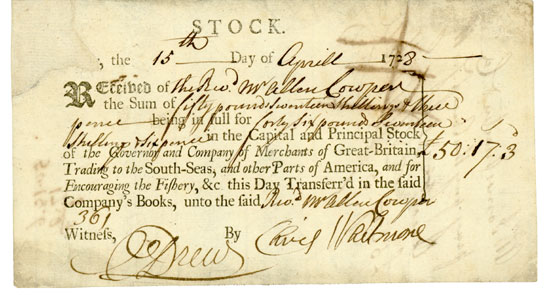
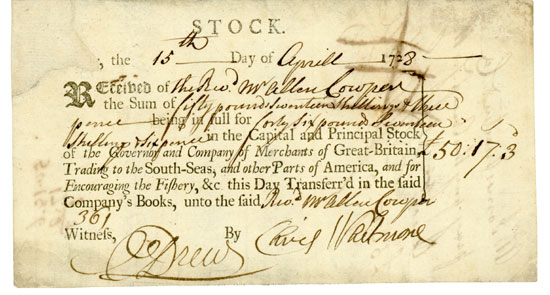
In England, the government was drowning in debt from years of war. Then came a brilliant idea. A new company, The South Sea Company, was granted a monopoly on all trade with the Spanish colonies in South America. In exchange, the company would take on a huge chunk of the British national debt. It sounded official. It sounded powerful.
The public went wild. Shares in the South Sea Company became the hottest ticket in town. People from every walk of life, from dukes to maids, sold family heirlooms to buy in. The share price exploded, rising nearly tenfold in a matter of months. A word had to be invented for the newly rich who appeared overnight: “millionaire.”
The reality? The company’s monopoly was almost worthless. Spain controlled South America and allowed only one ship per year to trade. The South Sea Company barely conducted any real business. Its soaring value was based on nothing but hype and the belief that someone else would pay even more for the shares tomorrow.
Paris’s Gambler: John Law and the Mississippi Dream
Across the Channel, an even more incredible story was unfolding. France was also broke. Enter John Law, a Scottish gambler, economist, and convicted murderer who had fled to the continent. He was a financial visionary, or a madman, or both. He convinced the French regent to let him set up a national bank and a company, the Mississippi Company, which was given a monopoly on trade with the French territories in North America, particularly Louisiana.
Law painted a picture of Louisiana as a paradise overflowing with gold and silver, a new El Dorado. The French public, desperate for a way out of economic misery, believed every word. Shares in the Mississippi Company skyrocketed. The scenes in Paris were chaos. Fortunes were made in an instant. The story goes that one beggar made a fortune simply by renting out his back to speculators who needed a surface to sign their contracts on.
Of course, Louisiana had no mountains of gold. It had swamps and mosquitos. The entire valuation was a fever dream. When the first whispers of reality reached Paris, the panic was immediate and absolute. The bubble burst. John Law had to flee for his life, disguised as a commoner.
In 1720, both bubbles popped almost simultaneously. The fallout was immense. Sir Isaac Newton himself lost a fortune. Suicides spiked. Governments were shaken to their core. For the first time, the world had witnessed a truly globalized financial disaster, a chilling preview of 2008, proving that when it comes to mass delusion, borders mean nothing.
Florida’s Land Fever: Selling Sunshine and Swamps
A century after America acquired Florida, it was still mostly an afterthought—a hot, humid peninsula of swampland and alligators. But in the early 1920s, a new kind of pioneer arrived. Not farmers or frontiersmen. Developers.
They saw what others had missed: a future paradise for snow-weary northerners. And they began to sell that dream with a fervor never seen before. The Florida real estate boom of the 1920s wasn’t just a market bubble; it was a mass psychosis.

Land prices doubled, tripled, then went vertical. A plot of land bought for $25 could be sold for $150,000 just a few years later. Newspapers ran full-page ads with fantastical drawings of grand hotels and Mediterranean villas on land that was, in many cases, literally underwater at high tide. People bought property sight-unseen from blueprints, so-called “binder boys” would meet new arrivals at the train station and sell them lots before they even left the platform.
It was an absolute frenzy. At the peak, it’s said that a third of Miami’s entire male population was working as a real estate agent. The infrastructure couldn’t keep up. The state’s rail lines became so clogged with building materials that they declared an embargo on all but the most essential goods. The party was getting too big, too fast.
And then, Mother Nature decided she’d had enough. In 1926, a massive hurricane, the “Great Miami” hurricane, slammed into the coast. It was a devastating, city-leveling storm that exposed the lie. The beautiful seaside lots were washed away, the grand hotel projects were reduced to rubble. The dream died. A second powerful hurricane in 1928 was the final nail in the coffin. The boom turned to bust, a quiet prelude to the national economic disaster that was just around the corner.
The Great Crash of ’29: When the Roaring ’20s Died Screaming
The 1920s was America’s greatest party. Jazz, flappers, and the feeling that prosperity would never end. And the heart of that party was the stock market. It wasn’t just for the rich anymore. It was for everyone. The butcher, the baker, the candlestick maker—they were all playing the market and getting rich.
How? Through a magic trick called “buying on margin.” You only had to put down 10% of a stock’s price. The other 90% was a loan from your broker. As long as the stock price went up, you were a genius. Your 10% investment could double or triple in weeks. The entire market was built on this mountain of debt, a financial house of cards wobbling in the wind.
And the market did go up. It went up and up and up. The Dow Jones Industrial Average soared more than 300% in just a few years. This wasn’t just speculation; there were real innovations driving the economy—cars, radios, electricity. It felt like a new era. A permanent plateau of prosperity. Famous economists declared that the stock market had reached its final, high peak.
They were wrong.
In late October 1929, the music stopped. On “Black Thursday,” the market took a terrifying dip. The big banks tried to stop the bleeding by buying up huge blocks of stock, a show of confidence. It didn’t work. The following week, on “Black Tuesday,” the floor fell out. Panic. Sheer, unadulterated panic. The ticker tapes, printing out the stock prices, fell so far behind they were useless. No one knew what was happening. All they knew was that they were being wiped out. Fortunes built over years vanished in minutes. Stories of investors leaping from windows became a dark, enduring symbol of the era.
The crash wasn’t just a financial event. It was a psychological trauma. It ripped the heart out of the American economy and ushered in the bleakest period in its history: the Great Depression. The party was over.
Japan’s Bubble Economy: When a Palace Was Worth More Than California
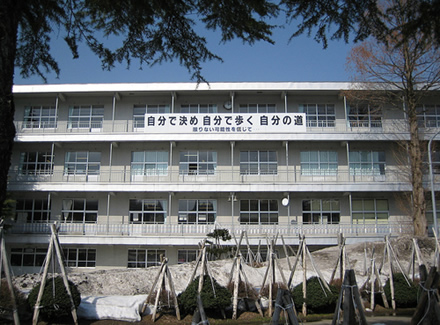
Fast forward to the 1980s. The new economic titan wasn’t America. It was Japan. “Japan Inc.” was a relentless, seemingly unstoppable force. Its cars, its electronics, its management techniques—they were all conquering the world. And its financial markets were on fire.

The Tokyo Stock Exchange’s Nikkei 225 index went on a tear that made the Roaring ’20s look tame. The value of Japanese stocks and real estate became so inflated it defied all logic. The insanity reached its peak with a now-legendary statistic: at one point, the small plot of land under the Imperial Palace in Tokyo was theoretically worth more than all the real estate in the entire state of California. Let that sink in.
Companies found it was more profitable to play the markets—a practice called “zaitech”—than to actually make things. Confidence was absolute. Brokers even offered their big clients guaranteed returns, a practice that should have set off every alarm bell on the planet. It was a national delusion, a belief that Japan was different, that its economic miracle had suspended the laws of financial gravity.
But gravity always wins. In 1989, the market peaked and the air began to hiss out of the balloon. The fall wasn’t a sudden crash, but a long, grinding decline that lasted for more than a decade. The Nikkei gave up every single yen of its spectacular gains. The aftermath wasn’t called a depression. It was called the “Lost Decade,” a period of economic stagnation and psychological malaise that, some argue, Japan has never fully recovered from.
MMM: The Pyramid That Seduced a Superpower
Imagine a country of 150 million people who have never had to balance a checkbook, choose a stock, or even think about investing. For 70 years, the state handled everything. Then, overnight, that state collapses. This was Russia in the early 1990s.
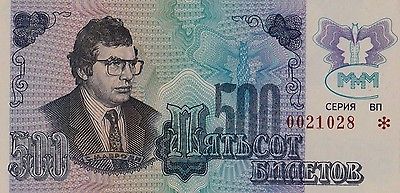
Into this chaotic, confusing new world of “capitalism” stepped a man named Sergey Mavrodi. A reclusive mathematician with a strange charisma, he launched a company called MMM. Its ads were inescapable on Russian television. They didn’t feature charts or financial advisors. They featured ordinary Russians—a lovable working-class guy named Lyonya Golubkov—who got rich quick buying MMM shares. The message was simple: everyone else is getting rich, why aren’t you?

The company promised returns of up to 1,000% a year. And for a short time, it delivered. Russians, deeply distrustful of their own government but possessing a naive faith in the magic of capitalism, pulled their life savings from under their mattresses and lined up for blocks to buy MMM’s colorfully printed share certificates.
It was, of course, a gigantic Ponzi scheme. But it was more than that. It was a cultural phenomenon. At its peak, estimates suggest that anywhere from 10 to 50 million people—a staggering portion of the entire population—were invested. When the government finally moved to shut it down in 1994, there was public outcry. People didn’t blame Mavrodi; they blamed the government for ruining their chance at a better life. In a truly surreal twist, Mavrodi was elected to the Russian parliament from his jail cell, securing him immunity from prosecution.
The scheme eventually collapsed for good, taking an estimated $100 million with it. While small by Western standards, the human cost was immeasurable. It may have been the largest fraud of its kind in history by number of victims, and it left a deep scar of cynicism on the Russian people that endures to this day.
The Dot-Com Bubble: A New Economy Built on Clicks and Smoke
The late 1990s. The dawn of the public internet. A new frontier. A new world. And, you guessed it, a new bubble. This time, the magic words weren’t “South American trade” or “postal coupons.” They were “e-commerce,” “B2B,” and “paradigm shift.”
A generation of investors, many of whom had lived through past crashes, fell for the oldest lie in the book: “This time it’s different.” The internet, they argued, had changed the rules of business forever. Profits didn’t matter. Revenues barely mattered. What mattered were “eyeballs,” “pageviews,” and “user acquisition.” A company could be losing millions of dollars a quarter, but if its website was getting enough clicks, its stock could be worth billions.
It was a gold rush. Companies with silly names and no viable business plan, like Pets.com (which famously sold pet supplies online at a loss), held IPOs and saw their stock prices rocket into the stratosphere. Wall Street analysts, the supposed gatekeepers of financial sanity, fanned the flames, putting “strong buy” ratings on anything with a “.com” in its name. The NASDAQ stock index, home to these tech darlings, shot up from 1,500 to over 5,000 in just two years.
This wasn’t a Ponzi scheme in the traditional sense, but the psychology was identical. Buy now, because tomorrow it will be worth more. The value wasn’t in the company; it was in the belief that someone dumber would come along and pay a higher price.
In March 2000, the bubble burst. The fall was brutal and swift. Companies that were once worth billions became worthless overnight. Trillions of dollars in paper wealth evaporated. The NASDAQ crashed by nearly 80%, a collapse from which it took 15 years to recover.
And now, look around. Listen to the chatter about crypto, meme stocks, and AI. Hear the familiar refrain? “It’s a new technology.” “The old rules don’t apply.” “You just don’t get it.” The names change, but the song remains the same.
The Echo in the Room
These stories are not relics. They are warnings. They are a mirror showing us our own reflection, our timeless dance with greed and hope. Every bubble is born from a compelling story, a promise of a new and effortless future. And every time, we want so desperately to believe it.
The technology evolves, from sailing ships to fiber optics, but the human operating system remains the same. We are wired to chase dreams, to follow the crowd, to believe in magic. The architects of these disasters, whether cunning or deluded, know this. They exploit it. As you read this, the seeds of the next great financial mania are being sown. The story is being written. The trap is being set. Will you recognize it when you see it?