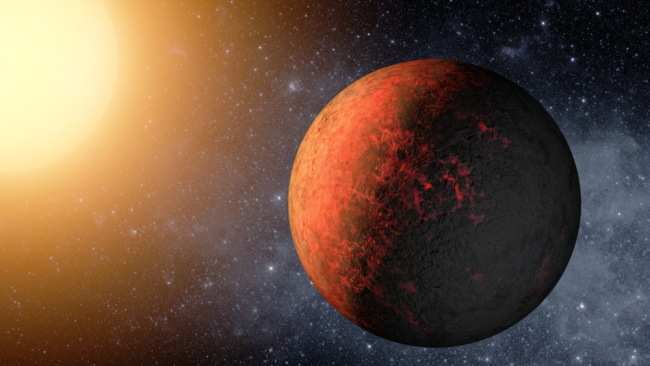
The Universe Just Got Crowded: Why NASA’s Kepler Discovery Changed Everything We Thought We Knew
Stop looking at your feet. Look up.
For thousands of years, humans have stared into the black void of space and asked one terrifying question: Are we alone? For centuries, the answer was a deafening silence. A cosmic shrug. We had zero proof that anything existed beyond our own solar backyard. We were the only game in town.
That changed. And it changed fast.
In a data dump that rocked the scientific community and sent conspiracy theorists into a frenzy, NASA’s Kepler space telescope revealed a truth that is impossible to ignore. We aren’t just looking at a few stars anymore. We are looking at a traffic jam.
As many as 2,700 new worlds have been spotted by this high-tech hunter since it launched. Think about that number. Two thousand. Seven hundred. And those are just the ones we caught blinking.
The Kepler Legacy: Hunting Ghosts in the Dark
Let’s back up. Before Kepler, finding a planet outside our solar system was like trying to spot a firefly crawling on a spotlight in New York City while standing in Los Angeles. It was impossible. The glare of the stars washed everything out.
Then came the transit method.
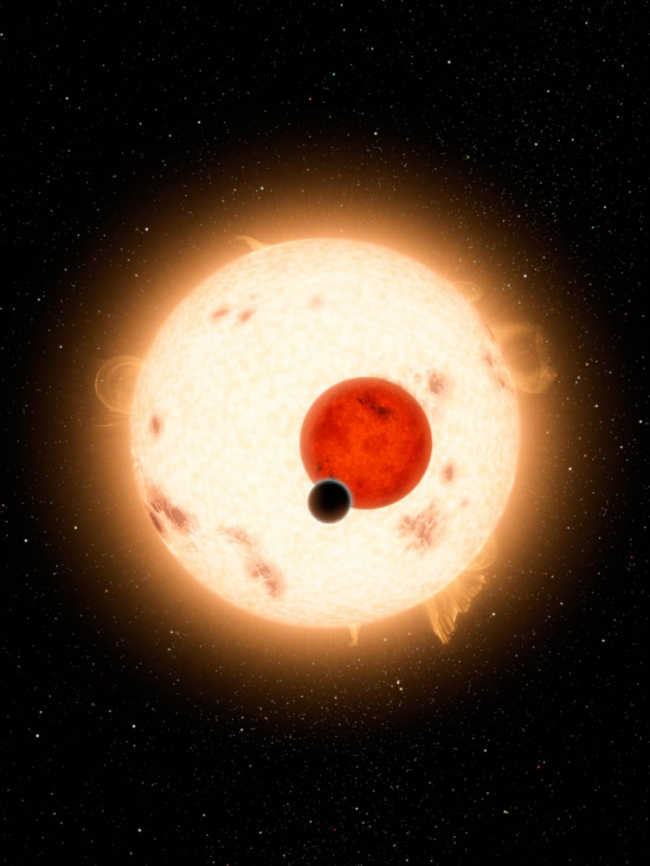
Kepler didn’t look for planets directly. It stared at 150,000 stars simultaneously without blinking. It waited for a shadow. A tiny, imperceptible dip in brightness. A wink. That wink means a planet just passed in front of its sun.
According to astronomers analyzing this mountain of data, some 90 per cent of these candidates should be confirmed as true planets orbiting beyond the Sun. That is a hit rate that defies logic. If you apply those odds to the rest of the Milky Way, the implications are staggering. There aren’t just a few planets out there. There are billions.
Weird Science: The “Styrofoam” Nightmare and the Iron Hells
If you think these new worlds are just boring rocks like Mars or cloudy balls like Venus, think again. The data coming back from deep space is weirder than any sci-fi movie script.
Discoveries include gas giants three times as large as Jupiter. Imagine a sky dominated by a planet that size. But it gets stranger.
One of the most mind-bending finds is a so-called “styrofoam” planet. The density is so low that if you had a bathtub the size of a galaxy, this planet would literally float in the water. How does a planet form with the density of a packing peanut? Physics says it shouldn’t happen. The universe says, “Watch me.”
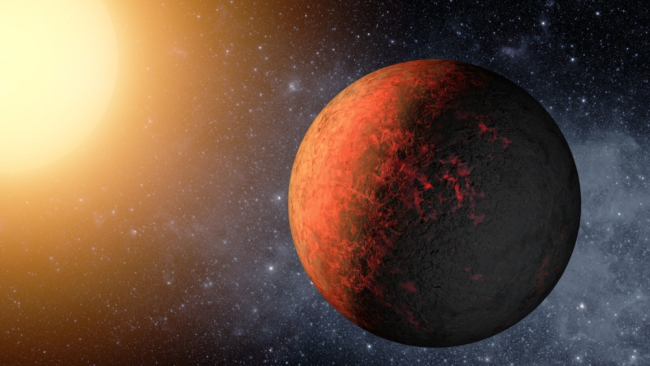
On the flip side, we have the heavyweights. Kepler found a world that is so super-dense, it could withstand being coated in oceans of molten iron. We are talking about gravity so intense it would crush a human into a soup of atoms in a nanosecond. These aren’t just planets; they are torture chambers.
The Goldilocks Mystery: Where is Earth 2.0?
This is where the story gets frustrating. It’s the holy grail of astronomy. The Goldilocks Zone.
This is the orbital sweet spot. Not too hot (where water boils off into steam). Not too cold (where water freezes into rock-hard ice). It has to be just right for liquid water to pool on the surface. And where there is water, there is life. Period.
Between 40 and 50 of the worlds discovered are within this life-sustaining band. That is fifty potential homes. Fifty potential civilizations.
So, why hasn’t NASA popped the champagne?
Scientists say they have been frustrated so far in attempts to find a life-supporting “second Earth” to act as a twin to our own planet. They keep finding the wrong types. Too big. Too gassy. Too unstable.
Prof Burucki, a heavyweight from NASA’s Ames Research Centre in California, dropped some cold water on the hype during a major conference in London hosted by the Royal Society.
“There are about 40 to 50 planetary candidates in habitable zones but we have not yet found an Earth-sized planet in the habitable zone,” Burucki admitted. “We’ve certainly found a lot of planets in habitable zones, but they’re not Earth-sized.”
Read between the lines. They found “Super-Earths”—massive rocky worlds that might have gravity too strong for life as we know it. Or “Mini-Neptunes” covered in suffocating gas.
“We speculate that there will be some,” Burucki added, “but that’s only a guess.”

The Great Silence: Are They Hiding?
Here is the part that keeps alternative historians and conspiracy analysts awake at night. If Kepler found thousands of planets in just a tiny patch of the sky, and if dozens of them are in the habitable zone, the math says we should be swimming in alien signals.
This is the Fermi Paradox on steroids.
If the galaxy is billions of years old, and there are billions of habitable planets, a civilization should have spread across the stars by now. So why is it so quiet?
- Theory 1: The Zoo Hypothesis. They are watching us, but they have a “look but don’t touch” policy. We are the exhibits.
- Theory 2: The Dark Forest. Civilizations that make noise get wiped out by predators. Maybe the smart aliens are staying quiet for a reason.
- Theory 3: We Are Looking for the Wrong Thing. We are looking for radio waves and oxygen. What if they run on dark energy and silicon?
The “Styrofoam” planet mentioned earlier? Some internet theorists speculate about artificial mega-structures. Could a planet be that light because it’s hollow? Because it’s a Dyson Sphere shell built around a core? Mainstream science says “puffy atmosphere.” But the data is on the edge of what makes sense.
The Future is Now: Beyond Kepler
The original reports on this discovery mentioned a wait. They talked about the future.
A European Space Agency mission was being planned to look for evidence of life – and signs of oxygen and carbon dioxide – in “exo-planet” atmospheres, those outside the solar system. But at the time, the scheme’s mooted new space telescope would not be launched until 2022 at the earliest.
Guess what? We made it. That future is here.
We have moved past just counting planets. With the launch of the James Webb Space Telescope (JWST), we are now sniffing their air. We are detecting methane, carbon dioxide, and water vapor on worlds light-years away.
The hunt has shifted from “Is there anything out there?” to “Is anyone breathing out there?”
The “Super-Earth” Anomaly
Let’s double back to the dense planets. The ones that can survive oceans of molten iron.
Why is our solar system so weird? We have small rocky planets (Earth, Mars) and big gas giants (Jupiter, Saturn). We don’t have anything in the middle. But the galaxy is full of them. “Super-Earths” are the most common type of planet out there, yet we don’t have one.
Some alternative history researchers suggest our solar system might be unique—or artificially arranged. The arrangement of our planets acts as a shield, with Jupiter protecting Earth from comets. It’s almost… too perfect. The chaos seen in the Kepler data makes our home look suspicious in its orderliness.
What Happens Next?
NASA is playing the long game. They drip-feed the discoveries. First, it was “maybe planets exist.” Then it was “gas giants exist.” Now it’s “habitable zones exist.”
The next announcement won’t be a statistic. It will be a photograph. A spectrum analysis showing industrial pollutants in the atmosphere of a distant world. Or a techno-signature that can’t be explained away as a glitch.
Until then, the Kepler data stands as a monument to our ignorance. We thought we were the center of the universe. Kepler proved we are just one grain of sand on an infinite beach.
Keep your eyes on the data. The truth isn’t just out there; it’s already on a hard drive in California, waiting to be decoded.
Source NASA, Metro, Ancient Archives