The Siberian Bombshell: DNA Proof of a Lost Human Species?
Forget everything you think you know about the wilderness. Forget grainy films from the American Pacific Northwest. The real story, the one that could shatter our understanding of human history, is buried under the snows of Siberia.
And one Russian scientist claims he has the proof.
Professor Valentin Sapunov, a biologist from the Russian State HydroMeteorological University, didn’t just suggest a myth was real. He threw a grenade into the halls of academia. He claimed that a thriving population of around 200 Yeti—a species of human-like mammal completely unknown to science—is living, breathing, and hiding in the vast, unforgiving forests of southern Siberia.
This wasn’t just a guess. It wasn’t folklore. Sapunov declared he had scientific evidence. Hard evidence. The kind that can’t be easily dismissed.
He was talking about DNA.

A Scientific Feud Ignites
The establishment did not take this well. At all. A firestorm of controversy erupted. Sapunov’s claims sent shockwaves through the Russian scientific community, a community not known for its tolerance of fringe ideas. He wasn’t just some amateur enthusiast; he was a professor. An insider.
And he was making an impossible claim.
His assertion was simple and terrifying: hair samples, recovered from a deep, remote cave in the Kemerovo region, were subjected to a battery of tests. Genetic analysis. The results? The hair did not belong to any known animal. It wasn’t bear. It wasn’t human. It was something in between. A primate, yes. But one that doesn’t exist in any textbook.
He went further. Sapunov argued that his estimated population of 200 individuals, scattered across the sprawling Kemerovo, Khakassia, and Altai regions, was a stable, viable number. It was just enough for them to reproduce, to survive, to continue their hidden existence right under our noses. Why haven’t we found one? According to the professor, “they have an acute sense of danger.” They are masters of evasion, ghosts in the world’s largest forest, the taiga.
But the backlash was swift and brutal. Oleg Pugachev, the director of the prestigious Zoological Institute of the Russian Academy of Science, publicly condemned Sapunov. He told the state-run newspaper *Rossiyskaya Gazeta* that Sapunov’s scientific claims amounted to “abominable lies.” A slap in the face. Pugachev’s institute was one of the very places Sapunov had claimed was involved in the DNA analysis. A direct denial. Someone wasn’t telling the truth.
So what’s the real story here? Is a respected professor risking his entire career on a lie? Or is a powerful scientific institution actively suppressing a discovery that would change the world forever?
Deep Dive: The Azasskaya Cave Incident
To understand the controversy, we have to go back to the source. The Azasskaya Cave. This isn’t a tourist spot. It’s a deep, dark fissure in the earth located in the remote Tashtagolsky District of Kemerovo, an area known locally for its strange history and unnerving folklore.
In 2011, an international conference and expedition descended on the region, drawn by a spike in local sightings. Hunters and villagers had been reporting encounters for years—tales of giant, hairy bipeds moving through the trees, of strange whistles in the dead of night, and of massive, unidentifiable tracks left in the mud and snow.
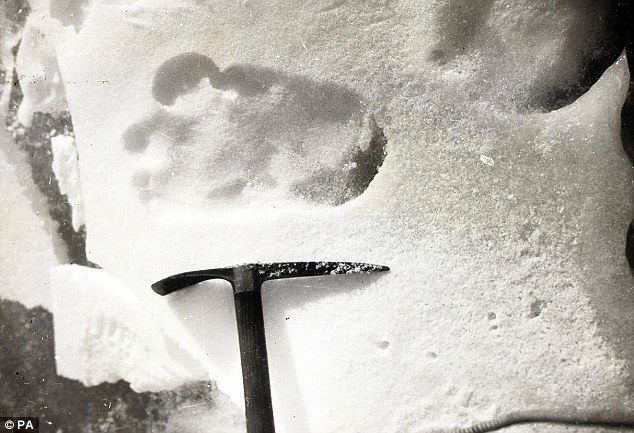
It was during this expedition that the now-famous “evidence” was found. Inside the cave, investigators discovered what appeared to be a makeshift bed of woven branches. And on that bed, they found several strands of coarse, greyish-brown hair. They also found a massive, single footprint pressed into the damp earth of the cave floor.

The “Proof” That Divided Science
This is where things get murky. Professor Sapunov claimed these hairs were sent to multiple labs, including the Zoological Institute. His leaked results suggested the DNA was “less than one percent” different from human DNA. It was closer to us than a Neanderthal, yet it wasn’t Homo sapiens. The mitochondrial DNA, passed down through the maternal line, showed no match with any known species.
A bombshell. A smoking gun. A living hominid fossil.
But then came the denials. The Zoological Institute, through Pugachev, flatly denied they had confirmed any such thing. They suggested the hair was likely from a bear, a goat, or even a known human. They accused Sapunov of sensationalism, of twisting preliminary findings, or worse, of outright fabrication. The official story became one of misidentification and media hype.
But the questions linger. Why would a tenured professor make such a specific, career-ending claim if it was a complete lie? Was he misled by lab results he didn’t fully understand? Or did he see the truth, only to have the doors of the scientific establishment slammed in his face? The conspiracy-minded have a different take: the discovery was real, and the denials were part of a coordinated, high-level cover-up.
What if They’re Hiding Them? A Conspiracy of Silence
Let’s entertain a radical thought. What if Sapunov was telling the truth? What if the Russian government and its top scientific bodies know that a relic species of human cousin is alive and well in Siberia? Why on earth would they hide it?
Reason 1: To Protect the Species
The moment you announce the existence of the “Siberian Yeti,” the world’s largest manhunt begins. Every big-game hunter, every glory-seeking adventurer, and every media outlet on the planet would descend on the Kemerovo region. The forests would be filled with guns, traps, and drones. The creature, which has survived for millennia by remaining hidden, would be hunted to extinction within a decade. A cover-up could be seen as a desperate, heavy-handed act of conservation.
Reason 2: Unimaginable Scientific and Social Upheaval
Think of the implications. The discovery would rewrite anthropology, biology, and history. It would pose profound religious and philosophical questions. Are they animals to be caged, or are they a brother species with rights? Can they think? Can they suffer? The legal and ethical chaos would be unprecedented. Perhaps some believe humanity simply isn’t ready for that truth.
Reason 3: The Cold War Connection
This rabbit hole goes deeper. During the Soviet era, the USSR was fascinated with paranormal and fringe science, hoping to find a strategic advantage over the West. Stories persist of secret Soviet programs to investigate psychic phenomena, UFOs, and—yes—the Almas, the Russian wildman. Is it possible that the existence of these creatures was a state secret for decades? Perhaps Sapunov stumbled upon a truth that the modern Russian government still wants to keep under wraps.
The Almas: Russia’s Other, Older Wildman
The Siberian Yeti isn’t a new idea. It’s just the latest name for a creature that has haunted the Russian consciousness for centuries. In the Caucasus Mountains and the wilds of Mongolia, it’s known as the Almas or Almasty.
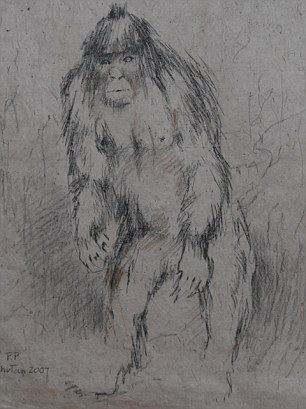
Unlike the more ape-like appearance of the North American Bigfoot, historical descriptions of the Almas are disturbingly human. They are described as being covered in reddish-brown hair, with features that mix ape and human characteristics—a sloped forehead, a powerful jaw, but an upright, human-like gait. For centuries, they were simply a part of the local landscape, a dangerous but known entity to be avoided.
There are even historical accounts of captured Almas. The most famous is the story of Zana, a supposed “wild woman” captured in the 19th century in the Ochamchire region of Abkhazia, Georgia. She was described as immensely powerful, covered in hair, and incapable of speech. Chillingly, she was “tamed” by a local nobleman and even had several children with local men. The story sounds like pure fiction, but in the 1970s, researchers located the graves of Zana and one of her sons, Khwit. The skulls were analyzed, and while the results were controversial and debated, they showed a strange mix of modern human and archaic, Neanderthal-like features. Could the Almas be a surviving pocket of Neanderthals or Denisovans? The DNA from the Siberian cave, being “almost human,” certainly points in that direction.

Could 200 Creatures Really Hide in Siberia?
Sapunov’s number—200 individuals—seems small. But is it too small to survive? And is Siberia big enough to hide them? The answer to both is a resounding *yes*.
The Siberian taiga is the largest forest on Earth. It covers over 5 million square miles. That’s larger than the entire United States, including Alaska. It is a place of brutal winters, impassable swamps, and mountains that have never been climbed. Vast swaths of it are almost completely uninhabited by modern humans. For a species that is, as Sapunov claims, hyper-aware and elusive, it is the perfect sanctuary.
A population of 200 is considered by geneticists to be a borderline, but potentially viable, number for a species to avoid the worst effects of inbreeding. If they live in small, scattered family groups across this enormous territory, their survival becomes not just possible, but plausible. They would feed on roots, berries, small game, and perhaps even scavenge from the kills of larger predators. They would be nomadic, following the seasons and the food, leaving behind only the faintest of traces. A footprint here. A strange shelter there. A strand of hair in a cave.
The Trail Goes Cold, But The Mystery Heats Up
In the years since Sapunov’s explosive claims, the story has largely faded from the mainstream media. The official narrative won. It was a mistake, a misidentification, a case of a scientist getting carried away. Case closed.
But on the internet, the story never died. In forums and on blogs, the debate rages on. New satellite images from the Kemerovo region are scrutinized for strange heat signatures or unexplained clearings. Armchair detectives compare the Siberian footprint casts to others from around the globe. The denials from the Zoological Institute are picked apart, analyzed for inconsistencies. To many, the official debunking felt too fast, too aggressive. Too much like a cover-up.
The Azasskaya cave hair remains the central, tantalizing piece of the puzzle. A piece of physical evidence that was, for a fleeting moment, presented as proof before being snatched away and locked behind a wall of official denial.
The Siberian taiga is silent. It keeps its secrets well. Professor Sapunov staked his reputation on a truth he says is out there, moving through the frozen pines. The establishment calls him a liar. But out in that vast, cold darkness, something walks. The only question is, is it an animal, a myth, or a long-lost member of our own family?
And how long until it steps out of the shadows?
Originally posted 2016-04-14 00:28:51. Republished by Blog Post Promoter