The Dinner Party That Ate a Prehistoric Monster: Solving the Wildest Culinary Mystery of the 20th Century
Picture it. New York City, 1951. The war is over, the future is bright, and the city’s most daring adventurers, scientists, and titans of industry are gathering in the Grand Ballroom of the Roosevelt Hotel. The air crackles with excitement. These aren’t your average socialites. These are the members of The Explorers Club.
Men who have stared into the maw of volcanoes, charted forgotten rivers, and stood on the world’s highest peaks. They’ve seen it all. Done it all.
But tonight, they are promised something new. Something impossible.
Tonight, they are told, they will not just be making history. They will be eating it.
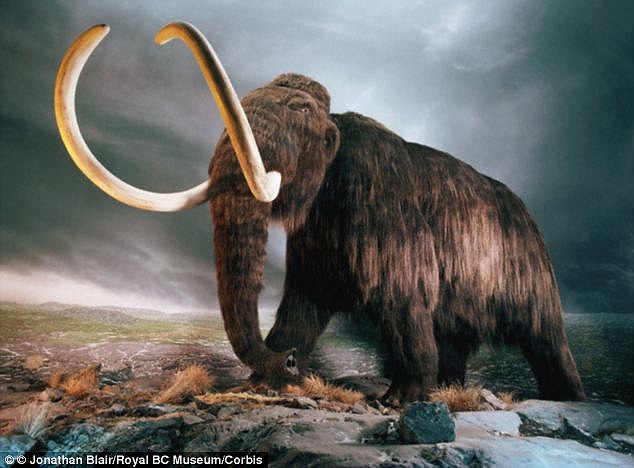
On the menu, nestled between bison steaks and Pacific spider crabs, is a dish so outrageous, so unbelievable, it sounds like a fever dream. A morsel of meat from a beast that walked the Earth 250,000 years ago. A slice of the Ice Age itself.
Tonight, they were going to eat woolly mammoth.

For over 60 years, this story has been one of history’s greatest urban legends. A tale of culinary bravado that blurred the line between science and spectacle. But did it actually happen? Did a group of New York’s elite really chew on a piece of prehistoric steak? The truth is far stranger, more convoluted, and ultimately more fascinating than the legend itself. A simple dinner party became a decades-long mystery, only to be solved by technology the diners could have never imagined.
A Menu Sourced from the Edge of Time
The 47th Annual Dinner of The Explorers Club on January 17, 1951, was orchestrated to be an unforgettable night. The man behind the curtain, the P.T. Barnum of this prehistoric feast, was Commander Wendell Phillips Dodge. A noted promoter and adventurer in his own right, Dodge knew how to build a buzz. He sent out press notices that whipped the media into a frenzy. This wouldn’t just be a meal; it would be a communion with a lost world.
The menu read like a naturalist’s fantasy:
- Green Turtle Soup (flown in from the Cayman Islands)
- Pacific Spider Crabs (with legs reportedly large enough to serve ten people)
- Bison Steaks (a taste of the old American West)
- And the main event… the pièce de résistance… Prehistoric Meat.
Herbert B. Nichols, writing for the Christian Science Monitor, captured the atmosphere perfectly: “The grand ballroom of the Roosevelt Hotel won’t serve food like that again this year.” He was right. They probably haven’t served food like that ever since.
But what, exactly, *was* it?
Deep Dive: Where Did the “Mammoth” Come From?
According to Dodge’s promotional materials, the meat was sourced from a truly remote and epic location: “Woolly Cove” on Akutan Island, in Alaska’s Aleutian chain. The story went that a specimen, flash-frozen and perfectly preserved in the permafrost, had been discovered by a group of explorers. This wasn’t just a bone or a tusk. This was flesh. Intact. Ready for the grill.
The tale was tantalizingly plausible. Even today, discoveries of remarkably well-preserved mammoths emerge from the melting permafrost of Siberia and Alaska. Creatures like “Yuka,” a juvenile mammoth found with its brain, hide, and muscle tissue still intact after 39,000 years, show that nature can be the world’s greatest freezer.
But Dodge, ever the showman, added another layer of intrigue. Some promotional materials claimed the meat wasn’t mammoth at all, but rather Megatherium—a giant ground sloth. These behemoths, which could stand as tall as a modern elephant, lumbered across the Americas before vanishing around 10,000 years ago. By offering two different extinct options, Dodge wasn’t just serving meat; he was serving a mystery. Was it the hairy titan of the Siberian plains or the clawed colossus of the Americas? The diners wouldn’t know for sure, and that was part of the thrill.

A Legend Takes Root
The dinner was a smashing success. Attendees chewed on the small, gamey-tasting morsels, believing they were consuming a creature that last saw the sun when Neanderthals still roamed the Earth. The story became legendary, a feather in the cap of the already prestigious Explorers Club. It was the ultimate “you had to be there” moment. For decades, the tale was repeated at dinner parties and in club histories, a piece of accepted, if eccentric, truth.
No one questioned it. Why would they? These were explorers. If anyone could procure a piece of a frozen mammoth, it was them. The legend settled into the comfortable realm of fact.
But one man wasn’t there.
And his absence would change everything.
The Doggy Bag That Solved a 60-Year-Old Mystery
Paul Griswold Howes, a fellow Explorers Club member and curator at the Bruce Museum in Greenwich, Connecticut, was unable to attend the 1951 dinner. Deeply disappointed to have missed the once-in-a-lifetime culinary event, he was sent a consolation prize: a small, preserved piece of the “prehistoric meat” in the mail.
Unlike his peers, Howes didn’t eat it. He was a man of science, a curator. His instinct was to preserve, not to consume. He carefully affixed the fibrous, dark piece of meat to a card, hand-wrote a label identifying it as “Megatherium – Giant Sloth,” and placed it into the museum’s collection. He had no idea he was creating a time capsule. He was preserving the single most important piece of evidence in the entire affair.
There it sat. For sixty years. A tiny, forgotten morsel in a museum drawer, waiting for a technology that could finally ask it a simple question: What are you?
Science Enters the Ring: A DNA Showdown
Fast forward to the 21st century. The legend of the mammoth dinner still echoed in the halls of Yale University, where it caught the attention of a curious PhD student named Jessica Glass. She, along with her adviser Matt Davis, heard the story and realized they lived in an age where such a wild claim could actually be verified. The age of DNA.
They tracked down the fabled specimen to the Bruce Museum. There, in the archives, was the very piece Paul Howes had saved. It was small, unassuming, but it held the key.
With the museum’s permission, they took a tiny sample, no bigger than a grain of rice, back to their lab. The plan was simple: extract any surviving DNA from the 60-year-old cooked meat and run it through a process called DNA barcoding. In essence, they would find the unique genetic “barcode” of the creature it came from and compare it to a global database of known species.
Deep Dive: The Science of Unmasking a Myth
Getting DNA from ancient or degraded samples is notoriously difficult. Getting it from something that was cooked is even harder. Heat shreds DNA into tiny, fragmented pieces. The Yale team had to use incredibly sensitive techniques to piece together enough of the genetic code to make an identification.
They focused on a specific gene, cytochrome c oxidase I, which is a standard marker used in DNA barcoding because it’s present in most animals and varies just enough between species to tell them apart. It’s like finding a single, legible paragraph in a book that has been put through a shredder.
The anticipation in the lab must have been electric. Would the sequence match *Mammuthus primigenius*? Or maybe *Megatherium americanum*? A match for either would rewrite history. It would confirm the most outlandish dinner party story of all time.
The sequencer finished its run. The genetic code was assembled. They ran it against the database.
And the result was a complete shock.
The Verdict: Not Mammoth, Not Sloth, But… Turtle?
The DNA didn’t match mammoth. It wasn’t giant sloth. It wasn’t bison or any other exotic mammal.
The genetic code was an undeniable, 100% match for *Chelonia mydas*. The green sea turtle.
The great prehistoric feast was a fraud. A brilliant, audacious, and long-running hoax. The diners hadn’t been eating a monster from the Ice Age; they had been eating a reptile from the Cayman Islands. A reptile that was, if you remember, already on the menu in the form of Green Turtle Soup.
“I’m sure people wanted to believe it,” said Jessica Glass after the discovery. “They had no idea that many years later a PhD student would come along and figure this out with DNA sequencing techniques.”

Unraveling the Great Prehistoric Prank
The evidence points to a masterful publicity stunt orchestrated by Commander Dodge. It’s likely there never was any mammoth or sloth meat. Faced with a room full of the world’s most jaded palates, he needed a showstopper. So, he invented one.
The most logical scenario is that the kitchen simply took some of the meat from the green sea turtles being used for the soup, cooked it separately, and presented it as the “prehistoric course.” It was a classic bait-and-switch, relying on the power of suggestion and the adventurous spirit of his audience. No one was going to question the taste of an animal no living human had ever eaten.
Was it a malicious deception? Probably not. It was more likely a bit of theatrical fun, a practical joke on a grand scale, perfectly in keeping with the larger-than-life personalities that filled the room that night. Dodge gave the members a story they could tell for the rest of their lives, and in that, he certainly succeeded.
The Mammoth in the Room: A Dream That Won’t Die
While the 1951 dinner was a hoax, the dream of tasting mammoth meat is, strangely, closer to reality today than it was then. The field of cellular agriculture and the “de-extinction” movement have made the idea less science fiction and more a question of “when.”
Companies like Colossal Biosciences are actively using genetic engineering to try and resurrect the woolly mammoth. In 2023, an Australian company named Vow created a “mammoth meatball” using a combination of sheep cells and a publicly available mammoth DNA sequence for the myoglobin protein. While not true mammoth meat, it was a stunning proof of concept.
It raises a host of new questions. Should we eat an extinct animal? What would it taste like? The Explorers Club of 1951, in their quest for the ultimate culinary experience, were simply 70 years ahead of their time.
The story of the great mammoth dinner is a perfect legend. It’s a tale about adventure, belief, and the irresistible power of a good story. Even though we now know the truth—that the exotic meat was just turtle—the myth is almost more powerful. It reminds us of a time when the world still seemed to hold impossible secrets, when a dinner in New York could feel like a journey to the beginning of time. And it proves that sometimes, a great hoax can be more fun than the real thing.
Originally posted 2016-02-22 12:45:33. Republished by Blog Post Promoter