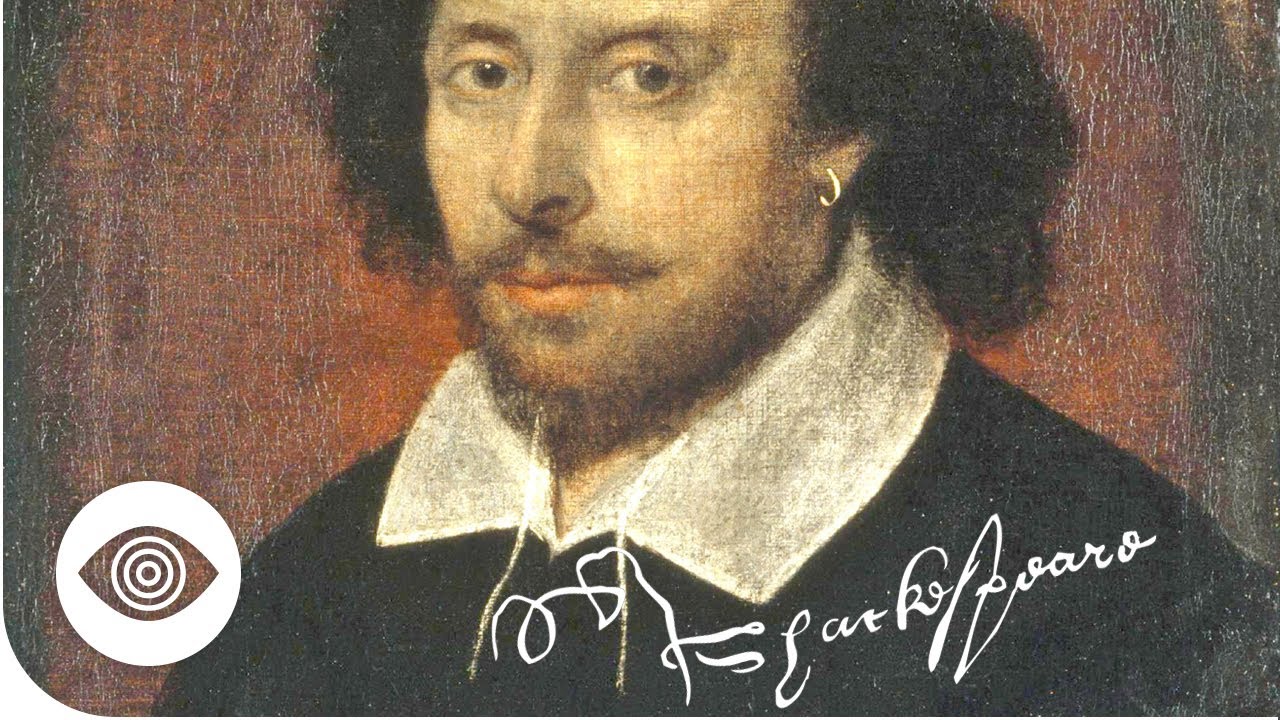
The Greatest Literary Con? Why the History Books Might Be Lying to You
William Shakespeare. The name is a titan. It sits on top of the literary world like an unmovable mountain. We are taught in school, from the moment we can read, that a glover’s son from a muddy little sheep town called Stratford-upon-Avon grew up to become the greatest master of the English language who ever lived. We accept it. Why wouldn’t we? It’s in the textbooks. It’s on the statues.
But what if it’s all a lie?
What if the man we call “The Bard” was nothing more than a front? A mask. A paid actor used to hide the identity of a genius who couldn’t—or wouldn’t—put his own name on the title page. This isn’t just some fringe internet theory born in a Reddit thread. This is a question that has haunted thinkers for centuries. Mark Twain didn’t believe the Stratford story. Neither did Sigmund Freud, Charles Dickens, or Orson Welles. They smelled a rat.
The establishment hates this topic. They get angry. They call you a conspiracy theorist just for asking to see the receipts. But when you look at the evidence—or rather, the terrifying lack of evidence—the official story starts to crumble like old parchment.
The Impossible Resume of the Stratford Man
Let’s look at the facts. Just the cold, hard facts.
The man from Stratford, William Shakspere (he never spelled it “Shakespeare”), was born to illiterate parents. His children were illiterate. That alone is strange for a man who supposedly possessed a vocabulary of 29,000 words—more than double that of the average educated person today. But okay, maybe he was a prodigy. Maybe he was the 16th-century version of Good Will Hunting. It happens.
But here is where it gets weird.
There is no record of him attending school. None. Not a single day. And yet, the plays show an expert, detailed knowledge of law, medicine, astronomy, court politics, military strategy, and foreign languages like French, Italian, and Greek. The writer of these plays knew the geography of Italy intimately. He knew which canals in Venice could be traveled by gondola. He knew the specific art collections in Italian ducal palaces.
The Stratford man? He never left England. As far as history can tell, he barely left London.
The Case of the Missing Library
Writers love books. They hoard them. They write notes in the margins. They talk about them in letters. For a man who wrote nearly 40 plays and 154 sonnets, you would expect a paper trail. You would expect a library.
When William of Stratford died, he left a detailed will. He was meticulous. He itemized his spoons. He itemized his sword. He famously left his wife his “second-best bed.” It’s petty. It’s specific.
Do you know what he didn’t mention? Books.
Not one. No manuscripts. No plays. No half-finished poems. Nothing. The greatest writer in history didn’t own a single book? Or a desk? Or an inkwell? It defies logic. It screams that the man who died in Stratford was a businessman, a grain merchant, and a moneylender—not the towering intellect who wrote Hamlet.
The Smoking Gun: The Signatures
We have six surviving signatures of William from Stratford. Just six. They are on legal documents, mostly regarding property deeds. If you look at them, they are a mess. They are shaky. They look like the scrawl of a man who was barely comfortable holding a quill. Some are spelled “Willm Shakp,” others “Shakspe.”
Compare that to the plays. The plays are fluid. They are confident. They invent new words on the fly. The disconnect between the shaky hand of the Stratford merchant and the soaring mind of the playwright is the Grand Canyon of literary history.
So, if the grain merchant didn’t write them, who did?
Suspect #1: The Dark Horse, Christopher Marlowe
Enter the bad boy of the Elizabethan era. Christopher Marlowe was everything Shakespeare was supposed to be. Educated at Cambridge. A spy for the Queen’s secret service. A brawler. A genius.
Marlowe established the “mighty line” of blank verse that Shakespeare perfected. In fact, their styles were so similar that computer analysis today struggles to tell them apart in certain scenes. But there is a problem. Marlowe died in 1593, right before Shakespeare became famous. He was stabbed in the eye during a bar fight in Deptford. Case closed, right?
Maybe not.
The “bar fight” has always looked suspicious. It involved known intelligence agents and con men. No police investigation. Just a quick burial in an unmarked grave. The theory? Marlowe was about to be arrested for heresy and atheism—crimes that carried the death penalty. He had friends in high places. Did he fake his death? Did he escape to Italy, sending plays back to England under a fake name to keep his voice alive?
It sounds like a movie. But in the world of Elizabethan espionage, truth was often stranger than fiction.
Suspect #2: The Philosopher, Francis Bacon
For a long time, Sir Francis Bacon was the top contender. He had the brainpower. He was the Lord Chancellor of England. He was the father of the Scientific Method. He traveled. He knew the law inside and out—and the plays are absolutely stuffed with complex legal terminology that only a lawyer would know.
Baconians believe he hid ciphers in the text. Codes. Secret messages.
Why would he hide? Because writing plays for the public theaters was considered trashy. It was low-brow. A high-ranking government official writing entertainment for the “groundlings” (the peasants who stood in the pit) would be political suicide. It would be like a Supreme Court Justice secretly writing scripts for a reality TV show today. You just wouldn’t put your name on it.
Suspect #3: The Aristocrat, Edward de Vere
This is the theory that is catching fire right now. The 17th Earl of Oxford. Edward de Vere.
If you profile the author of the plays—psychologically, geographically, socially—you get a picture that looks exactly like de Vere. He was a favorite of Queen Elizabeth (until he got a maid of honor pregnant). He was highly educated. He was a champion jouster (the plays use extensive fencing and jousting metaphors). He had his own company of actors.
Here is the clincher.
De Vere traveled extensively through Italy. He spent time in Venice, Verona, and Mantua—the very settings of Shakespeare’s Italian plays. He lived there. He didn’t just read about it in a book; he walked those streets.
The Hamlet Connection
Hamlet is often considered the most autobiographical of the plays. It’s about a prince whose father dies, whose mother remarries too quickly, and who is betrayed by a close advisor named Polonius.
Check this out:
- Edward de Vere’s father died when he was young.
- His mother remarried almost immediately.
- His guardian (and father-in-law) was Lord Burghley, the Queen’s chief advisor. Burghley wrote a list of precepts for his household that is almost identical to the advice Polonius gives Laertes in the play.
- De Vere was captured by pirates in the English Channel—just like Hamlet.
The parallels are staggering. The Stratford man had none of these experiences. De Vere lived them. He felt them.
Why the Cover-Up?
If someone else wrote the plays, why keep it a secret for 400 years? Why are English professors so terrified of this discussion?
Money. Tourism. Tradition.
Stratford-upon-Avon is a billion-dollar industry. It relies on the tourists buying tickets to see the “Birthplace,” the “Grave,” and the “Cottage.” If you admit that the local boy was just a front man, that economy collapses overnight. The academic careers built on biographies of the Stratford man would be worthless.
There is also the class issue. The establishment likes the “bootstraps” story. They like the idea that a commoner with no education could outwrite the aristocrats. It’s a nice story. It feels democratic. Admitting that the plays were likely written by a highly educated, wealthy Earl destroys that fantasy.
The Modern Investigation
The internet has blown this case wide open. Researchers are no longer gatekept by universities. We can access digital archives, scan handwriting, and cross-reference dates in seconds.
We are finding that the timeline of the Stratford man doesn’t line up. When the writer “Shakespeare” stopped producing plays, the Stratford man was busy suing his neighbors for small debts of malt and corn. He was hoarding grain during a famine. He was acting like a ruthlessly pragmatic merchant, not a retired poet reflecting on the human condition.
Meanwhile, Edward de Vere died in 1604. “But wait!” the critics scream. “Shakespeare wrote plays after 1604 like The Tempest!”
Or did he?
Recent analysis suggests that the dating of the plays is wrong. Many researchers now believe the “later” plays were actually written earlier and released later, or finished by other writers. And strangely, after de Vere died, the quality of the plays arguably changed. The voice shifted.
The Verdict? You Decide.
We may never have a signed confession. The people involved in this potential deception—the Cecils, the Walsinghams, the inner circle of Queen Elizabeth—were masters of secrecy. They created codes that took centuries to break. Hiding the identity of a playwright would have been child’s play for them.
But ask yourself this: Why is there so much silence around the man from Stratford? Why are there no letters? No diaries? No books? Why does his handwriting look like that of a child?
History is written by the winners. But sometimes, history is just a story we agreed to believe because the truth was too complicated, too political, or too dangerous. The plays remain beautiful regardless of who held the pen. But the mystery? The mystery makes the words come alive in a whole new way.
Keep questioning the narrative.