
Tuesday, August 4, 2026
HomeCrime & ConspiracyHoaxesVictor Lustig - The man who sold the Eiffel Tower

Victor Lustig – The man who sold the Eiffel Tower

The Man Who Sold the Eiffel Tower… Twice

Some crimes are born of desperation. Others, from sheer, cold-blooded greed. But every once in a while, a crime is committed that is so audacious, so theatrical, so utterly unbelievable that it transcends criminality and becomes something else entirely. It becomes art.

This is the story of that artist.

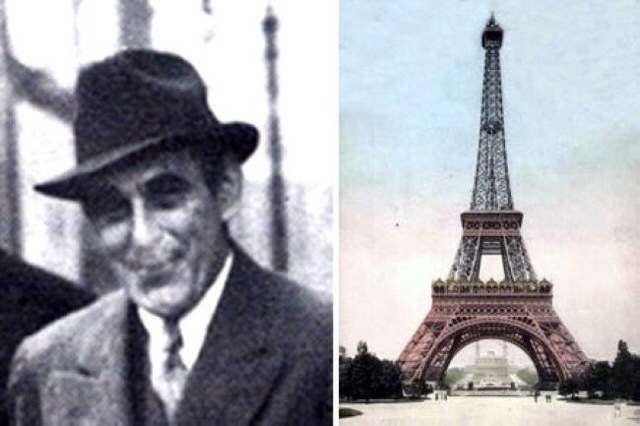
His name was Victor Lustig, and he was, without a doubt, the greatest con man who ever lived. He was a ghost, a chameleon, a man who could sell you the very air you breathe and make you thank him for the privilege. He spoke five languages fluently, possessed the manners of a European aristocrat, and had a gaze that could peel back the layers of a man’s soul to find his deepest, darkest desire: the shortcut.

The easy way out. The one weird trick. Lustig knew that this desire lives in all of us. And he played on it like a master violinist on a Stradivarius.

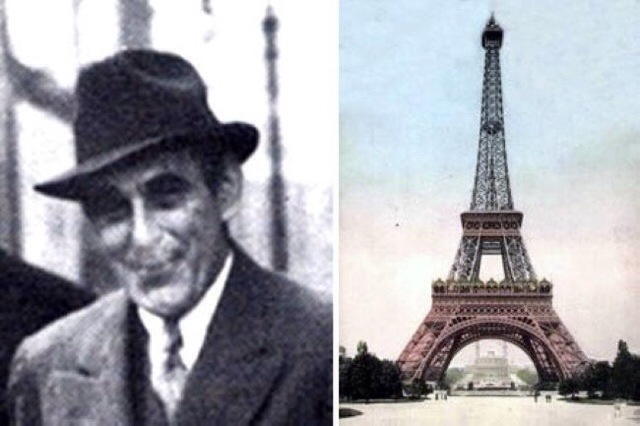
Most people know him for one thing. The big one. The impossible one. He sold the Eiffel Tower.

But the real story is so much wilder. Because he didn’t just sell it once. He sold it, got away clean, and then came back to do it all over again.

The Birth of a Legend

Who was this phantom? The man the French police would nickname “the Count”? Victor Lustig was born in 1890 in Bohemia, Austria-Hungary. He was not a count. He wasn’t even from a wealthy family. But he was brilliant. Wickedly so. By the time he was a young man, he was a walking, talking encyclopedia of human weakness, educated in the finest universities of greed and deception: the opulent transatlantic ocean liners steaming between Paris and New York City.

On these floating palaces, Lustig wasn’t a passenger. He was a predator. He learned to play cards, to spot the wealthy industrialist, the naive heir, the bored wife. He learned how to dress, how to talk, how to move with an effortless confidence that made people *want* to believe him. He ran small scams, phony investment schemes, anything to separate the rich and the careless from their cash.

But these were just warm-up acts. Appetizers for the main course. His first truly signature con was a masterpiece of mechanical and psychological trickery. He called it the “Rumanian Box.”

Deep Dive: The Money-Printing Machine

Imagine this. You’re a man of means, but always looking for an edge. A well-dressed European gentleman, “Count” Victor Lustig, arranges a private meeting. He brings with him a small, beautifully crafted mahogany box. It’s adorned with polished brass dials, intricate levers, and a small slot.

He tells you this is a marvel of science, a machine capable of perfectly duplicating any currency. A money box. He scoffs at the term “counterfeiting,” explaining that the process is a chemical and mechanical one, an exact atomic replication. It’s not a copy. It’s a twin.

To prove it, he asks you for a $100 bill. He inserts it into one slot, and a blank piece of paper, cut to size, into another. He turns the dials with the focus of a watchmaker. Then, he tells you the hard part. The chemical process, he explains with a sigh, is incredibly slow. It will take six hours to complete the transfer.

You wait. The minutes tick by like hours. It’s insane. It can’t be real. But what if it is? The greed starts to burn in your stomach. Six hours later, the Count returns. He makes a final adjustment, and with a soft whirring sound, a brand new, crisp $100 bill slides out of the machine. It’s perfect. Identical to the original. It feels right. It smells right. He even suggests you take them both to the nearest bank to verify their authenticity. They pass every test.

The hook is set. You have to have this box. The Count is reluctant. It’s one of only a few in existence, a dangerous technology. But perhaps, for the right price… say, $30,000… he might be willing to part with it.

The trick? It was pure theater. Lustig had simply pre-loaded the box with two or three genuine $100 bills. The elaborate six-hour delay was the real genius. It built unbearable anticipation, but more importantly, it gave him a six-hour head start. By the time the new owner waited another six hours for the *next* bill, only to find a blank piece of paper emerge, Lustig was on a train to another state, $30,000 richer.

How many did he sell? No one knows. People duped by their own greed are rarely keen to report it to the police.

The Ultimate Con: For Sale, One Slightly Used National Monument

In the spring of 1925, Victor Lustig arrived in Paris. The city was buzzing, a post-war cocktail of roaring jazz, artistic revolution, and economic anxiety. Lustig was reading the newspaper when a small article caught his eye. It detailed the mounting problems with the Eiffel Tower.

It was rusting. The upkeep was a nightmare. The maintenance costs were bankrupting the city.

And then the thunderbolt of an idea struck him. An idea so insane, so impossibly brazen, it could only work.

Setting the Stage: A “Temporary” Eyesore

You have to understand something about the Eiffel Tower in 1925. It wasn’t the beloved global icon it is today. Not even close. It was built as the temporary centerpiece for the 1889 World’s Fair. Many Parisians, especially the city’s artistic elite, absolutely despised it. They called it a “truly tragic street lamp,” a “giant, hideous factory smokestack.”

The original permit for the tower was for only 20 years. It was scheduled to be torn down in 1909. It was only saved because its height made it perfect for a radiotelegraph antenna. So, when Lustig read that article about its costs, the idea of dismantling it wasn’t science fiction. It was a real, lingering possibility.

This was the crack in reality that Lustig needed. He immediately got to work. He spent a small fortune commissioning the creation of forged government documents, complete with official-looking seals and ribbons. He created a new identity for himself: Deputy Director-General of the Ministère des Postes et Télégraphes (the Ministry of Posts and Telegraphs), the department then responsible for the tower.

Then, he sent formal, confidential invitations to the five biggest scrap metal dealers in Paris. They were summoned to a secret meeting at the Hôtel de Crillon, one of the most luxurious and historic hotels in the city. The secrecy, the location, the official stationery… it all screamed legitimacy.

The Pitch of a Lifetime

Lustig, in his guise as a stressed-out government official, laid it all out. The political situation was delicate. The engineering reports were a disaster. The city simply could not afford the Eiffel Tower anymore. The decision had been made at the highest levels: the tower was to be sold for scrap.

He told them the deal had to be kept absolutely secret to avoid a public uproar. The winner of the bid would be a hero to the French treasury, but the news couldn’t break until the contracts were signed and sealed. He gave them a tour of the tower in a rented limousine, using his fake credentials to get access to areas the public never saw, further cementing his authority.

He was watching them the whole time. Sizing them up. Reading their tells. He was looking for his fish.

He found him. Andre Poisson.

Poisson was a provincial dealer, new to the big leagues of Parisian business. He felt insecure, desperate to prove he belonged. He was the perfect mark. Lustig sensed his eagerness and his anxiety. After the initial meeting, Poisson’s wife was suspicious, but Andre was already hooked by the prospect of the deal that would make his career.

Lustig arranged a private follow-up meeting with Poisson. And here, he delivered the final, brilliant stroke of psychological genius. The convincer.

He let his formal demeanor slip. He sighed, and began to complain about his life as a public servant. The low pay. The endless bureaucracy. The lack of appreciation. He confessed that his salary was simply not enough to maintain the lifestyle he enjoyed. He didn’t ask for a bribe outright. He didn’t have to. He just let the implication hang in the air, thick and heavy.

For Poisson, this was it. This is what clicked. The whole thing suddenly seemed real. Of course! A corrupt government official looking for a little something on the side! It was a scenario he understood. A shady bureaucrat was far more believable than an honest one. This moment of fake corruption is what sold the entire con.

Poisson handed over a massive bribe to secure the deal. Then he paid the full “purchase price” for 7,300 tons of Parisian steel. Lustig accepted the certified bank draft, promised to be in touch with the final contracts, and calmly walked out of the hotel. He went straight to the train station and boarded the express to Vienna, his suitcase filled with cash.

Round Two: The Unbelievable Encore

For weeks, Lustig laid low in Vienna, living like a king. He scanned the international newspapers every single day, waiting for the inevitable explosion. The headlines screaming about the monumental fraud. The international manhunt for the “Count.”

But there was nothing. Silence.

He realized the truth: Andre Poisson was too embarrassed, too utterly humiliated, to ever go to the police. How could he admit to his wife, his colleagues, his competitors, that he had been duped into trying to buy the Eiffel Tower?

And that’s when Lustig’s second, even more audacious idea, formed. If it worked once…

A month later, he was back in Paris. He gathered a *new* group of five scrap dealers, booked a suite at a different luxury hotel, and ran the exact same scam, step for step. The forged documents, the secret meeting, the sob story about his government salary.

It was almost unbelievable. It was working again. But this time, he pushed his luck a fraction too far. One of the dealers in this new group grew suspicious and quietly went to the police just before the deal was finalized. Lustig got tipped off that the authorities were sniffing around. Before the net could close, he grabbed his cash and fled, this time for the United States. He didn’t get paid, but he got away.

The American Years: Conning a Kingpin

In America, Lustig continued his career, leaving a trail of duped bankers and businessmen in his wake. But his most legendary American exploit involved a man you do not swindle. Al Capone.

Lustig, with a level of nerve that defies logic, arranged a meeting with the most feared gangster in Chicago. He didn’t try to sell him a money box or a landmark. He offered him a straight investment. A stock deal that would double his money in 60 days. He asked Capone for $50,000.

Capone, intrigued by the well-dressed Count’s confidence, gave him the money, with the unstated but very clear understanding that if anything went wrong, Lustig would end up at the bottom of Lake Michigan.

Lustig did not invest the money. He didn’t even try. He put Capone’s $50,000 in a safe deposit box in Chicago and just… waited. For two months, he did absolutely nothing.

When the 60 days were up, he returned to Capone’s headquarters. He approached the gangster with a look of profound disappointment. “The deal fell through,” he said, hanging his head in shame. He apologized for failing the great Al Capone and returned the entire $50,000.

Capone was stunned. He was used to people who either succeeded or who ran off with his money and ended up dead. He had never, ever had someone fail and then honestly bring all the money back. Impressed by this stranger’s incredible “honesty,” Capone grunted, “I know you’re a con man, but you’re an honest one.” He peeled off five $1,000 bills from the stack and handed them to Lustig. “Here,” he said. “For your trouble.”

$5,000. That was the con. That was the goal all along. He had swindled Al Capone by being “honest,” a psychological trick so clever it bordered on magic.

The Final Act: The Count in The Rock

Lustig’s luck, however, was a finite resource. His final grand scheme was a counterfeiting operation. But this wasn’t just a few fake bills. He engineered a ring so sophisticated and so massive that the “Lustig money” began to pose a genuine threat to the U.S. economy. The Secret Service made his capture their number one priority.

After a long chase, they finally caught him. But the show wasn’t over. A day before his trial, Lustig staged a daring, classic escape from the Federal House of Detention in New York City. He tore bedsheets into strips, braided them into a rope, and climbed out the window, coolly cleaning his nails as he descended past the shocked eyes of onlookers on the street below. He was free.

But his downfall was not a clever detective or a dogged agent. It was the oldest story in the book. A woman scorned. His younger mistress, Billy May, discovered he was cheating on her. In a fit of jealous rage, she placed an anonymous call to the federal agents, telling them exactly where he was hiding.

This time, there would be no escape. Victor Lustig was sentenced to 20 years in the one place his charm and wit could not help him: Alcatraz.

On the unforgiving island prison, the “Count” was just another number. The master of illusion, the silver-tongued phantom, finally ran out of tricks. He died of pneumonia in 1947, twelve years into his sentence. The man who lived a life of unimaginable luxury and daring had an ignominious end. An official document lists a contributory cause of death on his certificate in brutally simple terms, a final insult to a life of grand theater.

So what was he? A simple thief? Or something more? Lustig operated by a code, his so-called “Ten Commandments for Con Men,” which included gems like, “Be a patient listener,” “Wait for the other person to reveal any political opinions, then agree with them,” and “Never be a drunk.” He was a student of human nature, a performer whose stage was the entire world and whose audience was anyone with a little bit of greed in their heart.

Could his scams work today, in our world of instant information and digital footprints? Or has the game simply changed, with new hustles for a new age? Perhaps the ultimate trick Victor Lustig ever pulled was leaving us with a story so good, so unbelievable, that we *want* to be conned by it, even a century later.

Amit Ghosh
Amit Ghoshhttps://coolinterestingnews.com
Aloha, I'm Amit Ghosh, a web entrepreneur and avid blogger. Bitten by entrepreneurial bug, I got kicked out from college and ended up being millionaire and running a digital media company named Aeron7 headquartered at Lithuania.
RELATED ARTICLES
- Advertisment -

Most Popular

Recent Comments

Warren Pan Abbott on The legend of the Devil Monkey !
chris davies on The McPherson Tape Mystery
Reed Reedly on ET has Internet!
Bea Houseoffashion on Proof Of Time Travellers – Gallery
Marcus2012 on ET has Internet!
Reed Reedly on ET has Internet!
LaughsAtConspiracyNuts on The 9/11 Conspiracy – Myths and Facts
Alex Sliverman on Did the ancients fly?
Doctor Wholigan on Time Traveler in 1938 film
chris davies on The McPherson Tape Mystery
Archie1954 on 10 secret UFO hideouts
chris davies on Ghosts of flight 401
Marcus2012 on ET has Internet!
jason Macdonald on Proof of Time Travel? – China
chris davies on Long-Lost Pyramids Found?
Reed Reedly on ET has Internet!
Milkman on Connected Universe
Tenmiles on Baigong Pipes Mystery
Simon Foster on Sirius – The Documentary
From the 1st April on 2013 – Alien Contact date ?
SkyWatcher on Is ET ignoring us?
I Come From The Future on Obama to make UFO Alien disclouser soon ?
ÛñK?øWn on 2013 – Alien Contact date ?
Just another person on 2013 – Alien Contact date ?
Malcolm Windowcleaner on The strange case of Rudolph Fentz
Mason Servio on Strange Things on Mars
Marke Wisdom Seeker on What will we find as arctic melts?
Andrea A Elisabeth Levyne on Aliens Captured in Varginha, Brazil
Mitch Grouyeki on Amazing Space Shuttle pictures









