Monday, August 10, 2026
HomeMedia & GalleriesFilms & DocumentariesVampire Secrets - Documentary

Vampire Secrets – Documentary

The Vampire: Deconstructing the Myth of the World’s Most Enduring Monster

Forget everything you think you know about vampires.

Seriously. Erase the sparkling skin, the velvet capes, and the dramatic European accents. The real story, the one whispered in terrified hushed tones for thousands of years, is so much darker, so much stranger, and so much more… real.

We’ve been told it’s all a story. A fairy tale to scare children. But is it? The legends didn’t just appear out of thin air. They are echoes of a primal fear, a fear born from things our ancestors saw, things they couldn’t explain, and things they had to bury. Sometimes, literally.

Tonight, we’re not just telling stories. We’re prying open the coffin lid on one of history’s greatest secrets. We’re digging into the graves of kings and queens, exploring forgotten medical texts, and walking the razor’s edge between folklore and fact.

What if the vampire isn’t a myth at all? What if it’s a distorted memory of something that actually happened? Something that might still be happening.

Let’s find out.

The Primal Fear: What Were Our Ancestors Running From?

Before Dracula, before any romantic notion of the immortal lover, there was simply… the Thing. The thing that came back.

Every ancient culture has a version of this story. It’s a human universal. In Mesopotamia, they feared the Lilitu, winged demons that preyed on babies and pregnant women. The ancient Greeks told tales of the Empusa, a shape-shifting female demon with a bronze leg who seduced young men before devouring their flesh and blood. The Romans had the Strix, a nocturnal bird-like creature that feasted on human organs.

But the true heartland of the vampire legend as we know it is Eastern Europe. Here, they were not charming aristocrats. They were corpses.

They were the Strigoi of Romania and the Vrykolakas of Greece. They were bloated, foul-smelling, and mindless. They were the reanimated bodies of the unbaptized, the cursed, or the victims of suicide. They would claw their way out of their own graves, driven by a hideous hunger, and return to their villages to plague their own families first. They brought disease. They drained not just blood, but life force. They were a walking pestilence.

Why this obsession with the dead returning? Think about it from their perspective. In a world without modern medicine, death was a confusing, messy process. People didn’t understand decomposition. A body might swell with gases, making it look “well-fed.” A trickle of blood from the mouth could be seen as evidence of a recent meal. Sometimes, people in comas or cataleptic states were buried alive by mistake. Imagine the terror when a scratching sound was heard from a fresh grave.

This wasn’t a story. To them, it was an observable reality. The dead were not staying dead.

The Real Dracula: Warlord, Hero, or Monster?

Then came the name that would change everything: Dracula.

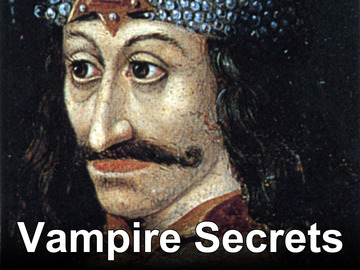
Bram Stoker didn’t invent the vampire, but he gave it its most famous face, borrowing the name from a real-life 15th-century Romanian prince: Vlad III, Prince of Wallachia. Also known as Vlad the Impaler.

The man himself was far more terrifying than any fictional creature of the night. Vlad wasn’t a vampire, but his life was soaked in enough blood to create a legend that would last for centuries. He ruled a small province trapped between two massive, warring empires—the Kingdom of Hungary and the Ottoman Empire. He was a man fighting for his people’s survival, and he used terror as his primary weapon.

A Deep Dive into The Forest of the Impaled

His favorite method of execution was, you guessed it, impalement. He didn’t just kill his enemies; he made gruesome examples of them. After one major battle against the invading Ottomans, the conquering Sultan Mehmed II marched his army toward Vlad’s capital. What he found was not a defending army, but a scene of unimaginable horror.

A “forest” of over 20,000 impaled Turkish soldiers and Bulgarian captives stretched for miles. Men, women, and children, all rotting on massive stakes. The stench was overwhelming. The sight was so psychologically devastating that the Sultan, a man who had conquered Constantinople, turned his entire army around and went home. Vlad had won the battle without lifting a sword.

Stories spread like wildfire. They said Vlad dined amongst the dying bodies in his impaled forests. They said he washed his hands in the blood of his victims before eating. German pamphlets from the era, the equivalent of modern-day tabloids, painted him as an absolute monster who roasted children and forced their mothers to eat them. Were these stories true? Or were they propaganda spread by his enemies to demonize him?

For Romanians today, he’s often seen as a national hero. A brutal, yes, but necessary leader who kept their nation independent. But for the rest of the world, thanks to Bram Stoker, his name became synonymous with the undead. A perfect historical hook for the ultimate predator.

The Blood Countess: The Woman Who Bathed in Terror

If Vlad the Impaler was the father of the vampire myth, then Countess Elizabeth Báthory was its unholy mother.

Born into one of the most powerful noble families in Hungary in the late 16th century, Báthory was wealthy, intelligent, and untouchable. For a while. After her husband’s death, whispers began to circulate from her enormous castle in ÄŒachtice. Whispers about local peasant girls who were hired as servants and then… vanished.

The stories grew darker. The girls weren’t just disappearing; they were being tortured. Horribly. Accounts from the eventual trial described beatings, needles stuck under fingernails, girls being covered in honey and left for ants, and being forced to stand outside in the freezing cold as water was poured on them until they became living ice sculptures.

And then came the most infamous legend of all: that the aging Countess, obsessed with her fading beauty, believed that bathing in the blood of virgin girls would restore her youth. Hundreds of girls were said to have died to fuel her grotesque vanity.

Conspiracy: Was the Blood Countess Framed?

Here’s where the story gets complicated. For decades, her guilt was taken as fact. The “Blood Countess” was the ultimate female monster. But modern historians have started to question the narrative. Could it have been a setup?

  • She was a powerful woman. After her husband died, Elizabeth controlled a vast fortune and huge tracts of land. Many powerful men, including the King of Hungary, owed her massive amounts of money.
  • She was a Protestant. She ruled in a region of growing Catholic power, making her a political and religious target.
  • The “evidence” is shaky. The most lurid tales, especially the blood-bathing, only appeared in print years after her death. The original testimonies from her servants were likely extracted under torture.

Was she really a sadistic serial killer who butchered over 600 girls? Or was she a politically inconvenient and incredibly wealthy widow whose enemies concocted a monstrous story to bring her down and seize her property? Once she was convicted, her lands and loans were conveniently forfeited. We may never know the truth, but her story added a chilling new element to the vampire myth: the idea of blood as a source of eternal youth.

How to Slay a Vampire: A Grisly Guide from History

So, your village is plagued by a creature of the night. What do you do? Our ancestors had a surprisingly detailed, and gruesome, instruction manual.

Forget the cool, clean kills you see in movies. Killing a real-world “vampire” was a messy, terrifying, and deeply serious affair. It was part ritual, part desecration.

  1. Staking: The most famous method. But why? The stake wasn’t just a random piece of wood. It had to be a specific type, often hawthorn or ash, which had religious significance. The goal wasn’t just to pierce the heart but to pin the corpse to the earth, preventing it from rising again. In some traditions, they would drive the stake through the stomach, to release the “bloated” evil inside.
  2. Beheading: This was a common fail-safe. If staking it didn’t work, you cut off its head. This was seen as severing the soul from the body for good. Often, the head would be buried between the corpse’s legs or somewhere far away, so the creature couldn’t “find” it to reanimate.
  3. Burning: The ultimate purification. If you really wanted to make sure the thing never came back, you dug it up, chopped it into pieces, and burned it to ash. The ashes were then scattered in a river or buried at a crossroads, a place of spiritual power believed to confuse spirits.
  4. Other Methods: Garlic wasn’t just a repellent; its strong smell was thought to ward off all kinds of evil spirits and diseases. Holy water acted as a spiritual acid. And silver? Its association came later, but its purity was long thought to be a defense against unnatural creatures.

This wasn’t folklore. This really happened. The “New England Vampire Panic” in the 1800s saw dozens of bodies exhumed by terrified families who believed their dead relatives were rising from the grave to spread tuberculosis (then called “consumption”). They performed these exact rituals, burning the hearts and lungs of their loved ones in a desperate attempt to stop the disease.

The Science of the Damned: Could Vampires Be Real?

Okay, so reanimated corpses probably aren’t clawing their way out of graves. But could a real medical condition have created the vampire legend? Absolutely.

Science offers a few fascinating candidates for the “original vampire.”

  • Porphyria: This is the classic theory. A rare group of genetic blood disorders that affects the body’s ability to produce heme, a component of hemoglobin. The symptoms are startlingly vampiric. Sufferers can experience extreme photosensitivity (sunlight causes painful blisters), receding gums (making teeth look like fangs), facial disfigurement, and reddish-brown teeth. In theory, an ancient sufferer of this disease would have been a terrifying sight.
  • Rabies: Transmitted by the bite of an animal, rabies attacks the nervous system. Its symptoms are even more compelling. It can cause insomnia (making one nocturnal), extreme aggression and a desire to bite, hydrophobia (fear of water, which could be mistaken for a fear of holy water), and a revulsion to strong smells like garlic. A rabid human would look like a feral, violent monster.
  • Catalepsy: This is a nervous condition that causes muscle rigidity and an apparent loss of consciousness. The person appears dead. Their breathing is shallow, their pulse is faint. Before modern medicine, countless people suffering from catalepsy were declared dead and buried. If they woke up and managed to escape their coffin, they would return to their village as a “person who came back from the dead,” often pale, traumatized, and looking for help. To a superstitious villager, it was a revenant.

The Masquerade: How a Role-Playing Game Redefined the Night

For centuries, the vampire was a monster. An antagonist. But in 1991, something changed. A tabletop role-playing game called Vampire: The Masquerade was released, and it completely revolutionized the mythos for a new generation.

Suddenly, you could *be* the vampire. But these weren’t simple monsters. They were tragic, political, and deeply personal anti-heroes. The game introduced a complex world of warring vampire clans, each with its own unique powers, weaknesses, and philosophies. It created the concept of “The Masquerade,” the vampire law to hide their existence from the mortal world at all costs.

This game gave vampires an internal life. They struggled with their “Beast,” the raging monster within. They fought for power in the shadows of modern cities. They were poets, punks, corporate raiders, and anarchists. It was dark, it was gothic, and it was intelligent. This game’s DNA can be seen in almost every piece of vampire media that followed, from the *Underworld* film series to TV shows like *True Blood*.

From Monster to Heartthrob: The Vampire’s Extreme Makeover

The journey of the vampire in popular culture is a wild ride. It’s a mirror reflecting our own changing fears and fantasies.

It started with the pure, silent horror of Nosferatu (1922)—a bald, rat-like creature that was a walking plague.

Then came the suave, sophisticated gentleman. Bela Lugosi’s Dracula (1931) gave the vampire a voice, a hypnotic charm, and a sexual allure that was both terrifying and seductive.

The 20th century saw the vampire become more complex. Anne Rice’s novels, starting with *Interview with the Vampire*, gave them deep psychological angst. Her vampires were lonely, philosophical beings cursed with an eternity they didn’t ask for. They were monsters, but they were monsters who could love, suffer, and question their own existence.

And then… they started to sparkle. The *Twilight* series took the “tortured lover” angle and turned it up to eleven, removing almost all the classic horror elements. The modern vampire became the ultimate romantic fantasy: powerful, protective, eternally devoted, and impossibly beautiful. The monster had officially become a boyfriend.

They Walk Among Us: The Real-Life Vampire Community

Now, we arrive at the most unbelievable part of the story. Something many people don’t even know exists.

There is a global, real-life vampire subculture. Right now. Today.

These are not people who think they are immortal, turn into bats, or sleep in coffins. They are people who identify as vampires because they have a perceived need to take in life force or blood from outside sources to maintain their physical and mental well-being. It’s a very real and serious part of their identity.

The community is generally divided into two main types:

  • Sanguinarians (“Sangs”): These are people who consume small, safe amounts of human blood. This is not a violent act. It is always done with a willing, tested, and consenting donor. It is a deeply personal and often ritualistic practice.
  • Psi (Psychic) Vampires: These individuals believe they feed on pranic or psychic energy from other people. This can be done from a distance, or through touch and close emotional contact. They often describe feeling drained, ill, or depressed if they go too long without “feeding.”

This is a hidden world with its own online forums, social networks, and community “houses.” It’s a place where people who feel this strange need can find others like them and learn to manage their condition responsibly.

A Code in the Shadows: The Rules of the Real Vampires

This might be the most shocking thing of all. Far from being predatory monsters, the real vampire community is often governed by a strict set of ethics. Safety and consent are everything.

They have developed codes of conduct that would put many other communities to shame. Donors are not “victims”; they are cherished partners in a consensual exchange. Health is a top priority, with rigorous screening for blood-borne illnesses. For Psi vampires, there are ethical debates about “deep feeding” without permission versus ambient feeding in a crowd, which is seen as more acceptable.

They have created a system to survive and thrive in the shadows, completely unseen by the mainstream world. It’s a far cry from the monstrous killers of legend.

So the vampire has evolved. From a bloated corpse to a warlord. From a blood-bathing countess to a tragic romantic. And finally, to a hidden community of real people living by a code of ethics.

The story is not over. It never is.

The next time you’re out late at night, and the world seems just a little too quiet, just remember the journey this legend has taken. From the graveyards of Eastern Europe to the suburbs of modern America. The creature has changed its face, but the core idea remains.

There are things in the darkness we do not understand. And they are hungry.

Amit Ghosh
Amit Ghoshhttps://coolinterestingnews.com
Aloha, I'm Amit Ghosh, a web entrepreneur and avid blogger. Bitten by entrepreneurial bug, I got kicked out from college and ended up being millionaire and running a digital media company named Aeron7 headquartered at Lithuania.
RELATED ARTICLES
- Advertisment -

Most Popular

Recent Comments

Warren Pan Abbott on The legend of the Devil Monkey !
chris davies on The McPherson Tape Mystery
Reed Reedly on ET has Internet!
Bea Houseoffashion on Proof Of Time Travellers – Gallery
Marcus2012 on ET has Internet!
Reed Reedly on ET has Internet!
LaughsAtConspiracyNuts on The 9/11 Conspiracy – Myths and Facts
Alex Sliverman on Did the ancients fly?
Doctor Wholigan on Time Traveler in 1938 film
chris davies on The McPherson Tape Mystery
Archie1954 on 10 secret UFO hideouts
chris davies on Ghosts of flight 401
Marcus2012 on ET has Internet!
jason Macdonald on Proof of Time Travel? – China
chris davies on Long-Lost Pyramids Found?
Reed Reedly on ET has Internet!
Milkman on Connected Universe
Tenmiles on Baigong Pipes Mystery
Simon Foster on Sirius – The Documentary
From the 1st April on 2013 – Alien Contact date ?
SkyWatcher on Is ET ignoring us?
I Come From The Future on Obama to make UFO Alien disclouser soon ?
ÛñK?øWn on 2013 – Alien Contact date ?
Just another person on 2013 – Alien Contact date ?
Malcolm Windowcleaner on The strange case of Rudolph Fentz
Mason Servio on Strange Things on Mars
Marke Wisdom Seeker on What will we find as arctic melts?
Andrea A Elisabeth Levyne on Aliens Captured in Varginha, Brazil
Mitch Grouyeki on Amazing Space Shuttle pictures