The Day the World Froze Over (Again)
Picture the scene. Munich. 2016. A room filled with the world’s most powerful people—diplomats, generals, and presidents. The air is thick with polite tension. Then, a man steps to the podium. Russian Prime Minister Dmitry Medvedev. He adjusts the microphone, looks out at the crowd, and says something that should have sent an electric shock through the entire Western establishment.
He asks a question. A chilling, time-bending question.
Is this 2016… or is it 1962?
He lets it hang there. The year of the Cuban Missile Crisis. The year humanity held its collective breath, knuckles white, as two superpowers stared each other down over a nuclear abyss. Medvedev declared it plainly: “One could go as far as to say that we have slid back to a new Cold War.”
The response from the West? A polite dismissal. A diplomatic shrug. NATO’s top general, Philip Breedlove, assured reporters that NATO didn’t want a Cold War, didn’t talk about it, didn’t anticipate it. Just a misunderstanding. Nothing to see here.
They were wrong. So, so wrong.
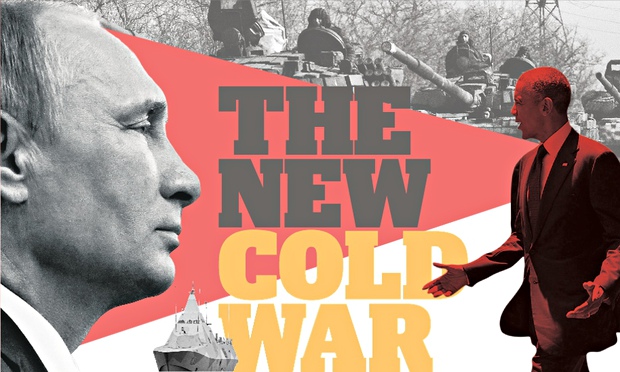
Medvedev’s speech wasn’t a gaffe. It wasn’t hyperbole. It was a prophecy. It was the starting gun for a conflict that had already been raging in the shadows for years, a conflict that was about to explode into the open. The old Cold War never really ended. It just went quiet. It morphed. And now, the silence is over.
Deep Dive: What Was The *First* Cold War?
For anyone born after the Berlin Wall came down, it might seem like ancient history. A black and white film reel. But you have to understand the sheer, gut-wrenching terror of that era to grasp what’s happening now.
It wasn’t a war of armies clashing on a battlefield. Not usually. It was a war of spies, of whispers, of secrets buried under concrete. It was a war of ideology. Capitalism versus Communism. The “Free World” led by the United States against the Soviet Union and its iron-fisted bloc of satellite states.
An “Iron Curtain,” as Winston Churchill famously called it, had descended across Europe, splitting families, cultures, and an entire continent in two. On one side, color, jazz, and blue jeans. On the other, gray conformity, bread lines, and the constant fear of the secret police knocking on your door.
The stakes? Everything. Total annihilation.
Both sides had thousands of nuclear warheads pointed at each other, ready to launch at a moment’s notice. Schoolchildren practiced “duck and cover” drills, a futile gesture against a fire that could melt cities. Families built fallout shelters in their backyards. It was a 45-year-long standoff where one mistake, one miscalculation, could have ended human civilization.
The fighting happened in the margins, in so-called “proxy wars.” Korea. Vietnam. Afghanistan. The jungles and deserts of the world became the bloody chessboard for Washington and Moscow, where they backed opposing sides and let others do the dying. It was a global struggle for influence, for resources, for the very soul of the planet.

The New Battlegrounds: Ukraine and Syria
When Medvedev spoke in 2016, the pieces were already moving on this new, terrifying chessboard. The West saw isolated incidents. Russia saw a grand strategy.
The Crimean Gambit
Let’s rewind two years before that Munich speech. 2014. Ukraine. A pro-Western revolution overthrows a pro-Russian government in Kyiv. For the West, this was a victory for democracy. For Vladimir Putin, a former KGB agent who sees the collapse of the Soviet Union as the greatest geopolitical catastrophe of the 20th century, this was a direct attack.
Why? NATO. The North Atlantic Treaty Organization. The military alliance formed after World War II to contain the Soviet Union. After the USSR collapsed, NATO didn’t dissolve. It expanded. Eastward. It absorbed former Soviet satellite states, creeping right up to Russia’s border. For Russia, putting NATO bases in Ukraine was like Mexico joining a military alliance with China. It was an existential threat.
So Putin acted. Suddenly, mysterious soldiers appeared in the Ukrainian peninsula of Crimea. They wore green uniforms with no insignia. The media called them “little green men.” They were, of course, Russian special forces. They seized control of the peninsula with barely a shot fired. Russia then held a snap referendum and annexed Crimea, claiming it was correcting a historical wrong and protecting its vital warm-water naval port at Sevastopol.
The West screamed foul, imposing sanctions. But they did little else. A red line had been crossed, and the consequences were… minimal. A lesson was learned in Moscow: the West would complain, but it wouldn’t fight.
The Syrian Proxy War
At the same time, another fire was raging in the Middle East. The Syrian civil war. A brutal, multi-sided conflict. The United States and its allies were backing various rebel groups trying to overthrow President Bashar al-Assad. The official line was that they were fighting terrorists and supporting “legitimate opposition groups.”
But Russia, a long-time ally of the Assad family, saw something different. It saw another U.S.-backed “regime change” operation, just like in Iraq and Libya. It saw a chance to reassert its influence in the Middle East and to protect its only naval base in the Mediterranean.
So Russia intervened. Big time. It sent its air force, its special operators, and “advisors.” Moscow claimed it was only attacking ISIS terrorists. But Western observers pointed out that Russian bombs were falling overwhelmingly on the very same anti-Assad rebels the CIA was funding and training. American-backed fighters were being killed by Russian bombs. It was a proxy war, ripped straight from the Cold War playbook, playing out in the ruins of Aleppo.

The Invisible Front: A War for Your Mind
But this isn’t your grandfather’s Cold War. The biggest difference isn’t the location of the battlefields. It’s the battlefields you can’t see.
The New Cold War is a war of information. A war of ghosts in the machine. A war fought with fiber-optic cables, server farms, and social media algorithms. It’s a war for control of the narrative. A war for your mind.
Just months after Medvedev’s speech, the world got a taste of what this new combat looks like. The 2016 U.S. presidential election. Suddenly, phrases like “Russian bots” and “troll farms” entered the public lexicon. Intelligence agencies concluded that Russia had engaged in a sweeping and systematic campaign to interfere in the election. Not by hacking voting machines, but by hacking the voters themselves.
They used armies of fake social media accounts to spread divisive content, amplify conspiracy theories, and sow chaos. They targeted fractures in American society—race, religion, politics—and poured gasoline on them. The goal wasn’t necessarily to pick a winner. The goal was to make Americans lose faith in their own system. To make them distrust their media, their government, and each other. To break the country from the inside out.
And it’s not just elections.
It’s cyberattacks against power grids, banks, and hospitals. It’s the constant flood of disinformation that makes it impossible to know what’s real anymore. It’s “deepfake” technology that could soon create perfectly convincing videos of world leaders saying things they never said. The battlefield is the phone in your pocket. The weapon is the information you consume.

What If The Warning Was Ignored on Purpose?
Let’s entertain a darker thought. What if the Western leaders in that room in Munich didn’t just *miss* the warning? What if they heard it, understood it, and simply… didn’t care? Or worse, welcomed it?
Think about it. A Cold War is good for business. The original Cold War fueled a massive military-industrial complex that became one of the most powerful forces in American politics. It justified enormous defense budgets. It created jobs. It spurred technological innovation—from the internet to GPS—all born from the race to beat the Soviets.
In 2016, Secretary of State John Kerry announced a “four-fold increase” in U.S. spending on the “European Reassurance Initiative,” bumping it up to $3.4 billion. That’s a lot of money for new tanks, new jets, and new bases. A new threat requires a new budget. The “War on Terror” was winding down, and the defense industry needed a new adversary. A big one. Russia fit the bill perfectly.
Is it possible that both sides are locked in a kind of symbiotic conflict? A global drama that justifies their power, enriches their elites, and distracts their populations from problems at home?
The official story is that the West is defending freedom and the international order. The Russian story is that it’s defending its sovereignty against an aggressive, expanding empire. The truth is probably somewhere in the messy, complicated middle. But one thing is certain: the powerful on both sides benefit from the conflict.
The Prophecy Fulfilled: From Cold War to Hot War
The events of 2016 weren’t the end of the story. They were the prologue.
The tensions over Ukraine never cooled down. They simmered. The proxy war festered. And in February 2022, the New Cold War turned hot. Russia launched a full-scale invasion of Ukraine, triggering the largest land war in Europe since World War II.
Suddenly, all the abstract talk of sanctions, alliances, and deterrence became horrifyingly real. Cities were leveled. Millions fled their homes. The world watched in horror as a 21st-century war unfolded, with trenches and artillery duels alongside drone strikes and cyber warfare.
The West, led by the United States, responded not with soldiers, but with weapons and money, pouring tens of billions of dollars worth of advanced military hardware into Ukraine. It became the ultimate proxy war. Ukrainian soldiers were fighting and dying, using American rockets and European tanks to destroy Russian hardware. The nuclear threats, once a relic of the past, returned. Putin and his officials began openly talking about the conditions under which they would use their atomic arsenal.
The clock is ticking again.
Looking back at that day in Munich, it’s impossible not to be stunned by the clarity of the warning and the deafness of the response. Medvedev laid it all out. He told the world where things were headed. They chose not to listen. Or maybe they did, and this is the outcome they wanted all along.
We are living in the world they built. A world of renewed division, of escalating conflict, of invisible wars and the ever-present shadow of a mushroom cloud. It’s not 1962. It’s something new, something more complex and in many ways, more dangerous.
The New Cold War is here. It’s not coming. It arrived years ago. And the question now is not if it will get worse, but how much worse it can possibly get.