Stop for a second. Look at the ground beneath your feet. What if I told you that entire kingdoms, bloody wars, and thousands of years of human drama were sleeping right under the dirt? This isn’t a movie script. In the dusty, heat-soaked plains of northern Iraq, this is reality. In the Kurdistan region, archaeologists stumbled upon something that shouldn’t exist. Or rather, something that history forgot.
They found Idu.
This wasn’t just a pot shard or a rusty arrowhead. This was a metropolis. A power player. A city that stood tall, fought back against the biggest bullies of the ancient world, and then vanished. Poof. Gone. Hidden beneath a massive mound of earth for three millennia. How do you lose a city? How does a civilization just get swallowed by the earth?
The Ghost Beneath the Village
Picture a standard hill. It looks natural, right? Just a bump in the landscape. But in the Middle East, some hills are liars. They are artificial. They are man-made.
They are called “tells.”
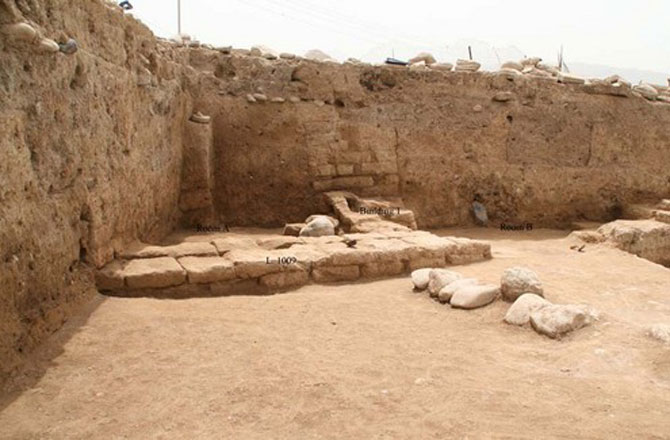
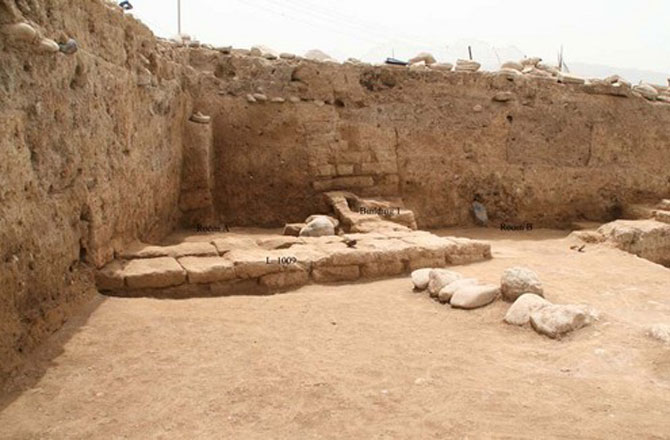
The site of Idu is located in a valley on the northern bank of the lower Zab River. But you wouldn’t know it if you walked past it. Today, it’s a mound rising about 32 feet (10 meters) above the flat plain. That is thirty-two feet of human history, layered like a terrifying lasagna of bones, bricks, and broken dreams.
Here is the kicker. There is a town on top of it right now. The modern-day village of Satu Qala sits directly on the head of the ancient city. People are cooking dinner, watching TV, and sleeping just yards above the throne rooms of forgotten kings.
Cinzia Pappi, an archaeologist from the Universität Leipzig in Germany, helped crack this wide open. The team didn’t just find dirt. They found the identity of the city. Cuneiform inscriptions—the ancient barcode of history—screamed the name across the ages: Idu.
A Time Capsule from the Neolithic Era
We need to understand the scale of time here. The earliest remains in this mound date back to Neolithic times. We are talking about the moment humanity decided to stop running after mammoths and started planting seeds. Farming first appeared in the Middle East around this time. This spot has been occupied, fought over, and lived on for nearly 9,000 years.
Think about that. Nine. Thousand. Years.
But the real action? That happened between 3,300 and 2,900 years ago. That was the golden age. That was when Idu wasn’t just a truck stop on the road to Babylon; it was a prize.
The Assyrian War Machine
To understand why Idu matters, you have to understand the bad guys. The Assyrian Empire. Imagine the Galactic Empire from Star Wars, but with chariots and beards. They were ruthless. They were efficient. They conquered everything in sight.
For a long time, Idu was under the thumb of these iron-fisted rulers. The city was used as an administrative center. It was a government outpost. A tax collection hub. The Assyrians needed Idu to control the surrounding territory. It was a strategic choke point.
But empires crumble. They get fat. They get lazy. Or they get distracted fighting someone else. And when the Assyrian Empire started to wobble? Idu saw its chance.
140 Years of Freedom
This is the part of the story that gets the blood pumping. Usually, when a city rebels against Assyria, the history books end with “and then everyone died.” The Assyrians were famous for flaying their enemies and stacking heads in piles. Nasty stuff.
But Idu did something impossible.
As the empire declined, the city declared independence. They didn’t just survive; they thrived. For 140 years, Idu was its own kingdom. They had their own kings. We know their names because they wrote them down on bricks and plaques, almost like they were daring us to find them.
King Ba’ilanu. King Palil-ereš.
These aren’t just funny sounds. These were men who looked at the horizon, saw the smoke of Assyrian war camps, and said, “Not today.” They built palaces. They commissioned artwork. They created a legacy that screamed legitimacy. They weren’t just rebels; they were royalty.
The Art of Rebellion
What did they leave behind? Cuneiform inscriptions and works of art reveal the palaces that flourished in the city throughout its history. But it’s the specific imagery that gives us chills. One work of art found at the site depicts a bearded sphinx with the head of a human and the body of a winged lion. It’s holding a severed head? No, it’s usually standing guard.
Wait. A sphinx? In Iraq?
Yes. But this is the Assyrian style of sphinx, often called a Lamassu. However, during the independent years, the art style shifted. It became unique to Idu. They were forging a national identity.
They also found a cylinder seal—a small round stone used to roll a signature onto wet clay. This particular seal showed a hero battling a Griffin. A literal monster. Is this mythology? Or is it a metaphor for their struggle against the beast of the Assyrian war machine? History is written by the victors, but art is the soul of the people.
The Empire Strikes Back
Good things rarely last forever in the ancient world. The 140-year party had to end. The Assyrians regrouped. They sharpened their swords. They fixed their chariots. And they came back.
The city was reconquered. We don’t have the play-by-play, but we can guess it wasn’t pretty. The Assyrians weren’t known for forgiveness. They likely smashed the palaces of Ba’ilanu. They probably defaced the inscriptions. They wanted to erase the memory of Idu’s independence.
And yet, here we are. Digging it up. The Assyrians failed. They couldn’t delete the file completely.
The Problem with Modern History
Here is where the story hits a wall. A literal, concrete wall. The excavation of Idu is incredibly difficult. Why? Because of the village of Satu Qala.
You can’t just bulldoze people’s homes to find ancient bricks. The archaeologists have to work in the gaps. Between houses. In backyards. It’s a surgical operation. They are trying to extract a tumor of history without killing the patient—the modern village.
This raises a massive ethical question. Who owns the land? The people living there now, or the ghosts of the people who lived there 3,000 years ago?
Exploratory trenches were dug. The results were mind-bending. But large-scale excavation? That requires moving the village. And that costs money. And political willpower. In a region that has seen enough modern conflict to last a lifetime, digging up the past isn’t always the priority.
What Else is Hiding?
This discovery forces us to ask the big question: What else is out there?
If a capital city, a seat of kings, can remain hidden under a small village for thousands of years, what about the open desert? What about the mountains?
Recent satellite imagery and drone scans of the Middle East have revealed lines in the sand. Shapes of buildings that are invisible from the ground. We are entering a new golden age of archaeology, but it’s a race against time. Looters are everywhere. ISIS destroyed countless sites in this very region just a few years ago. We are losing history faster than we can find it.
The Mystery of the “Glazed Bricks”
One of the most fascinating finds in Idu wasn’t gold or jewels. It was bricks. Glazed bricks. These were used to decorate the palace walls. They weren’t just brown mud. They were colorful. They told stories.
Finding glazed bricks in a provincial city is a big deal. It implies wealth. Serious wealth. Where did the money come from? Was Idu a trade hub? Did they control a secret resource?
Some theories suggest the Zab River was a major highway for trade between the mountains and the plains. Idu sat right on the toll booth. If you wanted to move goods, you paid the Kings of Idu. That kind of cash allows you to hire mercenaries. It allows you to build walls. It allows you to tell the Assyrian Emperor to take a hike.
The “Deep State” of Antiquity
Let’s get conspiratorial for a second. Why was Idu so important to the Assyrians that they *had* to have it back? Was it just territory? Or was it something else?
Ancient texts often speak of temples and shrines that housed “gods.” In the ancient mindset, a god lived in his statue. If you captured the statue, you captured the god’s power. Did Idu hold a spiritual significance that terrified the Assyrians? Were they afraid that the gods had switched sides?
The inscriptions mention the god Ba’al. The storm god. A chaotic force. If the Kings of Idu claimed the favor of the storm, that’s a powerful propaganda tool. You don’t just fight an army; you fight the weather. You fight the heavens.
The Future of Idu
Right now, the site is quiet. The archaeologists have packed up their trowels for the season. The villagers of Satu Qala are walking over the mound, perhaps unaware that a cylinder seal depicting a Griffin is just a few feet below their sandals.
But the door has been opened. We know it’s there.
Idu serves as a reminder. A warning, maybe. Empires fall. Kings are forgotten. Cities are buried. But eventually, the truth claws its way to the surface. The earth cannot keep a secret forever.
As technology improves—as we use ground-penetrating radar and LIDAR—we won’t need to dig to see what’s down there. We will strip away the layers of dirt digitally. We will walk the streets of Idu in virtual reality. We will look into the eyes of the Sphinx and finally understand what it was guarding.
Until then, the mound waits. Silent. Watching. The city that refused to die is holding its breath, waiting for us to listen to the rest of the story.
So next time you see a hill that looks a little too perfect, a little too flat on top… wonder. What lies beneath?
Source: Discovery News
Originally posted 2013-10-03 20:59:01. Republished by Blog Post Promoter
![ancient-city-670[1]](https://coolinterestingnews.com/wp-content/uploads/2013/10/ancient-city-6701.webp)