The Cursed Mansion on the Hill: Inside the Twisted Downfall of the Flavel Family
Some houses just feel wrong. They sit on their plots of land, silently watching the world go by, holding secrets within their decaying walls. They are monuments to forgotten dreams and private nightmares. And in Astoria, Oregon, one house stands above the rest, a testament to a family’s spectacular, terrifying collapse.
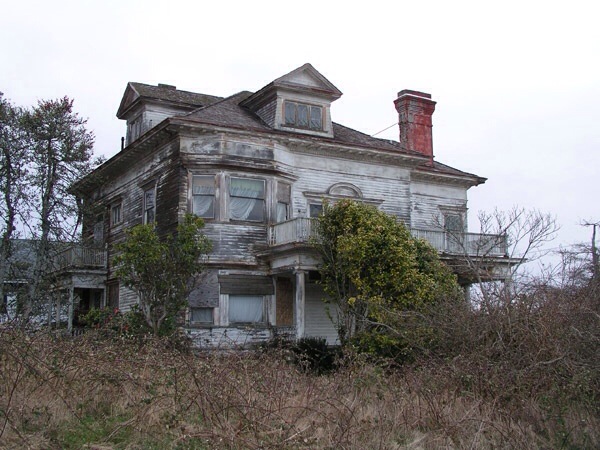
This isn’t the Flavel House you see on the tourist brochures. Oh no. This is the *other* one. The one the locals whisper about. A grand Queen Anne mansion, built with the wealth of a shipping titan, that became a sealed tomb for his descendants.
It’s a story of privilege curdling into paranoia. Of wealth rotting into squalor. It’s a story that features a fugitive known as “Hatchet Harry,” a bizarre arrest for stealing motel towels, and a final, horrifying discovery in a unplugged refrigerator that will make your blood run cold. How does a family go from the pinnacle of society to a real-life horror story? Pull up a chair. You’re about to find out.

A Gilded Cage: The Rise of Astoria’s Other Flavel Dynasty
To understand the rot, you first have to see the shine. The Flavel name was gold in Astoria at the turn of the 20th century. Captain George Flavel was a maritime baron, a Columbia River bar pilot who made a fortune guiding ships through the treacherous waters. His own magnificent home is now a museum, a perfectly preserved slice of Victorian splendor.
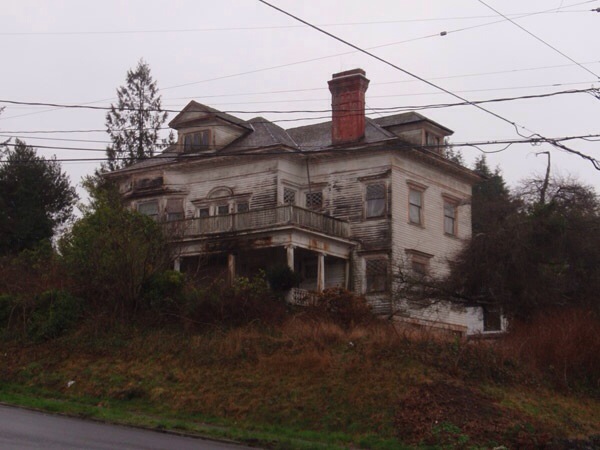
But this story isn’t about that house. It’s about the one his son, Harry M. Flavel, built for his own family just up the hill. Completed in 1901, it was another jewel in the family’s crown. A statement. It broadcasted wealth, stability, and a future as bright and promising as the Pacific sun glinting off the river.
Inside this beautiful home, Harry and his second wife, Florence, raised their two children: Harry S. Flavel and Mary Louise Flavel. They had everything. Money. Status. A legacy. They were supposed to carry the Flavel torch into a new generation. Instead, they doused it in gasoline and lit a match.
Who Was “Hatchet Harry”?
The cracks appeared early. And they were violent. Young Harry S. Flavel was not a happy child. He was a storm brewing within the manicured walls of the mansion. The pressure of his family name, the isolation of wealth, who knows what it was. But something was deeply, fundamentally wrong.
The breaking point, the incident that would brand him for life, came when he was just 20. In a fit of rage that has never been fully explained, Harry S. took a hatchet and began methodically chopping up the grand wooden banister of the main staircase. Hacking away at his own gilded cage.
Think about that. The sheer, furious violence of it. But here’s the detail that turns it from a simple tantrum into something far more sinister. While he was doing it, his own mother, Florence, was reportedly locked in her room upstairs. Was she a prisoner? Was he keeping her safe *from* something, or was she hiding *from him*? The family’s silence on the matter was deafening. From that day on, he had a new name in town. Not Harry. “Hatchet Harry.” And it stuck.
A Dog Leash, A Car, and a Fateful Stab
For decades, the Flavel family retreated further into their mansion and further into themselves. They became ghosts in their own town. Recluses. The house grew quiet, the curtains stayed drawn. But the violence simmering under the surface was bound to erupt again. And in February 1983, it did.
Harry S. Flavel, now a middle-aged man, was out walking his dog. A simple, everyday act. But the world outside the Flavel mansion was a hostile place in his mind. A car came speeding down the road, too fast for his liking. As it passed, Harry reacted. He swung the heavy chain of his dog’s leash and struck the vehicle.
The driver, a man named Michael Sosnovske, slammed on his brakes. He got out, furious. He grabbed Flavel’s sleeve, demanding his name to call the police. It was a confrontation. A challenge to the invisible walls Harry had built around himself. And Harry’s response was swift and brutal.
He pulled a knife. And he stabbed the man in the abdomen.
He would always claim it was self-defense. That he was the victim. That the world was out to get him. But the jury saw it differently. After a long and twisted legal battle, Harry S. Flavel was convicted of assault in 1985.
The Fugitive Years: A Bizarre Trail of Towels and Bail Bonds
The conviction was just the beginning of the next bizarre chapter. Flavel, ever defiant, exhausted every possible appeal. For five long years, he fought the system. Then, on August 17th, 1990, the day he was finally due to appear for sentencing, he simply didn’t show up. He was gone.
He hadn’t just fled alone. The entire remaining family unit—Harry S., his mother Florence, and his sister Mary Louise—vanished. They packed what they could and became fugitives, a strange, paranoid clan on the run from the law. The grand mansion on the hill was locked up and left to rot.
Their life on the lam wasn’t exactly a Hollywood movie. After two months, the law finally caught up with “Hatchet Harry.” But it wasn’t for the stabbing. It was in Willow Grove, Pennsylvania. For stealing motel towels. The absurdity is staggering. A man convicted of a violent felony, brought down by petty theft. It spoke of a mind completely detached from consequence, a family spiraling into total dysfunction.
But the family bond, however twisted, was strong. His sister, Mary Louise, a shadowy figure who was always by his side, raised the bail money. And just like that, they were ghosts in the wind again. Disappeared.
The Walls Close In: Death, Debt, and Disappearance
Back in Astoria, the Flavel mansion became a dark landmark, a testament to the family that had imploded. The years ticked by. The paint peeled. The gardens grew wild.
Florence, the matriarch, died in 1991 after two years on life support, having spent her final years refusing to pay property taxes, a last act of defiance against the world she’d shut out. Then, on May 31, 2010, the central figure of the tragedy, Harry S. “Hatchet Harry” Flavel, died at the age of 82.
But his story wasn’t over. His body lay unclaimed at a mortuary for nine months. Nine. Months. His sister, Mary Louise, the only one left, refused to pay for his burial. Was it a lack of funds? Or a final, cruel act in a lifetime of dysfunction? We’ll never know. Eventually, the man born into one of Astoria’s wealthiest families was buried in a pauper’s grave, paid for by an indigent burial fund.
Shortly after his death, a strange thing happened. Black mourning bunting, the kind used for funerals, mysteriously appeared draped from the balcony of the abandoned mansion. Who put it there? Was it Mary Louise, in a secret, final tribute? Or a morbid prank by locals? It was another layer of mystery dropped onto the house.
And then, Mary Louise Flavel, the last keeper of the family’s dark secrets, vanished completely. Her ex-lawyer had no idea where she went. She simply walked away from the wreckage of her life and has never been seen or heard from again. She is a ghost. The final question mark in a story full of them.
Unsealing a Modern-Day Tomb
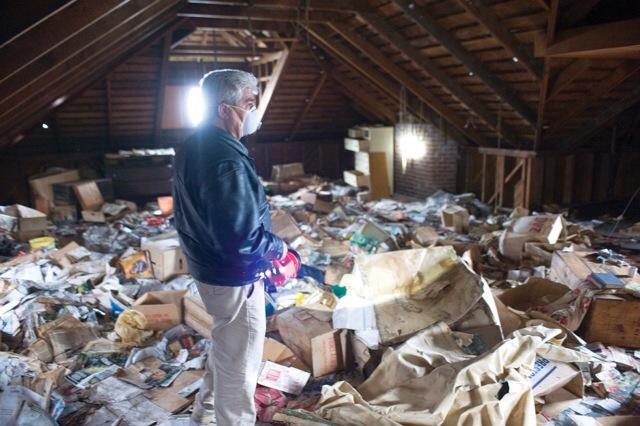
With the family gone, the city of Astoria finally took control of the derelict property under a building ordinance. For the first time in decades, outsiders were about to step inside. They were prepared for decay and neglect. They were not prepared for what they actually found.
Opening the doors to the Harry M. Flavel house wasn’t just entering a home; it was like cracking open the seals on a pharaoh’s tomb. A tomb dedicated to paranoia, isolation, and profound mental illness.

Three Feet of History: The Newspaper Floors
The first thing that hit them was the sheer volume of stuff. This wasn’t just clutter. It was a barricade. In many rooms, newspapers were stacked three feet deep, a yellowed, crumbling timeline of the world the Flavels had shut out. Some papers dated back a century. They weren’t just hoarding; they were burying themselves alive. Stacks and stacks of unopened mail confirmed it—they had completely severed ties with the outside world.
Scattered among the debris were strange, sad artifacts. Self-help books, like the 1960s bestseller *I’m OK–You’re OK*, lay half-buried in the junk. A tragic, ironic clue that they knew something was wrong. They knew they were broken, but they were utterly incapable of finding a way out.
And then there were the objects of pure menace. A 12-inch knife was found lying next to the basement stairwell. A stark reminder of the violence that was always just beneath the surface. In the basement, they found something even stranger: two massive pillars, stretching from floor to ceiling, constructed from empty plastic bleach jugs, spiraled and arranged by the neck. Bizarre, obsessive “art.” A monument to a shattered mind.

The Dog in the Refrigerator: A Final, Chilling Secret
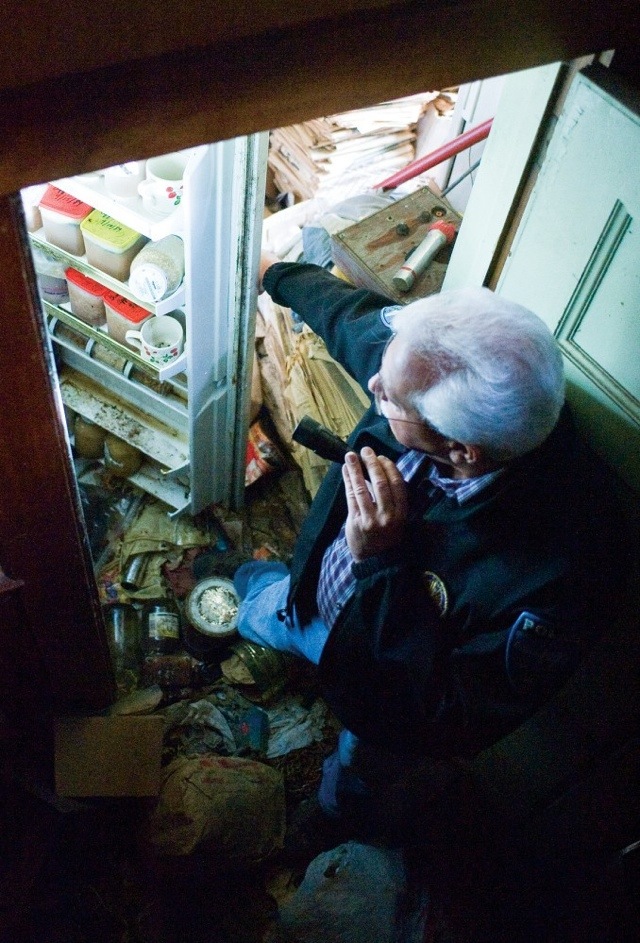
But the most disturbing discovery was waiting in the kitchen. Inside the refrigerator, which had long since lost power, amidst the rotting food, were the remains of a dog.
Let that sink in.
Was this the dog Harry was walking on that fateful day in 1983? A beloved pet they couldn’t bear to part with, so they preserved it in the only way their broken minds could comprehend? Or was it something else entirely? A symbol of the ultimate collapse, where the line between love and neglect, between sanctuary and tomb, had been erased forever.
This single, grisly detail tells you everything you need to know about the final years inside the Flavel mansion. It was a house of horrors. Not of ghosts or ghouls, but of the very real, very human specters of mental illness, isolation, and despair.

The Lingering Ghost: Where is Mary Louise Flavel?
The house was eventually cleared out. Sold. Restored. Today, it looks beautiful again from the outside, its Queen Anne architecture a lovely sight on the Astoria hillside. But you can’t erase a history like that. You can’t just paint over the madness.
The story of the Flavels is a chilling American Gothic tale. It’s a question without an answer. How did it all go so wrong? Was it a sickness of the mind passed down through generations? Was it the crushing weight of a powerful legacy? Or can a house, a beautiful collection of wood and nails, somehow hold a darkness of its own?
And the biggest question of all still hangs in the Oregon air. Somewhere out there, Mary Louise Flavel, now an old woman, may still be alive. The last person to see the inside of the house before it was unsealed. The last person who knows the full truth of her family’s descent. Where did she go? And what secrets did she take with her?
Originally posted 2013-12-02 22:13:51. Republished by Blog Post Promoter
![20131203-000311[1]](https://coolinterestingnews.com/wp-content/uploads/2013/12/20131203-0003111.webp)