You know the feeling. You step into an elevator, press the button for your floor, and your eyes drift up the panel. 10, 11, 12… 14. Wait. Where did 13 go? We all know the answer. Buildings all over the world pretend the 13th floor simply doesn’t exist. It’s an old superstition, a relic of a time when we thought numbers held the power to kill. But what if they were right?
What if some numbers actually do carry a dark energy? A vibration that attracts chaos, destruction, and death?
Forget the number 13. If you really want to see fear in the eyes of an airline scheduler, whisper the number 191. Flight 191 doesn’t refer to a single specific crash. It’s not just one bad day in history. It is a recurring nightmare that has plagued the aviation industry for decades. It is a phantom that haunts the tarmac.
In fact, there have been so many catastrophes attached to this specific flight number that, much like those hotel owners hiding the 13th floor, some superstitious airlines have completely erased “191” from their schedules. They won’t fly it. They won’t list it. And after you read this, you might never want to board a plane with those digits painted on the tail.
The Curse Begins: A History of Blood and Fire
Let’s cut through the noise. Since the 1960s, five separate flights carrying the number “191” have ended in absolute ruin. We aren’t talking about minor turbulence or a rough landing. We are talking about twisted metal, fireballs, and tragedy on a massive scale.
The most infamous of these? The worst aircraft disaster in American history. It wasn’t a terrorist attack. It wasn’t a missile. It was American Airlines Flight 191.
May 25, 1979. Chicago O’Hare. A beautiful McDonnell Douglas DC-10 is taxiing to the runway. On board, 258 passengers and 13 crew members are settling in for a trip to Los Angeles. Everything looks normal. The sun is shining. The engines are humming.
Then, the throttle goes up.
The horror at O’Hare
As the plane roared down the runway, hitting takeoff speed, something impossible happened. The number one engine—the massive turbine on the left wing—didn’t just fail. It physically ripped itself off the aircraft. It tore away, flipping over the top of the wing and smashing onto the runway behind them.
But the pilots? They couldn’t see the wing. They didn’t know the engine was gone. They thought they had a simple failure. They followed the book. They kept climbing.
Big mistake.
When the engine ripped away, it severed the hydraulic lines. The leading-edge slats on the left wing—devices that help the plane generate lift—retracted. The right wing still had its slats out. The left wing didn’t. The plane climbed to about 300 feet, and then physics took over. The left wing stopped flying. The right wing kept flying.
The aircraft rolled. Hard. It went past vertical. Passengers looked out their windows and saw the ground directly above them. The plane slammed into an open field near a trailer park, exploding into a massive fireball. 273 people died instantly (including two on the ground).
To this day, it remains the deadliest aviation accident on U.S. soil. And the flight number? 191.
The X-15 Incident: The Curse Reaches Space
You might think, “Okay, that’s one bad crash.” But the pattern started long before Chicago. We have to go back to 1967. We have to look at the X-15 program. This wasn’t a commercial airliner. This was the bleeding edge of human technology. A rocket plane designed to touch the void of space.
Test flight number 191.
Major Michael Adams was at the controls. He was an elite pilot. The best of the best. He took the X-15 up to over 260,000 feet. He was technically in space. He had earned his astronaut wings on the way up. But he never got to wear them.
On the way down, the aircraft entered a hypersonic spin at Mach 5. Imagine spinning around in a chair, then multiply that speed by five times the speed of sound. The G-forces were unimaginable. The plane broke apart mid-air. The wreckage was scattered across miles of the Mojave Desert.
Flight 191 claimed its first victim not on a runway, but at the edge of the heavens. It was a warning shot. A signal that this number was not to be trifled with.
Delta 191: The Invisible Killer
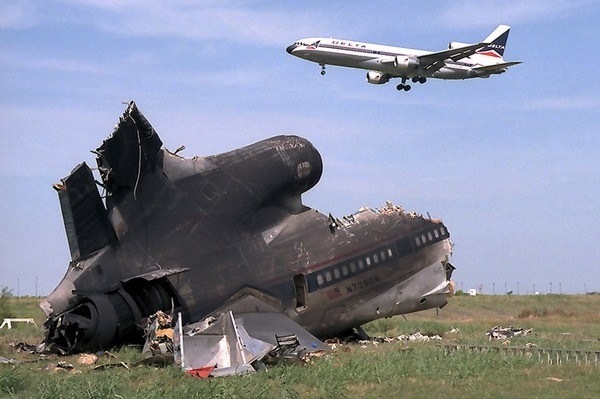
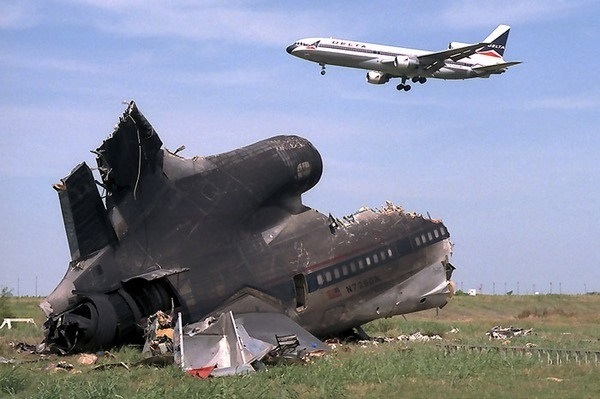
Fast forward to 1985. Delta Airlines Flight 191. A Lockheed L-1011 Tristar, a beast of a plane. It was approaching Dallas/Fort Worth International Airport. The pilots were experienced. The plane was solid.
But nature had other plans. Or maybe the number did.
As they came in for a landing, they hit a microburst. If you don’t know what a microburst is, imagine a giant, invisible foot stomping down from the clouds. It’s a sudden, violent downdraft of wind. One second you are flying, the next the air is pushing you into the dirt with the force of a freight train.
The pilots fought. They wrestled the yoke. They pushed the engines to full power. It wasn’t enough. The plane slammed into a field north of the runway, bounced, and careened across a highway. It crushed a car, killing the driver instantly, before smashing into two massive water tanks.
The tail section broke off and spun away, saving some of the people in the back. But 137 people lost their lives that day. Another Flight 191 destroyed. Another scar on the history of aviation.
Comair 191: The Impossible Mistake
This one keeps conspiracy theorists up at night. 2006. Lexington, Kentucky. Comair Flight 191 (marketed as Delta Connection). It was an early morning flight. Dark. Quiet.
The pilots were cleared for Runway 22. It was a long, safe runway. Perfectly lit. But for reasons that investigators still argue about, they turned onto Runway 26.
Runway 26 was short. It was for small private planes, not a commercial jet. It was unlit. It was a trap.
They hit the gas. The plane accelerated. They passed the point of no return. But the runway ran out. They weren’t fast enough to lift off. The jet clipped the airport fence, plowed through trees, and burst into flames. 49 people died. Only the First Officer survived, pulled from the burning wreckage.
How do two trained pilots turn onto the wrong runway? Fatigue? Maybe. Confusion? Perhaps. But look at the flight number. Is it possible that the “191” energy clouds the mind? Does it create a blind spot in reality?
JetBlue 191: The Mental Breakdown
This brings us to the modern era. The curse seemed to shift. It stopped attacking the machines and started attacking the minds of the people flying them.
In 2012, JetBlue Airways Flight 191 made global headlines. Not because it crashed, but because the captain lost his mind.
Captain Clayton Osbon was a veteran. A nice guy. A professional. But mid-flight, something snapped. He started rambling to his co-pilot about things that didn’t make sense. He talked about “being evaluated.” He obsessed over radio frequencies. Then, he stood up and started screaming.
He ran into the cabin. He was ranting about Jesus. He was screaming about Al-Qaeda. He yelled about a bomb on board. “We’re all going down!” he shouted to the terrified passengers. “Say your prayers!”
Can you imagine that? You are sitting in seat 14A, sipping a ginger ale, and your pilot runs past you screaming that the world is ending.
The co-pilot locked the door. Passengers tackled Osbon. They had to choke him out and tie him up with seatbelt extenders. The plane made an emergency landing in Amarillo, Texas.
Later, he was found not guilty by reason of insanity. He was put in a mental hospital. Doctors said it was a “brief psychotic disorder.” But look at the context. Flight 191. He was flying the cursed number. Did the pressure of that history crack his psyche? Did he see something the rest of us couldn’t?
The Numerology of 191: Cracking the Code
Although the misfortune of flights ending in 191 is likely a coincidence, numerologists have had a field day trying to decipher the hidden meaning of the numbers. Let’s break it down.
1 + 9 + 1 = 11.
In numerology, 11 is a “Master Number.” It represents intuition, spiritual insight, and supernatural energy. But it also represents chaos. And let’s not ignore the obvious: 9/11. The date that changed aviation forever. The number 11 haunts the airline industry like a ghost. American Airlines Flight 11 was the first plane to hit the World Trade Center.
Is “191” just a scrambled version of that dark energy? A warning hidden in plain sight?
Then there is the palindrome effect. 191 reads the same forwards and backwards. It is a loop. A cycle. In many occult traditions, palindromes are used to seal magic or create traps. You can’t escape it. No matter which way you look, it’s the same.
The Tarot Connection
Look deeper. In the Tarot deck, the 13th card is Death. We already know airlines hate 13. But if you take 191… drop the 9 (which often represents completion or the end) you are left with 1-1. The Magician? Justice? Or simply a gateway?
Some internet theorists suggest that 191 is a frequency. A specific vibration that disrupts navigation equipment and human brainwaves. They point to the JetBlue incident as proof. The equipment didn’t fail; the biological equipment (the pilot’s brain) failed.
The Airlines Are Scared
You might think this is all nonsense. Just spooky stories for late-night campfires. But money talks. And airlines hate losing money.
After the Delta crash, Delta Airlines retired the flight number 191. They didn’t want to see it on the board. American Airlines? They retired it too. For a long time, you couldn’t book a flight 191 on these major carriers. They claimed it was out of respect for the victims. That’s the PR answer.
But ask any old-school pilot. Ask the guys who have been flying since the 80s. They are a superstitious bunch. They carry lucky coins. They have rituals before takeoff. They know that the sky is a dangerous place, and you don’t tempt fate. Retiring the number wasn’t just about respect; it was about fear.
Some airlines have brought it back. Memories fade. New executives take over who care more about logistics than lore. But would you fly it? If you looked at your boarding pass and saw “Flight 191,” would your heart skip a beat?
Strange, but true…
We live in a world governed by science. We trust aerodynamics. We trust turbine mechanics. We trust radar. But every once in a while, something happens that defies the spreadsheet.
The tragedy of the 191 flights is a reminder that we are not always in control. Whether it’s a loose bolt, a sudden wind, a confused pilot, or a simple twist of fate, disaster is always waiting in the wings.
Is it a curse? Is it a statistical anomaly? Or is it simply that we look for patterns in the chaos to make sense of the senseless?
Next time you are at the airport, watch the departure screens. Look for the numbers. And if you see 191 flashing “ON TIME,” maybe… just maybe… wait for the next flight.