The Russian Roswell: Declassifying the Soviet Union’s Most Terrifying UFO Secret
Forget everything you think you know about Roswell. Forget Area 51. Those stories are child’s play compared to what happened deep within the iron heart of the Soviet Union.
We’re talking about a place so secret, it made America’s black sites look like public parks. A place where an entire town was wiped off the map just to protect its perimeter. A fortress of science and paranoia built on the vast, empty steppe. They called it Kapustin Yar. And in 1948, something fell out of the sky that would change the Cold War forever.
What you are about to read isn’t just a story. It’s a descent into a rabbit hole of crashed alien ships, recovered bodies, and a technological arms race fueled by secrets not of this world. The official story is silence. The truth? The truth is far more explosive.
A Fortress in the Steppe: The Birth of the Soviet Area 51
To understand the Kapustin Yar incident, you have to understand the place itself. After World War II, the world was fractured. The smoke had barely cleared from the battlefields of Europe when a new, colder war began. The United States and the Soviet Union, former allies, were now bitter rivals locked in a struggle for global domination. The prize was technology. And the spoils of war were the German scientists who had built the V-2 rocket, the world’s first long-range ballistic missile.
While America was busy with Operation Paperclip, spiriting away Wernher von Braun and his top minds, the Soviets launched their own version. They scooped up the remaining German rocket scientists and engineers. And they needed a place to put them to work. A place far from prying eyes. Far from Western spies. Somewhere isolated, secure, and utterly controllable.
They found it. A desolate patch of land over 500 miles south of Moscow, about 60 miles from the war-torn city of Stalingrad (now Volgograd). This was Kapustin Yar. It wasn’t just a base. It was a scientific gulag, a top-secret city dedicated to one thing: beating the Americans.
The secrecy was absolute. Chilling. The nearby town of Zhitkur was deemed too close. So, the Kremlin didn’t build a wall. They didn’t reroute a road. They evacuated every man, woman, and child, and then they leveled the entire town. Bulldozed it into the dirt. As if it never existed. That’s the kind of secret we’re talking about.
Here, under the watchful eye of the KGB, the captured Germans and their Soviet counterparts worked relentlessly. Their mission was twofold: build missiles that could carry atomic bombs to America, and conquer space. It was here that the seeds of the Sputnik satellite and the Vostok program that sent Yuri Gagarin into orbit were planted. But they were also testing new aircraft, new radar systems, and new weapons. They were scanning the skies. Watching. Waiting.
And one day, the skies looked back.
1948: The Day the Sky Cracked Open
The year was 1948. Just one year after a strange debris field was found on a ranch outside of Roswell, New Mexico. The Cold War was in its infancy, a period of deep paranoia and suspicion. Every shadow was an enemy, every unidentified blip on a radar screen a potential threat.
At Kapustin Yar, the air crackled with tension. Soviet radar operators, among the best in the world, stared at their green screens day and night. Then it happened.
A target. An unknown. Moving at a speed and trajectory that defied all known physics. It wasn’t a bomber. It wasn’t one of their own experimental rockets. It was something else. Something impossible.
The order was given. Scramble. A MiG fighter jet screamed into the sky, its pilot a seasoned veteran of the Great Patriotic War. He climbed, slicing through the thin, cold air, hunting the phantom that his ground control was tracking. Then, he saw it.
His radio call must have been frantic, a mix of disbelief and terror. What he described was a silver, cigar-shaped object. It had no wings, no propellers, no visible means of propulsion. It hung in the air with an unnatural stillness before moving with bursts of impossible speed. It was smooth. Seamless. Alien.
The pilot banked his MiG, trying to get a firing solution. He was the tip of the Soviet spear, a guardian of the Motherland. This was an intruder. And his orders were clear.
He never got the chance.
According to the fragmented reports that leaked out decades later, the UFO responded. A blinding beam of light, or perhaps some kind of particle weapon, shot from the object and engulfed the MiG. The pilot’s last transmission was a scream. He was blinded. His controls were dead. The plane was out of control.
The dogfight, if you can call it that, was over in seconds. The energy weapon had not only disabled the Soviet fighter but had also seemingly damaged the alien craft itself. Both objects, the pinnacle of human aviation and a visitor from another world, tumbled from the sky. They careened towards the earth, locked in a death spiral, before slamming into the empty steppe with a ground-shaking explosion that echoed for miles.
Silence.
Then, the cleanup began.
The Recovery: Inside Russia’s Hangar 18
Within minutes, the area was swarming. Not with firefighters or medics. This was a job for the GRU—Soviet military intelligence—and the KGB. The crash site was immediately cordoned off. A perimeter was established for miles in every direction. The orders from Moscow were simple: secure the wreckage, secure any bodies, and make sure this event never, ever happened.
What they found at the crash site became the most guarded secret in the entire Soviet Union.
The Unearthly Wreckage
The MiG was a twisted, melted wreck. But it wasn’t the mangled metal of a normal crash. The fuselage was fused and slagged in ways that suggested temperatures far beyond a simple explosion. It looked like it had been hit by a directed bolt of lightning.
A few hundred yards away lay the prize. The cigar-shaped craft was shattered but partially intact. The material of its hull was unlike anything the Soviet scientists had ever seen. It was incredibly light, yet so strong that their diamond-tipped saws reportedly shattered against it. When bent, it would slowly return to its original shape. Whispers of “memory metal” began to circulate in the top-secret debriefings.
There were no rivets, no welds, no seams. The entire craft seemed to have been grown, not built. And on some of the fragments, there were strange, indecipherable markings, almost like hieroglyphics.
The Occupants
The darkest secret of Kapustin Yar was not the ship, but what was found inside. Reports, pieced together from alleged KGB defectors and smuggled documents, speak of non-human bodies. The descriptions are chillingly familiar to those who have studied the Roswell case.
Small beings. Greyish skin. Large, dark eyes. Frail bodies with oversized heads. How many were there? Some say two, some say three. They were pulled from the wreckage and transported under the heaviest guard imaginable to a secure medical facility deep within the Kapustin Yar complex.
The autopsies, if they happened, would have been a scientific goldmine. Alien biology. A glimpse into life from another world. What did they learn? We can only guess.
The wreckage and the bodies were quickly moved to a newly constructed, massive underground bunker. A subterranean complex dug deep into the earth, shielded from spy planes and prying satellites. This was Russia’s Hangar 18. And it was here that the real work began: reverse-engineering the technology of the gods.
What If? Alien Tech and the Soviet Leap Forward
This is where the story goes from a simple crash-retrieval to something with world-altering consequences. Think about the timeline. After 1948, the Soviet Union, a nation devastated by war, began to make technological leaps that stunned the West.
Could it be a coincidence? Or did they have help?
Consider the MiG-15, which suddenly appeared in the skies over Korea and outperformed early American jets. Consider the astonishing success of the Sputnik launch in 1957, a feat that sent America into a panic. Consider their advances in missile guidance and stealth technology.
Conspiracy researchers argue that these advancements were too fast, too sudden. They believe Soviet scientists, working in that secret bunker at Kapustin Yar, were successfully reverse-engineering the alien technology. Were their new alloys based on the UFO’s hull? Were their new avionics and guidance systems derived from the alien navigation computer? It’s a terrifying thought: the Cold War, a standoff that brought the world to the brink of nuclear annihilation, may have been fought with weapons and technology partially derived from a non-human intelligence.
The Dam Breaks: Leaks, Documentaries, and Denials
For decades, the Kapustin Yar incident was nothing more than a ghost story, a rumor whispered among UFO researchers. How could anyone prove it? The Soviet Union was an information black hole.
But then, the USSR collapsed in 1991. The Iron Curtain fell, and the old secrets began to bleed out. Former KGB officers, now old men with nothing to lose, began to talk. Documents, some real, some questionable, began to surface.
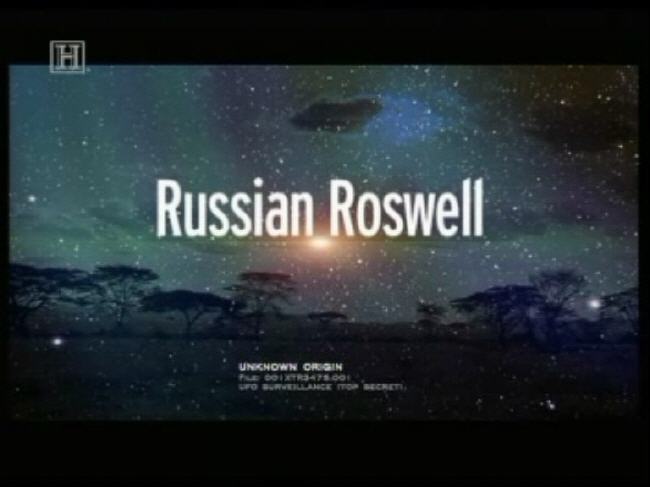
The story exploded into the public consciousness in 1998 with a TNT television special called “The Secret UFO Files of the KGB.” It featured interviews with former Soviet military personnel and showed alleged KGB footage of the crash retrieval and even a supposed alien autopsy. The footage was grainy, dramatic, and for many, it was the smoking gun.
Of course, skeptics immediately cried foul. They claimed the footage was fake, a well-produced hoax designed to cash in on the popularity of “The X-Files.” They argue the entire story is a fabrication, a modern myth blending the Roswell narrative with Cold War paranoia. The Russian government, to this day, officially denies everything. Kapustin Yar, they say, was and is just a rocket test range. Nothing more.
But the story won’t die. Why? Because it makes a terrifying kind of sense. If a UFO crashed in America, why wouldn’t one crash in the massive territory of the Soviet Union? And if it did, is there any doubt that the ruthless, secretive Soviet regime would have covered it up with an efficiency that would make the CIA blush?
Kapustin Yar Today: Russia’s Silent Secret
The base at Kapustin Yar is still active. It remains one of Russia’s most important aerospace and missile test facilities. On Google Earth, you can see the launchpads, the runways, the sprawling infrastructure. But you can’t see what’s underground.
Modern internet sleuths and researchers continue to dig. They analyze declassified documents, cross-reference old testimonies, and scan satellite photos for anomalies. The story has taken on a life of its own, a cornerstone of UFO lore that suggests the phenomenon is truly global.
In an age where the United States government is finally admitting that UAPs (Unidentified Aerial Phenomena) are real, that pilots are seeing things they can’t explain, the Kapustin Yar incident demands a second look. It’s no longer a question of “do UFOs exist?” The question now is: “Who knows what, and for how long?”
Was the Russian Roswell a hoax? A piece of Cold War propaganda? Or was it the real deal? A moment when humanity, in the heart of its most secretive empire, came face-to-face with a power beyond its comprehension.
The truth may still be buried under the cold, hard dirt of the Russian steppe, in a bunker that doesn’t officially exist, protecting a secret the world was never meant to know.