The Bermuda Triangle: Cracking the Code of the Devil’s Sea
You’ve heard the whispers. The chilling tales told by sailors in hushed tones. A patch of ocean off the southeastern coast of the United States that seems to have a hunger. A place where ships and planes don’t just crash.
They vanish.
Utterly. Without a trace. One moment they are there, slicing through the waves or soaring through the clouds. The next? Silence. Radio static. An empty expanse of water that holds its secrets tight.
They call it the Devil’s Triangle. We know it as the Bermuda Triangle. For decades, it has been the world’s most terrifying and enduring mystery. A geographical phantom haunting the lines between Bermuda, Florida, and Puerto Rico. But is it a paranormal vortex, a portal to another dimension? Or is it something far more mundane, a legend spun from coincidence and a human need for a good ghost story?
Forget what you think you know. We’re going deeper. We’re charting a course straight into the heart of the storm, armed with declassified reports, scientific theories, and the cold, hard logic of a man who solved murders for a living. Prepare to have your reality questioned.
The Birth of a Nightmare: How the Legend Began
A mystery this big doesn’t just appear. It grows. It festers. It starts with a seed of truth and gets watered with fear and exaggeration until it becomes a monster.
The story of the Triangle didn’t truly explode into the public consciousness until the 1950s and 60s. Magazine articles began connecting a series of strange disappearances in the area. But the man who poured gasoline on the fire was Charles Berlitz. His 1974 book, “The Bermuda Triangle,” became a global bestseller. It was a terrifying catalog of lost vessels and vanished aircraft, all presented as undeniable proof that something was fundamentally *wrong* with this stretch of ocean. Berlitz didn’t just report the facts; he wove a narrative of supernatural dread, hinting at everything from alien abductions to lingering technology from the lost city of Atlantis.
But the bedrock of his entire legend, the one case that gives even the most hardened skeptic a moment’s pause, was the disappearance of Flight 19.
Deep Dive: The Ghost Planes of Flight 19
December 5, 1945. The war was over. Five TBM Avenger torpedo bombers lifted off from a naval air station in Fort Lauderdale, Florida. It was a routine training exercise, designated “Flight 19.” Fourteen men, led by an experienced instructor, Lieutenant Charles Taylor, were on board. The weather was clear. The planes were in perfect working order.
They were never seen again.
What happened out there over the Atlantic is a chilling puzzle pieced together from fractured, increasingly desperate radio transmissions. About an hour and a half into the flight, the tower picked up a call from Taylor. He sounded confused. Baffled.
“Both my compasses are out and I am trying to find Fort Lauderdale, Florida,” he reported. “I am over land but it’s broken. I am sure I’m in the Keys but I don’t know how far down.”
This made no sense. His flight plan shouldn’t have taken him anywhere near the Florida Keys. The control tower tried to guide him, but Taylor seemed lost in a fog of disorientation. Other pilots in his squadron could be heard in the background, their voices laced with growing anxiety. The transmissions became more and more bizarre.
“Everything is wrong… strange… the ocean doesn’t look as it should.”
Then, talk of “white water” and a final, garbled message. As fuel ran low and darkness fell, Taylor’s last known order was for his pilots to ditch their planes together when the first one ran out of gas. Then… nothing. Just the hiss of an empty channel.
But the nightmare wasn’t over. A Martin Mariner flying boat, a massive rescue plane with a 13-man crew, was dispatched to search for the missing squadron. It, too, vanished from radar in the exact same area. A tanker ship in the vicinity later reported a massive explosion in the sky around the time the Mariner would have been there. The most likely explanation is that the plane, known grimly by its crews as a “Flying Gas Tank,” suffered a catastrophic fuel vapor explosion. A tragedy, yes, but for believers in the Triangle, it was just another victim claimed by the voracious sea.
Five bombers. One rescue plane. Twenty-seven men. Wiped off the face of the earth in a matter of hours. No wreckage. No bodies. No answers. How do you explain that?
The Usual Suspects: Unpacking the Wild Theories
When you have a void of information, human imagination rushes in to fill it. And the theories about the Bermuda Triangle are some of the most spectacular, mind-bending ideas ever conceived. They range from the scientifically plausible to the utterly fantastic.
H3: The Magnetic Mystery Machine?
Let’s start with the one that sounds the most scientific. It’s a bit of a classic. The idea is that the Bermuda Triangle is one of only two places on Earth, the other being the “Devil’s Sea” near Japan, where a magnetic compass points to “true north” instead of “magnetic north.”
What does that mean? Well, the Earth’s magnetic north pole isn’t in the same place as its geographic north pole (the spot all the lines on a globe meet). The difference between them is called magnetic variation or declination. Navigators have known about this for centuries. It’s Navigation 101. They use charts to correct for it. The theory was that the Triangle’s weird magnetic properties would confuse pilots and captains, sending them catastrophically off course into oblivion.
Sounds compelling, right? The problem is, it’s mostly bunk. While the line of zero declination (an agonic line) did pass through the Triangle region decades ago, the Earth’s magnetic field is constantly shifting. That line has moved. Furthermore, even when it was there, it wasn’t some invisible wall of confusion. It was a known variable that any competent navigator would account for. It wouldn’t make five military bombers simultaneously lose their way.

H3: Ocean Flatulence: The Methane Gas Theory
This one is a fan favorite. The theory goes that the seabed in the Bermuda Triangle is rich with massive, frozen deposits of methane gas, called methane hydrates. If a tremor or a change in temperature were to destabilize one of these deposits, it could erupt, sending a colossal bubble of methane gas rocketing to the surface.
What would this do? It would instantly and dramatically lower the density of the water. A ship sailing over this spot would lose all buoyancy. It would drop like a stone, sinking so fast that there would be no time for a distress call. The gas would then dissipate, and the evidence would vanish, leaving nothing but an empty ocean. Some even speculate a massive cloud of flammable methane could ignite from a plane’s engine, causing an instant explosion. It’s a terrifying and scientifically plausible scenario. But while these methane eruptions are a known phenomenon, there is zero direct evidence linking one to any of the famous Triangle disappearances.
H3: Aliens, Portals, and Sunken Super-Cities
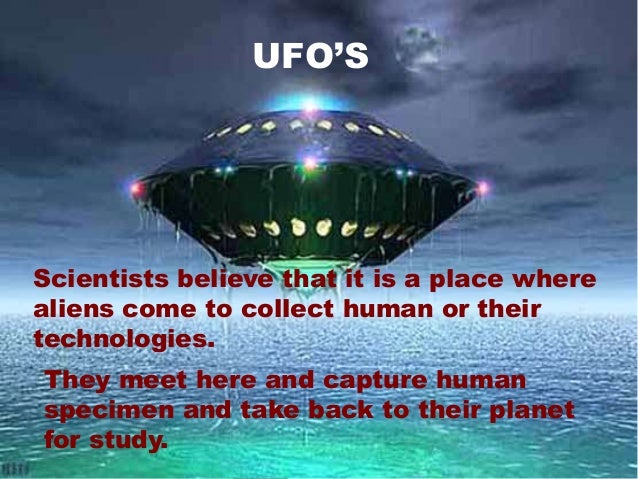
Now we get to the fun stuff. The theories that require you to throw the rulebook out the window. For decades, UFO enthusiasts have proposed that the Triangle is an alien hunting ground. A place where extraterrestrial craft dip down from the clouds to snatch up human specimens and their technology for study. Why this one spot? Maybe it’s a “thin” place in our atmosphere, an easy entry point. Maybe there’s a massive underwater alien base hidden in the deep trenches of the Atlantic.
Or what if it’s not a door for *them* to come in, but a door for *us* to fall out? The idea of a time warp or a portal to another dimension is another cornerstone of Triangle lore. Ships and planes aren’t destroyed; they’re simply… displaced. Pushed into another reality, another time. It explains the lack of wreckage perfectly.
And then there’s Atlantis. The legend, popularized by Charles Berlitz himself, suggests that the mythical lost city is located at the bottom of the ocean right in the middle of the Triangle. Its power source, a giant energy crystal, is supposedly still active. Periodically, it flares up, disrupting electronic equipment, confusing compasses, and vaporizing anything that gets too close. It’s a fantastic story that connects one great mystery with another.
Enter the Detective: The Cold, Hard Takedown
When a story gets this wild, you need someone to bring it back down to Earth. Enter Trevor Marriott. A retired British Police murder squad detective. A man who spent his career cutting through lies, finding facts, and looking for what’s real, not what’s fantastic.
Marriott decided to investigate the great myths—the Bermuda Triangle, Atlantis, the Mary Celeste—not as a believer, but as a detective working a cold case. He wasn’t interested in speculation. He wanted evidence. He spent years digging through archives, insurance records, official reports, and weather logs.
What he found was shocking, but not for the reasons you’d think.
He discovered that the legend of the Bermuda Triangle was a house of cards built on a foundation of misinformation, exaggeration, and in some cases, outright fabrication. He found that many of the ships and planes listed as “mystery” disappearances either didn’t sink in the Triangle at all, or they had perfectly logical explanations that the myth-makers simply ignored.
- Many ships listed as vanishing in “calm weather” actually sailed directly into the path of documented, ferocious hurricanes.
- Several of the “mysterious” wrecks were later found, their disappearances explained by mechanical failure or structural problems.
- Some of the stories were just… made up. Embellished for a good article.
Even the cornerstone case of Flight 19 began to look different under his scrutiny. He pointed out that Lt. Charles Taylor, the flight leader, had recently transferred to the Florida base and wasn’t familiar with the area. He also had a history of getting lost on flights. Marriott’s conclusion was that Taylor likely became disoriented, mistook the Bahama islands for the Florida Keys, and, with his compasses malfunctioning (a not-uncommon occurrence), accidentally led his men further and further out into the open Atlantic until they ran out of fuel and crashed in the heavy seas.
It was a terrible tragedy born from human error and bad luck. Not a paranormal event.
The Official Story (That Nobody Wants to Hear)
Marriott’s findings line up perfectly with the official stance of the one organization that knows these waters better than anyone: The United States Coast Guard.
For years, they have been inundated with questions about the supposed mystery. Their answer is blunt and unwavering. In an official statement, they put it plainly:
“The Coast Guard does not recognize the existence of the so-called Bermuda Triangle as a geographic area of specific hazard to ships or planes. In a review of many aircraft and vessel losses in the area over the years, there has been nothing discovered that would indicate that casualties were the result of anything other than physical causes. No extraordinary factors have ever been identified.”
They point out that this region has some of the heaviest boat and air traffic in the world. It’s also a place of extreme weather. The Gulf Stream is a powerful, turbulent “river within the sea” that can cause sudden, violent shifts in the weather. It’s also the heart of “hurricane alley.” They argue that, statistically, a large number of accidents are inevitable in such a busy and volatile area. There is no mystery to solve because there is no anomaly to begin with.
So, What’s Really Going On?
The detective says it’s a hoax. The Coast Guard says it doesn’t exist. The evidence for portals and aliens is, to put it mildly, nonexistent. So why does the legend endure? Why are we still so captivated by the idea of the Devil’s Triangle?
Because the truth is often boring. Human error. Bad weather. Mechanical failure. These are tragic, but they are understandable. They are finite. A mystery, on the other hand, is infinite. It’s a blank space where we can project our greatest fears and our most fantastic dreams.
The Bermuda Triangle is no longer just a place on a map. It’s an idea. It’s a modern myth. It represents the humbling fact that even in our age of satellites, GPS, and instant communication, the world is still a vast, powerful, and sometimes unknowable place. The ocean can still swallow us whole, and sometimes, we never find out why.
So the next time you see that patch of water on a map, ask yourself: Is it just an ordinary piece of the planet, subject to the same laws of physics as everywhere else? Or is it waiting, patiently, for its next victim?