Saturday, September 5, 2026
HomeWeird WorldStrange PlacesThe ghosts of the sunken Russian town of Mologa

The ghosts of the sunken Russian town of Mologa

Imagine waking up one morning and being told your entire life is illegal. Your house? Gone. Your church? Demolished. The graveyard where your ancestors sleep? About to be erased forever. This isn’t a dystopian movie script. This is the terrifying true story of the “Russian Atlantis.”

20140309-000628.webp

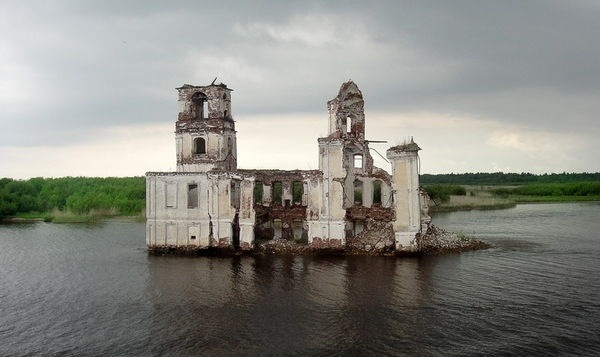
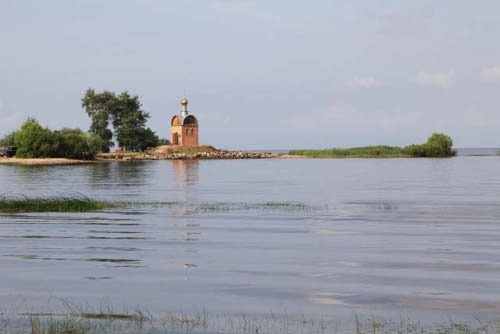
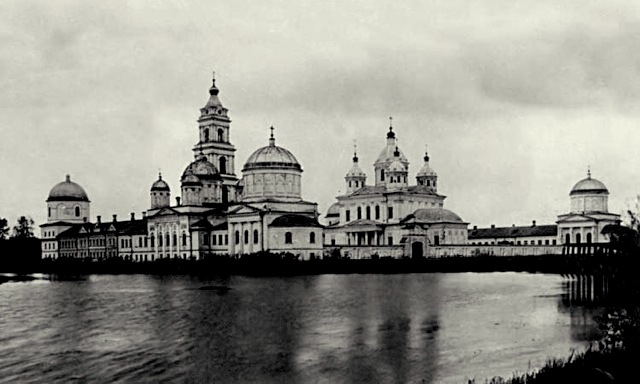
Mologa (Russian: Моло́га). The name itself sounds like a ghost story. It was a thriving town in the Yaroslavl Oblast, Russia, sitting perfectly at the confluence of the Mologa and Volga Rivers. It was beautiful. It was historic. And now? It is a corpse of a city, rotting silently under the dark, murky waters of the Rybinsk Reservoir.

But why? Why destroy a city that had stood for eight centuries? Was it just for electricity? Or was it something darker? A display of raw, unfiltered power? Let’s rip the cover off this history.

The Golden Age: Before the Water

You have to understand what was lost. Mologa wasn’t some tiny village of mud huts. It was a powerhouse. History tells us it existed since at least the 12th century. That is older than Moscow. Think about that.

In the early 1200s, it was part of the Principality of Rostov. Knights. Traders. Monks. It saw them all. Later, the Principality of Yaroslavl grabbed it. By 1321, Mologa was huge enough to become the center of its own independent principality. It had its own rulers. Its own pride.

20140309-000847.webp

But independence rarely lasts in Russian history. Ivan III, the “Gatherer of the Russian Lands,” swept in and annexed Mologa for Muscovy. The local rulers? They packed their bags. They moved to Moscow and became the Princes Prozorovsky and Shakhovskoy. They traded their river kingdom for court politics.

The Trade Hub of the East

Fast forward to the late 15th century. A massive fair was relocated from Kholopiy Gorodok to Mologa. This changed everything. Overnight, Mologa became the heartbeat of trade between Russia and Asia. Spices. Silks. Furs. Gold. It all flowed through here.

Sigismund von Herberstein, a diplomat who saw more of Russia than most Russians, wrote that Mologa even had a fortress. It was secure. It was rich.

Sennaya Square during the annual fire brigade celebration in Mologa. A fire lookout tower (on the right) was designed by Andrey Dostoyevsky, the brother of the famous writer.

Look at that image above. That is Sennaya Square. Look at the people. They had no idea that the water was coming. They had no idea their world was about to end. The fire lookout tower on the right? It was designed by Andrey Dostoyevsky. Does that name ring a bell? It should. He was the brother of Fyodor Dostoyevsky, the literary titan who wrote Crime and Punishment. The culture here ran deep.

Following the chaos of the Time of Troubles, Mologa didn’t just survive; it exploded with growth as a trade sloboda. In the 19th and early 20th centuries, it was a massive staging post. Why? Geography. It sat right at the start of the Tikhvinskaya water system. This was the superhighway of the day, connecting the mighty Volga directly to the Baltic Sea.

The Death Sentence: 1935

Then came the Soviet era. The 1930s. A time of massive industrialization. Stalin wanted to electrify the country, and he didn’t care who—or what—got in the way.

The order came down in 1935. A cold, bureaucratic piece of paper. The plan was to build the Rybinsk Reservoir and the Rybinsk hydroelectric plant. It was to be the largest man-made body of water on Earth at the time. A monument to Soviet engineering. But monuments need a foundation. And in this case, the foundation was the bones of an ancient city.

20140309-001033.webp

The Four-Meter Mistake

Here is the twist that makes this story so tragic. Mologa didn’t have to die. Originally, the engineers planned the reservoir level to be 98 meters above sea level. Mologa stood at roughly 98 meters. It would have been close, sure. Maybe some wet basements. But the city could have survived. It could have been an island. A peninsula.

But the planners wanted more power. They crunched the numbers. If they raised the water level to 102 meters—just four tiny meters higher—the capacity of the hydroelectric plant would skyrocket. Four meters. That is the height of a small two-story house. That decision sealed Mologa’s fate.

For the sake of a few more megawatts, a thousand years of history was sentenced to death.

The Great Exodus and the “Suicide Squad”

The evacuation began. But “evacuation” is too polite a word. It was an erasure. Around 130,000 people were forced to move. Not just from Mologa, but from hundreds of surrounding villages. They were scattered like dust in the wind—sent to Slip, Yaroslavl, Moscow, Leningrad.

Imagine the scene. Soldiers watching as you pack your life into a cart. Wooden houses were disassembled log by log. Stone buildings were blown up with dynamite so they wouldn’t obstruct ships later. The churches? They were stripped of their bells, which were melted down for the war effort.

But then, a dark rumor started. A rumor that turned into a legend. And finally, a terrifying historical possibility.

The 294 Martyrs

Official Soviet history says the evacuation was a success. “Great success! The people moved for the good of the Motherland!”

Lies.

Documents have surfaced—specifically a report from the NKVD (the secret police)—that tell a different story. According to these “recent internet theories” and archival digs, 294 locals refused to leave. They didn’t just refuse. They locked their doors. They chained themselves to heavy objects. They stayed in their churches.

They chose to drown.

Can you imagine the conviction? The sheer horror? As the floodwaters rose, slowly creeping up the streets, swallowing the gardens, breaking through the windows… 294 people sat in the darkness and waited for the end. They died with their city. For decades, this was a state secret. You didn’t talk about the “Mologa suicides.” You would disappear if you did. It wasn’t until 2003 that a monument was erected to honor those who refused the order. A grim acknowledgment of a horrific sacrifice.

The Ghost City Returns

The water took them in the 1940s. Mologa vanished from the maps. It was gone. The Rybinsk Sea covered everything.

But the city refuses to stay dead.

The reservoir is shallow. It’s not an ocean. And when the heat hits, or the dam levels are adjusted, Mologa tries to breathe again. In 1992 and 1993, the level of the reservoir dropped by 1.5 meters. Historians rushed to the site. It was the first expedition to the sunken world.

They found paved streets covered in silt. They found the foundations of the cathedrals. They collected rusted tools, broken icons, and the debris of a murdered civilization. This data was used to create a Mologa Museum. A museum for a city that no longer exists.

The 2014 Resurrection

Then came August 2014. A heatwave struck the region. The water level plummeted. It became extremely low. What happened next was surreal.

The entire outline of the city appeared. The foundations of houses. The cemetery. The streets were walkable. Former inhabitants—now old men and women—boarded ships and sailed to the middle of the lake. They stepped off the boats and walked on the muddy ground of their childhoods.

They found the piles of bricks where their stoves used to be. They found the twisted metal of their school fences. They knelt in the mud and wept.

It was a scene right out of a post-apocalyptic nightmare. A gathering of ghosts visiting a graveyard of buildings.

The Day of Mologa

The memory is kept alive. April 14 is now remembered in Yaroslavl Oblast as the Day of Mologa. It is a day of mourning.

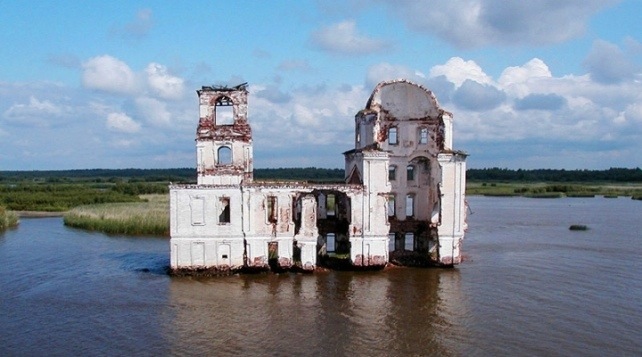
Boats loaded with monks, priests, and descendants sail out to the coordinates. They drift over the spot where the main square used to be. Sometimes, if the water is clear and the sun is right, you can see the upper parts of the cross-crowned belfries. They are still there. Reachable, yet untouchable. The priests hold a divine service on the water, chanting prayers for the drowned city and the 294 souls who stayed behind.

Every second Saturday of August, ordinary people visit the site. It’s a pilgrimage. A warning. A reminder that progress often comes with a body count.

Why Does This Story Matter?

We look at Atlantis as a myth. A fun story about gods and magic. But Mologa is the real deal. It proves how fragile our existence is.

One bureaucratic decision. One signature on a piece of paper in Moscow. And 800 years of history was washed away. The “Russian Atlantis” isn’t just a spooky place to visit on Google Earth. It is a crime scene.

The ruins are still down there. The skeletons of the houses are waiting in the dark and cold. And maybe, just maybe, the spirits of those 294 people are still guarding their homes, waiting for the water to recede one last time.

Amit Ghosh
Amit Ghoshhttps://coolinterestingnews.com
Aloha, I'm Amit Ghosh, a web entrepreneur and avid blogger. Bitten by entrepreneurial bug, I got kicked out from college and ended up being millionaire and running a digital media company named Aeron7 headquartered at Lithuania.
RELATED ARTICLES
- Advertisment -

Most Popular

Recent Comments

Warren Pan Abbott on The legend of the Devil Monkey !
chris davies on The McPherson Tape Mystery
Reed Reedly on ET has Internet!
Bea Houseoffashion on Proof Of Time Travellers – Gallery
Marcus2012 on ET has Internet!
Reed Reedly on ET has Internet!
LaughsAtConspiracyNuts on The 9/11 Conspiracy – Myths and Facts
Alex Sliverman on Did the ancients fly?
Doctor Wholigan on Time Traveler in 1938 film
chris davies on The McPherson Tape Mystery
Archie1954 on 10 secret UFO hideouts
chris davies on Ghosts of flight 401
Marcus2012 on ET has Internet!
jason Macdonald on Proof of Time Travel? – China
chris davies on Long-Lost Pyramids Found?
Reed Reedly on ET has Internet!
Milkman on Connected Universe
Tenmiles on Baigong Pipes Mystery
Simon Foster on Sirius – The Documentary
From the 1st April on 2013 – Alien Contact date ?
SkyWatcher on Is ET ignoring us?
I Come From The Future on Obama to make UFO Alien disclouser soon ?
Just another person on 2013 – Alien Contact date ?
Malcolm Windowcleaner on The strange case of Rudolph Fentz
Mason Servio on Strange Things on Mars
Marke Wisdom Seeker on What will we find as arctic melts?
Andrea A Elisabeth Levyne on Aliens Captured in Varginha, Brazil
Mitch Grouyeki on Amazing Space Shuttle pictures