Wednesday, May 6, 2026
HomeFilms & DocumentariesThe Fake Attack That Started The Vietnam War

The Fake Attack That Started The Vietnam War

Did a Lie Plunge America into the Vietnam War?

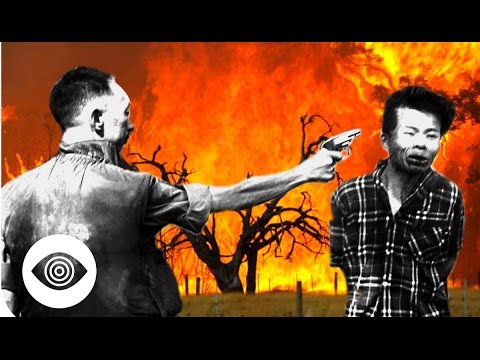
Every war starts with a story. A line in the sand. An event so shocking, so outrageous, that a nation has no choice but to respond with fire and fury. For the United States and the Vietnam War, that event was the Gulf of Tonkin incident.

The official story is simple. It’s clean. In the dark, choppy waters off the coast of North Vietnam in August 1964, American warships were twice attacked without provocation. An act of brazen aggression by a hostile communist regime. President Lyndon B. Johnson, a man who swore he didn’t want a wider war, was left with no option. Congress agreed, overwhelmingly passing the Gulf of Tonkin Resolution, a document that would become the legal bedrock for a decade of bloodshed that would claim over 58,000 American lives and millions of Vietnamese lives.

But what if that story was a lie?

What if the second attack, the one that truly tipped the scales, never even happened? What if it was a ghost story, a phantom battle born from stormy weather, jittery sonar operators, and a desperate desire in Washington for an excuse to go to war? This isn’t some wild internet theory. This is a possibility supported by declassified documents, on-the-record testimony from the very men who were there, and even a secret internal report from the National Security Agency itself.

So buckle up. We’re going deep into the fog of war, where truth and lies blur, and where a single “incident” changed the course of modern history forever.

The Spark in the Dark: What Officially Happened on August 2nd

To understand the lie, you first have to understand the grain of truth it was built on. Because something absolutely did happen on August 2nd, 1964. It was real. It involved bullets and torpedoes.

The USS Maddox, an American destroyer, was steaming through international waters in the Gulf of Tonkin. Or so the story goes. In reality, it was on what was called a DESOTO patrol, an electronic espionage mission. Its job was to hoover up North Vietnamese communications and radar signals, essentially mapping out their coastal defenses. But it was doing more than just listening.

Just before the Maddox arrived, a series of covert CIA-backed raids, known as OPLAN 34A, had been hitting the North Vietnamese coast. South Vietnamese commandos, trained and equipped by the U.S., were attacking radar stations and naval bases. So, when the North Vietnamese saw a massive American warship bristling with antennas creeping along their shoreline right after these raids, they weren’t exactly in a welcoming mood. They saw a co-conspirator. An accomplice.

They weren’t wrong.

Three North Vietnamese P-4 torpedo boats roared out to meet the Maddox. They launched torpedoes. They fired machine guns. The Maddox, a much larger and more powerful ship, fired back with its massive five-inch guns. U.S. fighter jets scrambled from a nearby aircraft carrier and strafed the tiny North Vietnamese boats, sinking one and heavily damaging the others. The fight was over in minutes. The Maddox was virtually unscathed, with only a single bullet hole to show for the encounter.

In Washington, the response was a mix of outrage and opportunity. An American ship had been fired upon! But LBJ played it cool, issuing a stern warning but ordering no immediate retaliation. He sent a second destroyer, the USS Turner Joy, to join the Maddox. The message was clear: we’re not backing down. The two ships resumed their patrol, pushing even closer to the North Vietnamese coast.

The stage was set for Act Two.

August 4th: The Phantom Battle in a Thunderstorm

Two nights later, the world changed. The Maddox and the Turner Joy were back in the Gulf. The weather was terrible. A storm was rolling in, churning the sea and lighting up the sky. The mood on both ships was tense. The crews were on edge, expecting another attack at any moment.

And then, it began.

Sonar operators reported high-speed torpedoes in the water. Radar screens lit up with blips of small, fast-moving vessels. For the next four hours, the two American destroyers went ballistic. They twisted and turned in the violent sea, firing hundreds of shells at targets that were, to the naked eye, completely invisible. They were fighting shadows.

Pilots flying overhead were baffled. Commander James Stockdale, who would later become a famous POW and Ross Perot’s running mate, had the best view in the house. He circled above the chaos for hours. His report was chillingly simple. “I had the best seat in the house to watch that event,” he later stated, “and our destroyers were just shooting at phantom targets… There were no boats there… There was nothing there but black water and American firepower.”

Voices of Doubt from the Deck

Stockdale wasn’t the only one. On the deck of the Maddox, doubt was spreading like a virus. The ship’s own sonar had a nasty habit of picking up its own rudder movements in rough seas, creating “ghost” torpedo signatures. The radar operators were tracking storm clouds and waves as potential enemy boats.

The on-scene commander, Captain John Herrick, became increasingly skeptical as the “battle” wore on. After the initial frantic reports, he sent a flash message back to the Pentagon urging caution. His message was a bombshell of doubt: “Review of action makes many reported contacts and torpedoes fired appear doubtful. Freak weather effects on radar and overeager sonarmen may have accounted for many reports. No actual visual sightings by Maddox. Suggest complete evaluation before any further action taken.”

Think about that. The man in charge of the ships, in the middle of the “attack,” was telling his superiors to pump the brakes, that the whole thing might be a mistake. A ghost in the machine.

But his message of caution was too late. The story was already rocketing around Washington, and it was a story the powerful wanted to hear.

A Rush to War: The White House Response

In the White House, the initial reports of a second, much larger attack were treated as gospel. It was the “unprovoked” aggression President Johnson needed. It was 1964, an election year, and LBJ was being painted as soft on communism by his opponent, Barry Goldwater. He needed to look tough. Decisive.

Even as Captain Herrick’s follow-up message of doubt came in, the gears of war were already grinding. Secretary of Defense Robert McNamara, a man famous for his supreme confidence, allegedly brushed aside the concerns. He had the initial reports he wanted, the ones that confirmed an attack. He didn’t want contradictory information. He later admitted in the documentary “The Fog of War” that he and others had “misled the American people.” But at that moment, they had a narrative to sell.

Before the sun had even risen over the Gulf of Tonkin, before a “complete evaluation” could ever be made, LBJ went on national television. With a grim and serious face, he told the American people and the world that U.S. ships had been attacked again and that retaliatory airstrikes were already underway.

The lie was now official.

A Blank Check for War: The Gulf of Tonkin Resolution

Armed with this dramatic, and false, story of a second attack, the Johnson administration went to Congress. They didn’t ask for a declaration of war. They asked for something far more flexible and, ultimately, more dangerous.

They asked for the Gulf of Tonkin Resolution.

This document gave the President the power to take “all necessary measures to repel any armed attack against the forces of the United States and to prevent further aggression.” All necessary measures. It was a blank check. It was the legal green light to escalate a small-scale conflict into a full-blown war, all without ever having to go back to Congress for official approval.

And Congress, swept up in the patriotic fervor and trusting the word of the President, passed it almost unanimously. The House voted 416-0. The Senate voted 88-2. Only two senators, Wayne Morse of Oregon and Ernest Gruening of Alaska, had the courage to vote no, warning that their colleagues would live to regret giving one man so much power.

They were right. The resolution, based on a phantom battle, became the foundation for the entire American war in Vietnam. It was used to justify sending hundreds of thousands of troops, dropping millions of tons of bombs, and continuing the war for nearly a decade.

Declassified! The NSA’s Secret History

For decades, the idea that the August 4th attack was faked was considered a conspiracy theory. But then, in 2005, the truth was finally declassified. The National Security Agency, the nation’s top-secret electronic spying agency, released its own internal, classified history of the event. And it was explosive.

The report, written by NSA historian Robert J. Hanyok in 2001, confirmed what the skeptics had been saying all along. Hanyok’s conclusion was stark and unambiguous: there was no second attack.

He found that NSA officials had deliberately twisted and distorted intelligence reports to make it look like an attack had occurred. Key North Vietnamese communications were mistranslated. Timelines were altered. Contradictory evidence was ignored or buried. Hanyok found that 90% of the relevant signals intelligence (SIGINT) was discounted in favor of the 10% that seemed to support the attack narrative. It was a classic case of telling the bosses what they wanted to hear.

This wasn’t a mistake. According to the NSA’s own historian, it was a deliberate deception. The very agency tasked with providing the unvarnished truth had instead provided a lie, a lie that gave the President the pretext he was looking for.

A Legacy of Deception

The Gulf of Tonkin incident wasn’t just the starting gun for the Vietnam War. It was the moment the trust between the American people and their government was fundamentally broken. The “credibility gap,” a term that would define the 1960s and 70s, was born in those dark, stormy waters.

When the truth eventually began to trickle out, thanks to whistleblowers like Daniel Ellsberg and the release of the Pentagon Papers, it poisoned the well of public trust for generations. It taught an entire generation to question official stories, to look for the hidden motive, and to be wary of any rush to war based on secret intelligence.

The echoes of Tonkin are everywhere. They were heard in the justifications for the Iraq War, in debates over government surveillance, and in the deep cynicism that many people feel toward their leaders today.

The story of the Gulf of Tonkin is more than just a history lesson. It’s a warning. It’s a chilling reminder of how easily a nation can be led into a catastrophic war based on distorted facts and a compelling story. It proves that the first casualty of war isn’t just the truth; sometimes, the death of the truth is what starts the war in the first place.

Arindam Mukherjee
Arindam Mukherjee
Arindam loves aliens, mysteries and pursing his interest in the area of hacking as a technical writer at 'Planet wank'. You can catch him at his social profiles anytime.
RELATED ARTICLES

20 COMMENTS

- Advertisment -

Most Popular

Recent Comments

Warren Pan Abbott on The legend of the Devil Monkey !
chris davies on The McPherson Tape Mystery
Reed Reedly on ET has Internet!
Bea Houseoffashion on Proof Of Time Travellers – Gallery
Marcus2012 on ET has Internet!
Reed Reedly on ET has Internet!
LaughsAtConspiracyNuts on The 9/11 Conspiracy – Myths and Facts
Alex Sliverman on Did the ancients fly?
Doctor Wholigan on Time Traveler in 1938 film
chris davies on The McPherson Tape Mystery
Archie1954 on 10 secret UFO hideouts
chris davies on Ghosts of flight 401
Marcus2012 on ET has Internet!
jason Macdonald on Proof of Time Travel? – China
chris davies on Long-Lost Pyramids Found?
Reed Reedly on ET has Internet!
Milkman on Connected Universe
Tenmiles on Baigong Pipes Mystery
Simon Foster on Sirius – The Documentary
From the 1st April on 2013 – Alien Contact date ?
SkyWatcher on Is ET ignoring us?
I Come From The Future on Obama to make UFO Alien disclouser soon ?
ÛñK?øWn on 2013 – Alien Contact date ?
Just another person on 2013 – Alien Contact date ?
Malcolm Windowcleaner on The strange case of Rudolph Fentz
Mason Servio on Strange Things on Mars
Marke Wisdom Seeker on What will we find as arctic melts?
Andrea A Elisabeth Levyne on Aliens Captured in Varginha, Brazil
Mitch Grouyeki on Amazing Space Shuttle pictures