The 27 Club Curse: A Cosmic Coincidence or a Sinister Conspiracy?
It’s a whisper in the dark alleys of rock and roll history. A number. A curse. A club you can only join in death.
27.
They burn so brightly. A supernova of talent, charisma, and rebellion. They change the world, write the anthems for a generation, and then… they’re gone. Snuffed out. Always at the impossibly young, impossibly specific age of 27. Is it just a tragic coincidence? A statistical fluke amplified by our love for a good story? Or is it something more? A grim pattern etched into the fabric of fame, a Faustian bargain coming due, or a trap laid by forces we can’t even begin to comprehend?
The term “27 Club” is now embedded in our cultural lexicon. It refers to the shocking, almost unbelievable list of iconic musicians and artists who died at that precise age. The causes vary—drug abuse, suicide, mysterious accidents, even murder—but the number remains the same. A constant. A chilling memorial to genius extinguished far too soon. Forget the dry academic studies that try to wave it away. For those who feel the music, for those who see the pattern, the 27 Club is terrifyingly real.
The Founding Four: Genesis of a Modern Legend
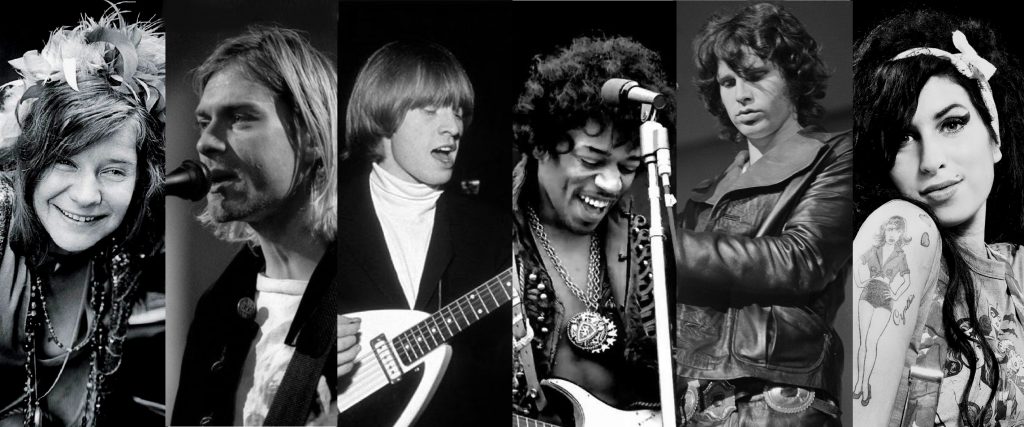
The legend didn’t form overnight. It seeped into consciousness over a brutal, two-year period between 1969 and 1971. In the span of just 24 months, the world lost four of its most revolutionary musical voices. Four architects of the counter-culture. All of them, 27 years old. It was the Big Bang of the curse.
Brian Jones: The Drowning Stone
It started in a swimming pool. Brian Jones, the brilliant, multi-instrumentalist founder of The Rolling Stones, was the first domino to fall. By 1969, Jones was a shadow of his former self. Ousted from the very band he created, his life was a spiral of paranoia and substance abuse. On the night of July 3rd, 1969, he was found motionless at the bottom of his swimming pool at Cotchford Farm.
The official verdict? “Death by misadventure.” An accident. But the whispers started immediately. Was he too high to swim? Or was he held under the water? Theories have swirled for decades, implicating everyone from a disgruntled contractor to shadowy figures tied to the band. His death was a tragedy, a cautionary tale about the excesses of rock and roll. But it was also a beginning. The first entry in a ledger no one knew was being written.
Jimi Hendrix: The Voodoo Child’s Last Sunset
Just over a year later, the world lost its greatest guitarist. Jimi Hendrix wasn’t just a musician; he was a force of nature. He played the guitar with his teeth, set it on fire, and bent its notes into sounds no one had ever heard before. He was an icon of peace and psychedelic power.
On September 18th, 1970, he died in a London hotel room. The story goes that he asphyxiated on his own vomit after taking a combination of sleeping pills and red wine. A tragic, almost mundane end for such an electric man. But again, the official story felt… incomplete. Questions lingered. Why were there so many pills in his system? Why did his girlfriend’s story keep changing? Some theories, fueled by former roadies and associates, suggest he was murdered, waterboarded with wine by intelligence agents who saw his anti-war influence as a threat. Coincidence? Or was the pattern taking shape?
Janis Joplin: Pearl’s Final Song
The hits kept coming. The universe wasn’t done. A mere 16 days after Hendrix’s death, the raw, blues-drenched voice of Janis Joplin was silenced forever. On October 4th, 1970, she was found dead in her Hollywood hotel room from a heroin overdose. She was at the peak of her powers, working on her masterpiece album, Pearl. Her death was a gut punch to a generation still reeling from the loss of Jimi.
Suddenly, people started connecting the dots. Brian. Jimi. Janis. All gone. All pioneers. All 27. It was no longer a series of isolated tragedies. It was a sequence. A terrifying trio that left the music world asking, “Who’s next?”
Jim Morrison: The Lizard King’s Parisian Riddle
The answer came less than a year later. Jim Morrison, the shamanistic poet frontman of The Doors, had moved to Paris to escape the circus of his fame. He wanted to be a writer, a poet. But his demons followed him. On July 3rd, 1971—exactly two years to the day after Brian Jones died—Morrison was found dead in a bathtub.
The official cause was “heart failure.” But there was no autopsy. The French authorities saw no signs of foul play. The story is a mess of contradictions. Did he die in the tub? Or did he overdose in a nightclub toilet, his body later moved by dealers to avoid a scandal? Some even believe he faked his own death to escape into anonymity. The lack of a definitive answer turned his death into a permanent mystery, and in doing so, it cemented the curse. The fourth cornerstone of the 27 Club was laid.
The Grunge Explosion and a Mother’s Prophecy
For a while, the “club” was a piece of rock trivia, a dark footnote. Then came the 90s. Then came grunge. Then came Kurt Cobain.

Kurt Cobain: Reluctant King of the “Stupid Club”
When Kurt Cobain, the voice of a generation and frontman of Nirvana, died by suicide on April 5th, 1994, the world stopped. He was the biggest rock star on the planet, and his death at the age of 27 was a cataclysm. It wasn’t just his age that reignited the legend; it was his own mother’s heartbreaking words.
In an interview, Wendy O’Connor lamented, “Now he’s gone and joined that stupid club. I told him not to join that stupid club.”
That quote was fire on gasoline. The media ran with it. “That stupid club” could only mean one thing: the 27 Club. Jones, Hendrix, Joplin, Morrison. And now, Cobain. He became the fifth, and perhaps most tragic, member. His death transformed the 27 Club from a piece of music lore into a full-blown cultural phenomenon. Conspiracy theorists still argue he intentionally timed his death, a grimly artistic final statement. Others point to his family’s history of suicide, suggesting his mother’s comment was about a different, more personal “club.” But it doesn’t matter. The idea was now welded to his legacy, and the curse felt more real than ever.
A Modern Revival: The Curse in the 21st Century
The internet age brought new eyes to the mystery, and in 2011, the club got its most high-profile member in almost two decades. A member who seemed to know what was coming.
Amy Winehouse: A Prophecy Fulfilled
Amy Winehouse was a talent from another era. Her voice was a timeless blend of soul, jazz, and heartbreak. But her struggles with addiction and the relentless glare of the tabloid media were painfully public. The world watched her slow-motion implosion.
Years before her death, she had reportedly expressed a fear of dying at 27. It was a chilling premonition. On July 23rd, 2011, she was found dead in her London home. The cause? Alcohol poisoning. She was 27 years old.
Winehouse’s death was a global media event, and the 27 Club was at the heart of the narrative. It wasn’t just a coincidence anymore; it felt like a prophecy. She was the first superstar of the internet age to join the ranks, and her death cemented the legend for a new generation, proving the curse wasn’t just a relic of the classic rock era.
Beyond the Icons: The Club’s Shadowy Roster
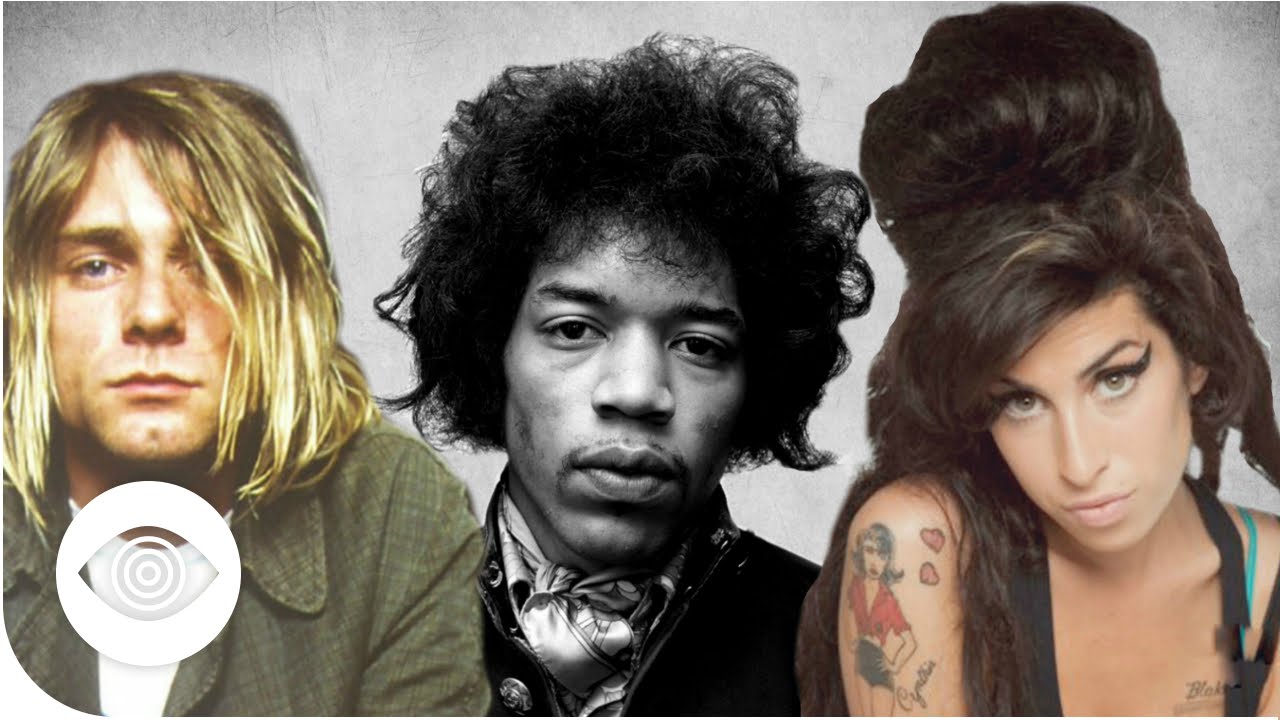
While the “big six” get all the headlines, the list of musicians and artists who died at 27 is staggeringly long. Looking at the full roster makes the idea of a simple coincidence feel… weak.

- Robert Johnson (d. 1938): Many consider this legendary bluesman the club’s founding member. The myth says he sold his soul to the devil at a crossroads in exchange for his guitar skills. He died under mysterious circumstances, allegedly poisoned by a jealous husband.
- Ron “Pigpen” McKernan (d. 1973): The soulful organist and original frontman of the Grateful Dead, he died of a gastrointestinal hemorrhage after years of heavy drinking.
- Jean-Michel Basquiat (d. 1988): The curse isn’t limited to musicians. This groundbreaking neo-expressionist artist, a friend of Andy Warhol, died of a heroin overdose, cutting short a meteoric career.
- Richey Edwards (d. 1995): The brilliant, troubled lyricist for the Manic Street Preachers adds a different kind of mystery. He didn’t die; he vanished. His car was found near a known suicide spot, but his body was never recovered. He was legally declared presumed dead in 2008. He was 27 when he disappeared.
The list goes on, a haunting litany of lost talent from every genre and era. Each name adds another layer of credibility to the chilling pattern.
The Skeptic’s Corner: Debunking the Curse
Of course, not everyone buys into the myth. Scientists and statisticians are quick to pour cold water on the supernatural flames. In 2011, the British Medical Journal published a study that made headlines. Researchers analyzed the deaths of over 1,500 famous musicians. Their conclusion?
There is no statistical spike in deaths at age 27.
A Trick of the Mind?
The study found that musicians do have a higher mortality rate in their 20s and 30s than the general population, but the age of 27 is not special. The “curse,” they argue, is a classic case of confirmation bias. We remember the famous few who died at 27 and ignore the hundreds who died at 24, 28, or 32. Because the story of the “27 Club” is so compelling, our brains actively look for evidence to support it.
The data might be on their side. But does it explain the feeling? The sheer concentration of iconic, genre-defining artists on that one list? For believers, a dry academic paper can’t explain away the eerie chill of the coincidence.
The Real Curse: The Perils of Fame
Perhaps the real curse isn’t a number, but the lifestyle itself. Think about it. Young artists are shot into a world of immense pressure, unlimited money, and constant access to drugs and alcohol. They are often sensitive, emotionally raw people who use their art to cope. Fame is a blowtorch that can melt even the strongest resolve. The late 20s are a notoriously difficult period for many people—a time of questioning and crisis. Add the volatile cocktail of rock stardom to that mix, and you have a recipe for self-destruction. The “27 Club” might just be the most visible symptom of a much larger disease.
What If? The Rabbit Hole of Conspiracy
But what if the simple explanations are just a cover story? What if there’s something far stranger at play? This is where the story gets really interesting.
The Saturn Return and Cosmic Timelines
Astrologers point to a powerful cosmic event: the Saturn Return. It’s the time, between the ages of 27 and 30, when the planet Saturn returns to the same position in the sky that it occupied at the moment of a person’s birth. It’s considered a time of massive upheaval, karmic reckoning, and forced maturation. A “grow up or get out” moment from the universe. Is it possible that these hyper-sensitive, brilliant souls are simply unable to withstand this intense cosmic pressure?
A Deal with the Devil?
The legend of Robert Johnson selling his soul at the crossroads is the blueprint. Could the 27 Club be a modern continuation of this Faustian bargain? A group of artists who, knowingly or not, made a pact for unparalleled talent and fame, with the price being their life at the peak of their creative power? It’s a wild theory, but one that speaks to the almost supernatural talent these individuals possessed.
A Legacy Forged in Tragedy
So, what is the 27 Club? Is it a curse? A conspiracy? A statistical illusion? Or a self-fulfilling prophecy, where troubled artists see the club as a grimly romanticized exit plan?
Maybe the truth is that it’s all of these things. And none of them.
The “curse” might not be real in a supernatural sense, but its power as a modern myth is undeniable. It’s a story we tell ourselves about genius, tragedy, and the brutal cost of fame. It ensures that these artists are not just remembered for their music, but are frozen in time as eternally young, eternally rebellious martyrs. Whether it’s a pattern woven by the cosmos or just by our own storytelling, the legend of the 27 Club guarantees that these brilliant flames, extinguished far too soon, will never, ever be forgotten.