History is full of masterminds. Geniuses. People who pull off the impossible crime and vanish into the night. D.B. Cooper jumping out of a Boeing 727 with $200,000 and disappearing forever? That’s the gold standard. That is the legend everyone chases.
And then, there is the other side of the coin.
The dark, chaotic, and frankly bizarre side. Enter Philippine Airlines Flight 812. This wasn’t a smooth operation. This wasn’t a Hollywood script. This was grit, desperation, and one of the most confusing aviation mysteries to ever unfold in the skies over Southeast Asia. May 25, 2000. A date that 278 passengers will never, ever forget.
We need to talk about Reginald Chua. We need to talk about a man who brought swimming goggles to a hijacking.
The Flight That Should Have Been Routine
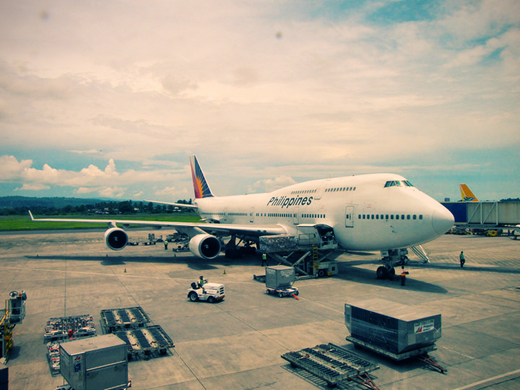
Let’s set the stage. It’s the turn of the millennium. Pre-9/11. Airport security was… different. Looser. The world felt safer, or maybe just more naive. Flight 812 was a massive Airbus A330-301, a beast of a machine, scheduled for a quick hop from Francisco Bangoy International Airport in Davao City to Ninoy Aquino International Airport in Manila. A standard domestic run.
On board? A mix of tourists, business travelers, and families. 291 souls in total. The mood? Relaxed. The engines roared to life, the plane climbed into the tropical sky, and for a while, everything was perfect. Drinks were served. People were napping. The hum of the jet engines was a lullaby.
But sitting among them was a man with a ticket under the name “Augusto Lakandula.” He wasn’t there for the peanuts. He was sweating. He was waiting. And in his bag, he carried a kit that would baffle investigators for decades.
“This is a Hijack!”
We’ve all seen the movies. The terrorist stands up, screams, waves a machine gun. But real life is often stranger. Just as the Airbus A330 began its initial descent towards Manila, chaos erupted near the cockpit.
The man we now know as Reginald Chua made his move. He didn’t storm the cockpit with military precision. He burst forward, brandishing a gun and what appeared to be a hand grenade. He fired a shot. BAM. Into the bulkhead. This wasn’t a drill. The smell of gunpowder filled the front cabin. Panic? Instant.
Screams. Crying children. The flight attendants froze.
Chua was agitated. Crying, yelling, erratic. This wasn’t a cold-blooded operative. This was a man at the end of his rope. He claimed he had accomplices. He claimed the plane would blow up if the pilots didn’t listen. The cockpit crew, locked behind their door, had to make a choice. Do they open? Do they risk everyone? They communicated through the interphone. The pilots kept their cool. They had to.
The Bizarre Demands of a Desperate Man
This is where the story takes a sharp left turn into the surreal. Usually, hijackers want one of three things: political prisoner releases, a flight to Cuba (or Libya), or millions of dollars in cash delivered on the tarmac.
Chua? He wanted the passengers’ wallets.
It sounds insane. You hijack a multimillion-dollar aircraft to rob the passengers? But that’s exactly what happened. He ordered the flight attendants to collect valuables. Watches. Cash. Jewelry. “Put it in the bag!” he screamed. Passengers, terrified for their lives, stripped off wedding rings and emptied their pockets. It was a harvest of desperation.
But why? Why rob a plane mid-air? You have nowhere to go. You can’t spend that money in the air. Unless you plan on leaving early.
The “Cooper” Fantasy vs. Reality
Reginald Chua had a plan. Or at least, he had a vision. He was going to pull a D.B. Cooper. He was going to jump. But D.B. Cooper was an experienced paratrooper (probably) with military-grade gear. Chua had… a tent.
Yes. You read that correctly.
This deep dive into the forensic evidence reveals something tragic and laughable. Chua had crafted a homemade parachute. He didn’t buy a rig. He didn’t steal one from a skydiving school. He seemingly stitched one together using tent nylon. It was a Frankenstein’s monster of a survival device.
And the “rip cord”? There wasn’t one. When he realized his homemade contraption lacked a way to actually open, he frantically grabbed a sash from one of the aircraft curtains. He tied it to the pack. This was his lifeline. A piece of fabric meant to block out sunlight was now the only thing standing between him and terminal velocity.
The Gear Check from Hell
Let’s look at his outfit. If you are jumping from a jetliner at altitude, it is cold. Freezing. The wind blast is like getting hit by a truck. You need oxygen. You need thermal protection. You need goggles.
Chua had a ski mask. Okay, that makes sense. But he also brought swimming goggles. Not skydiving goggles. Swimming goggles. The kind you use to do laps in a pool. He strapped them on. He looked like a nightmare from a bad comic book. A gun in one hand, a bag of stolen jewelry in the other, wearing a ski mask and swim goggles, with a curtain sash tied to a tent on his back.
He was ready. Or so he thought.
The Moment of Truth: 6,000 Feet
He commanded the pilot to descend. “Go down! Depressurize!”
The pilots, realizing they had to get this guy off the plane to save the passengers, complied. They dropped the altitude. The Airbus slowed down. They were over Antipolo, Rizal. The terrain below? Rugged. Jungle. Mud.
The rear door was the target. Depressurizing a plane is violent. The air rushes out. Ears pop. The temperature drops. The cabin becomes a wind tunnel. Chua stood at the rear door, the wind howling outside like a banshee. 1,800 meters up. That’s roughly 6,000 feet. Survivable? Yes, with a real parachute.
But then, psychology kicked in. Fear. Primal fear.
Imagine standing at the edge of an open aircraft door. The ground is a blur of green and brown. The noise is deafening. You are holding a bag of stolen watches. And you realize your parachute is made of garbage.
Chua froze.
The Push Heard ‘Round the World
He couldn’t do it. He clung to the door frame. His knuckles white. The plan fell apart in seconds. He was blocking the door, the wind whipping his homemade rig around him. He was a danger to the aircraft. If he got sucked into the tail? Disaster. If he fired the gun again? Disaster.
The accounts here get intense. Reports state that a flight attendant—pushed to the brink of adrenaline—made the decision for him. “Go!”
A shove. A struggle. Gravity won.
Reginald Chua was ejected from the Airbus A330. He tumbled into the slipstream. The plane, lighter by one hijacker, immediately closed the door and banked away, heading for the safety of Manila. The passengers gasped. It was over. But for Chua, the nightmare was just beginning.
The Mystery of “Augusto Lakandula”
While the plane landed safely and 278 people hugged their families, the manhunt began. Who was this guy? The ticket said “Augusto Lakandula.”
Filipino history buffs paused at that name. Lakandula was a pre-colonial ruler of Tondo. A king. It was a pseudonym, clearly. A statement. “I am a king taking back what is mine.” It hinted at a delusion of grandeur. This wasn’t just a robbery; it was a performance.
Police scoured the ticket records. They interviewed the crew. The pilot, Captain Butchy Soriano, was skeptical from minute one. “He won’t make it,” he reportedly told officials. The physics didn’t add up. The speed of the plane, even slowed down, was too high for a homemade chute. The wind shear alone could tear a human apart, or at least knock them unconscious.
The Search in the Jungle
For three days, the Philippines held its breath. Where was he? Did he make it? Was he sipping mojitos on a beach with a bag full of Rolexes?
Rumors flew. Internet forums (in their infancy back then) buzzed. Maybe he had a getaway driver waiting below. Maybe the homemade chute actually worked. It was the D.B. Cooper mystery all over again, but in the tropics.
Soldiers and police combed the area of Real, Quezon. It’s rough country. Dense vegetation. Hills. Mud. Lots of mud.
Then, on the third day, they found him.
A Grimy End to a Grand Plan
He wasn’t sipping cocktails. He wasn’t spending the money.
Reginald Chua was found in the village of Llabac, near the border of Laguna province. The visuals were grim. His body was nearly consumed by the earth itself—buried in mud. His “parachute”? It had failed spectacularly. It didn’t deploy. It wrapped around him, a shroud of nylon and curtain sash.
But here is the twist that keeps mystery enthusiasts awake at night: The autopsy and the scene analysis suggested something terrifying.
Some reports indicate he didn’t die from the impact immediately. The jungle floor is soft; the trees break the fall. He might have survived the plunge, broken and battered, only to be swallowed by the environment. The mud in that region is like quicksand after heavy rains. Was he alive? Did he struggle? Or did the impact simply drive him into the ground like a nail?
The officials found the bag. The jewelry. The cash. It was all there. He died for nothing. The swimming goggles were still with him. A tragic, ridiculous talisman.
Who Was Reginald Chua?
Once the fingerprints were run and the driver’s license in his pocket was found, the legend of “Lakandula” evaporated. He was Reginald Chua.
Why did he do it? The backstory is a classic tragedy of financial ruin. Chua had been a family man. He had dreams. But the years leading up to 2000 were hard on the Asian economy. He had financial troubles. Massive debt. He felt cornered.
Investigators pieced together a portrait of a man who had snapped. He wasn’t a terrorist with a political agenda. He was a guy who needed cash fast and concocted a plan that defied the laws of physics and common sense. He thought he could cheat the system. He thought he could cheat gravity.
The Legacy of Flight 812
This incident changed things. Philippine Airlines tightened security. The world looked at the “homemade parachute” concept and realized that desperation breeds ingenuity, even if that ingenuity is fatal.
We look back at D.B. Cooper with a sense of awe because he got away. We look back at Reginald Chua with a mix of pity and horror. He is the “failed” Cooper. The man who tried to reach for the stars (or at least the ground) and missed.
But consider the terror of those passengers. For an hour, they were held hostage by a man in swimming goggles. It sounds funny now, decades later, but in that metal tube at 30,000 feet, it was a life-or-death situation. The gun was real. The grenade (though later debated if live or dummy) looked real enough to kill.
The “What If” Scenario
Let’s play the game. What if the chute had opened? What if he drifted down safely?
He landed in the middle of nowhere. With a bag of stolen goods. He would have had to trek miles out of the jungle, covered in mud, carrying loot. The police were already closing in on the flight path. He likely would have been caught within 24 hours anyway. The plan was doomed from the start. There was no getaway car. There was no exit strategy beyond “jump.”
Conclusion? No, Just Reality.
We don’t need a formal conclusion here. The image of a man buried in mud with a curtain sash tied to his back speaks for itself. It is a brutal reminder of how far desperation can push a human being.
Reginald Chua boarded Flight 812 as a nobody. He died as a cautionary tale. A story told in flight schools and security briefings. A story whispered about in the dark corners of the internet where people discuss the weirdest deaths in history.
So the next time you board a plane and buckle up, take a look around. The person next to you might just have a story. Hopefully, they don’t have a homemade parachute.