Tuesday, August 11, 2026
HomeUnexplained MysteriesModern MysteriesThe Coso Artifact. - Strange Relic

The Coso Artifact. – Strange Relic

The 500,000-Year-Old Spark Plug? Cracking Open the Coso Artifact Mystery

Some things just don’t belong. A fish in a tree. A phone charger in a Roman ruin. A sophisticated mechanical device entombed inside a rock that geologists claim is half a million years old. That last one isn’t a joke. It’s the story of an object that has haunted the fringes of science and history for over 60 years. An object that defies easy explanation. An object that, to this day, has vanished without a trace.

They call it the Coso Artifact.

And it might just rewrite everything you think you know about the past.

Picture this. It’s 1961. The sun beats down on the desolate, rocky landscape of the Coso Mountains in California. Three rockhounds—Mike Mikesell, Wallace Lane, and Virginia Maxey—are out searching for geodes, those hollow rocks lined with sparkling crystals. It’s a hobby. A fun day out. They run a small gift shop and are always looking for new treasures to sell.

On this particular day, they find something. A strange, lumpy rock, caked in hardened clay. It didn’t look like a typical geode, but it was interesting. So they bagged it. Later, back at their workshop, Mikesell prepared to cut it open, expecting to find a glittering cavity of quartz crystals. He fired up his diamond-bladed rock saw.

And the blade broke.

Whatever was inside this rock wasn’t crystal. It was something impossibly hard. After ruining a brand new blade, Mikesell finally managed to slice the rock in half. And what he saw inside made no sense at all.

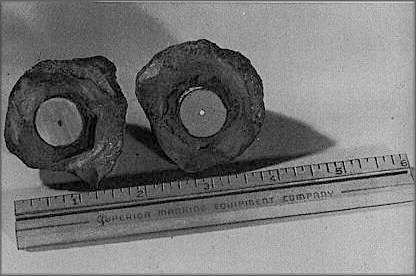
There, perfectly centered in the stone, was not a collection of natural crystals, but a man-made object. A ghost in the geology. A machine in the stone.

A Machine in the Stone: What Exactly Did They Find?

Let’s break down what they were staring at, because the details are what make this story so mind-bending. This wasn’t just a random piece of metal. It was complex. It was manufactured.

Staring back at them from the rock’s freshly cut surface was a cross-section of a perfectly circular object. At its core was a tiny metal shaft, only about 2 millimeters thick, made of a bright, shiny metal. Surrounding this metal pin was a perfectly cylindrical sleeve made of what appeared to be white, industrial-grade porcelain or ceramic. A material you’d expect to find in a lab, not a rock.

But it gets weirder.

Encasing the porcelain cylinder was a hexagonal sleeve of some unknown, dark material, which some early reports suggested might be decomposing copper, while others hinted at something organic, like wood. And surrounding that hexagon were rings of copper, which, astoundingly, showed no signs of the corrosion or oxidation you’d expect from something buried for… well, any length of time. And finally, the whole assembly was embedded in the rock, which itself was filled with fossilized shells and debris.

unexplained relic

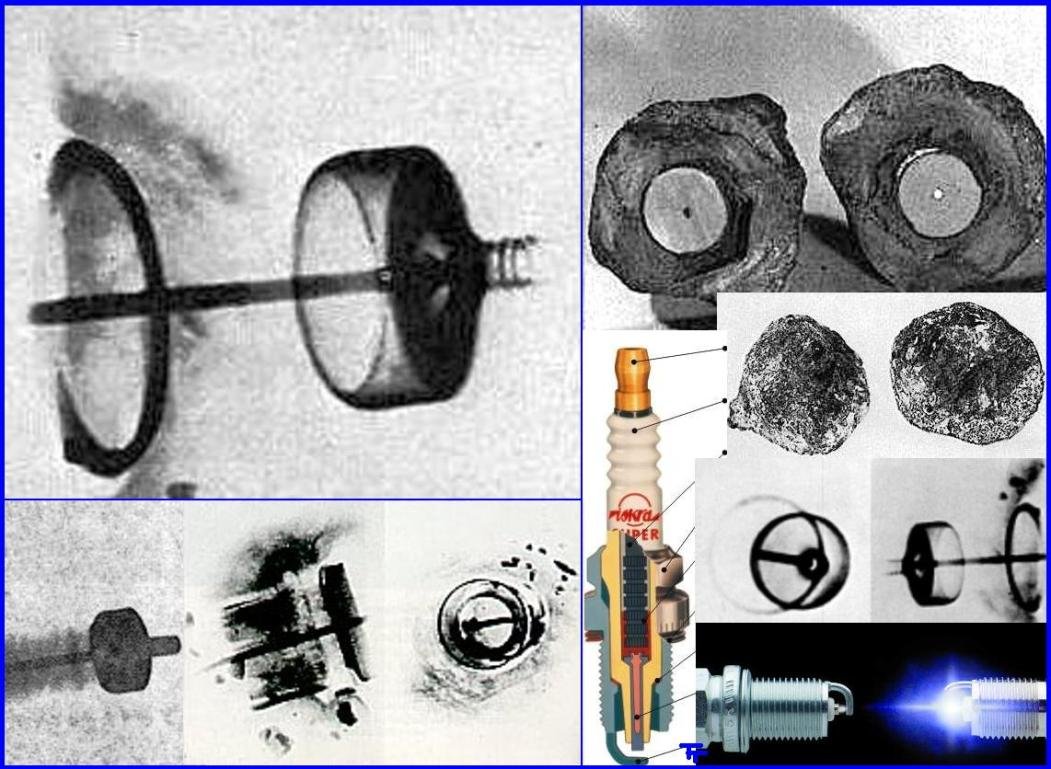
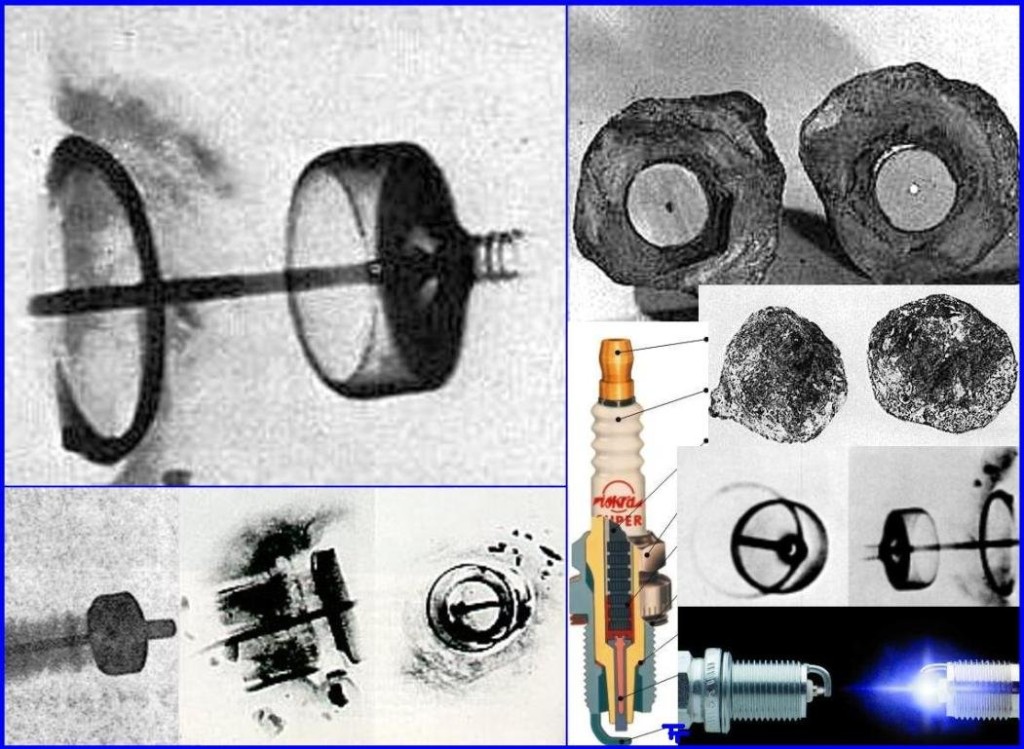
X-rays taken of the object later revealed even more astonishing details. The metallic shaft at the center seemed to be attached to a tiny spring or helix at one end. A spring. This wasn’t a nail. It wasn’t a bullet. It was a component. A piece of a larger machine. The immediate conclusion from anyone who saw it was unavoidable: it looked exactly like a modern spark plug.

The 1920s Spark Plug Theory: Case Closed?

Of course, the skeptics pounced. And their argument is, on the surface, pretty convincing. They didn’t see an ancient artifact; they saw a piece of old junk.

Specifically, they identified the Coso Artifact as a 1920s-era Champion spark plug. The dimensions, the porcelain insulator, the central metal electrode—it all seemed to match. Investigators like Pierre Stromberg and Paul Heinrich did extensive research, comparing the X-rays of the artifact to diagrams of old spark plugs. The resemblance is undeniable.

So, how does a 100-year-old car part get inside a rock?

The explanation is a geological process called concretion. It sounds complicated, but it’s not. Imagine the spark plug fell out of an old Model T bouncing along a dusty trail. It gets buried in wet clay or mineral-rich mud. Over time, minerals in the surrounding soil—like iron oxides—begin to harden around the object, cementing the sand, pebbles, and fossils into a rock-hard shell. This process doesn’t take half a million years. It can happen in a few decades. Maybe 50 or 100 years, tops.

The story seems to fit. Old mining operations were common in the Coso Range. A discarded piece of machinery, a spark plug, gets buried and becomes a “geode.” Case closed. Mystery solved. Time to go home.

Right?

Not so fast. Because there’s one gigantic, glaring problem with that neat little theory.

The Geologist’s Bombshell: A 500,000-Year-Old Paradox

The “it’s just a spark plug” theory completely falls apart when you listen to the one person who should know. A professional geologist.

According to the discoverers, they took the artifact to a geologist who examined the rock encasing the device. The geologist, who has remained anonymous—a fact that both fuels and frustrates conspiracy theorists—made a shocking determination. The rock wasn’t a fast-forming concretion. He identified the outer layer as a geode, and based on the layer of fossilized shells and geological context, he estimated its age. The number he came back with was staggering.

500,000 years.

Let that sink in. Half. A. Million. Years. That’s not just before the 1920s. That’s before *homo sapiens* as we know them even walked the Earth. We’re talking about an era of prehistoric hominids, a time when our most advanced technology was a sharpened rock.

Suddenly, the story changes. This is no longer about a misplaced piece of old machinery. This is a paradox. A 1920s-style spark plug cannot exist inside a 500,000-year-old rock. Both things cannot be true. Yet, here was the evidence, sliced in half for all to see. One of these “facts” has to be wrong. The skeptics say the age is wrong. The believers say our understanding of history is wrong.

This single, explosive claim is what elevates the Coso Artifact from a simple curiosity into one of the greatest “Out-of-Place Artifacts”—or OOPArts—of all time. It’s the linchpin of the entire mystery. Without the ancient date, it’s just a rusty spark plug. With it, it’s evidence of a world we can barely imagine.

Deep Dive: The Coso Range – A Land of Ancient Secrets

The location of the discovery only adds another thick layer of intrigue. The Coso Mountains aren’t just some random patch of desert. Today, a large portion of the range is a restricted military zone—the Naval Air Weapons Station China Lake. A place where cutting-edge technology is developed and tested, hidden from public view. Coincidence?

More than that, this area is one of the most significant archeological sites in North America. The Coso Rock Art District contains over 100,000 petroglyphs, ancient images carved into the rocks by Native Americans thousands of years ago. It was a sacred, important place for ancient peoples. Why here? What did they know about this land? To find an object suggesting *another*, far older technological presence in a land already steeped in ancient mystery feels… significant.

Was this a place of power? A nexus point visited by ancient people, and perhaps, by something else entirely?

The Vanishing Act: Where is the Coso Artifact Now?

Here’s the part of the story that drives everyone crazy. If we could just get our hands on the artifact today, we could solve this mystery in an afternoon. We could use carbon dating on any organic material. We could use mass spectrometry to analyze the metals. We could definitively date the rock and end the debate forever.

There’s just one problem. The Coso Artifact is gone.

It has completely vanished from the public record. The last known custodian was one of the discoverers, Wallace Lane. According to reports from the time, Lane was offered $25,000 for the object—a massive sum in the 1960s—and he refused. He wasn’t looking for a quick buck. He believed he had something important.

But since then? Nothing. Silence. Lane has since passed away, and the artifact’s location is unknown. It was never passed to a museum or a university. It simply… disappeared.

This is where the conspiracy theories ignite. Did Lane simply misplace it? Or did someone—or some agency—make him an offer he couldn’t refuse? Was the artifact quietly acquired and hidden away in a secret government warehouse, like the end of *Raiders of the Lost Ark*, to keep it from shattering our carefully constructed historical narrative?

The absence of the artifact is, ironically, the strongest evidence for those who believe in its extraordinary origins. If it were just a spark plug, why hide it? Why would it disappear? The fact that we can no longer study it keeps the mystery alive and kicking.

Theories That Defy Convention: Beyond the Spark Plug

Once you step outside the box of mainstream explanation, the possibilities become truly wild. If it’s not a 1920s Champion spark plug, then what on Earth could it be?

Theory 1: The Antediluvian Civilization

What if there was a civilization before ours? A highly advanced, global culture that existed hundreds of thousands of years ago. A society like Atlantis or Lemuria, with technology that rivaled, or even surpassed, our own. This civilization could have been wiped out by a cataclysm—a pole shift, a great flood, a comet impact—leaving behind only scattered, almost unrecognizable fragments of their world. The Coso Artifact could be one such fragment. A simple component, a “spark plug” from one of their machines, preserved by a geological fluke.

Theory 2: Ancient Astronauts and Alien Tech

Perhaps the technology wasn’t human at all. The ancient astronaut theory suggests that Earth has been visited by extraterrestrial beings for millennia. Could the Coso Artifact be a piece of their technology? A component that fell from a damaged scout ship or was discarded from an alien probe that surveyed the Earth half a million years ago. This could explain the strange, uncorroded metals and the advanced ceramic—materials from off-world. Maybe the petroglyphs in the Coso Range aren’t just art, but depictions of the visitors the ancient people saw.

Theory 3: The Time Travel Paradox

This is a true mind-bender. Could the artifact be from… the future? A piece of equipment dropped by a time traveler on a mission to Earth’s distant past. The object then lay on the ground for 500,000 years, becoming encased in rock, waiting to be found in 1961. This would explain why it looks like a familiar piece of 20th-century technology—because its design principles might originate from our own technological lineage, just from a point much further down the line.

The Final Verdict: A Relic of Time or a Rusty Piece of Junk?

So where does that leave us? Trapped between two impossible conclusions.

On one hand, we have the simple, rational, and frankly boring explanation: It’s a 1920s spark plug that got stuck in some fast-forming mud and rock. The 500,000-year-old dating was a mistake, a misinterpretation, or a flat-out lie made up to generate publicity for a gift shop. The artifact is lost because, well, it was just a piece of junk and nobody thought to preserve it carefully.

On the other hand, we have the electrifying possibility that the mainstream story is the real fabrication. That the object was exactly what the geologist claimed: a piece of advanced machinery inside a half-million-year-old stone. Its resemblance to a spark plug is either a coincidence or an example of convergent technological evolution. And its disappearance is the result of a concerted effort to suppress a truth too radical for the public to handle: we were not the first.

The Coso Artifact remains a perfect mystery because the key evidence is missing. All we have are old photos, conflicting accounts, and a story that seems too strange to be true, yet too detailed to be dismissed. It is a ghost story for geologists, an enigma for engineers. It forces us to ask an uncomfortable question: What else is hiding in plain sight, buried just beneath the surface, waiting to be cut open?

What do YOU think is buried in the Coso Mountains? A piece of history… or a piece of the future?

Amit Ghosh
Amit Ghoshhttps://coolinterestingnews.com
Aloha, I'm Amit Ghosh, a web entrepreneur and avid blogger. Bitten by entrepreneurial bug, I got kicked out from college and ended up being millionaire and running a digital media company named Aeron7 headquartered at Lithuania.
RELATED ARTICLES
- Advertisment -

Most Popular

Recent Comments

Warren Pan Abbott on The legend of the Devil Monkey !
chris davies on The McPherson Tape Mystery
Reed Reedly on ET has Internet!
Bea Houseoffashion on Proof Of Time Travellers – Gallery
Marcus2012 on ET has Internet!
Reed Reedly on ET has Internet!
LaughsAtConspiracyNuts on The 9/11 Conspiracy – Myths and Facts
Alex Sliverman on Did the ancients fly?
Doctor Wholigan on Time Traveler in 1938 film
chris davies on The McPherson Tape Mystery
Archie1954 on 10 secret UFO hideouts
chris davies on Ghosts of flight 401
Marcus2012 on ET has Internet!
jason Macdonald on Proof of Time Travel? – China
chris davies on Long-Lost Pyramids Found?
Reed Reedly on ET has Internet!
Milkman on Connected Universe
Tenmiles on Baigong Pipes Mystery
Simon Foster on Sirius – The Documentary
From the 1st April on 2013 – Alien Contact date ?
SkyWatcher on Is ET ignoring us?
I Come From The Future on Obama to make UFO Alien disclouser soon ?
ÛñK?øWn on 2013 – Alien Contact date ?
Just another person on 2013 – Alien Contact date ?
Malcolm Windowcleaner on The strange case of Rudolph Fentz
Mason Servio on Strange Things on Mars
Marke Wisdom Seeker on What will we find as arctic melts?
Andrea A Elisabeth Levyne on Aliens Captured in Varginha, Brazil
Mitch Grouyeki on Amazing Space Shuttle pictures