The Brown Mountain Lights: Are They Ghosts, Aliens, or Is the Mountain Itself Alive?
You’re driving. A winding, two-lane road carved into the heart of the Appalachian Mountains. It’s late. The kind of late where the darkness outside your car feels solid, like you could reach out and touch it. Then you see it.
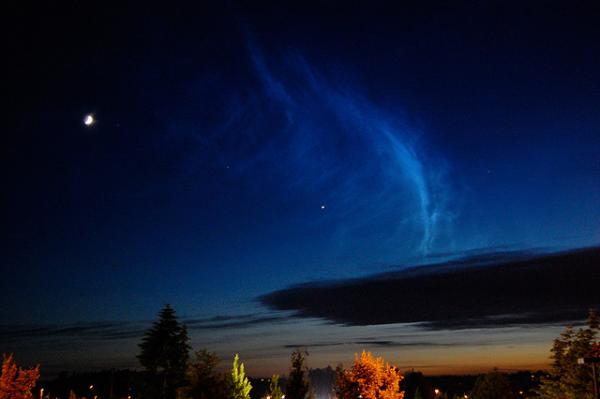
A single orb of light, hovering just above the distant ridge of Brown Mountain. It glows with a soft, reddish-orange hue. It’s not a plane. It’s not a star. It just… hangs there. Silent. Watching.
Then another one appears. And another.
They begin to move. Not like anything man-made. They drift, they dance, they play a game of cosmic tag against a backdrop of ancient stone and shadow. Sometimes they fade slowly, dimming like a dying ember. Other times, they blink out of existence in an instant. Gone.
What did you just see? You’ve just become the latest witness to one of America’s oldest and most profound mysteries. The Brown Mountain Lights.
For hundreds of years, this strange phenomenon has baffled everyone from Native American tribes and early settlers to government scientists and modern-day ghost hunters. The explanations range from the spectral to the scientific, from the earthly to the utterly alien. But one thing is certain: the lights are real. And they refuse to be explained away.
Ancient Whispers from the Mountain
Long before the first European settlers pushed their way into the rugged hills of North Carolina, the Cherokee people knew about the lights. They had stories. Legends passed down through generations around crackling fires, tales that spoke of the mountain’s spiritual power.
One of the most enduring legends tells of a great battle that took place on the slopes of Brown Mountain between the Cherokee and the Catawba tribes. The fighting was fierce, a bloody conflict that left many brave warriors dead. The grieving widows and sweethearts would come to the mountain at night, holding torches high, searching for the spirits of their lost husbands and sons. The lights, the story goes, are the spectral torches of these women, forever searching, forever mourning.
Another, older story speaks of “the great slaying.” A Cherokee hunting party was supposedly caught in a massive flood or rockslide, their bodies lost to the mountain forever. The lights are said to be their spirits, freed from the earth and now roaming the ridgeline for eternity.
These weren’t just spooky campfire stories. They were deeply held beliefs. When a German civil engineer named Gerard de Brahm was charting the region in 1771, he documented the lights and the local legends surrounding them, noting that the Cherokee and Catawba believed the lights were the souls of their murdered ancestors demanding vengeance. This isn’t a modern tale. This is a mystery woven into the very fabric of American history.
What Do People Actually See?
The truly maddening thing about the Brown Mountain Lights is their inconsistency. No two sightings are ever exactly the same. It’s a shapeshifting mystery, a phantom that changes its form for every new audience.
Some witnesses report seeing a single, pale white or blueish light that appears and disappears in the same spot over several minutes. Others describe brilliant red orbs that move with intelligent, purposeful speed, sometimes even seeming to react to flashlights or car horns from the overlooks below. People have seen them rise up from the valley floor, hover in mid-air, and then shoot straight up into the sky at impossible speeds.
Then there are the truly spectacular displays.
On rare nights, the entire mountain seems to come alive. Dozens, sometimes hundreds, of lights will suddenly appear, twinkling and flashing all along the ridge like a city of ghosts. Witnesses have described it as looking like a “celestial Christmas tree” or a “fleet of silent lanterns.” These incredible displays often last for just a few minutes before vanishing as quickly as they came, leaving the onlookers in stunned, breathless silence.
The research can feel like driving through western North Carolina itself—the roads are winding, and one simple turn can send you off in a completely new direction. You think you have a handle on it, and then a new eyewitness account throws everything you thought you knew into question.
The Official Explanations That Just Don’t Stick
As the mystery grew, science had to step in. The problem? Every time “official science” has tried to put this ghost to bed, it has failed. Spectacularly.
The first major investigation was conducted by the U.S. Geological Survey (USGS) in 1913. After a brief study, the lead researcher confidently declared the mystery solved. The lights, he said, were simply the headlights of a locomotive train operating in the distant Catawba Valley. It was a neat, tidy explanation that satisfied pretty much everyone.
There was just one tiny problem. He was dead wrong.
A catastrophic flood had completely washed out those specific railroad tracks a full year *before* his investigation even began. There were no trains. There were no headlights. The explanation was a bust.
Strike one for the debunkers.
Later, another theory gained traction: temperature inversions. The idea is that a layer of warm air can trap a layer of cooler air beneath it, acting like a lens. This atmospheric lens could, in theory, bend and magnify lights from distant towns like Hickory and Lenoir, projecting them onto the mountain. This explains why the lights might seem to float or waver.
It’s a plausible idea, and it might even explain *some* of the modern sightings. But it completely falls apart when you look at the historical record. How does refraction explain the lights seen by the Cherokee and Gerard de Brahm in the 1700s, long before those towns had electricity? It doesn’t. It can’t.
Other mundane explanations like swamp gas, glowing fungi (foxfire), or campfires have all been proposed and systematically dismantled. There is no swamp on Brown Mountain. Foxfire doesn’t float hundreds of feet into the air and zip across a valley. And campfires don’t perform intelligent, aerial acrobatics.
Is the Mountain Itself a Giant Battery?
This is where things get interesting. Enter Joshua P. Warren, a paranormal investigator who grew up in the shadow of Brown Mountain and has dedicated over 20 years of his life to cracking this case. Warren has appeared on shows for National Geographic, the History Channel, and Discovery, and he has a theory that is both scientific and deeply strange.
He believes the mountain itself is generating the lights.
“If you talk to a physicist, he will talk about plasma; talk to an astronomer and he will talk about optical illusions; talk to a chemist and he will discuss gasses,” Warren has said. He synthesized these ideas into a groundbreaking theory.
Warren’s hypothesis centers on the unique geology of Brown Mountain. The mountain is crisscrossed by fault lines and composed of layers of conductive rock (like quartz) and non-conductive rock. He suggests that as water rushes through underground tunnels and fissures, it creates a massive static electric charge, essentially turning the layers of rock into a gigantic natural capacitor—a battery.
“I think the water rushing through builds up an electrical charge on layers of rock,” Warren explains. “When you layer these, you form a condenser that stores charges till a critical point and then discharges.”
So, what’s the trigger? The temperature change.
This is especially pronounced in the fall, which is famously the best time to see the lights. The daytime temperatures are warm, and the nighttime temperatures plummet. As the air cools rapidly after sunset, the mountain itself physically contracts. This contraction, according to Warren, squeezes those electrically charged rock layers together.
When the pressure hits a critical point… ZAP. A massive electrostatic discharge. The mountain releases its stored energy.
But why do they look like floating balls? “Based upon experiments in the lab, we feel it is because that numerous discharges sometimes intersect at different angles and it is the point of intersection that becomes visible,” Warren proposes. “So it is not a ball but the only visible portion of a larger electrostatic interaction.”
In his own laboratory, Warren and his team claim they were able to simulate these conditions and create a self-contained, ball-like plasma. They essentially built a small-scale Brown Mountain and made it light up. If his theory is correct, the lights are a form of natural plasma, born from the very rock and energy of the mountain itself.
Beyond Conventional Science: Enter the High Strangeness
Warren’s theory is compelling, but it doesn’t account for all the stories. It doesn’t explain the reports of lights that seem to follow cars, react to people, or move with apparent intelligence. For that, you have to venture to the fringe.
The legends have evolved. The old tales of Indian ghosts now share space with modern myths of UFOs, secret underground military bases, and even alien abduction.
The most famous local story involves a man named Ralph Lael. During the 1960s, Lael, a local businessman from nearby Morganton, made a series of incredible claims. He said he hadn’t just *seen* the lights—he’d been taken aboard them. Lael asserted that he was abducted by aliens on multiple occasions and taken to their home world of Venus. He claimed the Brown Mountain Lights were the energy signatures of their spacecraft, and that a massive alien base was located deep within the mountain itself.
Lael even opened a small, makeshift museum to display the “artifacts” the aliens had supposedly given him. While most people dismissed him as an eccentric crank, his stories cemented the link between Brown Mountain and extraterrestrial activity in the local folklore.
Is it possible? Could the lights be non-human probes or surveillance drones from a hidden base? The idea might sound crazy, but the behavior of the lights—their silent, high-speed maneuvering and seemingly intelligent patterns—keeps the UFO theory alive and well for a dedicated community of believers.
The Digital Campfire: Modern Theories and Viral Sightings
In the 21st century, the mystery has gone digital. Online forums like Reddit and countless YouTube channels are filled with amateur investigators sharing their own footage, photos, and wild theories. Every grainy video of a distant light reignites the debate.
Modern sky-watchers armed with night-vision gear and high-powered zoom lenses flock to the overlooks, hoping to be the one to finally capture the definitive proof. Some claim to have filmed the orbs changing shape. Others have posted audio recordings of strange humming or electronic sounds that accompanied a sighting. The internet has become a massive, digital campfire where new legends are born and old ones are given new life.
The consensus? Nobody agrees on anything, which only makes the mystery more potent.
How to See the Brown Mountain Lights Yourself
Reading about the lights is one thing. Seeing them is another. If you want to try your luck, you need to know where to go and when.
Top Viewing Spots:
- The Brown Mountain Overlook: Located on Highway 181 at mile marker 20 (north of Morganton, NC). This is the most popular and easily accessible spot, with a paved parking area and clear views of the ridge.
- Wiseman’s View: For the more adventurous. Located on the opposite side of the gorge, this spot requires driving several miles on a bumpy, unpaved Forest Service road. The payoff is a much closer and more dramatic view. Many hardcore light-hunters swear by this location.
When to Go:
The lights can appear any time of year, but your best bet is during the fall, particularly in September and October. The clear, crisp air and the significant temperature drop between day and night seem to be the perfect recipe. Many of the most dramatic sightings have occurred on clear nights following a day of rain.
Be patient. You could wait for hours and see nothing. Or you could step out of your car and witness a celestial spectacle that will stay with you for the rest of your life.
So, what are the Brown Mountain Lights? Are they the lonely, eternal torches of heartbroken Cherokee women? The geological discharge of a mountain-sized battery? Or the calling card of visitors from another world?
Maybe they are all of these things. Maybe they are none of them.
The only thing we know for sure is that the mystery endures. The mountain keeps its secrets. It watches, it waits, and on certain nights, it puts on a show. The question is, will you be there to see it?