The Ghost in the Machine Has Returned: Inside Cicada 3301’s 2014 Resurgence
It starts with a whisper. A glitch in the matrix. A single image posted in the darkest corners of the internet, asking a simple question: Are you one of us?
For thousands of amateur codebreakers, armchair detectives, and digital archeologists, that whisper became a roar. This is the story of Cicada 3301, the internet’s most profound and baffling enigma. A multi-layered, globe-spanning scavenger hunt designed by an unknown, anonymous group for a purpose nobody truly understands. They say they are looking for “highly intelligent individuals.”
But to what end?
After a full year of deafening silence, a year where many thought the mystery had died, it came back. On January 5th, 2014, the ghost in the machine stirred once more, kicking off a new hunt that was darker, more complex, and more philosophical than ever before.
This is a deep dive into that moment. Into the chaos, the clues, and the chilling questions that still echo across the web today.
A Deep Dive: What Exactly IS Cicada 3301?
Imagine a puzzle box designed by a mad genius. Now imagine that box is the entire internet. That’s Cicada 3301.
It first appeared on January 4th, 2012, on the infamous message board 4chan. An anonymous user posted a stark, black-and-white image with simple text:
“Hello. We are looking for highly intelligent individuals. To find them, we have devised a test. There is a message hidden in this image. Find it, and it will lead you on the road to finding us. We look forward to meeting the few that will make it all the way through. Good luck. 3301.”
A challenge. A gauntlet thrown down to the digital world. At first, most dismissed it as a joke. But a few curious minds started digging. They discovered that opening the image file in a simple text editor revealed a hidden string of characters—a Caesar cipher. Solving that led to a URL. That URL led to another image. That image, using steganography (the art of hiding data within other data), led to a book code, which pointed to a collection of cryptic runes from the medieval Welsh poem, the Mabinogion.
And that was just the first day.
The 2012 and 2013 puzzles became the stuff of legend. They demanded an impossible range of skills:
- Advanced cryptography and steganography.
- An understanding of Mayan numerology.
- Deep knowledge of classical music by Bach and Chopin.
- The ability to decipher Anglo-Saxon runes.
- An appreciation for the philosophy of Aleister Crowley and William Gibson.
It wasn’t just digital, either. Clues eventually led to physical locations. Posters with a cicada logo and a QR code appeared on telephone poles in cities from Warsaw, Poland, to Miami, Florida. From Seoul, South Korea, to Paris, France. Solvers had to form teams, collaborating across continents in real-time to check these locations. It was a global phenomenon, coordinated by an invisible hand.
Those who reached the end were reportedly led to a private forum on the Deep Web. Then, they vanished from the public discussion. The puzzle was over. The winners were chosen. And the rest of the world was left with one burning question: Who is behind this?

The Year of Anxious Silence
After the 2013 puzzle concluded, Cicada went dark. A full twelve months passed with nothing. The online communities that had sprung up to solve the puzzles grew restless. Had the creators found who they were looking for? Was the project over? The vacuum was quickly filled with noise.
Hoaxers and trolls saw their chance. Dozens, then hundreds, of fake “Cicada puzzles” began to appear. Some were clumsy and easily debunked. Others were incredibly elaborate, mimicking Cicada’s style with chilling accuracy. These fakes sent thousands of hopeful solvers on wild goose chases, wasting countless hours and muddying the waters. The community became paranoid, fractured. Trust was a rare commodity.
Some feared the worst. Maybe the widespread media coverage had spooked the creators. Like the insect itself, perhaps Cicada 3301 had gone back underground, scared away by the light. The first week of January 2014 was a chaotic mess of false starts and dead ends. The hope that had once energized the community was turning into bitter disappointment.
Until it happened.
Epiphany is Upon You: The 2014 Return
Just before 11 PM on Sunday, January 5th, 2014, a tweet appeared. It came from an account previously used by the Cicada organization, an account that had been dormant for a year. To its mere 700 followers, it sent a message that instantly electrified the internet.
The tweet contained a faint image of a cicada. The text was simple, poetic, and ominous.
“Hello. Epiphany is upon you. Your pilgrimage has begun. Enlightenment awaits. Good luck. 3301.”
Was it real? After so many fakes, the community was skeptical. But this time was different. The message was accompanied by a PGP signature. Think of PGP as a digital fingerprint, a cryptographic key that proves, with mathematical certainty, that the sender is who they claim to be. When solvers checked the signature against the public key Cicada had used in the past, the result was undeniable. It was a match.
They were back.
The words themselves were a puzzle. “Epiphany,” a moment of sudden revelation. “Pilgrimage,” a journey to a sacred place. “Enlightenment,” a state of higher understanding. This wasn’t just a test of intelligence anymore. The 2014 puzzle was framing itself as a spiritual or philosophical quest.
Into the Rabbit Hole: A Self-Portrait
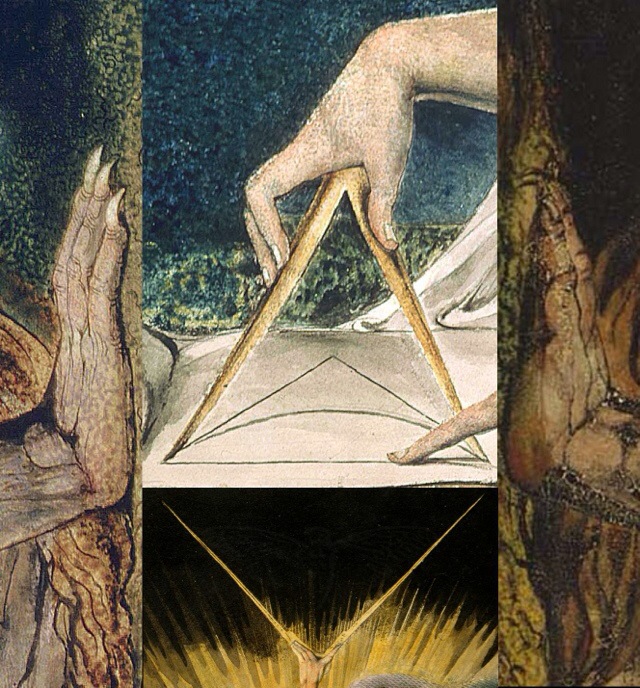
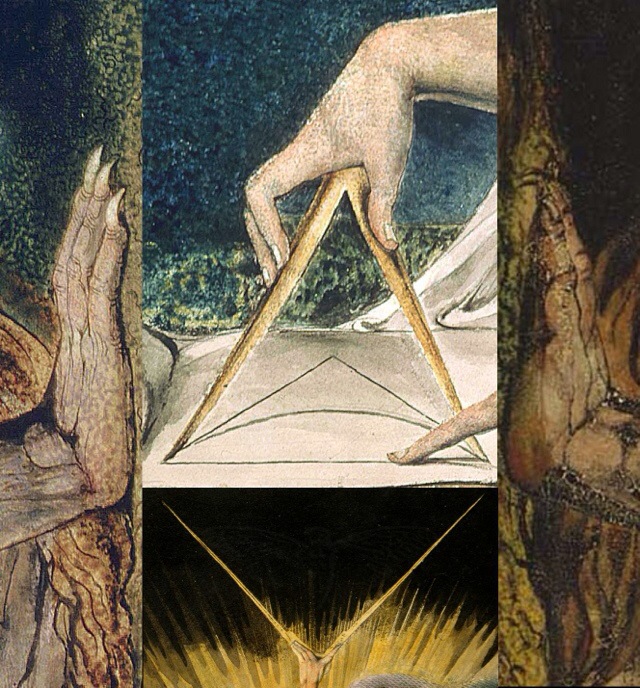
The image in the tweet was the key. When solvers ran it through steganography tools, they pulled out a hidden message. This message led them to a piece of art titled “Self-Portrait” by the artist and mystic William Blake. But it wasn’t just the art. It was the text layered within it, a cryptic collage of phrases and symbols.
This single image was a masterpiece of complexity. It contained references to Masonic compasses, Kabbalistic diagrams, and philosophical texts. To even begin, you needed to understand hexadecimal code, reverse-image searches, and multiple layers of ciphers. It was a brutal filter, designed to instantly weed out anyone who wasn’t truly dedicated.
The trail had begun. From Blake’s art, solvers were led into a labyrinth of obscure knowledge. They found themselves decoding passages from “The Book of the Law,” a central sacred text of the esoteric philosophy of Thelema. They analyzed prime numbers hidden in the image’s data. They were pointed towards a mysterious Twitter feed that tweeted out what appeared to be random numbers, which were actually coordinates, forming a dot-to-dot picture of… a cicada.
The 2014 puzzle was more esoteric than ever before. It leaned heavily on themes of self-discovery, Gnosticism, and the nature of consciousness. It was as much a philosophical exam as it was a technical one.
The Grand Question: Who is Pulling the Strings?
The sheer scale and complexity of Cicada 3301 begs the question: Who on Earth is behind it? The resources, the planning, the global coordination—this isn’t the work of a few kids in a basement. The theories are as wild as the puzzle itself.
Case File #1: A Government Recruitment Program?
This is the most common theory. Are organizations like the NSA, CIA, or MI6 using Cicada as the ultimate recruitment tool? It makes a certain kind of sense. They need the world’s best cryptanalysts and data security experts. What better way to find them than to build an uncrackable puzzle and see who solves it? It’s a real-world test of the exact skills they need. In 2013, documents leaked by Edward Snowden confirmed that intelligence agencies use online games and puzzles for recruitment. Still, Cicada’s overt use of anti-establishment and esoteric philosophy seems strangely off-brand for a government agency.
Case File #2: A Secret Society?
Could Cicada 3301 be the modern-day initiation rite for a secret society? A digital Freemasons or a new Illuminati? The puzzle’s content certainly points in this direction. The heavy use of spiritual texts, Masonic symbols, Kabbalah, and Eastern philosophy all suggest a group focused on more than just code. They use the word “enlightenment.” They talk of a “pilgrimage.” Perhaps they aren’t looking for employees, but for acolytes. New members for a hidden order dedicated to some unknown purpose.
Case File #3: A Crypto-Anarchist Collective?
Another strong theory suggests Cicada is a group of activists dedicated to privacy, cryptography, and challenging government control. The puzzles often contain themes championing personal liberty and free information. The very first puzzle in 2012 led solvers to a poem called “The Agrippa,” which is about the fleeting nature of information in the digital age. Perhaps the goal is to build a team of brilliant minds to work on new privacy-protecting technologies, a counter-force to the surveillance state.
Case File #4: The World’s Most Elaborate Hoax?
Could it all be… nothing? A prank of unimaginable proportions? An Alternate Reality Game (ARG) with no prize at the end, designed only for the thrill of the chase? It’s possible. But the resources required are immense. The global distribution of physical clues alone suggests a level of funding and organization far beyond a simple game. Who would spend so much time and money for a laugh?
The Winners’ Circle and The Great Silence
So what happens if you actually win? What awaits at the end of the pilgrimage?
Silence.
The few individuals who claim to have solved the puzzles and been accepted into the inner circle are sworn to secrecy. The public story ends abruptly. According to the few scraps of information that have leaked out, solvers are brought to a private forum. There, they are told they were selected to join a think tank, a collective dedicated to advancing the cause of “liberty, privacy, and security.” They are supposedly tasked with developing software and pursuing philosophical ideas. After that, the trail goes cold.
For the thousands who followed along, it’s an anticlimax. The mystery just leads to a bigger mystery.
And then, after the 2014 puzzle ran its course, Cicada went silent again. A brief, cryptic message appeared in 2016, but it didn’t launch a new puzzle. Since then, nothing. Years have passed. The organization, if it ever was one, has vanished back into the digital ether from whence it came.
Did they find everyone they were looking for? Was the project a success? Or was it shut down? No one knows. The Cicada 3301 mystery remains unsolved.
It stands as a powerful reminder that the internet is still a wild and unknown frontier. That there are still hidden corners, secret doors, and brilliant, anonymous minds at work behind the curtain. Cicada 3301 showed the world what a truly global, collaborative human effort could achieve. It also left us with a chilling thought.
They said they were looking for the most intelligent people on Earth.
What if they found them?