Home Films & Documentaries The Assassination Of John Lennon

The Assassination Of John Lennon

3
82

The Shot That Silenced a Generation: Was John Lennon’s Killer a Lone Madman or a Pawn?

It wasn’t just a gunshot. It was a fault line. A seismic shock that split time into a “before” and an “after.” On one side, the dream of the 60s, a bit faded but still alive in the voice of its most brilliant, cynical, and hopeful poet. On the other side, a cold, hard silence.

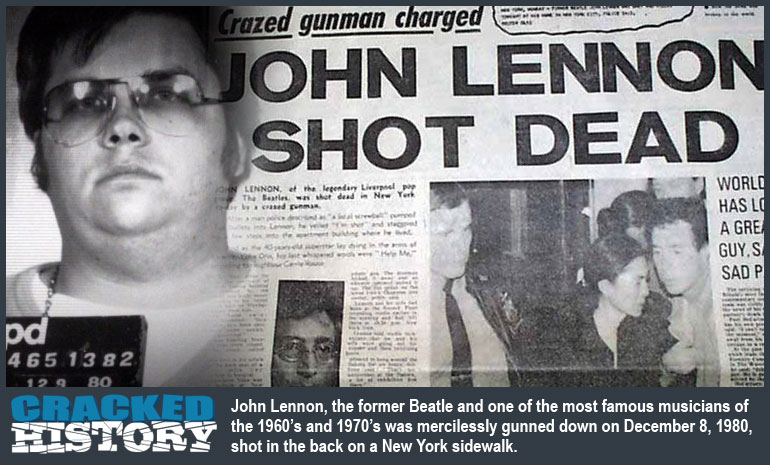
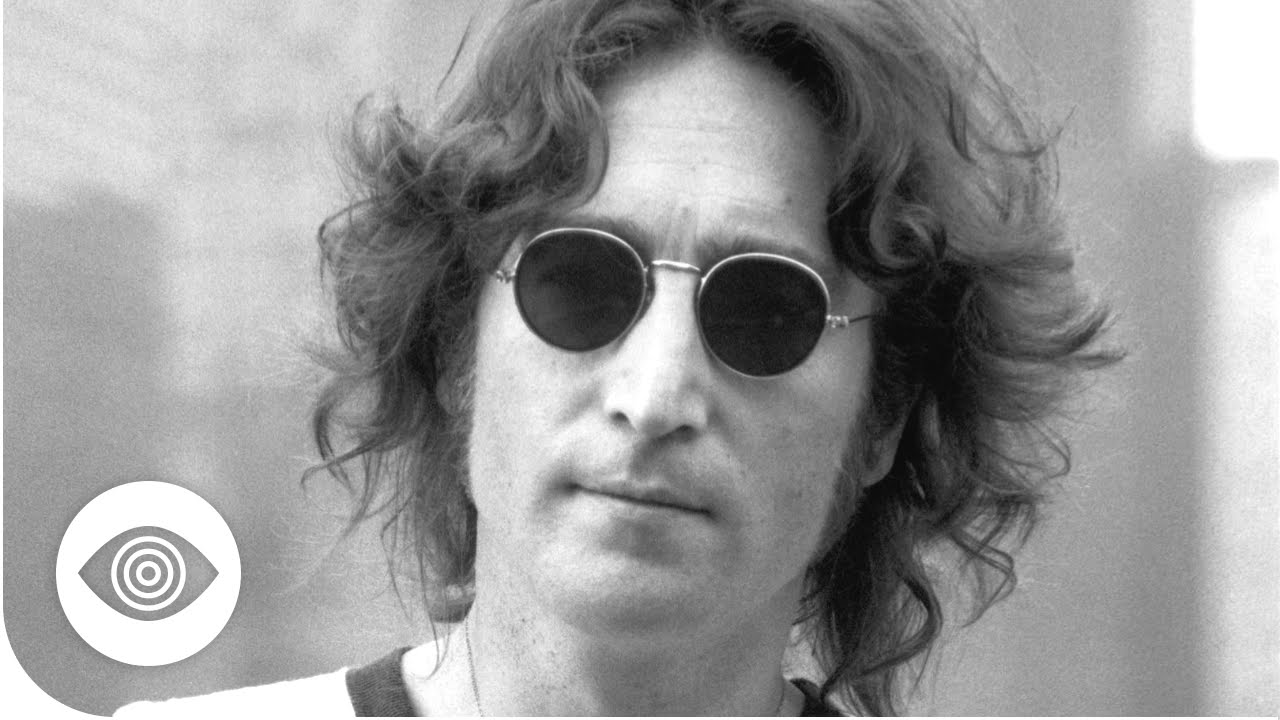
The official story is simple. Clean. Almost too clean. John Lennon, the icon, the Beatle, the activist, was murdered. Cut down in his prime at 40 years old by a deranged fan named Mark David Chapman outside his gothic New York apartment, The Dakota.

That’s the story they tell you on the news. The one written in the history books.

But what if it’s not the whole story? What if the “deranged fan” was something else entirely? What if the strings were being pulled by forces far more powerful, far more sinister, than a single disturbed mind?

Forget what you think you know. We’re going past the headlines and into the shadows, to ask the questions that have haunted millions for decades. Was Mark David Chapman a lone gunman? Or was he a perfectly programmed assassin, a human weapon activated to eliminate a powerful voice of peace? The truth, as always, is buried deep.

A Day in the Life: The Final Countdown

December 8th, 1980. A crisp, cold Manhattan day. For John Lennon, it was a day buzzing with creative energy. After five years of self-imposed exile as a “househusband” raising his son Sean, he was back. His new album with Yoko Ono, Double Fantasy, was a comeback, a love letter, a statement. He was optimistic, energized, and creating again.

The day was a whirlwind of activity. It started with a photo shoot. Not just any photo shoot.

The Last Photograph

Famed photographer Annie Leibovitz arrived at their apartment in The Dakota. The assignment was for the cover of Rolling Stone. Leibovitz initially wanted a solo shot of John, but he was adamant. “I want to be with Yoko,” he insisted. The result was one of the most iconic images of the 20th century: a naked, vulnerable Lennon, curled in a fetal position, clinging to a fully clothed Ono. It was a picture of pure devotion, a raw and unapologetic display of his love. It was also the last formal portrait ever taken of him.

After the shoot, a radio crew from San Francisco arrived. DJ Dave Sholin sat with Lennon for what would become his final interview. Listening to the tapes today is chilling. John is full of life, brimming with plans for the future. He talks about his music, his family, his belief in a positive future. “I consider that my work won’t be finished until I’m dead and buried and I hope that’s a long, long time,” he told Sholin. A long, long time would turn out to be just a few hours.

An Encounter with Fate

Around 5 p.m., John and Yoko prepared to leave for the Record Plant studio. As they walked out of the grand, castle-like archway of The Dakota, a figure stepped from the small crowd of fans that often gathered there. He was a pudgy, unassuming man in his twenties. He held a copy of Double Fantasy. His name was Mark David Chapman.

He didn’t say much. Just held out the album. Lennon, ever gracious with his fans, took the record and a pen. “Is this all you want?” he asked, scrawling “John Lennon 1980” on the cover. Chapman simply nodded.

Think about that moment. The killer and the victim, face to face. A simple, quiet transaction. An autograph. A photograph was even snapped of the moment, capturing the eerie calm before the storm. John Lennon signed his own death warrant, handed it back to his killer, and got in the car. He had no idea he had just looked his own destiny in the eye.

Ambush at the Archway

The session at the Record Plant went late. They were working on a Yoko track, “Walking on Thin Ice.” John’s searing guitar work on the song would be the last music he ever recorded. It was almost 11 p.m. when they finally decided to head home. They could have eaten out, but they wanted to see their son, Sean, before he went to sleep.

Their limousine pulled up to the curb on 72nd Street. Instead of driving into the secure courtyard, they got out on the street. A fatal decision. As Yoko walked a few steps ahead, John followed, clutching the master tapes from the studio session.

The figure from earlier was still there. Waiting. Hiding in the shadows of the archway. As Lennon passed, Chapman called out. Not a scream, but a flat, calm statement.

“Mr. Lennon!”

John began to turn. And the world exploded.

Pop. Pop. Pop. Pop. Four shots from a .38 caliber Charter Arms revolver. The hollow-point bullets were designed to expand on impact, to tear and destroy everything in their path. They did their job with brutal efficiency. Two hit Lennon in the back, two in the shoulder. They ripped through his chest, shredding his aorta. The lifeblood of a generation began to spill onto the cold New York pavement.

Lennon staggered forward, up the steps to the doorman’s station. “I’m shot,” he gasped. “I’m shot.” He collapsed, the precious tapes clattering to the floor. Chaos erupted. Yoko screamed. The doorman, Jay Hastings, rushed to John’s side, covering him with his uniform jacket. Another employee, Jose Perdomo, wrestled the gun from Chapman’s hand.

And what of the killer? He didn’t run. He didn’t fight. Mark David Chapman, having just murdered one of the most famous men on the planet, calmly took off his coat, placed it on the ground, and pulled out a book. He just stood there, under the gaslights of The Dakota’s entrance, and began to read. The book was J.D. Salinger’s The Catcher in the Rye.

Deep Dive: The Killer with the Book

This is where the official story starts to fray. This is where the questions begin. Why that book? And why was Chapman so eerily calm, so detached, as if he had just completed a task and was now waiting for his next instruction?

The “Catcher” Connection

The official explanation is that Chapman identified with the novel’s alienated protagonist, Holden Caulfield, who rails against the “phonies” of the world. Chapman, in his supposed delusion, had come to see John Lennon—the millionaire who sang “Imagine no possessions”—as the ultimate phony. Killing him was, in his twisted mind, a way to absorb his fame and become Holden Caulfield.

It sounds plausible. For a crazy person.

But the connection of *The Catcher in the Rye* to assassins and would-be assassins is strangely persistent. John Hinckley Jr., who attempted to assassinate President Ronald Reagan just a few months later, was also obsessed with the book. It’s a pattern that makes you wonder. Is the book a magnet for unstable minds? Or is it something else? A trigger? A calling card? A piece of programming?

john-lennon-killed-on-dec-8-1980

Was Chapman a Programmed “Manchurian Candidate”?

Let’s entertain a darker possibility. Let’s talk about mind control. It’s not science fiction. The CIA’s Project MK-Ultra was a very real, very illegal program that ran for decades. Its goal was to research methods of mind control, including the use of drugs, hypnosis, and psychological abuse to create unwitting agents. Programmed assassins.

Could Chapman have been one of them?

Consider his background. He wasn’t just some nobody. He had worked for World Vision, a Christian charity with reported ties to the CIA, in refugee camps. He had traveled to strange places—Beirut, Lebanon, during a civil war. These are not the typical activities of a security guard from Hawaii.

His behavior was bizarre and erratic. He claimed to have heard voices commanding him: “Do it, do it, do it.” After the shooting, he seemed to be in a trance-like state, as if he was watching a movie of his own actions. He had even traveled to New York two months earlier with the same gun, but something stopped him. He went home. Was that the real Chapman fighting against his programming? Did his handlers have to “reactivate” him for the final mission?

When the police arrived, they found a man who was completely passive. “I acted alone,” he said, almost as if reciting a script. He pleaded guilty, avoiding a trial where these strange connections and his mental state could have been explored in open court. How convenient.

The Government’s “Lennon Problem”

But why? Why would powerful people want John Lennon dead? To answer that, you have to remember who he was. He wasn’t just a pop star. He was a global force.

A Threat to the Establishment

In the late 60s and early 70s, John Lennon was one of the most powerful anti-war voices on the planet. His songs “Give Peace a Chance” and “Happy Xmas (War Is Over)” were anthems for a generation disgusted with the Vietnam War. He wasn’t just singing songs; he was mobilizing people.

The Nixon administration saw him as a serious threat. The FBI and CIA had him under constant surveillance. They tapped his phones. They followed him. They amassed a file on him that was hundreds of pages long. They were terrified he would disrupt the 1972 Republican National Convention and tried for years to have him deported.

Lennon eventually won his immigration battle and quieted down, entering his “househusband” phase. But by 1980, he was back. He was re-energized and ready to engage with the world again. With Ronald Reagan, a conservative hawk, just elected president, a re-politicized John Lennon could have been a massive problem for the powers that be. His death, just weeks after Reagan’s election, removed a major cultural and political opponent from the board. Permanently.

A Nation in Shock

The news spread like a virus. There was no internet, no social media. The first most Americans heard of it was through a surreal, shocking television moment. On ABC’s *Monday Night Football*, legendary sportscaster Howard Cosell had to deliver the news.

“Remember this is just a football game,” he told the massive audience, his voice somber. “An unspeakable tragedy confirmed to us by ABC News in New York City: John Lennon, outside of his apartment building on the West Side of New York City, the most famous, perhaps, of all of the Beatles, shot twice in the back, rushed to Roosevelt Hospital, dead on arrival.”

Silence. A stunned nation trying to process the impossible. Crowds immediately began to gather at Roosevelt Hospital and outside The Dakota, holding candles, singing his songs. It was a spontaneous, global outpouring of grief. The world had lost more than a musician; it had lost a piece of its conscience.

Lennon was cremated two days later. Yoko Ono, in her grief, chose not to hold a funeral. Instead, she asked for ten minutes of silent prayer around the world. On December 14th, millions upon millions of people stopped what they were doing and honored him in silence. A fitting tribute for a man who championed peace.

The Questions That Remain

The official story is sealed. Mark David Chapman was a deranged fan who acted alone. He is still in prison, denied parole time and time again. Case closed.

But for those of us who look closer, the story is full of holes. The strange behavior of the killer. His inexplicable calm. The *Catcher in the Rye* connection. Lennon’s history as an enemy of the state. The convenient timing of his death.

Was it all just a tragic coincidence? A perfect storm of madness and celebrity? Or was Mark David Chapman a tool? A pawn in a much larger, darker game, programmed and pointed at a target deemed too influential, too powerful, and too dangerous to be allowed to speak?

We may never know for sure. The powerful are very good at keeping their secrets. But the story of John Lennon’s final day isn’t just a story about a murder. It’s a chilling reminder that sometimes, the most dangerous thing you can do is imagine a better world, and invite everyone else to imagine it with you.

Originally posted 2014-02-16 18:00:02. Republished by Blog Post Promoter