Home Films & Documentaries The Assassination of Abraham Lincoln

The Assassination of Abraham Lincoln

7
85

The Shot Heard ‘Round the World: Was Lincoln’s Assassination an Inside Job?

April 14, 1865. Good Friday.

The air in Washington D.C. was thick with celebration. The brutal, bloody Civil War was finally over. General Lee had surrendered just five days earlier. Banners hung from buildings. People danced in the streets. For the first time in four agonizing years, the United States of America was whole again, saved by the grit and grim determination of its 16th President, Abraham Lincoln.

That night, the President and his wife, Mary Todd, decided to take in a play. A lighthearted comedy, “Our American Cousin,” at Ford’s Theatre. A moment of relief. A chance to breathe.

It was a trap.

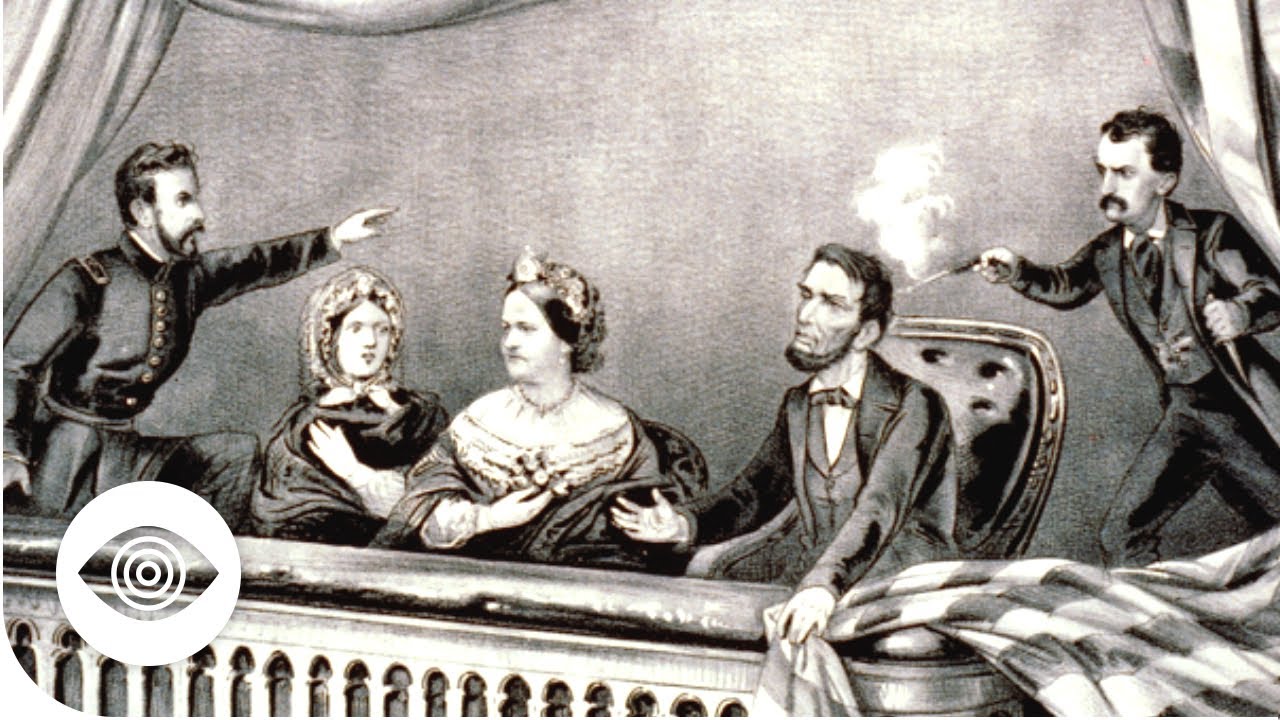
Just after 10 PM, a single shot from a .44 caliber Deringer pistol echoed through the theater. A man leaped from the presidential box to the stage below, shouting “Sic semper tyrannis!”—Thus always to tyrants. The President slumped forward, mortally wounded. The celebration was over. The nightmare had just begun.

The history books tell you a simple story. A famous but disgruntled actor, John Wilkes Booth, a rabid Confederate sympathizer, acted out of fanatical rage. He was the lone mastermind, a madman who slipped through the cracks. His small band of misfits were rounded up, the case was closed, and the nation moved on.

But what if that story is a lie? What if the official narrative is just the surface layer, a carefully constructed fable to hide a much darker, more terrifying truth? What if the conspiracy to kill Abraham Lincoln went far, far deeper than a handful of Southern loyalists? What if it reached into the highest levels of the very government Lincoln fought to save?

The Official Story: A Plot to Decapitate the Union

Before we journey down the rabbit hole, let’s get the textbook version straight. Because even the “official” story is far bigger than most people realize. This wasn’t just about killing Lincoln. It was a coordinated, three-pronged attack designed to throw the entire U.S. government into absolute chaos.

Target One: The President

This part of the plan went off with chilling precision. John Wilkes Booth, one of the most famous actors of his day, knew Ford’s Theatre like the back of his hand. He knew the play. He knew the layout. He even knew the exact moment to strike—during a line that always got a huge laugh, a laugh that would muffle the sound of his pistol shot.

He slipped into the presidential box, which was shockingly left unguarded. Lincoln’s bodyguard, John Frederick Parker, was a man with a questionable record and had reportedly left his post to get a drink at the saloon next door. A coincidence? Or something else?

Booth fired. The rest is history.

Target Two: The Vice President

At the same time Booth was at Ford’s Theatre, another conspirator, George Atzerodt, was supposed to be assassinating Vice President Andrew Johnson at his residence at the Kirkwood House hotel. Atzerodt, a German immigrant and carriage painter, was tasked with knocking on Johnson’s door and stabbing him to death when he answered.

But Atzerodt lost his nerve. He spent the evening drinking at the hotel bar, asking the bartender about the Vice President’s habits, before wandering off into the night, drunk and terrified. He completely abandoned the mission. This single act of cowardice may have saved the Union from total collapse. But the question remains: why was he chosen for such a vital task? Was he meant to fail?

Target Three: The Secretary of State

The most brutal part of the plot unfolded at the home of Secretary of State William H. Seward. Seward was already bedridden, recovering from a severe carriage accident. The attacker, Lewis Powell, a hulking former Confederate soldier, gained entry by pretending to deliver medicine.

What followed was a scene of pure butchery. Powell burst into Seward’s bedroom and began stabbing him viciously in the face and neck with a massive knife. Seward was saved only by the metal surgical collar he was wearing from his accident. Powell fought his way through the house, injuring Seward’s two sons, his daughter, a male nurse, and a messenger before escaping into the street. It was a bloodbath. It proved this was no lone wolf attack. This was a coordinated wave of terror.

So, the accepted story is that Booth’s grand plan failed. Two of the three targets survived. The government didn’t collapse. But this is where the neat and tidy story begins to unravel.

The Great Escape and the Whispers of a Cover-Up

Think about this. John Wilkes Booth was one of the most recognizable men in America—a 19th-century movie star. After shooting the president, he leaped onto the stage, breaking his leg in the process, and managed to escape on horseback out of Washington D.C.

How? How did a famous man with a snapped fibula evade the largest manhunt in American history for twelve long days?

The manhunt was disorganized from the start. Key bridges out of Washington were supposed to be closed, yet Booth and an accomplice, David Herold, crossed one with ease. The telegraph lines out of the city, which should have been shut down immediately, mysteriously continued to function for hours, but only for certain messages. It was almost as if someone was clearing a path for him.

What Really Happened at Garrett’s Farm?

The chase finally ended at a tobacco barn on Richard Garrett’s farm in Virginia. Union soldiers surrounded the barn and demanded Booth surrender. He refused. The soldiers then made a bizarre decision: they set the barn on fire. The official orders from Secretary of War Edwin Stanton were to take Booth alive. Why burn him out? Was it to destroy evidence? Or to make sure a dead man couldn’t talk?

In the fiery chaos, a shot rang out. Sergeant Boston Corbett claimed to have fired the fatal shot, hitting Booth in the neck. Booth was dragged from the burning barn and died a few hours later. Case closed.

Or was it? Many witnesses claimed the shot came from a different angle. Others questioned if the man in the barn was even Booth at all. He had shaved his signature mustache, and his appearance was altered. Decades later, stories would surface of Booth having escaped, living out his days under an assumed name. These tales persist on internet forums even today, with researchers pointing to lookalikes and inconsistencies in the body’s identification.

The Missing Diary of a Killer

Here’s where it gets really strange. When Booth’s body (or the body *said* to be Booth’s) was searched, a small diary was found in his pocket. This diary was immediately handed over to the Secretary of War, Edwin Stanton. When it was finally produced as evidence at the conspiracy trial, there was one glaring problem: 18 pages had been crudely ripped out.

Stanton, under oath, claimed he had never seen any missing pages. Yet, years later, a government chemist analyzed the diary and found faint indentations on the pages following the removed section, suggesting writing had been present. What was on those pages? A list of names? Names of powerful people? People who wanted to ensure their involvement was never, ever discovered?

The diary is the smoking gun for many researchers. The missing pages suggest a cover-up at the highest level, orchestrated by the one man who took control of the entire investigation: Edwin Stanton.

Who Was Pulling the Strings? The Deeper Conspiracy

If Booth wasn’t the true mastermind, who was? Who had the power, the motive, and the resources to orchestrate the murder of a president and clear a path for the killer’s escape? The theories point in several shocking directions.

Theory #1: The Confederate High Command

This is the most obvious theory. The Confederacy had just lost a devastating war. Their world was destroyed. It’s plausible that remnants of the Confederate Secret Service, operating out of Canada, launched this as a final act of vengeful desperation. Historians have confirmed that Booth met with Confederate agents in Montreal just months before the assassination.

Was this a direct order from Confederate President Jefferson Davis? A “decapitation strike” to give the South a chance to regroup? The military trial of the conspirators tried desperately to prove this link, but the evidence was always just out of reach. Perhaps the information connecting the dots was on those missing diary pages.

Theory #2: The International Bankers

Follow the money. It’s a classic rule in any investigation. During the Civil War, Lincoln needed money to fund the Union army. Instead of borrowing from the powerful European banking cartels at exorbitant interest rates, he did something radical. He had the Treasury print its own debt-free money, the “Greenback.”

This move was a direct threat to the power of the international financiers who controlled the world’s money supply. By creating his own currency, Lincoln had shown that a government didn’t need to be in debt to them. Did these powerful bankers, fearing their business model would be destroyed, conspire to remove Lincoln from the board? It’s a theory that echoes through many modern conspiracies, the idea of a “banker’s plot” to control nations by controlling their debt.

Theory #3: The Ultimate Inside Job

This is the most chilling possibility of all. What if the conspiracy came from within Lincoln’s own government?

By 1_865, Lincoln’s plan for “Reconstruction” was clear. He wanted to bring the South back into the Union with “malice toward none, with charity for all.” He favored a soft, forgiving peace. But a powerful faction in his own Republican party, the “Radical Republicans,” wanted the opposite. They wanted to punish the South, crush its political power, and remake it from the ground up.

Lincoln was in their way. His Vice President, Andrew Johnson, was much more sympathetic to their hardline stance. With Lincoln dead, Johnson would become president. The Radicals would get their wish.

And who was the leader of these Radicals? The man who controlled the manhunt, who held the diary, who insisted on a military trial instead of a public one, and whose soldiers failed to protect the president? Secretary of War Edwin Stanton.

Stanton’s behavior after the assassination is deeply suspicious. He seemed to take control with an almost gleeful efficiency. He controlled the flow of information. He oversaw the trial that sent four people, including the first woman ever executed by the U.S. government, Mary Surratt, to the gallows based on flimsy evidence. He had the motive, the means, and the opportunity to not only allow the assassination to happen but to manage the cover-up afterward.

A Military Farce: Justice or a Show Trial?

The conspirators were not tried in a civilian court. Instead, they were put before a military tribunal. Why? Stanton argued that since Lincoln was the Commander-in-Chief, his murder was an act of war.

But critics then and now see a darker motive. A military court allowed for different rules of evidence. Hearsay was permitted. The accused had limited access to legal counsel. The verdicts could be decided by a simple majority, and the proceedings could be kept secret. It was the perfect environment to control the narrative, to ensure only the “right” story got out. Was this justice? Or was it a way to quickly and quietly tie up loose ends, hang a few convenient scapegoats, and bury the truth forever?

The Questions That Refuse to Die

Over 150 years later, the dust has settled, but the questions remain, sharper than ever.

Why was the President’s guard missing from his post at the exact moment of the assassination?

How did a famous man with a broken leg evade thousands of soldiers for nearly two weeks?

Who tore the 18 pages from Booth’s diary, and what secrets did they contain?

Why was a secret military trial used to convict the conspirators, shielding the proceedings from public view?

And was the man killed in that burning barn truly John Wilkes Booth, or a patsy used to close the book on a conspiracy that was spiraling out of control?

The history books will give you the simple answer. A crazed actor. A failed plot. An open-and-shut case. But the shadows of history tell a different story. A story of powerful men, secret agendas, and a truth so explosive it had to be buried under a mountain of lies. The assassination of Abraham Lincoln wasn’t the end of the Civil War. It may have been the first shot in a new one—a war for the truth that is still being fought today.

Originally posted 2014-04-11 17:00:04. Republished by Blog Post Promoter