We like to think we understand the world around us. We trust our eyes. We trust the solid ground beneath our feet. But every once in a while, the fabric of reality tears. Just a little bit. And what peeks through that tear changes everything.
Sometimes, it’s terrifying. Sometimes, it’s hilarious. And sometimes, it is so utterly bizarre that it defies every law of physics we hold dear. Welcome to the fringe. We are about to walk through three of the strangest accounts on record. From the comedic errors of modern UFO hunting to the chilling, physical manifestation of history in a York basement, and finally, to the absolute madness of bubble-car driving entities in a British park.
Are you ready to question what is real? Good. Because the answers aren’t in a textbook.

The South Wales “UFO” Panic (2008)
Picture the scene. It’s 2008. South Wales. The night sky is an inky canvas, perfect for spotting the unexplainable. Tensions are high. Why? Because pop culture in the mid-2000s was obsessed with the skies. We didn’t have high-definition camera drones in every backyard yet. If you saw a light hovering in the sky, you didn’t think “Amazon delivery.” You thought: They are here.
One evening, the silence of the police control room was shattered by a frantic 999 call. A local resident was watching something impossible. Panic in their voice. Breath short.
They reported a “bright, stationary” object. It wasn’t moving like a plane. It wasn’t flickering like a star. It had been hovering “in the air” for “at least half an hour.” Just sitting there. Watching. Waiting.
The Interception
Police dispatchers take these calls seriously. You never know when a “UFO” is actually a distress flare, a burning aircraft, or unauthorized airspace intrusion. A unit was dispatched. “Alpha Zulu 20” raced to the scene, lights flashing, adrenaline pumping. The officers were ready for anything. Little green men? A secret military prototype? A weather balloon?
They arrived. They looked up. They squinted.
The transcript of the ensuing Control Room conversation is a masterpiece of anticlimax. It deserves to be framed in every astronomy hall in the world:
Control: “Alpha Zulu 20, this object in the sky, did anyone have a look at it?”
Officer: “Yes. It’s the moon. Over.”

Silence on the radio. Case closed.

Deep Dive: The Psychology of “The Want to Believe”
How does a human being, a rational creature with millions of years of evolutionary instinct, mistake the Moon—the massive rock that has orbited us for 4.5 billion years—for an alien spacecraft?
It’s called autokinetic effect mixed with heavy expectation bias. When you stare at a bright stationary light in a dark environment without a frame of reference, your eyes naturally jitter. To your brain, the object appears to move. It dances. It hovers. It watches you.
In 2008, the internet was just starting to boil over with conspiracy forums. The witness wanted to see a UFO. So, their brain took the most familiar object in the night sky and turned it into a monster. It’s funny, sure. But it also proves how unreliable eyewitness testimony can be when fear takes the wheel.
The Ghosts of the IX Legion: The Treasurer’s House (1953)
Let’s leave the comedy behind. Let’s go dark. We are heading to York, England. The year is 1953. The location: The Treasurer’s House, a place soaking in centuries of dust and secrets.
Harry Martindale was not a ghost hunter. He wasn’t looking for fame. He was an apprentice plumber, just 18 years old. A practical man. He dealt with pipes, wrenches, and lead. On this particular day, he was in the cellar, installing a new central heating system. He was alone. The only sound was the scraping of his tools and his own breathing.
Then, the sound changed.
A trumpet blast. High, shrill, and deafening.
Harry looked around. Nothing. Just the cold stone walls. He went back to work, assuming it was a radio from the street. Then it happened again. Closer. Much closer. And this time, it wasn’t just a sound. The atmosphere in the cellar dropped. The air grew heavy, like static electricity before a storm.
The March of the Dead
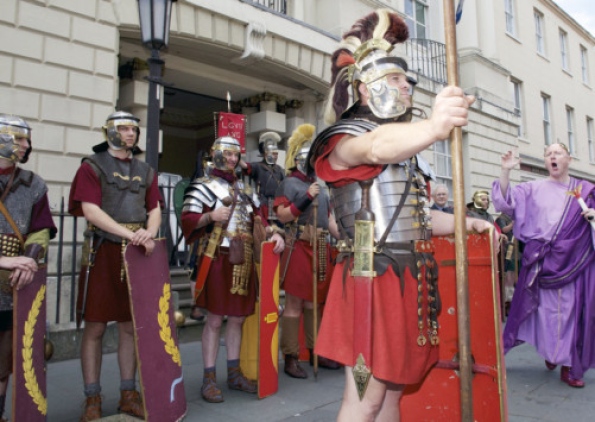
Out of the solid brick wall, a helmet emerged. Then a face. A Roman soldier. He looked tired. Grimy. Unshaven. This wasn’t a translucent, floaty “Casper the Ghost” figure. This looked like a living, breathing man made of flesh and blood. But he was walking through the wall.
Harry scrambled backward, pressing himself against the far corner, terrified into silence. The soldier didn’t look at him. He just marched on.
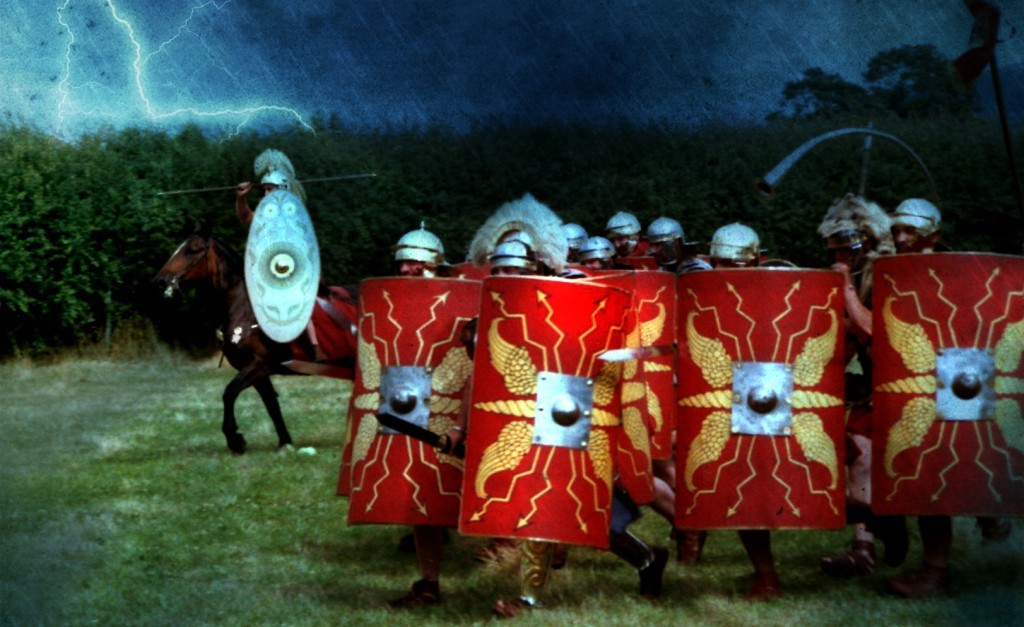
Then came the others. A horse. More soldiers. An entire platoon of the lost IX Legion. They were disheveled, wearing green tunics and carrying round shields. But here is the detail that sends shivers down the spine of every skeptic who hears this story. Here is the detail that makes this case legendary.
Harry couldn’t see their feet.
They were walking on their knees. It looked like they were sinking into the floor. Harry watched, paralyzed, as they marched across the cellar and vanished into the opposite wall.

The Impossible Evidence
When Harry told the curator of the house what he saw, he expected to be fired or laughed at. Instead, he was met with a strange look. Years later, excavations were carried out in the cellar. Archaeologists dug down.
Guess what they found?
About 15 inches below the modern cellar floor lay the original Roman road, the Via Decumana. The soldiers weren’t walking on their knees. They were walking on the road that existed 1,900 years ago. Harry Martindale saw them at the correct height for their time, not his.
This is the “smoking gun” for the Stone Tape Theory. This theory suggests that ghosts aren’t spirits of the dead, but recordings. Intense emotional energy—fear, exhaustion, determination—gets “imprinted” onto the environment, specifically stone or water. Under the right conditions, the atmosphere plays the tape back. A hologram of history. The soldiers didn’t see Harry because they weren’t there. He was watching a 3D movie projected by the house itself.
The High Strangeness of the Wollaton Park Gnomes (1979)
If the Roman soldiers scare you, this next story might just break your brain. It sounds like a fairy tale gone wrong. It sounds like a hallucination. But to the people involved, it was absolute, terrifying reality.
September 1979. Nottingham, England. The sun was setting over the marshy, wooded area of Wollaton Park. A group of primary school children—around 8 to 10 years old—were playing near the gates. It was a normal evening. Until the woods came alive.
The children later reported hearing a weird, high-pitched, bell-like sound. Ding. Ding. Ding.
From the shadows of the trees, they emerged. Not ghosts. Not soldiers. Gnomes. Thirty pairs of them. Sixty tiny men in total.
Bubble Cars and Beards
These weren’t the cute ceramic statues you put in your garden. The children described them as looking “mean.” They were about half the height of a human child. They had long white beards, wrinkled faces, and wore classic pointed caps—mostly red.
But here is where the story takes a sharp left turn into “High Strangeness.” They weren’t riding horses or walking. They were driving cars.
The children described the vehicles as silent, hovering “bubble cars.” Tiny, red, two-seater vehicles that moved without engines. The gnomes zipped out of the brush and began to chase the children. The kids screamed. They ran. They didn’t stop running until they reached their homes, pale and shaking.

Mass Hysteria or Interdimensional Leak?
Skeptics immediately cried “fibbing.” Kids make stuff up, right? But the headmaster of the school interviewed the children separately. He asked trick questions. He tried to trip them up. They all told the exact same story. The drawings they made were consistent. The terror in their eyes was real.
Even stranger? It wasn’t just the kids. After the story leaked, adults came forward. Sane, working-class adults who admitted, usually in hushed tones, “I saw the little men too.”
This falls into the category of what researcher Jacques Vallée calls “The Absurd.” When a close encounter is so ridiculous (bubble-driving gnomes?), we dismiss it. But what if that’s the camouflage? What if the phenomenon masks itself in our own cultural folklore to interact with us? In 1979, bubble cars were a sci-fi trope. Did the entities mimic what the kids expected to see?
The Creator of the Myth: Wil Huygen (Bio & Context)
You cannot talk about the Wollaton Gnomes without looking at the cultural bomb that dropped just two years prior. Was the sighting a result of a “Tulpa”—a thoughtform brought to life by collective imagination?
Wil (Willibrord Joseph) Huygen (June 23, 1922 – January 14, 2009) was the Dutch author who, perhaps inadvertently, seeded the consciousness of those Nottingham children.
Huygen wasn’t a fantasy writer by trade. He was a physician. A man of science. Born in Amersfoort, the Netherlands, as the seventh of ten children, he possessed a clinical eye for detail. This background is exactly what made his most famous work so dangerous to the imagination.
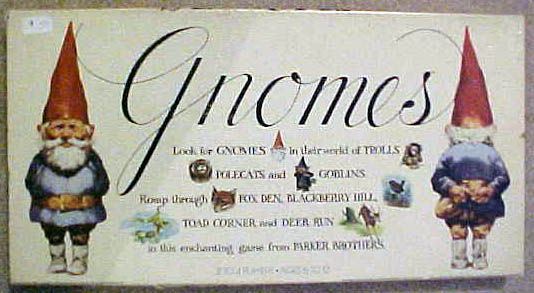
In 1977, he published Gnomes (originally Leven en werken van de Kabouter), illustrated by the legendary Rien Poortvliet. This wasn’t a storybook. It was written like a biology field guide. It treated gnomes as real, biological species. It had anatomical diagrams. It described their mating habits, their architecture, their lifespan. It sat atop the New York Times bestseller list for over a year.
The book was everywhere in the late 70s. It was on coffee tables, in libraries, and on TV.
The Connection
Did Wil Huygen’s “field guide” act as a blueprint? When those children in Wollaton Park experienced something unexplainable in the woods, did their brains reach for the most available imagery—Huygen’s gnomes? Or, is it possible that Huygen didn’t just invent them? Did the good doctor know something we didn’t? In his second book, De oproep der Kabouters, he and the illustrator appear as characters, claiming they were contacted by the gnomes because they wrote the first book.
Huygen passed away in 2009 at the age of 86. He left behind a legacy of whimsy, but also a lingering question. Did he write fiction? or did he document a hidden reality that, on a dark night in Nottingham, decided to drive its bubble cars out of the pages and into our world?
The Moon. The Romans. The Gnomes. Three stories. Three layers of reality. Which one do you believe?
Originally posted 2016-02-26 12:28:00. Republished by Blog Post Promoter
![roman-soilder-ghost[1]](https://coolinterestingnews.com/wp-content/uploads/2016/02/roman-soilder-ghost1.webp)