The Stairway to Heaven: Madness or Destiny?
Look up. Higher. Past the clouds. Past where the jets fly. Imagine a train. But this train doesn’t go across the country. It goes up.
Space elevators. The concept sounds like pure hallucinations from a 1950s sci-fi writer who had too much coffee. A cable stretching from the surface of our planet, piercing the sky, and locking into a counterweight deep in the black void of space. It sounds impossible. It sounds crazy. But here is the thing that will keep you awake at night: The math actually works.
Physics says yes. Engineering says no.
Space elevators could revolutionize space travel. That is the understatement of the century. If we pull this off, we aren’t just “traveling” to space anymore. We are colonizing it. We are owning it. But while undeniably useful, the concept of a space elevator may simply be impractical in the real world. Or is it? Are we just not smart enough yet?
Let’s rip this idea apart and see what’s inside.
The 100,000-Kilometer Problem
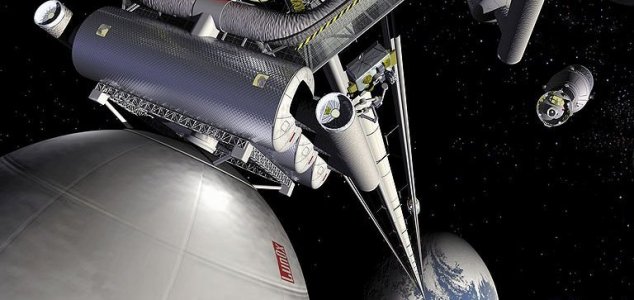
A science fiction staple, the space elevator is a transportation system which uses special capsules to carry things into space along a cable that is so long that it stretches all the way into orbit.
Think about a ball on a string. You spin it around your head. As long as you spin it fast enough, the string stays tight, right? That is the basic principle here. Centrifugal force.
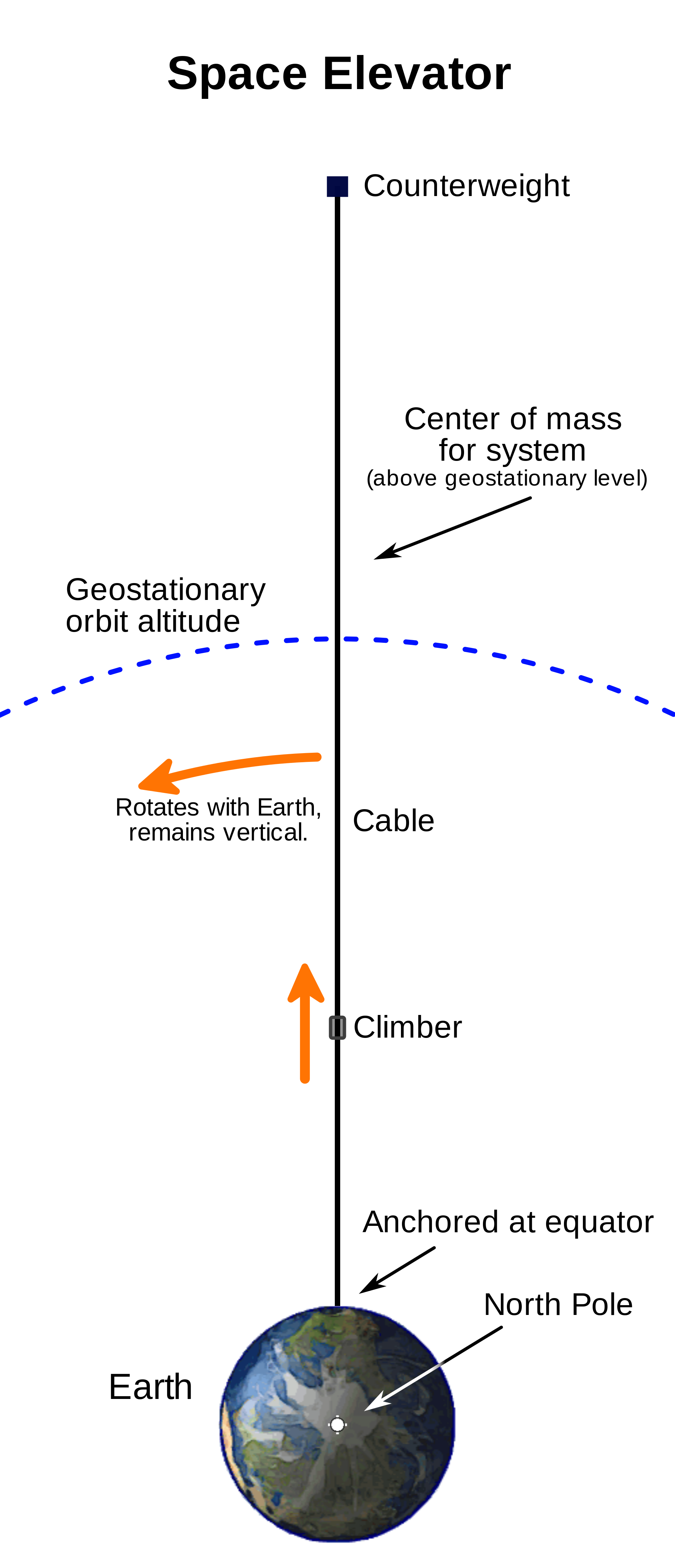
You anchor a cable at the equator. You shoot the other end out into space, past geostationary orbit (that’s about 22,000 miles up). You put a massive weight on the end. As the Earth spins, that weight pulls outward. It keeps the cable tight. Taut. A roadmap to the stars.
Its advantages over sending people and cargo into space using conventional rockets would be huge, saving vast amounts of money and resources on every launch. Right now, riding a rocket is like burning a Rolls Royce every time you want to go to the grocery store. It is wasteful. It is dangerous. It is expensive.
With an elevator? You just use electricity. Solar panels on the side of the track could power the climbers. The cost drops from thousands of dollars per pound to maybe… a few bucks. A pizza delivery to the International Space Station would be cheaper than a FedEx package to London.
The trouble, however, is that nobody has ever been able to come up with a viable way to actually turn the concept of a space elevator into a real-life system.
The “Impossible” Material
Here is where the dream hits a brick wall. Or rather, a steel wall that isn’t strong enough.
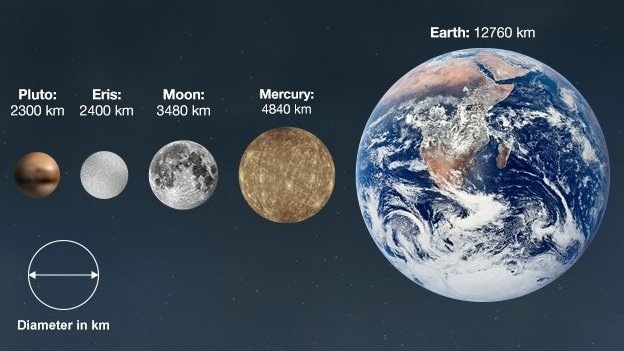
Some have argued that building such a thing is fundamentally impractical, especially given that the cable would need to be over 100,000km in length – more than twice the Earth’s circumference. Gravity is a bully. It wants to pull that cable down. The spin of the Earth wants to throw it out. The tension on that line would be unimaginable.
Steel snaps. Titanium? Like wet paper. Kevlar? Not even close.
We need a material that is lighter than air but stronger than diamond. We need Carbon Nanotubes. Or Graphene. These are molecular structures where carbon atoms link arms in a honeycomb pattern that is virtually unbreakable. In a lab, we can make this stuff. It works.
The catch? We can only make it about the size of a fingernail clipping. We need a ribbon of it that is 60,000 miles long. If there is a single defect—one atom out of place—the whole thing unzips and comes crashing down.
Elon Musk: The Chief Skeptic
When the guy who lands rockets on drone ships says your idea is too hard, you listen.
Elon Musk, CEO of SpaceX and inventor of the Hyperloop, has also expressed his skepticism by suggesting that it would be easier to build a bridge from Los Angeles to Tokyo. Think about that visual. A bridge across the entire Pacific Ocean. That is insane. And Musk thinks that is easier than a space elevator.
“This is extremely complicated,” he said. “I don’t think it’s really realistic to have a space elevator.”
Musk bets on rockets. Why? Because we understand fire. We understand tanks of fuel. It is brute force. It is loud, messy, and dangerous, but we know how to do it. A space elevator requires materials that don’t effectively exist yet. It requires global cooperation. It requires a level of patience that humanity rarely shows.
The “Tower of Babel” Connection?
Let’s get weird for a second. Alternative historians love this part. Look at the Tower of Babel story.
Humanity tries to build a structure to reach the heavens. God gets mad, confuses their languages, and smashes it. Was this a metaphor? Or was it a garbled memory of a prehistoric civilization trying to build a space elevator?
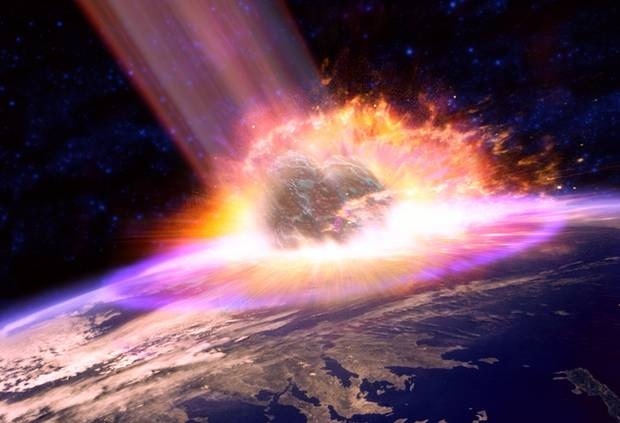
If you believe the ancient astronaut theories, maybe we have been down this road before. And maybe it ended in a cataclysm. If a space elevator breaks, it doesn’t just fall over like a building. It wraps around the world. It whips through the atmosphere, creating sonic booms and shockwaves that could level cities. It is a whip crack heard around the world. Is that what happened in the deep past? Probably not. But it’s fun to think about.
The Believers: Never Tell Me The Odds
Despite the danger. Despite the impossible physics. The dream refuses to die.
Nonetheless, there are still some, including Peter Swan of the International Space Elevator Consortium, who believe that space elevators are very much a part of our future. These guys aren’t writing sci-fi novels. They are doing the math. They are holding conferences. They are serious.
“It’s a phenomenal enabling technology that would open up our Solar System to humankind,” he said. “I think the first ones will be robotic, and then 10 to 15 years after that we’ll have six to eight elevators that are safe enough to carry people.”
Japan is betting big on this too. The Obayashi Corporation, a massive construction giant in Tokyo, has stated they aim to build one by 2050. They aren’t joking. They have timelines. They have R&D departments burning through cash to figure out how to weave carbon nanotubes.
The Lunar “Spaceline” Solution
Here is a modern twist that changes the game. Recent internet theories and serious papers from Cambridge University suggest we might be building the elevator on the wrong planet.
Earth has high gravity. Earth has a thick atmosphere. Earth has hurricanes and terrorists and birds.
The Moon? The Moon is quiet. And the gravity is weak.
We could build a space elevator on the Moon today. We don’t need magic carbon nanotubes. We can use Kevlar or Dyneema—stuff you can buy at a hardware store (almost). We anchor it to the lunar surface and dangle it down toward Earth. A “Spaceline.”
You fly a rocket to the bottom of the line (which hangs in zero-G), latch on, and take the solar-powered train to the Moon’s surface. No landing gear needed. No massive fuel burn for descent. It creates a permanent highway between Earth and our satellite.
The Ultimate Gamble
Why do we care? Why obsess over a 60,000-mile cable?
Because rockets are a bottleneck. We can’t move heavy industry off-planet with rockets. We can’t build massive starships in orbit if we have to launch every nut and bolt on a Falcon 9.
If we want to save the Earth, we need to get the heavy, dirty factories off of it. We need to mine asteroids, not mountains. We need to harvest solar power in space and beam it down. The space elevator makes all of that cheap. It makes it easy.
It is the difference between paddling a canoe across the ocean and building a bridge. One is an adventure; the other is infrastructure.
So, is it impossible? Maybe. Is it dangerous? Absolutely. If that cable snaps, it’s a global disaster. But the payoff? The payoff is the stars.
We are standing at the bottom of a very long ladder. The first rung is shaky. We don’t know if the top is secured. But eventually, someone is going to start climbing.
Originally posted 2015-11-03 15:25:32. Republished by Blog Post Promoter
Originally posted 2015-11-03 15:25:32. Republished by Blog Post Promoter

Arindam loves aliens, mysteries and pursing his interest in the area of hacking as a technical writer at ‘Planet wank’. You can catch him at his social profiles anytime.