Tuesday, August 4, 2026
HomeUnexplained & ParanormalStrange StoriesShape-Shifting Jesus Described in Ancient Egyptian Text

Shape-Shifting Jesus Described in Ancient Egyptian Text

The Pilate Paradox: Did a 1,200-Year-Old Text Just Rewrite the Crucifixion?

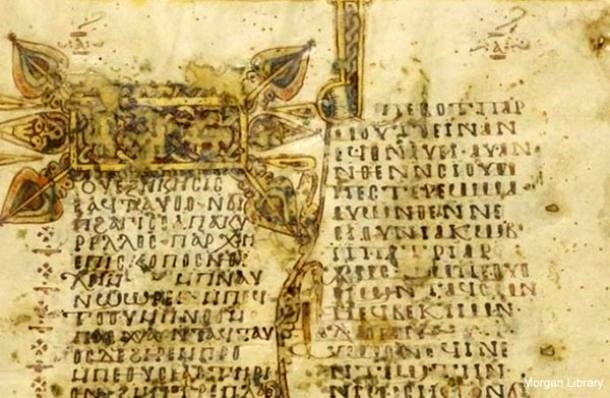
Forget everything you think you know. Seriously. Take the most famous story in Western history, the story of the crucifixion, and throw it out the window. Because a dusty, 1,200-year-old manuscript, written in the ancient Coptic language of the Egyptian Christians, tells a version of events so bizarre, so contradictory, it feels ripped from a parallel universe.

This isn’t just a slightly different translation. Oh no.

This is a full-blown rewrite. A cosmic plot twist. A text that suggests one of history’s greatest villains might have been a secret ally, and that Jesus himself possessed a power straight out of a modern comic book.

For centuries, this story lay dormant, its secrets locked away in a language few could read. Rescued from the forgotten library of a remote Egyptian monastery, its brittle pages whisper of a secret dinner, a shocking sacrifice, and a supernatural ability that completely changes the meaning of Judas’s infamous kiss. Get ready. The rabbit hole is deeper than you could ever imagine.

The Secret Supper of Pontius Pilate

Let’s start with the man history loves to hate: Pontius Pilate. The Roman governor. The man who washed his hands of the whole affair, a symbol of cowardly bureaucracy in the face of injustice. That’s the official story, anyway.

This ancient text flips the script entirely.

According to this manuscript, on the night before the crucifixion, Pilate didn’t just reluctantly condemn Jesus. He invited him to dinner. Stop and think about that. The powerful Roman prefect, breaking bread with the Galilean preacher he was about to send to a brutal death. What could they possibly have talked about? The weather? Roman politics? The quality of the wine?

The text suggests a conversation of profound significance. Pilate, far from being a cold-hearted official, is shown as a man tormented by his duty. He sees something in Jesus. Something that shakes him to his core. He doesn’t want to kill him.

Then comes the bombshell.

As the dinner concludes, Pilate makes an offer so shocking it borders on insanity. He tells Jesus, “I will save you.” But how? By offering a substitute. Not a common criminal like Barabbas. No. The text claims Pilate offered to sacrifice his own son in Jesus’s place.

Let that sink in. The Roman governor, a man of immense power and authority, was so moved by his dinner guest that he was willing to kill his own child to spare him. This single detail doesn’t just change Pilate’s character; it obliterates the traditional narrative. It paints him not as a villain, but as a potential believer, a man caught in an impossible political trap, willing to make the ultimate sacrifice.

This isn’t as crazy as it sounds. While mainstream Christianity condemns Pilate, other, older traditions view him very differently. The Ethiopian Orthodox Church, for instance, actually venerates Pilate and his wife as saints, believing they secretly converted to Christianity. Could this 1,200-year-old text be a missing piece of that puzzle? A remnant of a belief system where Pilate wasn’t the judge, but the first powerful convert, a man who saw divinity and tried to protect it?

20140225-225327.webp

Why a Kiss? The Mystery of the Shapeshifting Messiah

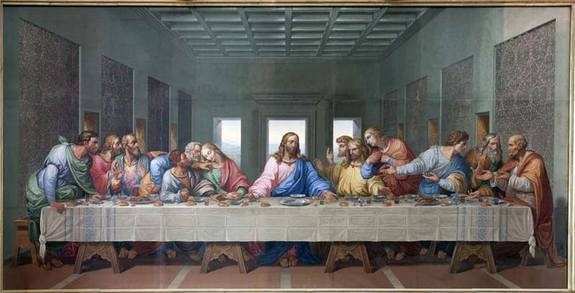
If the story about Pilate scrambled your brain, this next part will vaporize it. We all know the story of Judas Iscariot. The disciple who betrayed Jesus for 30 pieces of silver. The man whose name is synonymous with treason. And his method of identification? A kiss in the Garden of Gethsemane.

But have you ever stopped to ask *why* a kiss? In a tense, nighttime raid, why use such an intimate, personal gesture to point out a man to a mob of armed guards? Couldn’t he have just pointed and said, “That’s him”?

For centuries, the kiss has been interpreted as the ultimate act of duplicitous betrayal—using a sign of love to signal death. It’s poetic. It’s tragic. But according to this Coptic manuscript, the reason was far more practical. And far more paranormal.

The text states that Judas used a kiss because Jesus had the ability to change his shape.

He was a shapeshifter.

Think about the implications. The manuscript, titled “Pseudo-Cyril of Jerusalem on the Life and the Passion of Christ,” explains that Jesus could alter his appearance at will. He could appear as an old man, a youth, or even a child. He could be tall or short, light or dark. He was impossible to pin down. To the Romans and temple guards, he was a ghost, a phantom who could blend into any crowd and vanish.

So the kiss wasn’t about betrayal in the poetic sense. It was a targeting system. Judas had to get close. He had to physically mark the *current* form of Jesus for the guards. The instructions from the chief priests would have been something like: “We don’t know what he’ll look like tonight. He could be anyone. Get right up to him and kiss him so we know for sure which one to grab.”

Suddenly, a strange historical detail makes a chilling, supernatural kind of sense.

A Glimpse into Gnostic Belief?

This idea of a shapeshifting Jesus isn’t just some random fantasy. It connects to very old, very real Christian traditions that were later stamped out as heresy. We’re talking about Gnosticism. The Gnostics were early Christians who had a radically different view of the world. They believed the physical world was a prison created by a lesser, evil god, and that Jesus was a purely spiritual being sent from a higher realm of light to give humanity secret knowledge (or “gnosis”) to escape.

To many Gnostics, Jesus didn’t have a real, physical body. He was more like a hologram. An apparition. It makes perfect sense that a being like that could change its appearance at will. The ability to shapeshift fits Gnostic theology like a glove. Could this text be a surviving echo of what millions of early Christians *actually* believed before their gospels were burned and their beliefs condemned by the organized church?

The Timeline Conspiracy: A Tuesday Arrest

The canonical gospels of Matthew, Mark, Luke, and John give us a very specific timeline for the Passion week. The Last Supper is on a Thursday evening. Jesus is arrested later that night. He is tried and convicted overnight and crucified on Friday.

It’s the foundation of the Easter holiday. Maundy Thursday. Good Friday. Easter Sunday.

This ancient Coptic text takes that timeline and shatters it. It states, unequivocally, that the arrest of Jesus happened on a *Tuesday* evening.

At first, this might seem like a minor detail. Who cares? Tuesday, Thursday, what’s the difference?

The difference is everything.

An arrest on Tuesday means there are two full “missing” days in the most-scrutinized week in history. Wednesday and Thursday. What happened during that time? The official story has a rushed, chaotic trial in the dead of night. But a Tuesday arrest allows for a much longer, more drawn-out process. It provides the time needed for Pilate’s secret dinner and his desperate attempts to find a way out. It suggests a far more complex political and legal battle was happening behind the scenes than the one we’ve been told.

It opens up a chasm in the narrative. Were there other interrogations? Other secret meetings? Did they hold him for two extra days trying to break him, only to find their efforts were useless? This single change in the calendar transforms the Passion from a rushed, 24-hour event into a grueling, multi-day ordeal, filled with possibilities the official story simply glosses over.

So, What Does This All Mean?

Now, let’s be clear. The scholar who translated this text, Roelof van den Broek of Utrecht University, is careful to point out that this discovery doesn’t mean these events *actually* happened. He states, “The discovery of the text doesn’t mean these events happened, but rather that some people living at the time appear to have believed in them.”

It’s the academic, responsible perspective. This text reflects the beliefs of a certain community of Egyptian Christians in the 8th or 9th century.

But can we really leave it at that?

Stories like this don’t just appear out of thin air. They are born from something. They are echoes. Whispers carried down through generations. The early Christian world was a chaotic explosion of different beliefs, gospels, and traditions. It wasn’t until the 4th century at the Council of Nicaea that a group of powerful bishops and a Roman Emperor decided which books were “in” and which books were “out.”

What if texts like this one are the “outtakes”? The deleted scenes from the director’s cut of history? They show us that for hundreds of years, people believed in a Jesus who could change his form, a Judas who needed a special way to identify him, and a Pontius Pilate who was a tragic, conflicted figure, not a simple villain.

These aren’t just fairy tales. They represent a version of Christianity that was suppressed, a version that was perhaps more mystical, more strange, and more challenging than the one that became dominant. This Coptic text is a crack in the wall of accepted history. A small glimpse into an alternate reality. It forces us to ask the most dangerous question of all: What other stories have been buried?

Amit Ghosh
Amit Ghoshhttps://coolinterestingnews.com
Aloha, I'm Amit Ghosh, a web entrepreneur and avid blogger. Bitten by entrepreneurial bug, I got kicked out from college and ended up being millionaire and running a digital media company named Aeron7 headquartered at Lithuania.
RELATED ARTICLES
- Advertisment -

Most Popular

Recent Comments

Warren Pan Abbott on The legend of the Devil Monkey !
chris davies on The McPherson Tape Mystery
Reed Reedly on ET has Internet!
Bea Houseoffashion on Proof Of Time Travellers – Gallery
Marcus2012 on ET has Internet!
Reed Reedly on ET has Internet!
LaughsAtConspiracyNuts on The 9/11 Conspiracy – Myths and Facts
Alex Sliverman on Did the ancients fly?
Doctor Wholigan on Time Traveler in 1938 film
chris davies on The McPherson Tape Mystery
Archie1954 on 10 secret UFO hideouts
chris davies on Ghosts of flight 401
Marcus2012 on ET has Internet!
jason Macdonald on Proof of Time Travel? – China
chris davies on Long-Lost Pyramids Found?
Reed Reedly on ET has Internet!
Milkman on Connected Universe
Tenmiles on Baigong Pipes Mystery
Simon Foster on Sirius – The Documentary
From the 1st April on 2013 – Alien Contact date ?
SkyWatcher on Is ET ignoring us?
I Come From The Future on Obama to make UFO Alien disclouser soon ?
Just another person on 2013 – Alien Contact date ?
Malcolm Windowcleaner on The strange case of Rudolph Fentz
Mason Servio on Strange Things on Mars
Marke Wisdom Seeker on What will we find as arctic melts?
Andrea A Elisabeth Levyne on Aliens Captured in Varginha, Brazil
Mitch Grouyeki on Amazing Space Shuttle pictures