Sunday, September 13, 2026
HomeSpace & ScienceScienceScientists discover plastic-eating bacteria

Scientists discover plastic-eating bacteria

The Earth’s Secret Weapon: Has a Rebel Bacteria Evolved to Eat Our Plastic Apocalypse?

Look around you. Right now. How much plastic can you see? Your phone case. The bottle of water on your desk. The keyboard you’re typing on. The fleece jacket you’re wearing. It’s everywhere.

A ghost we created.

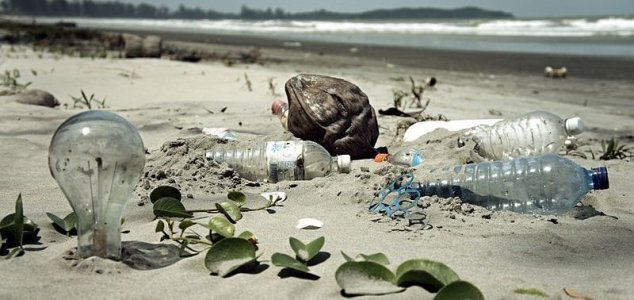
For nearly a century, we’ve been told this material is our triumph and our curse. A modern miracle of convenience that will outlast us all, choking our oceans and poisoning our lands for a thousand years. A synthetic monster we built but could not un-build. We dump millions of tons of it every single year, creating floating continents of garbage in our seas and toxic mountains on our land.

It’s a problem so big, so utterly overwhelming, it feels hopeless. We were told nothing could break it down. That it was, for all intents and purposes, immortal.

But what if that was a lie?

What if, deep within the sludge of a recycling plant, in the suffocating filth of our own creation, the planet itself has started to fight back? What if life, as it always does, found a way? This isn’t science fiction. This is the story of a discovery so profound it could change everything. Or, it could be the terrifying first chapter in a story we are not prepared for.

A Needle in a Plastic Haystack

The year is 2016. A team of researchers in Sakai, Japan, are doing the dirty work. They are wading through the muck of our modern world, collecting samples from a plastic bottle recycling facility. Not exactly a glamorous job. They scooped up 250 samples of PET-contaminated debris—sludge, wastewater, sediment—all teeming with microbial life that had been forced to live in a world made of our trash.

They were hunting for a ghost. A biological anomaly. A microbe that might, just might, be doing the impossible: eating plastic.

For weeks, their search turned up nothing. Just the usual suspects, bacteria surviving *on* the plastic, not consuming it. But then, in one sample, they saw it. A thin film of plastic, left in a petri dish with a specific colony of microbes, was vanishing. Disappearing. Not breaking into smaller pieces. It was being deconstructed, molecule by molecule.

They had found it. A previously unknown species of bacteria, which they named Ideonella sakaiensis 201-F6. This tiny organism wasn’t just living with plastic. It was using it as its primary food source. Its only food source.

Think about that. In the 70-odd years since we began mass-producing plastic, a lifeform has seemingly evolved from scratch with the specific biochemical tools needed to digest it. This is evolution happening on hyperspeed, a direct response to the planetary crisis we engineered.

Microbiology professor Enzo Palombo wasn’t entirely surprised. He stated, “If you put a bacteria in a situation where they’ve only got one food source to consume, over time they will adapt to do that.” A simple statement for a world-shattering event. Life adapts. Life survives. Even if it means learning to eat the indigestible.

DEEP DIVE: How to Eat a Plastic Bottle

So how does a microscopic organism devour something as tough and unnatural as a plastic bottle? PET, or polyethylene terephthalate, isn’t like a leaf or a piece of wood. It’s a polymer, a massive, tightly-bound chain of molecules that is notoriously resistant to the natural world. It was designed to be indestructible.

Professor Uwe Bornscheuer of Greifswald University in Germany noted at the time, “Until recently, no organisms were known to be able to decompose it.”

So what’s the secret? It’s all about the enzymes. Ideonella sakaiensis evolved a unique two-step weapon system to attack and consume PET.

Step 1: The Heavy Artillery – PETase

First, the bacterium latches onto the surface of the plastic. It then secretes a special enzyme called PETase. Think of PETase as a pair of industrial-strength molecular scissors. This enzyme attacks the long, tangled polymer chains that make PET so strong and begins snipping them apart. It breaks the main chain down into smaller, more manageable units called mono(2-hydroxyethyl) terephthalate, or MHET.

Step 2: The Finishing Move – MHETase

But the job isn’t done. The bacterium then absorbs these smaller MHET molecules. Once inside the cell, a second, even more specialized enzyme gets to work: MHETase. This enzyme takes the MHET chunks and breaks them down one final time, into their original, harmless building blocks: ethylene glycol and terephthalic acid.

And here’s the kicker. These two substances are not waste. They are food. The bacteria digest these simple organic compounds to get the energy and carbon it needs to live and reproduce. It doesn’t just break the plastic; it *eats* the plastic. The entire process, from solid bottle to bacterial energy, took about six weeks in the lab for a low-grade piece of PET. Not bad for a material we thought would last for centuries.

Conspiracy Corner: Is Gaia Declaring War?

This is where the story goes from interesting science to something far stranger. Mainstream science will tell you this is just a beautiful example of natural selection. We created a new environmental niche—a world full of plastic—and a lifeform evolved to fill it. Simple. Tidy.

But is it? Is it really that simple?

The speed is what’s so unsettling. Seventy years. That’s not a blink of an eye in evolutionary time; it’s the flutter of a single eyelash. For a complex, two-enzyme digestive system to emerge and perfect itself in that time is, to put it mildly, extraordinary.

This has led many online researchers and alternative thinkers to ask a chilling question: Is this random, or is this a response? Is the Earth itself, through the vast, interconnected network of microbial life, developing an immune system to fight the “plastic plague” we’ve unleashed?

Consider the Gaia hypothesis—the theory that the Earth functions as a single, self-regulating superorganism. If you get sick, your body produces antibodies to fight the infection. What if our global, suffocating layer of plastic waste is being treated as a planetary infection? And what if Ideonella sakaiensis is the first antibody?

What if it’s not alone?

The Japanese team found this one bacterium in one recycling plant. Who’s to say that similar—or even more powerful—microbes haven’t been evolving silently in the Great Pacific Garbage Patch? Or in the deepest, darkest landfills across the globe? Are we witnessing the start of a biological war on our own waste? A silent, microbial rebellion happening right under our noses.

The Mutant Super-Enzyme: Scientists Play God

The story doesn’t end in 2016. It gets even wilder. Once scientists had the genetic blueprint for the PETase enzyme, they started tinkering. They wanted to understand how it worked. And in doing so, they accidentally made it better. A lot better.

In 2018, a team at the University of Portsmouth in the UK, in collaboration with the US Department of Energy’s National Renewable Energy Laboratory, was studying the PETase enzyme’s structure. They made a few small mutations to its active site, the part of the enzyme that grabs onto the plastic. They were just trying to see how it was built.

But they accidentally created a monster.

Their new “mutant” enzyme was 20% more efficient at breaking down PET than the natural version. It worked faster and on tougher plastics. They had stumbled upon a way to supercharge nature’s own solution.

And they didn’t stop there. In 2020, the same group announced they had created an even more potent “enzyme cocktail.” They combined their mutant PETase with the second enzyme, MHETase, creating a super-mutant duo that worked up to *six times faster* than the original, naturally-evolved version. Later advancements have created enzymes that can digest plastic at room temperature in just 24 hours.

The dream is no longer just a fantasy. Scientists now envision massive bioreactors, giant vats filled with these super-enzymes, taking in mountains of plastic waste and, within hours, reducing it back to its pristine chemical building blocks. These building blocks could then be used to make new, high-quality plastic, creating a truly circular, infinitely repeatable recycling process. It’s the holy grail of waste management. A way to finally, truly, un-make the monster.

Pandora’s Plastic Box: What Could Possibly Go Wrong?

A miracle microbe. A super-enzyme that eats our trash. It sounds like the perfect Hollywood ending. But every great discovery has a dark side, a list of terrifying “what ifs.”

What if this gets out?

We’re not just talking about the naturally-occurring bacteria. We’re talking about the genetically engineered, supercharged versions. What would happen if a microbe armed with these hyper-efficient enzymes escaped the lab and got into the wild?

Suddenly, the world looks very different. Your polyester clothes could start to degrade in your closet. The insulation in your walls, the dashboard of your car, the soles of your shoes—all could be on the menu. Think about critical infrastructure: water pipes, medical equipment like IV bags and syringes, computer components. So much of our modern world is built with the very plastics these enzymes are designed to destroy.

Could we be engineering our own undoing, creating a biological plague that dismantles our civilization from the inside out? It sounds like a B-movie plot, but scientists are already taking extreme precautions. The very idea of releasing a self-replicating, plastic-eating organism into the environment is a bio-security nightmare.

And then there’s the conspiracy you won’t hear about on the evening news. Who stands to lose from a technology that creates infinitely recyclable plastic? The oil and gas giants, of course. The multi-trillion-dollar industry that profits from drilling up fossil fuels to create a constant stream of new, “virgin” plastic. A true circular plastic economy would be a direct threat to their entire business model. Will this technology ever be allowed to reach its full potential, or will it be bought, buried, and forgotten by powerful interests who need us to keep drilling, producing, and dumping?

The Final, Sobering Truth

For all the excitement, all the hope, and all the fear, one cold reality remains. Ideonella sakaiensis and its lab-grown cousins are not a magic bullet. They are not a get-out-of-jail-free card for our plastic addiction.

Why? Scale.

We currently produce around 400 million metric tons of plastic every single year. That number is expected to triple by 2060. The sheer volume is staggering, almost beyond comprehension. Even a fleet of the most efficient bioreactors in the world would be like trying to empty the ocean with a teaspoon.

The discovery of this plastic-eating bacteria isn’t an excuse to keep consuming and discarding. In fact, it’s the opposite. It’s a final warning shot from a planet pushed to its absolute limit.

It took the Earth, in its incredible resilience, over 70 years to evolve a single, microscopic defense against our onslaught. It took us only a few years to take that defense and try to turn it into an industrial weapon. That’s the story of humanity in a nutshell. We break things, and then we scramble to find ever-more-complex ways to fix what we broke, rarely stopping to ask if we should have just not broken it in the first place.

So is this tiny bacterium our salvation? A planetary antibody? Or is it the key to a Pandora’s Box we are not prepared to open?

The most effective tactic is still the simplest one, the one we’ve known all along. Just stop dumping the plastic in the first place.

Arindam Mukherjee
Arindam Mukherjee
Arindam loves aliens, mysteries and pursing his interest in the area of hacking as a technical writer at 'Planet wank'. You can catch him at his social profiles anytime.
RELATED ARTICLES
- Advertisment -

Most Popular

Recent Comments

Warren Pan Abbott on The legend of the Devil Monkey !
chris davies on The McPherson Tape Mystery
Reed Reedly on ET has Internet!
Bea Houseoffashion on Proof Of Time Travellers – Gallery
Marcus2012 on ET has Internet!
Reed Reedly on ET has Internet!
LaughsAtConspiracyNuts on The 9/11 Conspiracy – Myths and Facts
Alex Sliverman on Did the ancients fly?
Doctor Wholigan on Time Traveler in 1938 film
chris davies on The McPherson Tape Mystery
Archie1954 on 10 secret UFO hideouts
chris davies on Ghosts of flight 401
Marcus2012 on ET has Internet!
jason Macdonald on Proof of Time Travel? – China
chris davies on Long-Lost Pyramids Found?
Reed Reedly on ET has Internet!
Milkman on Connected Universe
Tenmiles on Baigong Pipes Mystery
Simon Foster on Sirius – The Documentary
From the 1st April on 2013 – Alien Contact date ?
SkyWatcher on Is ET ignoring us?
I Come From The Future on Obama to make UFO Alien disclouser soon ?
Just another person on 2013 – Alien Contact date ?
Malcolm Windowcleaner on The strange case of Rudolph Fentz
Mason Servio on Strange Things on Mars
Marke Wisdom Seeker on What will we find as arctic melts?
Andrea A Elisabeth Levyne on Aliens Captured in Varginha, Brazil
Mitch Grouyeki on Amazing Space Shuttle pictures