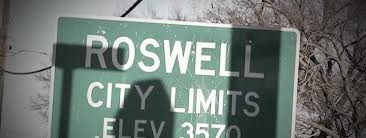
The Roswell Slides: The Alien Photo That Almost Changed The World
Have you ever looked at a photograph and felt the world shift under your feet? A single image so profound, so jarring, it threatens to rewrite history itself. We’re not talking about a pretty landscape or a family portrait. We’re talking about a picture that whispers a secret humanity has been screaming for centuries: We are not alone.
And for a brief, electrifying moment, we thought we finally had it.
The proof.
Two small, unassuming photographic slides. Kodachrome. The kind your grandparents used. But these weren’t pictures of a family vacation to the Grand Canyon. Oh no. They allegedly showed something else entirely. Something small, humanoid, and decidedly not from around here. These were the “Roswell Slides,” and they promised to be the smoking gun that blew the lid off the biggest cover-up in human history.
The story that exploded across the internet claimed these images were the real deal. Physical evidence. A direct link to the legendary crash of an extraterrestrial craft near Roswell, New Mexico, way back in 1947. The claims were staggering, the implications universe-altering.

But like all things connected to Roswell, the truth is a twisted road full of shadows, mirrors, and questions that lead to even more questions. So buckle up. We’re going on a deep dive into the story of the alien photo that fooled the world… or did it?
Deep Dive: The Day the Sky Fell in New Mexico
To understand why two little slides caused such a monumental stir, you have to go back. Back to the summer of ’47. The world was still healing from a world war, the Atomic Age was dawning, and people were starting to look up at the skies with a new kind of wonder, and a new kind of fear.
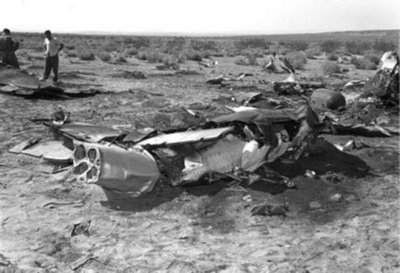
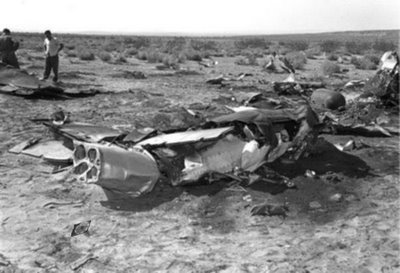
In early July, during a fierce thunderstorm, something streaked across the New Mexico sky and slammed into the desert scrubland on a ranch managed by W.W. “Mac” Brazel. When Brazel went to check on his sheep, he found something bizarre. The field was littered with debris unlike anything he had ever seen. There were lightweight, metallic I-beams with strange purplish-pink symbols on them. There was a foil-like material that, when crumpled, would instantly spring back to its original shape without a single crease. It was tough. Unbreakable. Strange.
He reported it to the local sheriff, who in turn called the Roswell Army Air Field (RAAF). Enter Major Jesse Marcel, the base intelligence officer. He drove out, collected some of the material, and was so impressed that he loaded it into his car and even showed it to his family back home. This wasn’t just junk.
The next day, the RAAF issued a press release that would become legendary. The headline of the Roswell Daily Record on July 8, 1947, screamed: “RAAF Captures Flying Saucer on Ranch in Roswell Region.”
They captured a what?
The story went viral, 1940s style. It was the lead on radio broadcasts across the nation. For a moment, the world held its breath. The military had captured a flying disc. The implications were earth-shattering.
And then, just as quickly, the story was killed. Less than 24 hours later, the military changed its tune. A high-ranking general, Roger Ramey, called a press conference. He held up fragments of a flimsy, busted-up weather balloon with a radar reflector. He claimed Major Marcel had misidentified the wreckage. That’s all it was, folks. A weather balloon. Nothing to see here. Move along.
The media accepted it. The world moved on. But the people of Roswell… they remembered. They whispered. They knew what they saw wasn’t any weather balloon.
A Bombshell in a Dusty Attic
Decades passed. The Roswell story bubbled under the surface, a persistent legend fueled by deathbed confessions from former military personnel, eyewitness accounts, and the government’s increasingly tangled explanations. But there was never any hard, physical proof. No piece of wreckage. No alien body. Nothing the public could see with its own eyes.
Until the slides.
The story goes that they were discovered hidden away in an attic in Arizona. Tucked inside a chest that belonged to a deceased couple. The couple, Bernerd and Hilda Blair Ray, were apparently upstanding, well-connected people. Bernerd was an oil exploration geologist who had worked in the Permian Basin of New Mexico. Hilda was a respected lawyer. Why would they have something like this?
The slides were passed through a few hands until they reached UFO researchers Adam Dew, Don Schmitt, and Tom Carey. And what they saw made their jaws drop. The images were on Kodachrome film, a stock that forensic analysis would later confirm was indeed manufactured in 1947. This wasn’t some modern Photoshop hoax.
The images were clear. In color. Taken from two different angles. They showed a small, humanoid figure laid out, seemingly in a glass museum case. Its head was oversized and partially detached, its limbs long and thin. Its skin looked desiccated, its internal organs apparently removed, suggesting an autopsy or dissection had taken place. It looked… alien. It looked exactly like the creatures described by Roswell witnesses.
Could this be it? The holy grail of ufology? The one piece of evidence that could blow the cover-up wide open and force governments around the world to finally admit the truth?
Be Witness: The World Holds Its Breath
The hype machine went into overdrive. The researchers organized a massive event in Mexico City on May 5, 2015, called “Be Witness.” It was streamed live online to a global audience. Thousands of people packed the National Auditorium. The buildup was immense. This wasn’t just another blurry video of a light in the sky. This was being presented as definitive, scientific proof.
They presented expert testimony. A forensic pathologist declared the creature was not a human, not a primate, not a mummy. Its biology didn’t match anything known on Earth. A former NASA astronaut, Edgar Mitchell, who had long been an advocate for UFO disclosure, lent his voice in support. The atmosphere was electric. This was the moment. The truth was about to be revealed.
And then, they showed the pictures.
The images flashed up on the giant screen. The crowd gasped. For a moment, it felt real. It looked real. The creature in the glass case was eerie, otherworldly. It was exactly what everyone had hoped for and feared. The internet exploded. Was this the beginning of a new chapter in human history?
CSI: Internet – When Sleuths Attacked
But then, something the organizers didn’t count on happened. The internet. In the old days, a story like this would be controlled by the media. But in the 21st century, every person with a laptop is a potential detective. And the global community of skeptics, researchers, and curious minds got to work.
They didn’t have access to the original slides, but they had high-resolution screenshots from the “Be Witness” event. And they started picking them apart, pixel by pixel. The first red flag was the setting. The creature wasn’t on a cold, steel military gurney. It was in a glass display case, propped up against a blanket. It looked less like a top-secret autopsy and more like… a museum exhibit.
The real breakthrough came from a tiny, almost unreadable detail. In the corner of the slide, there was a small placard. It was blurry. Frustratingly out of focus. But it was there. Using advanced photo-enhancement software and a whole lot of ingenuity, researchers began trying to decipher the text.
One word. Then another. Slowly, letters emerged from the digital noise. Words like “MUMMIFIED BODY” and “TWO YEAR OLD BOY.”
Wait. What?
The trail was hot now. Internet sleuths scoured museum archives and historical records. And then, they found it. A perfect match. The text on the placard was an almost exact match for a display at the Chapin Mesa Archeological Museum in Mesa Verde, Colorado. The display featured the mummified remains of a Native American child, discovered in the late 19th century.
The game was up. The “Roswell Alien” wasn’t an alien at all. It was the tragic, earthly remains of a human child, put on public display in a museum decades ago.
A Hoax, a Mistake, or Something Far More Sinister?
The fallout was immediate and brutal. The “Roswell Slides” went from being the greatest discovery in history to one of the most embarrassing fiascos in the history of ufology. The organizers were widely condemned. Adam Dew, one of the main promoters, eventually released a statement admitting the figure was likely the mummified child and apologized for the mistake.
But was it just a mistake? A case of wishful thinking gone wild?
Many believe it was an outright, cynical hoax designed to make money from the pay-per-view event. The promoters, they argue, must have known what they had, or at the very least, they willfully ignored the obvious signs that this wasn’t what they claimed it to be.
But there’s another, more paranoid theory. A theory that whispers from the shadowy corners of the conspiracy world. What if the Roswell Slides were a plant? What if this was a sophisticated disinformation campaign? Think about it. The best way to discredit the *real* Roswell story is to promote a piece of “evidence” that seems incredible, gets everyone excited, and then proves to be a spectacular, public failure. It poisons the well. It makes anyone who talks about Roswell look like a fool who falls for hoaxes.
Who would do such a thing? The same people who have been covering up the truth since 1947, of course. Plant a debunkable story to discredit the entire field. It’s a classic intelligence agency tactic. Make the truth so radioactive that no one serious will ever touch it again.
What if We’re Asking the Wrong Questions?
The story of the Roswell Slides is a cautionary tale. It’s a story about hope, hype, and how badly we want to believe. But even though this specific chapter is closed, the book remains wide open. The failure of the slides doesn’t erase the original Roswell event. It doesn’t explain away the dozens of credible, first-hand witnesses—military officers, pilots, and civilians—who swore until their dying day that what they saw was not a weather balloon.
It doesn’t explain the strange, unearthly properties of the debris Major Marcel described. It doesn’t explain the military’s sudden, panicked reversal of their “flying saucer” story. And it certainly doesn’t explain the reports from morticians and nurses in Roswell who spoke of small, non-human bodies being shipped out of the base hospital in secret.
The Roswell Slides may have been a dead end, a spectacular misidentification of a human tragedy. But the questions they tried to answer still hang in the air, thick as the desert dust. The truth is still out there. It might not be in a Kodachrome slide found in an attic. It might be buried in a classified file, or rusting at the bottom of a hangar at Area 51, or maybe… it’s just waiting for the next person to look up at the right time. The mystery endures.