Saturday, July 11, 2026
HomeWeird WorldPhoto GalleriesOur Solar System - Picture Gallery

Our Solar System – Picture Gallery

The Solar System They Don’t Want You To See

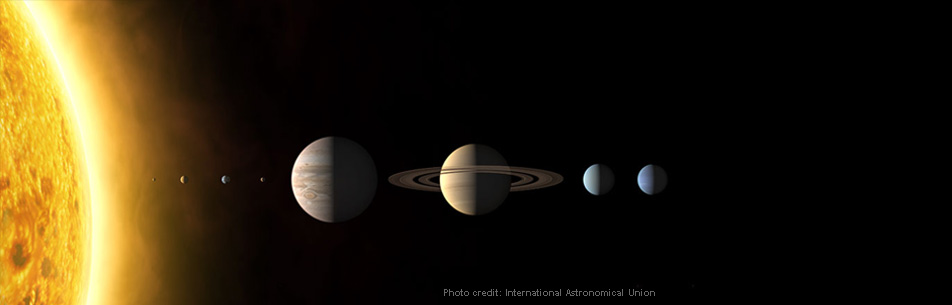
Forget the textbook. Forget the neat, tidy model of our solar system they showed you in grade school. You know the one. With the perfectly spaced planets and the friendly, smiling sun. It’s a fairy tale. A bedtime story to keep us from asking the real questions. Because if you look closer, if you really dig into the anomalies, the strange signals, and the declassified documents, a different picture emerges. A much, much weirder one.

Our solar system isn’t a quiet, orderly neighborhood. It’s a crime scene.

It’s an ancient battlefield, littered with the ruins of forgotten civilizations and the ghosts of long-dead worlds. Every planet, every moon, every spinning rock holds a piece of a puzzle that official sources refuse to acknowledge. They call it “pareidolia.” They call it “geological formations.” They call it “instrument error.”

We call it evidence.

What you are about to read is a journey into the shadows of our own cosmic backyard. We’re going to peel back the layers of sanitized NASA press releases and comfortable scientific consensus. We are going to look at the worlds around us not as inert balls of gas and rock, but as artifacts. Clues to a history so vast, so explosive, it would change everything we think we know about our place in the universe.

Get ready. The tour is about to begin.

The Scars of Mars: A Nuclear Wasteland?

Let’s start with our neighbor. The Red Planet. Mars. For decades, it has been the great hope for finding extraterrestrial life. But what if we’ve been looking for the wrong thing? What if we should be looking for extraterrestrial *death*?

Think about it. Mars is a frozen, irradiated desert with an atmosphere so thin it’s barely there. But all the evidence points to a different past. A past with flowing rivers, vast oceans, and a thick, protective atmosphere. A past where life could have thrived. So what happened? The official story is that Mars slowly lost its magnetic field, and the solar wind stripped its atmosphere away over billions of years. A slow, gentle fading into oblivion.

Sounds plausible. Boring. Safe.

But there’s another theory, one that rattles the cages of academia. Dr. John Brandenburg, a plasma physicist, analyzed the atmospheric data from Mars and found something terrifying. An enormous concentration of Xenon-129. On Earth, this specific isotope is found in one primary place: the fallout from hydrogen bomb explosions.

His hypothesis? Mars was murdered. Wiped out by two massive, strategic nuclear explosions in its distant past. One in Cydonia and another in Utopia Planitia. He argues that the planet’s reddish color isn’t just from iron oxide; it’s the lingering dust of a global-scale nuclear catastrophe.

Deep Dive: The Cydonia Complex

You can’t talk about Mars without talking about Cydonia. Back in 1976, NASA’s Viking 1 orbiter snapped a picture of a region on Mars that would ignite a firestorm of controversy. There, staring back at the camera, was a face. A massive, humanoid face nearly two miles long. NASA dismissed it almost immediately. A trick of light and shadow on a simple mesa, they said. Nothing to see here.

But people kept looking. And the more they looked, the more they found. Nearby, a collection of five-sided pyramidal structures, arranged in a way that seemed anything but natural. They called it “The City.” Richard C. Hoagland, a writer and researcher, championed the idea that these were not geological formations, but the ruins of an ancient, intelligent civilization.

Of course, newer, higher-resolution images were eventually released by NASA. They showed a heavily eroded hill. The case was closed, they announced. But was it? Look at the modern images yourself. The overall shape is still there. The symmetry is still uncanny. And critics argue that these new images have been digitally “fuzzed” or taken at angles designed to obscure the most artificial-looking features. They ask: if it was just a hill, why the decades-long effort to debunk it so aggressively?

What if that face wasn’t a monument to a king, but a warning? A silent scream across 200 million miles of space, telling us what happened there.

Planet X: The Ghost in the Machine

Our solar system has eight planets. That’s the official count since Pluto got the boot. But for centuries, astronomers have been haunted by the feeling that something is missing. A ghost in the machine. A massive, unseen player whose gravitational influence tugs on the outer worlds, disturbing their orbits in ways we can’t fully explain.

They call it Planet Nine now. Caltech astronomers Mike Brown and Konstantin Batygin have presented compelling mathematical evidence for its existence. A giant planet, perhaps ten times the mass of Earth, swinging through the dark voids of the outer solar system on a bizarre, elongated orbit that takes 10,000 to 20,000 years to complete.

They are looking for it right now. With our most powerful telescopes. But this is just new branding for a very old idea.

Long before modern science, ancient cultures spoke of a wandering star, a celestial disruptor. The Babylonians had Marduk. The Sumerians had Nibiru. According to the translations of Zecharia Sitchin, the ancient Sumerian clay tablets describe Nibiru in incredible detail. They say it’s the home world of an advanced race called the Anunnaki, who came to Earth hundreds of thousands of years ago in search of gold.

Sitchin’s theory connects Nibiru to a catastrophic event in our solar system’s past. The story goes that on a previous pass, Nibiru collided with a primordial planet that existed between Mars and Jupiter. Tiamat. That collision shattered Tiamat, creating the Earth, the Moon, and the asteroid belt. A cosmic car crash of epic proportions.

What If It’s Coming Back?

This is where the whispers on internet forums get loud. If Planet Nine is Nibiru, and if its orbit is 10,000 years long… well, you can do the math. People are constantly looking for signs of its return. They point to an increase in earthquakes, strange weather patterns, and solar anomalies as evidence of its growing gravitational influence as it approaches the inner solar system.

Is this just paranoia? Maybe. But consider this: in 1983, the IRAS (Infrared Astronomical Satellite) hit the front page of the Washington Post with a stunning headline: “Possibly as Large as Jupiter; Mystery Heavenly Body Discovered.” The article described a massive object found in the direction of the constellation Orion. Then… silence. The story was quickly walked back. Retracted. They called it a mistake, a misidentification of distant galaxies.

But the damage was done. For conspiracy researchers, this wasn’t a retraction. It was a cover-up. The moment the establishment realized what they’d found, they slammed the door shut, classifying the information and feeding the public a dismissive story to prevent panic. Are they still hiding it? Is the search for “Planet Nine” just a slow, controlled release of a truth they’ve known about for decades?

The Impossible Moons: Saturn’s Artificial Death Stars

If you want to find evidence of technology in our solar system, you don’t need to look for radio signals. You just need to look at Saturn’s moons.

Let’s start with Iapetus. From the moment it was discovered, it baffled astronomers. One side is as bright as snow, and the other is as dark as coal. This “two-tone” feature is bizarre enough. But the dividing line between the light and dark hemispheres is impossibly sharp and precise. It doesn’t look like a natural deposit. It looks painted on.

It gets weirder.

Circling the exact equator of Iapetus is a ridge. A massive mountain range that runs for over 800 miles and reaches 12 miles into the sky. It’s so straight, so perfectly aligned, that it looks like a weld. A seam. The kind you’d find when you join two massive halves of a hollow sphere together.

The Cassini probe gave us our best look at it, and the images are mind-bending. The moon isn’t perfectly spherical either; it has a strange, slightly polyhedral shape. Some sections appear flattened. Richard Hoagland famously pointed out that with its equatorial ridge and a massive crater that looks suspiciously like a superlaser dish, Iapetus bears an undeniable resemblance to the Death Star from Star Wars.

Coincidence? Nature is full of strange things, right?

Okay. Then explain Mimas. Another one of Saturn’s moons. Smaller, closer in. It, too, has a single, gigantic crater (named Herschel) that takes up a huge portion of its surface. The crater is so large and so perfectly placed that Mimas is an even more blatant look-alike for the Death Star than Iapetus. One is a fluke. Two? Two is a pattern. It’s a calling card. It’s a message left behind.

What are these objects? Are they colossal, ancient space stations, dormant for eons? Were they weapons? Ark ships? Whatever they are, they defy easy explanation. They are silent, frozen monuments to a technology so advanced it is almost indistinguishable from nature itself.

Venus: Earth’s Burned-Out Twin

Venus is hell. A churning, toxic nightmare world with surface temperatures hot enough to melt lead and a crushing atmospheric pressure that would instantly pulverize any human. It’s the last place you’d look for life.

But it wasn’t always this way.

Scientific models show that for billions of years, Venus could have been a paradise. A world with liquid water oceans, pleasant temperatures, and a stable climate. It could have been more Earth-like than Earth itself. This isn’t a fringe theory; this is mainstream science. They call it the “runaway greenhouse effect.” Something, somehow, tipped the scales and boiled the oceans away, creating the inferno we see today.

But what if it wasn’t a natural process? What if something gave it a push?

The alternative history here is staggering. What if the war that destroyed Mars also targeted Venus? What if a solar-system-wide conflict, using weapons we can barely imagine, turned a garden world into a furnace? The Soviet Venera probes that landed there in the 70s and 80s survived for mere minutes before being destroyed. But in those few minutes, they sent back strange images. Bizarre rock formations. What some analysts claim looks like carved stone or wreckage. The images are grainy, distorted by the hellish conditions, but the anomalies are there if you’re willing to look.

Could the story of a “fall from paradise” in so many of our ancient myths not be about Earth, but about a sister world we could once see in our skies? A memory, passed down through generations, of a beautiful blue-green planet turning into the searingly bright, cloud-shrouded monster we know as the Evening Star?

The Whispers of the Outer Giants

Out in the cold, dark depths of the solar system, the gas giants drift in silence. But they have secrets, too.

Jupiter, so massive it’s almost a second sun. It acts as our protector, its immense gravity gobbling up comets and asteroids that might otherwise hit Earth. But what is the Great Red Spot? A storm, they say. A storm that has been raging for at least 400 years. But it’s shrinking. And it’s behaving in ways our weather models can’t predict. Some have speculated it’s not a storm at all, but a colossal, planet-sized vortex, perhaps connected to something deep within the planet’s metallic hydrogen core.

And then there’s Uranus. The planet that got knocked on its side. It rotates at a 98-degree angle to its orbital plane. The standard explanation is a massive impact with an Earth-sized body in the distant past. It’s possible. But it’s also a convenient explanation for something we don’t understand. What kind of force could do that? A gravitational weapon? The passage of a rogue celestial object of immense power?

The solar system we see today may not be the one that was originally formed. It may be the shattered remnant of a much different, more crowded, and more violent system. The clues are everywhere. The weird tilt of Uranus. The asteroid belt’s existence as a failed or destroyed planet. The impossible moons of Saturn. The burned-out cinder of Venus and the irradiated graveyard of Mars.

This isn’t a peaceful system. It’s the aftermath.

Question Everything

The age of exploration isn’t over. It’s just changed. Today, the most important discoveries aren’t being made in government labs. They’re being made by people like you. By amateur astronomers with backyard telescopes who capture footage of strange objects moving in the rings of Saturn. By digital sleuths who pour over raw image data from NASA’s archives, finding the anomalies that have been “missed.”

Why does the live feed from the International Space Station so often cut to a blue screen right when an unidentified object appears? Why are so many images on NASA and Google Moon/Mars servers presented in low resolution or with areas mysteriously blurred out?

The official story is tidy. It’s comfortable. It makes sense. But the universe is rarely tidy and almost never comfortable. The truth is out there, hidden in the glare of the sun, tucked away in the shadows of a crater, or spinning silently in the dark. All you have to do is look up. And question.

Amit Ghosh
Amit Ghoshhttps://coolinterestingnews.com
Aloha, I'm Amit Ghosh, a web entrepreneur and avid blogger. Bitten by entrepreneurial bug, I got kicked out from college and ended up being millionaire and running a digital media company named Aeron7 headquartered at Lithuania.
RELATED ARTICLES
- Advertisment -

Most Popular

Recent Comments

Warren Pan Abbott on The legend of the Devil Monkey !
chris davies on The McPherson Tape Mystery
Reed Reedly on ET has Internet!
Bea Houseoffashion on Proof Of Time Travellers – Gallery
Marcus2012 on ET has Internet!
Reed Reedly on ET has Internet!
LaughsAtConspiracyNuts on The 9/11 Conspiracy – Myths and Facts
Alex Sliverman on Did the ancients fly?
Doctor Wholigan on Time Traveler in 1938 film
chris davies on The McPherson Tape Mystery
Archie1954 on 10 secret UFO hideouts
chris davies on Ghosts of flight 401
Marcus2012 on ET has Internet!
jason Macdonald on Proof of Time Travel? – China
chris davies on Long-Lost Pyramids Found?
Reed Reedly on ET has Internet!
Milkman on Connected Universe
Tenmiles on Baigong Pipes Mystery
Simon Foster on Sirius – The Documentary
From the 1st April on 2013 – Alien Contact date ?
SkyWatcher on Is ET ignoring us?
I Come From The Future on Obama to make UFO Alien disclouser soon ?
ÛñK?øWn on 2013 – Alien Contact date ?
Just another person on 2013 – Alien Contact date ?
Malcolm Windowcleaner on The strange case of Rudolph Fentz
Mason Servio on Strange Things on Mars
Marke Wisdom Seeker on What will we find as arctic melts?
Andrea A Elisabeth Levyne on Aliens Captured in Varginha, Brazil
Mitch Grouyeki on Amazing Space Shuttle pictures