Home Weird World Space OUR GALAXY IS HOME TO 10 BILLION ‘HABITABLE’ WORLDS

OUR GALAXY IS HOME TO 10 BILLION ‘HABITABLE’ WORLDS

0
70

Look up at the night sky. Go on, do it. If you get away from the city lights, out where the darkness feels heavy and thick, you see thousands of tiny pinpricks of light. For most of human history, we looked at those lights and wondered if we were special. We wondered if we were the only ones standing on a rock, looking up, asking questions. We told ourselves stories about being the center of everything.

We were wrong.

20140103-232959.webp

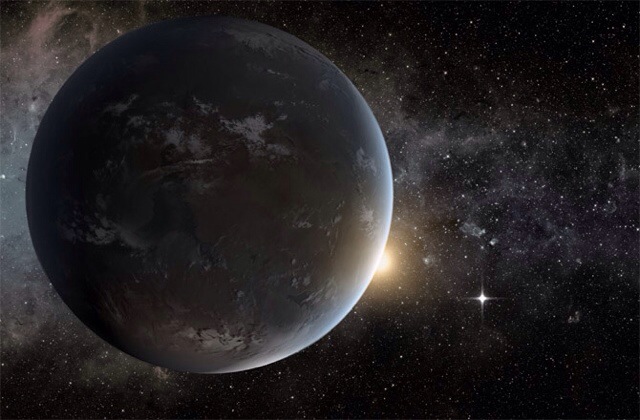
We aren’t just one of a few. We are one of billions. NASA’s Kepler space telescope didn’t just open a door; it kicked the door off its hinges and showed us a universe so crowded with potential life that it’s actually terrifying. The data doesn’t lie. It screams the truth.

The Kepler Earthquake: Shaking the Foundations of History

Let’s rewind a bit. Before Kepler launched, we were flying blind. We assumed other stars had planets, but we didn’t know. It was all guesswork. Science fiction writers dreamed of “Class M” planets, but astronomers had zero hard evidence.

Then came Kepler. This wasn’t just a telescope. It was a hunter. A stakeout artist. It stared unblinkingly at a single patch of sky—the Cygnus constellation—watching about 150,000 stars simultaneously. It didn’t sleep. It didn’t blink. It just waited.

What was it waiting for? A shadow. A tiny, imperceptible dip in brightness. Think of a mosquito flying in front of a distant searchlight. That’s what Kepler was looking for. When a planet crosses in front of its star, the light drops. Just a fraction. But that fraction tells us everything.

The mission had issues. Oh, it had setbacks. Gyroscopes failed. Reaction wheels died. The spacecraft was crippled. Critics said it was over. But the data kept pouring in, revealing a truth that alternative history researchers and UFO enthusiasts have suspected for decades: The galaxy is teeming with worlds. And not just gas giants like Jupiter. We are talking about rocky worlds. Wet worlds. Worlds like ours.

The Magic Number: 10 Billion

On November 4, astronomers dropped the bombshell. They crunched the numbers from the Kepler data. They extrapolated the findings to cover the entire Milky Way galaxy. The result? 10 billion.

Let that sink in. 10. Billion.

That is the estimated number of habitable, Earth-sized planets just in our own galaxy. Not the universe. Just our neighborhood. The Milky Way. If you look at the sky and hold up a grain of sand against the stars, you are covering thousands of potential civilizations. This isn’t a fringe theory anymore. This is hard science.

What Does “Habitable” Even Mean?

When scientists say “habitable,” they aren’t promising beachfront property or breathable air immediately. They are talking about the “Goldilocks Zone.” This is the sweet spot. Not too hot, not too cold.

If a planet is too close to its star, water boils away. It becomes a hellscape like Venus, crushed by its own atmosphere. If it’s too far, it freezes into an ice ball like Mars. But in the middle? Water can exist as a liquid. And where there is water, there is life as we know it.

But here is the kicker. Life is stubborn. We find life in volcanoes here on Earth. We find it deep in the ocean where the sun never shines. So, when NASA says there are 10 billion planets in the Goldilocks Zone, they are likely underestimating the potential for life. Life could be everywhere, even in the places we think are too harsh.

The Great Silence: Where is Everyone?

This brings us to the most disturbing part of this discovery. It’s a concept that keeps astronomers and conspiracy theorists awake at night. The Fermi Paradox.

If there are 10 billion habitable worlds, and the galaxy is billions of years old, statistically, we should have been visited by now. We should be swimming in radio signals. We should see Dyson Spheres blocking out the light of stars as advanced civilizations harvest energy.

But we see… nothing. Static. Silence.

Why? This is where things get dark. With 10 billion chances for life, the fact that we haven’t made contact suggests something frightening. Here are the leading theories floating around the dark corners of the internet:

  • The Great Filter: Civilizations might rise constantly, but something wipes them out before they can leave their home planet. Nuclear war? Artificial Intelligence gone rogue? A biological plague? Are we approaching our own filter?
  • The Zoo Hypothesis: They are watching us. We are the exhibits. Maybe Earth is a nature preserve, and the “aliens” have agreed not to interfere until we reach a certain level of maturity. Or maybe we are a quarantine zone, too dangerous to be allowed into the galactic community.
  • The Dark Forest: This is the scariest one. Imagine a dark forest at night. It’s quiet. Not because there is no life, but because predators are lurking. Every civilization stays quiet to avoid being eaten. Maybe we are the only idiots shouting into the void, broadcasting our location to the wolves.

Beyond Kepler: The New Eyes in the Sky

Kepler was just the beginning. It showed us where to look. Now, we have new tools. The James Webb Space Telescope (JWST) is the new heavy hitter. It’s not just counting planets; it’s sniffing them.

Webb is looking at the atmospheres of these exoplanets. It’s looking for biosignatures. Methane. Carbon dioxide. Oxygen. Industrial pollutants. Yes, we are actually looking for smog on other planets because that would prove an industrial civilization exists.

Recent findings have already spotted “water worlds” and planets with chemical makeups that don’t make sense unless something biological is happening. The news is trickling out slowly. NASA is cautious. They don’t want to cause a panic. But the papers are being published.

K2-18b: The Water World

Take K2-18b, for example. It’s a super-Earth. Twice as big as our planet. It orbits a red dwarf star. Kepler found it. But recent follow-ups suggest it has water vapor in its atmosphere. It might be covered in a massive, planet-wide ocean. Can you imagine the creatures swimming in an ocean that has no bottom and covers the entire globe?

Or what about the TRAPPIST-1 system? Seven Earth-sized planets packed tight around a single star. If you stood on the surface of one, you would see the other planets hanging in the sky, huge and detailed, like our moon but much closer. Are there seven different civilizations there, waving at each other?

The Paradigm Shift

For centuries, the church and the state told us we were unique. They told us Earth was the center of the universe. This control over the narrative kept us feeling special, but also isolated. It made us feel like the chosen ones.

The 10 billion figure destroys that control system. It forces us to accept that we are common. We are standard. We are just one variation of a theme that repeats billions of times across the galaxy.

Some people find this depressing. I find it electric. It means the odds are in our favor. It means that somewhere, right now, someone else is looking up at their version of the night sky, wondering if they are alone. Maybe they are writing a blog post just like this one.

The Kepler data is a wake-up call. We need to stop fighting over borders on this tiny rock. We need to look up. The real estate out there is limitless. The neighbors are out there. 10 billion of them.

What Happens Next?

We wait. We listen. And we keep searching.

The next few years are going to be wild. As AI helps us process the massive amounts of data from our telescopes, we might find a signal that was buried in the noise. A pattern we missed. A whisper from the stars.

So, the next time you feel lonely, remember the number. 10 billion. The galaxy is a crowded room. We just haven’t figured out how to turn on the lights yet.

Stay curious. Watch the skies.

Originally posted 2014-01-03 22:31:56. Republished by Blog Post Promoter