The Allagash Abductions: What Really Happened to Four Men in the Maine Woods?
Some stories just won’t die. They cling to the shadows of our history, whispered in late-night conversations and debated endlessly in the glowing corners of the internet. They are stories of things that shouldn’t be possible, of moments that break the rules of our reality. The Allagash Affair is one of those stories. It’s not just a tale of a strange light in the sky. No. It’s a chilling saga of four ordinary friends, a remote wilderness, and a terrifying encounter that would shatter their lives forever.
This isn’t just a UFO sighting. This is a story of abduction. Of missing time. Of medical examinations by non-human entities. And, ultimately, of a government cover-up that snatches the only physical proof from the hands of the very men it was taken from.
So, get comfortable. What you are about to read is a detailed account of one of the most well-documented and disturbing alien abduction cases in American history. A case with four credible, corroborated witnesses. A case that starts with a simple camping trip and ends with questions that reach for the stars.
A Night of Unspeakable Calm
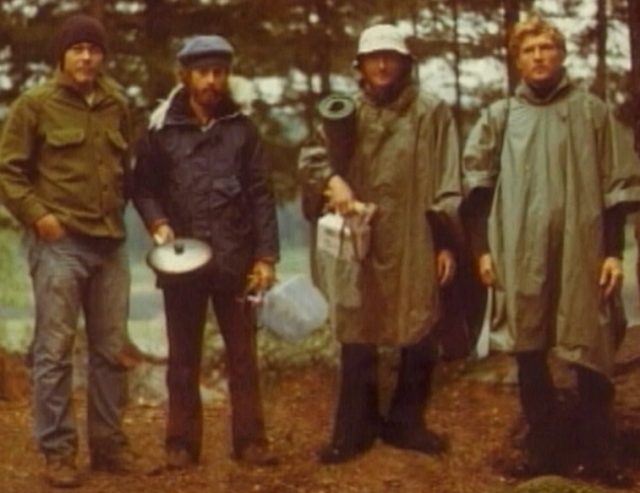
August 1976. The air was thick with the scent of pine and damp earth. Four friends, all art students from Massachusetts, sought an escape from the city grind. They were Chuck Rak, Charlie Foltz, and twin brothers Jack and Jim Weiner. Young men, full of life, their biggest concern was finding a good spot to fish and enjoy the untamed beauty of the Allagash Waterway in northern Maine.
This place is wild. Genuinely wild. Even today, it’s a sprawling, remote labyrinth of lakes and rivers, a place where you can travel for days without seeing another soul. On the evening of August 20th, they found their spot on the shore of Eagle Lake, set up camp, and built a massive bonfire. They knew the woods. They knew a fire that big would roar for four, maybe five hours. It was more than just for warmth; it was their anchor, their beacon in the pitch-black wilderness.
With the fire crackling behind them, they pushed their canoes into the glassy, black water for some night fishing. Silence. The only sounds were the gentle dip of their paddles and the distant call of a loon. It was perfect.
Until it wasn’t.

That Feeling You’re Being Watched
It started with a prickle on the back of the neck. Chuck Rak was the first to feel it. That unmistakable, primal instinct that you are being observed. He scanned the dark shoreline, expecting to see the glint of an animal’s eyes. He saw nothing. He looked up.
And then he saw it.
Hanging silently in the night sky, maybe two hundred feet above the trees, was a colossal sphere of light. It wasn’t a star. It wasn’t a plane. It pulsed softly, like a living thing, shifting through a spectrum of colors—red, green, a brilliant white-yellow. It made no sound.
“Hey, look!” Chuck’s voice was a strained whisper, but it cut through the silence like a knife. The other three men turned, their fishing forgotten. They stared, mesmerized and terrified, at the impossible object hanging in the sky. It was perfectly round, impossibly bright.
What do you do in a moment like that? Fight or flight? For Charlie Foltz, another instinct kicked in: curiosity. Communication. He grabbed a powerful flashlight, aimed it at the sphere, and clicked it on and off. A simple, human signal. Hello? Is anyone there?
The response was immediate. And terrifying.
The sphere, which had been slowly drifting upward, stopped dead. Then, without a sound, it began moving toward them. It glided over the water, growing larger and more intense with every passing second. The casual curiosity of a moment before evaporated into pure, cold panic.
The Chase and the Blue Light
“Paddle!”
The word was a choked command. They dug their paddles into the water, churning frantically, their canoes pointed toward the distant, flickering light of their bonfire. Their only goal was to get to shore. To get to the safety of the trees. But the object was fast. Faster than them.
As they raced across the water, a beam of light shot out from the bottom of the craft. It wasn’t like a spotlight. It was a strange, pale blue, almost ethereal cone of energy that seemed to absorb sound as it moved. It hit the water behind them and began to advance, a silent, surgical beam chasing them down.
They paddled for their lives. The blue light washed over the back of their canoes.
And then… nothing.
Complete blackness. An absence of everything.
The Glitch in Time
The next thing any of them remembered was standing on the beach, next to their canoes. They felt dazed, wrong. The air was cold. Looking up, they saw the object was still there, hovering directly over the lake, a silent, colossal witness to… what?
They stood there, stupefied, watching it for what felt like a couple of minutes. Then, with a speed that defied physics, it shot straight up into the cosmos and vanished. One second it was there, the next it was gone. Not a sound. Not a trace.
A strange lethargy settled over the four men. A deep, bone-weary exhaustion. Nobody wanted to talk about what they had just seen. It was too big, too strange. They just wanted to get to the fire and feel its warmth. But when they turned, a new, deeper chill ran down their spines.
The bonfire—the massive, five-hour blaze they had built—was gone. All that remained was a bed of faintly glowing, orange embers. It had burned down completely.
They checked their watches. In their minds, they had only been on the lake for maybe twenty, thirty minutes. But the fire told a different story. The fire told them hours had passed. Hours they couldn’t account for. This was their first horrifying introduction to a phenomenon known to researchers as “missing time.”
DEEP DIVE: The Missing Time Enigma
What is “missing time”? In the world of UFO investigations, it’s a terrifyingly common element in close encounter and abduction reports. A witness will experience an event, like seeing a strange craft, and then suddenly find themselves hours later with no memory of the intervening period. The 1961 Betty and Barney Hill case, arguably the first widely publicized abduction story, famously involved a two-hour gap in their memory during a drive through the White Mountains.
Skeptics often attribute this to psychological phenomena like fugue states or even simple microsleeps. But when four separate witnesses experience the exact same multi-hour memory gap simultaneously, backed by physical evidence like a completely burned-out bonfire, those explanations start to feel thin. For the men of Allagash, this wasn’t just a lost memory; it was a gaping hole in their reality, a scar left by an event their conscious minds refused to acknowledge.
Years of Nightmares and Whispers
The men tried to forget. They finished their trip, went back to their lives, to their art, and pushed the memory of that night deep down. But trauma doesn’t just disappear. It festers.
Years passed. Then, in 1983, Jim Weiner suffered a severe head injury in a fall. The accident triggered a form of epilepsy. The neurological issues were bad enough, but something else came with them: the nightmares. Vicious, hyper-realistic nightmares. He dreamed of strange, long-limbed creatures with huge, captivating eyes. He dreamed of being on a table, paralyzed, while they examined him. It got worse. He started waking up in the middle of the night, his body frozen in sleep paralysis, and would see the same creatures standing at the foot of his bed.
Terrified, he confided in his doctor. Expecting a prescription, he instead got a question: “Are you having any strange experiences?” When Jim described the visions, his doctor, instead of dismissing him, referred him to a man named Raymond Fowler. Fowler wasn’t a psychologist. He was one of the most respected UFO investigators in the country, a man known for his meticulous, no-nonsense approach.

The Unlocking of a Buried Memory
Fowler suspected that Jim’s nightmares weren’t just dreams. He believed they were screen memories, fragments of a repressed trauma bubbling to the surface. He recommended hypnotic regression, a controversial but often-used tool in abduction research to access buried memories.
What came out under hypnosis was explosive. The dam of Jim’s memory broke, and the story of that night on Eagle Lake came pouring out in terrifying detail.
He remembered the blue beam of light hitting the canoe. He remembered a feeling of floating, of being drawn upwards into the silent, glowing sphere. Inside, the room was bright but without a visible source of light. The air was sterile and cold. And they were there. The beings from his nightmares.
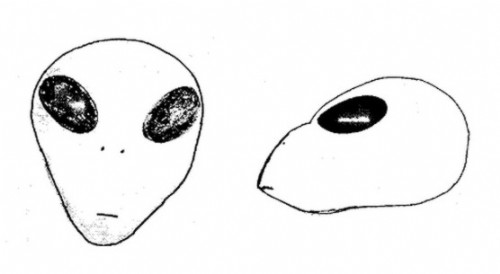
He described them as having large, bald heads, long, thin necks, and four-fingered hands. Their eyes were huge, black, and slanted, and they seemed to communicate without speaking, their thoughts just appearing in his mind. He recalled being laid on a table, unable to move. They subjected him to an intrusive physical examination. They took samples. Blood. Skin scrapings. Hair. Even bodily fluids.
One man’s story, no matter how compelling, is just a story. But Fowler knew there were three other witnesses. One by one, Jack Weiner, Chuck Rak, and Charlie Foltz all agreed to undergo hypnosis with other trained professionals. None of them were in the same room. None of them knew what the others had said.
And every single one of them told the exact same story. The details matched perfectly. The layout of the craft. The appearance of the beings. The procedures of the examination.
As artists, they were able to provide something more. They drew what they saw. Detailed sketches of the alien beings, the examination room, and the strange instruments used on them. The four accounts, taken together, presented a stunningly cohesive and horrifying picture. They hadn’t just seen a UFO. They had been taken.
The Twin Factor and the Implant
The story gets even stranger. During the hypnotic sessions, the men recalled the beings showing a particular interest in the twin brothers, Jim and Jack. This wasn’t their first encounter. Fragments of earlier abductions, stretching back to their childhood, began to surface. The idea of aliens focusing on identical twins has been a recurring theme in modern lore, fueling speculation about an interest in human genetics and reproduction.
The contact didn’t stop in 1976. In May of 1988, years after the regressions, Jack and his wife Mary experienced another abduction. Jack remembers the terrifying sensation of being floated out of their bedroom window, across their lawn, and into a waiting craft.
Shortly after this event, Jack noticed something new. A strange, hard lump on the inside of his leg. It hadn’t been there before; it seemed to appear overnight. Worried it could be cancerous, he went to his family doctor. The doctor was concerned and referred him to a surgeon to have it removed and biopsied.
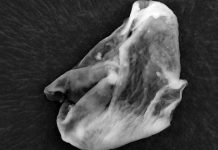
The surgeon went in. But what he pulled out wasn’t a cyst or a tumor. It was a small, bizarre object, grayish in color, with an unusual texture. The surgeon was baffled. In his report, he stated he had never seen anything like it in his entire career. Unsure of what to do, he sent the object to one of the most respected labs in the country: the Centers for Disease Control (CDC) in Atlanta for analysis.
The Cover-Up: When the Proof Vanishes
This is where the story turns from a personal account of a paranormal event into something much more sinister. This is where the Men in Black, so to speak, step out of the shadows.
Jack, anxious for answers, tried to follow up. What was the thing in his leg? What did the CDC find? But he was met with a wall of silence. After persistent inquiries, he was eventually told a confounding story. The object had been forwarded from the CDC to a military pathologist in Washington, D.C.
From there, the trail went cold. All Jack could find out was that a United States Air Force colonel had personally arrived, taken possession of the object, and walked away with it. It was never seen again. All requests for information were denied. The proof was gone.
Shaken, Jack went back to the surgeon who had removed it. Surely, he would have some answers. He would be outraged that his patient’s biopsy was confiscated by the military. But the surgeon’s demeanor had changed entirely. He refused to discuss the object. He refused to talk about the surgery. He stonewalled his own patient, offering no explanation, his face a mask of fear or forced compliance. Someone had gotten to him. The message was clear: drop it.
The Allagash Legacy: What Are We to Believe?
So, what happened out there in the Maine woods? Skeptics will point to the fallibility of memory, the suggestibility of hypnotic regression, and the possibility of a shared delusion among friends. Could they have simply misidentified a helicopter or a weather balloon and, over time, built a grander myth around it? Perhaps. But that doesn’t explain the missing time, corroborated by the physical evidence of the bonfire. It doesn’t explain four separate, detailed accounts matching under hypnosis. And it certainly doesn’t explain a physical object being removed from one man’s leg, only to be seized by the U.S. Air Force.
The four witnesses never sought fame or riches from their story. They were reluctant participants, dragged into the public eye by experiences they could barely comprehend. They all passed polygraph tests. Their lives were forever changed, and not for the better. They were left with the scars—physical and psychological—of an event that defies easy explanation.
The Allagash Affair remains a cornerstone case in abduction research for a reason. It has multiple, credible witnesses. It has a long timeline of contact. It has the element of missing time backed by physical evidence. And most tantalizingly, it has the vanished proof of an alleged alien implant and the shadow of a government cover-up.
Were these four men simply in the wrong place at the wrong time? Or were they, particularly the Weiner twins, part of a lifelong program of study by something not of this Earth? What secrets did that tiny object hold? And what does it say when the very institutions meant to protect us are the ones hiding the truth?
The story of the Allagash abduction doesn’t offer any easy answers. It just leaves us with a lingering, unsettling question, as vast and dark as the Maine woods at night: Are we alone? And if not, what do they want?