Imagine looking up at the night sky. You see the Moon. It’s familiar. It’s comforting. But there is a face of that rock that you will never, ever see from your backyard.
The Far Side.
For decades, this hidden hemisphere has fueled nightmares, dreams, and some of the wildest theories on the internet. And now? Now NASA is going back. But they aren’t just visiting. They plan to stay.

The Gateway to the Unknown
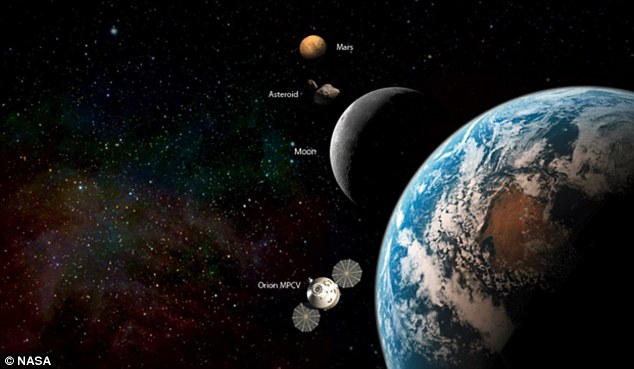
Let’s cut through the press releases and the sterile government talk. NASA is building a manned base. A fortress in the void. They want to “park” a massive structure beyond the dark side of the moon. They call it a “Gateway Spacecraft.”
Think about that phrasing. A gateway.
A gateway to where? Mars? That’s the official line. They tell us this station will serve as the ultimate jumping-off point for manned expeditions to the Red Planet. It’s a gas station. A rest stop on the longest road trip in human history. But if you dig a little deeper into the logistics, the location, and the sheer audacity of this plan, the hairs on the back of your neck might start to stand up.
This isn’t just about planting flags or gathering rocks anymore.
This station is slated to sit in a very specific, very strange spot in the cosmos. It won’t orbit the Moon like the Apollo capsules did. It won’t orbit Earth like the satellites that power your GPS. It’s going to hang suspended in the blackness, 277,000 miles from home.
The Numbers Game: Why This Is Different
To understand how insane this is, you have to look at the math. It’s terrifying.
The International Space Station (ISS)? That floating tin can where astronauts do backflips and drink recycled water? It orbits about 230 to 250 miles above your head. That’s it. It’s practically in the upper atmosphere. If something goes wrong on the ISS—a fire, a puncture, a medical emergency—they can hop in a Soyuz capsule and be back on solid ground in a few hours.
Now, look at this new plan.
277,000 miles.
That is over a thousand times farther away. If something breaks out there? You are on your own. There is no rescue mission coming in time. There is no quick abort. You are in the deep, deep black.
The Mystery of EML-2
This is where things get really interesting for those of us who track the unusual. NASA isn’t just throwing a dart at a map. They have chosen a specific parking spot known as Earth-Moon Libration Point 2, or EML-2.
What is EML-2?
In simple terms, it’s a “gravity pocket.” It’s a spot in space where the gravitational pull of the Earth and the gravitational pull of the Moon interact in a way that creates a stable zone. If you put a spaceship there, it stays there. It doesn’t fall toward Earth. It doesn’t crash into the Moon. It just… hovers.
It’s a cosmic ghost town.
But here is the kicker. EML-2 is located directly behind the Moon from the perspective of Earth. That means the Moon is constantly blocking the view.
Why would you put your most expensive, most advanced, most fragile piece of human technology in the one spot where Mother Earth can’t see it? Radio communications from EML-2 are tricky. You can’t just beam a signal straight back home because there is a giant rock in the way. You need relay satellites. You need a network.
Perfect for privacy, isn’t it?
If you wanted to conduct experiments that you didn’t want amateur astronomers or foreign spy satellites to see, EML-2 is the perfect hiding spot. It is the ultimate blind spot.
The “Dark Side” Obsession
We have to talk about the elephant in the room. The Far Side of the Moon.
Pink Floyd made it famous. Conspiracy theorists made it legendary. Since the dawn of the space age, there have been whispers. Why did we stop going? Why did the Apollo missions end so abruptly? We had the rockets. We had the tech. We had the momentum.
Then, suddenly… silence.
For fifty years, we have stayed in low Earth orbit. We built the Shuttle. We built the ISS. We played it safe. Now, out of nowhere, the drive is back. And the target is the exact area that has generated the most rumors of extraterrestrial activity.
Remote viewers, whistleblowers, and ex-military personnel have claimed for years that the Far Side isn’t empty. They talk about structures. Towers. Ancient mining operations. Things that don’t belong on a dead world.
Is this “Gateway” really about Mars? Or is it a surveillance post? Are we going back to watch something? Or are we going back to meet someone?
The Radiation Trap
Let’s step away from the aliens for a second and look at the physics. Because the physics are lethal.
The spaceship would expand man’s horizons—no doubt about that—but it will require massive problem-solving to figure out how to protect astronauts from radiation. This is the “Van Allen Belt” problem on steroids.
When you are 230 miles up on the ISS, you are still protected by Earth’s magnetosphere. It’s like a big, invisible umbrella that deflects the worst of the sun’s anger. Cosmic rays, solar flares, the really nasty stuff—it gets blocked.
At 277,000 miles out? You are naked.
You are standing in the middle of a shooting gallery. High-energy particles are zipping through space like microscopic bullets. They tear through metal. They tear through DNA.
NASA knows this. They admit it’s a hurdle. But the solutions are heavy. Literally heavy. You need lead, water, or massive electromagnetic shields to stop that kind of radiation. How do you launch that much weight? And how do you re-supply the ship from a quarter of a million miles away?
Every bottle of water, every oxygen tank, every screw has to be blasted off Earth, travel three days through the void, and dock with a station that is sitting in a gravity well behind the Moon. The logistics are a nightmare.
Unless they have technology they aren’t telling us about.
Follow the Money
The launch project is currently being built at an estimated cost of $3 billion a year. The original reports claimed it should be ready in 2017.
Well, look at the calendar.
We blew past 2017 a long time ago. The timeline has shifted. The rockets have changed names. The “SLS” (Space Launch System) has been plagued by delays, budget overruns, and bureaucratic red tape. But the checkbook stays open.
$3 billion a year.
That sounds like a lot of money to you and me. But in the world of black budget defense spending? It’s a rounding error. It’s pocket change. This begs the question: Is the public budget the real budget?
When the Orlando Sentinel reported that NASA spoke to the White House about the idea, the political machine started turning. Whether the U.S. Congress will support the multi-billion-dollar project indefinitely is the surface-level drama. The real story is the strategic necessity.
China is going to the Moon. They’ve already landed rovers on the Far Side. They are planting seeds. They are scanning the surface. If the U.S. doesn’t establish a permanent presence at EML-2, we lose the high ground. Literally.
This is Space Race 2.0. But this time, it’s not for prestige. It’s for territory.
The Mars Distraction
NASA plans to begin building the moon outpost two years after the initial launch components are ready. The roadmap is messy. But the end goal is always shouted from the rooftops: MARS.
But does that make sense?
Think about it. If you want to go to Mars, you build a ship in Earth’s orbit and you go. dragging everything to the far side of the Moon, parking it, and then leaving for Mars adds a weird step. It’s like driving from New York to Florida, but stopping in Seattle first.
Critics argue that the Lunar Gateway is a “boondoggle”—a project designed to keep contractors like Boeing and Lockheed Martin paid. And sure, that’s probably true. The military-industrial complex loves a forever project.
But what if the Mars talk is just the cover story?
If you tell the public “We need a base behind the Moon to spy on deep space objects,” people panic. If you tell them “We need a base to ensure China doesn’t claim the lunar helium-3 reserves,” people get nervous about war.
But if you say “We are going to Mars! Science! Exploration!”—everyone claps.
Mars is the perfect carrot to dangle. It’s far away. It’s hard. It justifies decades of spending. Meanwhile, the real action is happening at that outpost. The “Gateway” might be a gateway, alright. But maybe it’s a gateway to the lunar surface, to underground bases, or to classified technologies that need the vacuum of space to operate.
The Future is Quiet
The U.S. space agency is forming a team to draw up plans for the outpost, to be parked at a spot in space known as the Earth-moon libration point 2 (EML-2). The paperwork is being signed. The metal is being cut.
We are entering a new era. For fifty years, space was quiet. It was empty. It was safe.
Not anymore.
Whatever happens at EML-2 will change history. Maybe we will finally see a human walk on Mars. Maybe we will solve the riddle of the Moon’s origin. Or maybe, just maybe, we will find out why the universe has been so silent for so long.
Keep your eyes on the dark. Because something is about to turn the lights on.

Read More at The Daily Mail.
Originally posted 2016-04-07 12:28:35. Republished by Blog Post Promoter