The Billion-Dollar Secret Buried Beneath the Desert
Imagine stumbling upon a hole in the ground that leads not just to darkness, but to a room filled with twenty-seven rotting skeletons and a stack of gold bars worth more than the GDP of a small country. This isn’t the plot of a Hollywood blockbuster. This isn’t an Indiana Jones script. This is the story of Victorio Peak.
It is widely considered the most credible, yet maddening, treasure mystery in North American history. It involves murder. It involves the U.S. Military. It even drags in the Watergate scandal and a sitting President. And it all started with a simple deer hunt.
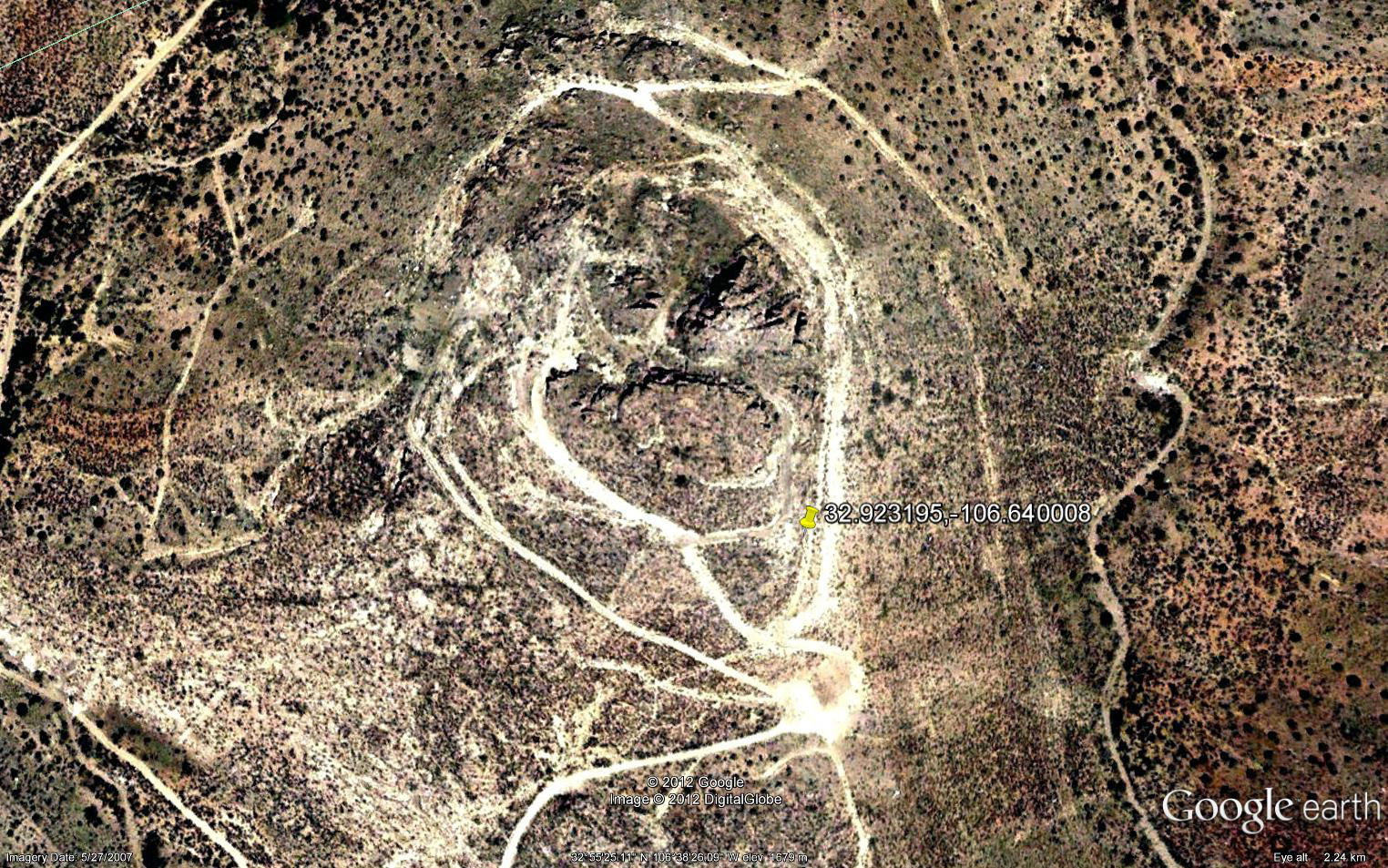
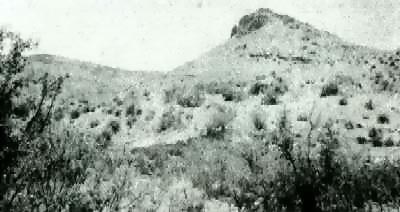
Deep within the Hembrillo Basin of New Mexico, the desert winds howl over a jagged limestone formation known as Victorio Peak. If the legends are true, the hollow heart of this mountain contains a fortune so vast it defies logic. We are talking about gold. Billions of dollars in bullion, coins, and artifacts. But those who try to take it? They usually end up broke. Crazy. Or dead.
1937: The Accident That Changed History
It was November. The air was crisp, the sky looming with the threat of a storm. Milton “Doc” Noss, a man who was part-chiropodist, part-drifter, and full-time dreamer, was out looking for deer. He wasn’t looking for history. He wasn’t looking for trouble. But he found both.
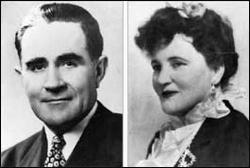
Doc, his wife Ova “Babe” Noss, and a small group of friends had set up camp at the base of the peak. The women stayed behind to tend the fire. The men ventured into the wilderness. As Doc scouted the base of the mountain, the heavens opened up. A cold, stinging rain began to lash the desert floor. Seeking cover, Doc scrambled up the rocky incline and ducked under a limestone overhang near the summit.
He sat there, shivering, waiting for the squall to pass. That is when he saw it.
A rock. It didn’t look right. In a landscape of jagged, chaotic geology, this stone looked… manipulated. Worked. It seemed out of place, like a puzzle piece jammed into the wrong box. Curiosity got the better of him. Doc reached out. He shoved against it. It didn’t budge.
He dug his fingers into the wet dirt surrounding the stone. He scraped away the mud until he could get a solid grip underneath it. With a grunt of exertion, he heaved. The rock gave way.
Beneath it was not solid earth, but a void. A black, gaping mouth leading straight down into the bowels of the mountain. Doc leaned over the edge, peering into the gloom. The smell of stale, dead air hit him. Through the darkness, he could make out the rotting remains of a thick wooden pole—an ancient ladder—anchored to the side of the shaft.
This wasn’t a natural cave. Someone had built this. Someone had been here before.
The Descent Into Madness
Doc returned to camp soaked but electrified. He told Babe. They made a pact right then and there: keep your mouth shut. This was their secret.
A few days later, they returned. No friends this time. Just Doc, Babe, ropes, and flashlights. Doc didn’t trust the ancient wooden pole he had seen; it looked ready to crumble into dust. instead, he tied a rope around his waist. Babe, a woman of immense grit, stood at the top, holding the line while her husband lowered himself into the throat of Victorio Peak.
The shaft was tight. Claustrophobic. Doc inched down, sixty feet into the crust of the earth. The beam of his flashlight cut through the dust, revealing walls that had been hand-chiseled centuries ago. Then, a blockage. A massive boulder hung precariously from the ceiling, choking the passage. Doc squeezed past it, his heart hammering against his ribs.
He dropped into a small antechamber. He swept his light across the walls. Drawings. Crude, faded symbols painted in ochre and chiseled into the stone. They looked indigenous. Apache? Maybe older. But the shaft didn’t stop there. It plunged deeper.
Doc went down again. Another 125 feet. The air grew heavier, hotter. Finally, the narrow squeeze opened up into a massive natural cavern. He was deep inside the mountain now. He took a step forward, and his light fell upon something that made his blood run cold.

The Guardians of the Gold
It was a human skeleton. But it wasn’t just lying there. It was kneeling. Its bony hands were bound behind its back, tied securely to a stake driven into the rocky floor. The head hung low, a silent testament to a violent, lonely execution.
Doc swung the light. Another one. And another.
He found them stacked in a small enclosure, like cordwood in a burial chamber. In total, Doc reported finding twenty-seven skeletons in those caverns. Were they slaves used to mine the tunnels, executed to keep the location secret? were they guards left behind to watch over the hoard for eternity? Or were they Apache warriors? The silence of the cave offered no answers, only dread.
The “Iron” Bars and the Two Billion Dollar Realization
Ignoring the dead, Doc pushed deeper. The cavern system was a maze of rooms. In one chamber, he found the loot. It was staggering.
There were piles of coins. Silver. Gold. Jewels that sparkled in the flashlight beam. Saddles that disintegrated at a touch. A solid gold statue of the Virgin Mary. He found a crown, fit for a king, studded with 243 diamonds and a massive pigeon-blood ruby.
But the real prize was in the back. Stacked against the wall like worthless firewood were thousands of heavy, black bars. They looked like pig iron. Rusty. Dirty. Useless.
Doc estimated there were thousands of them. Each one weighed over forty pounds. He grabbed a few handfuls of gold coins and stuffed his pockets. He grabbed the jeweled swords. But Babe, waiting anxiously at the surface, had told him to bring back proof of everything. He grabbed one of the heavy black bars. It was a struggle. He had to heave it back up that terrifying shaft, past the hanging boulder, gasping for air.
When he finally flopped onto the desert floor, covered in grime and sweat, he tossed the bar to Babe. “That’s the last one of them babies I’m gonna bring out,” he wheezed. “Too heavy.”
Babe looked at the bar. It was ugly. She picked up a rock and scratched at the surface, chipping away centuries of oxidation and grime. The black crust fell away.
Underneath, it wasn’t iron. It glowed with a dull, buttery yellow warmth. It was gold. Solid gold.
Do the math. Thousands of bars. Forty pounds each. At today’s prices, just the bullion alone would be worth billions. And that didn’t include the artifacts.
The Curse of the Gold Act
Here is where the story takes a sharp turn into “conspiracy thriller” territory. Doc Noss had found the ultimate prize, but he had a massive problem. The year was 1937.
Just four years earlier, President Franklin D. Roosevelt had signed Executive Order 6102, also known as the Gold Act. It was illegal for US citizens to own monetary gold. You couldn’t hoard it. You couldn’t sell it. If Doc walked into a bank with a stack of Spanish bullion, he wouldn’t get a deposit slip; he would get a pair of handcuffs.
He was sitting on a dragon’s hoard he couldn’t spend. Paranoia set in. Doc began to move the treasure in secret. He and Babe spent months living in a tent at the base of the peak. He would go down, bring up a few bars, and hide them in the desert. He buried them in different spots. He hid them in old wells. He trusted no one.
He filed a mining lease with the State of New Mexico to make it look legit. He tried to “launder” the gold by claiming he was mining it from ore, but gold bars are clearly melted down, not mined raw. He was trapped.
The Military Intervention: A Convenient Coincidence?
As World War II loomed, the US government needed space to test weapons. They looked at the vast, empty desert of the Tularosa Basin and decided it was perfect. They created the White Sands Missile Range.
In 1955, the hammer dropped. The military expanded the range. They evicted everyone. Ranchers lost their land. Miners lost their claims. And Doc Noss lost Victorio Peak.
The Army set up fences. They put up “Keep Out” signs. They stationed MPs with rifles. Victorio Peak was now government property. Doc was barred from entering. He had hidden some of the treasure out in the desert, but the bulk of the hoard—the thousands of heavy bars—was still inside the mountain. And now, the US Army was sitting right on top of it.
Deep Dive: The Conspiracy of Silence
This is where the internet forums light up. Did the military find the gold? There are reports—credible reports from soldiers stationed at White Sands—claiming that high-ranking officers ran secret excavation operations in the 1960s and 70s. Some claim to have seen trucks leaving the peak in the dead of night, suspension springs groaning under immense weight.
Was the gold moved to Fort Knox? Was it used to fund black budget operations? Or is it still there?
Murder in the Desert
Doc Noss never got his gold back. Desperate and broke, he made a fatal mistake. He partnered with a man named Charlie Ryan. Doc needed money to fight the government and try to sneak back onto the range. Ryan had cash, but he was volatile.
In March 1949, the partnership exploded. Doc suspected Ryan of trying to cheat him. Ryan suspected Doc of swindling him. They met in the dusty town of Hatch, New Mexico. Voices were raised. Ryan pulled a gun.
Doc Noss ran. A shot rang out. Then another. Doc fell dead, a bullet in his head.
The man who knew the secrets of the mountain was gone. He died with the map in his head. Ryan was charged with murder but was acquitted, claiming self-defense. A convenient end to a troublesome man.
The Watergate Connection: Nixon and the Gold
This sounds impossible, right? But hold on. In the 1970s, the Noss family (led by the indomitable Babe) was still fighting the Army to get access to the Peak. The story gained national traction. It went all the way to the White House.
During the Watergate scandal, when the infamous Nixon tapes were released, a conversation was discovered. John Dean, the White House Counsel, was caught on tape talking to President Nixon about the “gold in New Mexico.”
Why was the President of the United States discussing a treasure hunt? Many believe the government was actively trying to figure out how to seize the gold legally—or illegally.
In 1977, the military finally allowed a regulated search called “Operation Goldfinder.” The Noss family and the Army went in. They found the shaft. They found the caverns. But the gold? Gone.
However, the geological survey revealed something shocking. The caverns had been widened. There was evidence of heavy equipment usage. Someone had been there between 1955 and 1977. Someone had cleaned it out.
The Origin: Whose Gold Was It?
If the gold existed, where did it come from? Historians and treasure hunters have three main theories:
- The Emperor Maximilian Hoard: When the Mexican empire collapsed in the 1860s, Emperor Maximilian supposedly sent a massive fortune north to save it from the revolutionaries. It vanished near the border.
- Father La Rue: In the 1790s, a Spanish priest named La Rue supposedly found a rich vein of gold. When the Spanish army came to claim it for the King, La Rue hid the gold and collapsed the mine entrance. The soldiers tortured him, but he died without speaking.
- Apache Loot: Victorio Peak is named after the Apache Chief Victorio. It is possible the Apache used the caves to store loot from hundreds of raids on Spanish and American settlers over decades.
The Mystery Remains
Today, Victorio Peak stands silent inside the restricted zone of the White Sands Missile Range. You cannot go there. You cannot hike it. It is one of the most guarded places on Earth.
Did Doc Noss make it all up? Skeptics say yes. They say he was a conman who salted the mine with a few coins to trick investors. But that doesn’t explain the gold bars Babe Noss possessed. It doesn’t explain the Nixon tapes. It doesn’t explain why the Army fought so hard to keep the family away.
Is the gold sitting in a government vault? Or is it still deep in the earth, guarded by twenty-seven skeletons, waiting for the next rainstorm to wash away the dust?
One thing is certain: The desert knows how to keep a secret.
Originally posted 2016-04-25 08:27:53. Republished by Blog Post Promoter