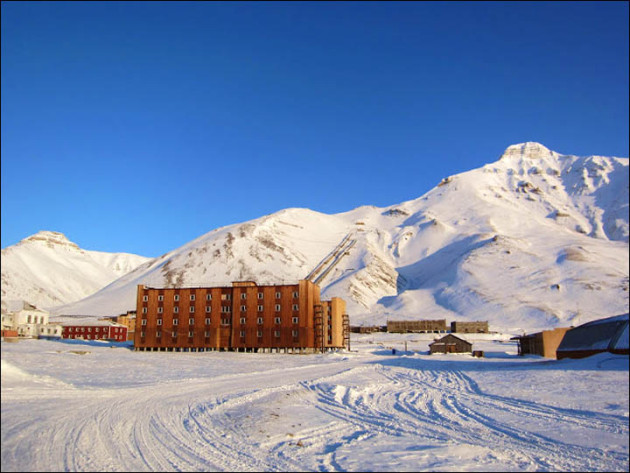
Imagine a place where the clock stopped ticking more than twenty years ago. A place where the coffee cups are still sitting on the tables, dust settling on library books that no one will ever read again. It isn’t a movie set. It isn’t a fiction.
It’s real.
And it is hiding in one of the most hostile environments on the face of the planet.

This is Pyramiden. A literal freeze-frame of history.
Captured on camera by Vladimir Prokofiev, this place is an anomaly. A glitch in the matrix. It is a deserted Soviet town. But here is the kicker: it isn’t in Russia. It isn’t in the former Soviet bloc. It is in Norway.
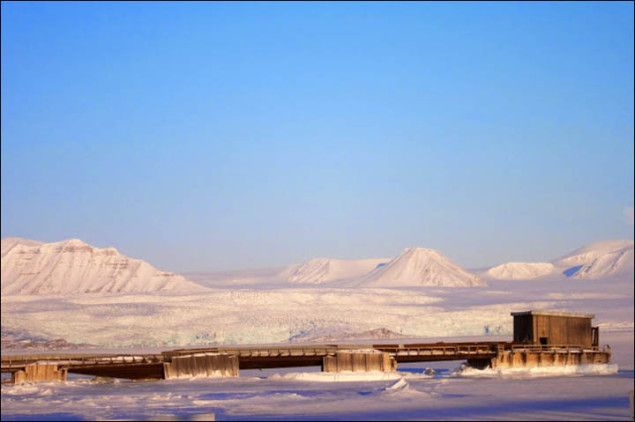
Situated just 1,300 km from the North Pole, this ghost town sits on the Arctic Ocean island of Spitsbergen in the Svalbard archipelago. It isn’t Siberia, though you would be forgiven for thinking so. The architecture? Pure Soviet Brutalism. The vibe? Iron Curtain chill. The weather? Deadly.
It was an outpost of ambition. A middle finger to the cold. People came here to conquer the ice, many of them tough-as-nails workers from Siberia who laughed at the freezing temperatures. But in 1998, the heartbeat of Pyramiden stopped.
The Paradox: A Soviet Slice of NATO Territory
Wait a second. How on earth did the Soviet Union just build a full-blown mining city inside a NATO country during the height of the Cold War?
This is where things get weird. Let’s rip the cover off the history books for a second.
It all comes down to the bizarre Svalbard Treaty of 1920. This piece of paper gave Norway sovereignty over the islands, sure. But it had a loophole big enough to drive a tank through. It stated that all signatories—including Russia—had equal rights to engage in commercial activities there.
The Soviets looked at that treaty and said, “Don’t mind if we do.”
They didn’t just want coal. They wanted a footprint. They wanted a presence in the West that couldn’t be legally removed. So, in 1927, they bought Pyramiden from the Swedes and turned it into the northernmost projection of Soviet power.
‘Welcome to the very end of the earth,’ says Vladimir Prokofiev. His photos are haunting. They don’t just show empty buildings; they capture a lost world. A civilization that packed its bags and vanished, leaving its skeleton behind.
Vladimir isn’t just a tourist. He lived the mystery. He worked there as a guide, leading curious Westerners through the silent streets during the spring thaw.
The Psychology of the “Midnight Sun”
Imagine the sun never setting. Ever.
‘The sun has been shining since 4:30 am. Soon it will start shining 24/7,’ Vladimir noted during his stay.
For months, the town is bathed in perpetual, relentless light. It messes with your head. It blurs the line between today and tomorrow. And then, the flip side comes. The Polar Night. Months of total, suffocating darkness where the only light comes from the moon and the auroras dancing overhead.
In this extreme isolation, communication becomes an obsession. A hunger.
Vladimir regularly visits one specific location in Pyramiden. It’s not a bar. It’s not a house. It’s a patch of dirt.
‘There are no radio, TV, Internet in the village. However, we can try to catch a signal from Norway in the so-called ’emotional spot’ or ‘spot of hope’,’ he explained.
The “Spot of Hope”: A Digital Lifeline
Think about that name. The “Spot of Hope.”
It sounds like something out of a post-apocalyptic video game. In a town of ghosts, the living gather at a single, invisible coordinate.
‘It is marked by a pole,’ Vladimir says.

Standing there is a battle against physics and biology. You are trying to connect with the outside world, to hear a voice, to see a text message. But the Arctic fights back.
‘The battery runs down before the fingers get frozen, you can never know which one will give up first – your fingers or a battery of your mobile,’ Vladimir explained.
It’s a race. You hold your arm up. You watch the bars on your phone flicker. One bar. Maybe two. The wind cuts through your gloves. Your phone, confusing the extreme cold for a dead battery, shuts down. The signal is gone. The hope evaporates.
Social Engineering: The Tale of London and Paris
The Soviets didn’t just build dormitories. They built a social experiment.
Walk with us down the main drag. You see two massive wooden buildings. They look sturdy, built to withstand the crushing weight of snow. But their names tell a different story.
One is known as “London.”
The other is “Paris.”
Why name Soviet barracks after Western capital cities? It seems like a joke, right? A bit of irony from the communists? Maybe.
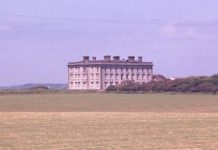
“London” was the men’s quarters. Unmarried men, specifically. A hive of workers, miners, and laborers. The bigger house to the right was “Paris.” This was the domain of the single women.
And right there in the middle? A canteen. A shared eating space.
‘Probably to give a chance for the unattached to meet,’ Vladimir suggests.
It was a manufactured romance. A brutalist version of a dating app. You eat your borscht, you look across the room, and you find a partner. Because in Pyramiden, you needed warmth. Human warmth.
The Illusion of Paradise
Here is where the story gets even stranger. Pyramiden wasn’t a gulag. It wasn’t a punishment. For many, it was a dream.
It was a Soviet Paradise.
In the 1970s and 80s, while people back in mainland Russia were waiting in bread lines, the residents of Pyramiden were living like kings. The standard of living here was artificially inflated to showcase the “success” of the regime.
A report on Vesti-Yamal TV in Russia painted a picture that sounds impossible:
‘It used to be a Soviet paradise… with a nursery, a school, a sports and entertainment centre, a warm swimming pool covered with a roof made of Karelia birch.’
A heated swimming pool. In the Arctic Circle. Think about the energy required to keep that water warm when it is -40 degrees outside. It was a massive flex. A display of dominance over nature.
The Soil That Flew
But the craziest detail? The grass.
Look at the ground in the photos. There is greenery. But Spitsbergen is rock and permafrost. Nothing grows there easily. So, what did the Soviets do?
They cheated.
‘Soil with special freeze-resistant grass was brought here by plane from ‘the big land’ (Ukraine and Russia),’ the report continues.
They literally flew in dirt. Tons of it. They imported an ecosystem. They terraformed the Arctic to make it look like home. And the eerie part? That grass still grows there. It has taken root in the foreign land, surviving long after the humans fled.
The Great Abandonment: What Happened in 1998?
Why did it end?
The official story is economics. The coal mines weren’t profitable. The Soviet Union had collapsed in 1991, and the money dried up. By 1998, the experiment was over.
‘The last ton of coal was lifted on 31 March 1998.’
But the way they left fuels the mystery. It wasn’t a slow wind-down. It was an exodus. People left personal belongings. They left instruments. They left the town intact, as if they expected to come back the next day.
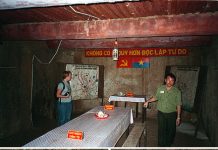
In the cultural center, there is a legend. The northernmost grand piano in the world. A massive “Red October” piano. It sits there in the silence. Occasionally, a tourist will sit down and play a few notes. The sound echoes through the empty halls, a ghostly reminder of the concerts that used to happen here.
In a garage, Vladimir found another relic. A 22-year-old Toyota. The Norwegian visitors call it a “limo.” It sits on flat tires, dust coating its windshield. It will never drive again. It is a statue now.
And watching over it all? A sign commemorating Yuri Gagarin’s trip to space in April 1961. The space race hero. Even here, at the top of the world, they looked to the stars.
The New Owners: Looters and Apex Predators
When the humans left, the scavengers arrived.
Early on, it was the tourists. The respectful ones came later, but the first waves? They were pirates.
The TV report accused early visitors of looting the town. ‘They took away all they could carry,’ including library books and parquet flooring. They stripped the history away, piece by piece. They wanted souvenirs of a fallen empire.
Today, things are different. The buildings have been secured. The lights are back on in some areas. There is a push to turn Pyramiden into a legitimate museum of the Cold War. A place for “Dark Tourism,” where people pay to see the ruins of ambition.
The Real Threat
But if you visit, you don’t just watch out for loose floorboards. You watch the horizon.
You aren’t at the top of the food chain here.
‘A threat is polar bears,’ warned the report. ‘They enjoy coming into the village and checking rubbish bins.’
This is their town now. The white bears roam the streets of “London” and “Paris.” They walk past the Gagarin sign. They sniff the imported grass.
Vladimir calls the minus 10C temperature on the thermometer “optimistic.” With the wind chill, it freezes your lungs. But for the bears, it is paradise.
The Ghost That Won’t Fade
Pyramiden stands as a monument to stubbornness. It is a place that shouldn’t exist, built on land that wasn’t theirs, with soil that was flown in, fueled by an ideology that has since crumbled.
Yet, the buildings remain.
The piano remains.
And at the “Spot of Hope,” if you stand very still and hold your phone high enough, you might just catch a signal from the living world. But as you stand there, fingers freezing, looking at the empty windows of the Soviet dormitories, you have to ask yourself:
Are we watching the town? Or is the town watching us?
Originally posted 2016-04-21 17:16:36. Republished by Blog Post Promoter