Home Weird World Space Most distant Galaxy discovered

Most distant Galaxy discovered

0
65

Deep Space Galaxy Discovery

The Ghost at the Edge of Creation

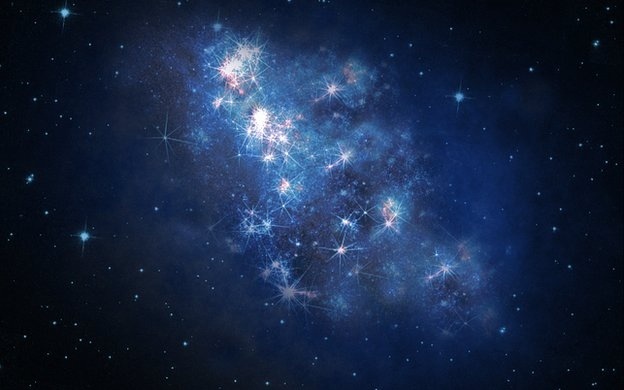
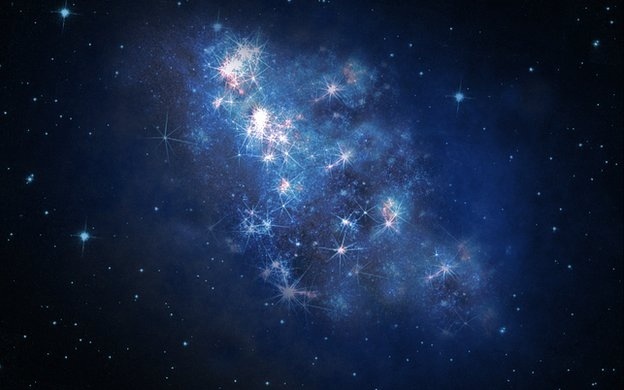
Stop for a second. Look at that image above. It looks like a smudge, doesn’t it? A blurry, insignificant red dot floating in a sea of black nothingness. But you are looking at a ghost. A phantom from a time before the Earth existed. Before the sun burned. Before the Milky Way even finished pulling itself together.

This is z8_GND_5296. It’s a terrible name for something so mind-shattering, but astronomers aren’t known for their poetry. They’re known for math. And the math here is terrifying.

This galaxy is roughly 30 billion light-years away. Read that again. 30 billion. If you know anything about the standard model of cosmology, your brain should be itching right now. The universe is supposed to be about 13.8 billion years old. So how can we see something 30 billion light-years away? Is the timeline wrong? Is the history of our reality a lie?

We’re going to rip this apart. We need to talk about the impossible distances, the time-traveling nature of light, and why this specific discovery kicked off a war in astronomy that is still raging today.

The Time Machine You Look Through Every Night

Here is the thing about space that keeps people awake at night. It’s a time machine. Light takes time to travel. It’s fast—186,000 miles per second—but the universe is vast beyond comprehension. When you look at the moon, you see it as it was 1.3 seconds ago. When you look at the sun (don’t do that), you see it as it was 8 minutes ago.

But when you look at z8_GND_5296? You are looking back 13.1 billion years into the past.

Back in 2013, a team led by Steven Finkelstein from the University of Texas at Austin pointed the Hubble Space Telescope at a patch of darkness and found this ancient behemoth. To confirm it wasn’t just a glitch, they used the Keck Observatory in Hawaii—a massive ground-based facility that shoots lasers into the sky to correct for atmospheric distortion.

They confirmed it. “This is the most distant galaxy we’ve confirmed,” Finkelstein said at the time. “We are seeing this galaxy as it was 700 million years after the Big Bang.”

700 million years. That sounds like a long time. It isn’t. In cosmic terms, that is the blink of an eye. It’s mere moments after the universe woke up. This galaxy shouldn’t be this developed. It shouldn’t be pumping out stars this fast. But it is.

The 30 Billion Light-Year Paradox

Okay, let’s address the elephant in the room. The math doesn’t seem to add up.

  • Age of Universe: 13.8 Billion Years.
  • Distance to Galaxy: 30 Billion Light-Years.

How? Nothing travels faster than light, right? If the universe is only 13.8 billion years old, light could only have traveled 13.8 billion light-years. So where did the extra distance come from?

Expansion. Relentless, terrifying expansion.

Imagine drawing two dots on a deflated balloon. One is Earth. One is this galaxy. As you blow up the balloon, the dots move away from each other. They aren’t moving across the rubber; the rubber itself is stretching between them. That is our universe.

When the light left z8_GND_5296, it was actually much closer to us. But during the 13 billion years that light spent flying through the void to hit the Hubble telescope, the space between us stretched. It expanded. The galaxy was carried away by the flow of space itself, like a boat on a rushing river. Today, if you could freeze time and drag a tape measure from Earth to that galaxy, it would measure about 30 billion light-years. We can never reach it. We can never talk to it. It has receded past the cosmic horizon. It is gone forever. All we have is the old light that finally reached us.

Redshift: The Doppler Effect of Doom

How do we know how far away it is? We can’t exactly use a radar gun. Astronomers use something called “Redshift.”

You know the sound a siren makes as it screams past you? Weee-oooo. High pitch as it comes toward you, low pitch as it goes away. Sound waves get squashed when approaching and stretched when leaving.

Light acts the same way. Because the universe is expanding, everything is running away from us. The light waves leaving that galaxy get stretched out by the expansion of space. As they stretch, they shift towards the red end of the spectrum. Blue becomes green, green becomes yellow, yellow becomes red, and eventually, it shifts into infrared—invisible to the human eye.

When Finkelstein and his team looked at this galaxy, they measured a redshift of 7.51. At the time, that was the record holder. It beat the previous champion (redshift 7.21). A shift that high means the light has been traveling through expanding space for an eternity, stretching out until it was barely detectable.

The Cosmic Dark Ages: What Came Before?

Why are we so obsessed with these high numbers? Why does 7.51 matter? Because we are hunting for the “Cosmic Dawn.”

After the Big Bang, the universe was hot soup. Then it cooled down and went pitch black. For hundreds of millions of years, there were no stars. No galaxies. Just invisible gas. Hydrogen and helium floating in the dark. We call this the Cosmic Dark Ages.

Then, something ignited. Gravity pulled clumps of gas together until—flash—the first stars turned on. These weren’t like our polite, yellow sun. These were monsters. Blue giants that lived fast and died young, exploding in supernovas that seeded the universe with the stuff that makes up your blood and bones.

Galaxy z8_GND_5296 is from the era when the lights came back on. It is a relic from the time when the universe stopped being a dark fog and became transparent. It was churning out stars at a rate that baffled scientists in 2013. It was making about 300 suns per year. Our Milky Way? It makes maybe one or two a year. This ancient galaxy was a factory on overdrive.

The Modern Twist: Breaking the Simulation?

Here is where things get weird. Since 2013, the game has changed. We launched the James Webb Space Telescope (JWST). And JWST didn’t just break the record set by z8_GND_5296. It shattered it into a million pieces.

We are now finding galaxies at redshift 13. Redshift 14. We are seeing things just 300 or 400 million years after the Big Bang. And here is the problem: They are too big.

The standard model of history says galaxies should start small. Blobby. Messy. But JWST is finding fully formed, massive galaxies sitting in a time period where they shouldn’t exist. It’s like walking into a nursery and finding a six-foot-tall bodybuilder in a crib.

This has led to some wild theories on the internet:

  • The Big Bang was wrong: Some renegade physicists suggest the universe is twice as old as we think, giving these galaxies more time to grow.
  • Primordial Black Holes: Did massive black holes form in the first second of the universe and pull these galaxies together faster than physics should allow?
  • Simulation Theory: This is a favorite in the conspiracy corners. If the universe is a simulation, maybe it procedurally generates distant galaxies only when we build a telescope powerful enough to look at them. Is the “rendering engine” glitching by placing mature assets in the wrong timeline?

Why This Matters to You

It’s easy to look at a fuzzy red dot and scroll past. “Who cares? It’s just gas.”

But think about the scale. That dot contains billions of stars. Each star likely has planets. In that snapshot from 13 billion years ago, were there eyes looking back at us? Probably not—it was too early for life as we know it. The heavy metals needed for biology hadn’t been forged yet. But maybe they had something else.

Or maybe it was a graveyard. A chaotic, radiation-blasted hellscape where nothing could survive.

The discovery of z8_GND_5296 was a warning shot. It told us that the early universe was busier, brighter, and more mysterious than our models predicted. It forced us to build better tools. It forced us to question our timeline.

The Unanswered Questions

Astronomers analyzed the color to get the distance. They verified it with Keck. They published in Nature. But every answer spawns three new questions.

  1. What triggered the starburst? Why was this galaxy making stars 100 times faster than the Milky Way?
  2. What happened to it? If we could see it today, what would it look like? It would be an old, dead elliptical galaxy, its stars long since burned out, drifting in the void 30 billion light-years away.
  3. Are we alone? If the universe has been rolling the dice on galaxy formation for 13 billion years, what are the odds that we are the only ones who started thinking about it?

The Final Horizon

We are stuck in a bubble. The light from z8_GND_5296 traveled so long that its waves stretched out, shifting red, barely reaching the mirrors of our telescopes. It’s a message in a bottle thrown into an ocean that is getting wider every second.

The record held by this galaxy in 2013 has fallen. New kings have been crowned by the James Webb telescope. But z8_GND_5296 remains a pivotal moment. It was the moment we realized we could see back to the beginning. We just weren’t prepared for what we would find.

The universe isn’t just expanding. It’s hiding things. And every time we peer through the keyhole, we realize the room behind the door is much, much bigger than we thought.

Keep looking up. The sky is full of ghosts.

Originally posted 2013-10-23 20:13:28. Updated for modern context.

Originally posted 2013-10-23 20:13:28. Republished by Blog Post Promoter