Imagine a battery that lasts forever. It doesn’t need recharging. It doesn’t burn coal. It doesn’t leave behind nuclear waste that glows green for ten thousand years. It just sits there, humming, pouring out enough juice to light up New York, Tokyo, and London simultaneously without breaking a sweat. Sounds like magic, right? Or maybe alien technology.
But it’s not magic. It is physics. Terrifying, mind-bending physics.
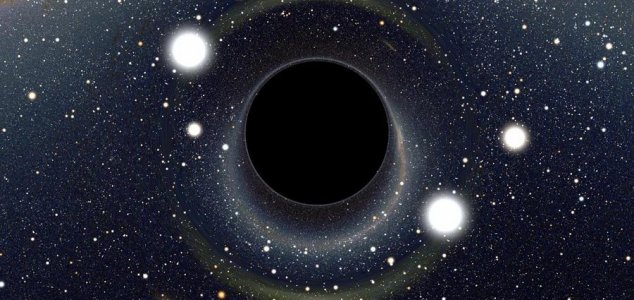
We are talking about black holes. Specifically, the idea of capturing a “miniature” black hole and using it to power human civilization. It sounds like the plot of a sci-fi horror movie where everything goes wrong in the third act. But the late, great Professor Stephen Hawking didn’t just think it was a cool movie plot. He ran the math. He looked at the universe and saw the ultimate power source hiding in the dark.
There is just one tiny, catastrophic problem. If you fumble this ball of energy, you don’t just blow a fuse. You don’t just blow up a city. You might just delete the entire planet.
The Forbidden Engine: Hawking’s Radical Proposal
Stephen Hawking was never one to shy away from the edge of reason. In his second Reith lecture on BBC Radio 4, back in 2016, he dropped a bombshell that kept physicists and futurists up at night. He suggested that a single, mountain-sized black hole could pump out X-rays and gamma rays at a rate of 10 million megawatts.
Let’s pause. 10 million megawatts. That is enough to power the world’s electricity supply. All of it. Every iPhone charger, every Tesla, every factory, every toaster on Earth. From one single object.
Most of us hear “black hole” and think of the gargantuan monsters at the center of galaxies—the ones famously photographed by the Event Horizon Telescope, looking like a fiery donut of doom. Those are the ones that eat stars for breakfast. We can’t use those. They are too big, too far away, and frankly, we are the snacks in that scenario.
But Hawking was talking about something else. He was talking about Primordial Black Holes.
What is a Primordial Black Hole?
Deep in the chaotic, soupy mess of the Big Bang, matter wasn’t spread out evenly. Some spots were denser than others. Scientists theorize that some of these dense pockets collapsed under their own gravity immediately, creating tiny black holes. These aren’t the star-eaters. These are ancient remnants.
Here is where your brain might hurt. A black hole with the mass of a mountain wouldn’t look like a mountain. Black holes are dense. Insanely dense. If you squashed Mount Everest down into a black hole, it would be smaller than a single atom. It would be sub-atomic.
Yet, it would still weigh as much as Mount Everest.
And because of a process called Hawking Radiation—the very discovery that made Stephen Hawking a legend—these tiny holes aren’t black at all. They are white-hot. They leak radiation. The smaller the hole, the hotter it gets. A mountain-sized black hole would be glowing, spitting out energy furiously as it slowly evaporates. It is basically a nuclear reactor that runs on gravity.
The Engineering Nightmare: How Do You Hold a Ghost?
So, you have found one of these ancient, invisible batteries. Great. Now, how do you hook a wire to it?
Hawking pointed out the obvious flaw in the plan. “It wouldn’t be easy however, to harness a mini black hole,” he warned. That is British understatement at its finest.
You cannot touch it. If you touch it, your hand gets ripped apart at a molecular level and sucked into the void. You cannot put it in a box. It will eat the box. You cannot put it on a table. It will eat the table.
This brings us to the most terrifying disaster scenario imaginable.
The “China Syndrome” on Steroids
Let’s say we actually catch one of these things. We build a facility. Maybe somewhere remote, like Siberia or the middle of the Australian outback. We turn it on. We are generating infinite power. Everyone is happy.
Then, the containment field fails.
In a nuclear meltdown, you get radiation and a mess that lasts centuries. Bad, but the planet survives. If a black hole containment fails? Game over.
Hawking explained it perfectly: “You couldn’t keep it in a power station, because it would drop through the floor and end up at the centre of the Earth.”
Think about gravity. This thing weighs as much as a mountain, but it is the size of a proton. It is incredibly heavy and unbelievably sharp. It would slice through the concrete floor, through the bedrock, through the crust, and through the mantle like a hot bullet through butter.
It wouldn’t stop. It would plummet straight to the Earth’s core. And once it is there, it would sit in the center, feasting on the molten iron heart of our planet. It would grow. As it eats, it gets bigger. As it gets bigger, it eats faster.
Eventually? The Earth becomes a hollow shell, crumbling inward until our entire world is consumed and compressed into a singularity. No explosion. Just a *slurp*, and then silence.
The Orbital Solution: Power from the Heavens
Because he was a genius, Hawking proposed a workaround. If you can’t keep it on the ground, you have to put it where gravity can’t hurt you.
“If we had such a black hole, about the only way to keep hold of it would be to have it in orbit,” he said.
Imagine a satellite towing a black hole. It orbits the Earth at a safe distance. We surround it with a massive array of collectors—like a Dyson Sphere shell—to catch the gamma rays and X-rays. Then, we use high-powered lasers or microwaves to beam that energy down to receiving stations on Earth.
It sounds perfect. Clean energy beamed from the sky. But consider the risks of orbital mechanics. Space is full of junk. Debris. Meteors. Failed satellites.
What if a stray piece of space junk hits our containment unit? What if the orbit decays? Now you have a mountain-mass object spiraling down toward the atmosphere. It wouldn’t burn up on re-entry. It would be the bullet that kills the world, falling from the heavens.
We would need to be extremely careful. One wrong move, one miscalculation in trajectory, and disaster strikes.
The Kugelblitz: Can We Build Our Own?
Here is where things get really wild. Some modern physicists and internet theorists believe we don’t need to find a primordial black hole. They think we can make one.
This concept is called a Kugelblitz (German for “Ball Lightning”).
According to Einstein’s General Relativity, gravity is created by mass and energy. If you concentrate enough energy—like lasers—into a tiny enough point, you can warp space-time so severely that it collapses into a black hole. A black hole made of pure light.
This is the holy grail of starship propulsion. Conspiracy theorists have long speculated that advanced extraterrestrial civilizations (Type II or Type III on the Kardashev scale) don’t use rocket fuel. They use Kugelblitz drives. They create a tiny black hole, feed it matter, and use the Hawking radiation to push their ships to near-light speed.
Is this why we haven’t seen aliens? Is this the “Great Filter”? Maybe every civilization that discovers how to make a black hole accidentally drops it and swallows their own home planet before they can explore the stars.
The CERN Conspiracy Connection
You can’t talk about mini black holes without bringing up the Large Hadron Collider (LHC) at CERN. Remember when they switched that machine on in 2008? The internet went crazy. People were genuinely convinced that smashing particles together at near-light speed would accidentally create a microscopic black hole that would devour Geneva, and then the world.
Scientists assured us it was impossible. They said that even if a micro black hole formed, it would evaporate instantly due to Hawking Radiation before it could eat anything.
But the fears linger. In the dark corners of the web, alternative historians and whistleblowers suggest that maybe we are trying to create stable singularities. Why? Not just for power. But for weapons. A bomb that implodes rather than explodes? That is the ultimate clean weapon. No mess. Just… gone.
The Hunt Continues
Despite the danger, the allure of infinite energy is too strong to ignore. Scientists have been hunting for evidence of primordial black holes for years. They look for weird gravitational lensing effects where background stars wobble for no reason. They look for unexplained bursts of gamma rays that might signal a mini black hole exploding.
So far? Nothing. Silence. The universe is keeping its secrets.
“This is a pity, because if they had I would have got a Nobel Prize,” Hawking quipped near the end of his lecture.
It is a classic Hawking joke—funny, but tinged with a deep frustration. He knew the math worked. He knew they should be out there. He knew they could save humanity from its energy crisis, or destroy us completely.
The Final Verdict
Are we ready for this power? Probably not. We can barely handle nuclear fission without catastrophic accidents like Chernobyl and Fukushima. The idea of handing humanity a leash attached to a black hole seems like giving a toddler a hand grenade.
But as we run out of oil, and as the planet heats up, desperation might drive us to look for radical solutions. The black hole battery sits there, theoretically possible, waiting for someone brave enough—or crazy enough—to try and grab it.
If we succeed, we become masters of the universe, commanding the power of stars in a box. If we fail? Well, at least it will be quick.
Originally posted 2016-02-17 13:31:24. Republished by Blog Post Promoter