The Silent Threat: How a City-Killer Asteroid Nearly Slipped Past Us in 2040
You probably never heard of it. And that was the point.
While the world’s attention was fixed on Apophis, the so-called “God of Chaos” asteroid, another cosmic bullet was quietly lining up Earth in its crosshairs. A ghost in the machine. A whisper in the dark, vast emptiness of space. It had a name, a designation given by the sentinels who watch the night sky: 2011 AG5.
It was smaller than the big-name threats. Less flashy. But it was on a trajectory that made seasoned astronomers go cold.
This isn’t just the story of a space rock. It’s the story of a near-miss that was almost a direct hit. It’s a tale of secret United Nations meetings, frantic calculations, and plans straight out of science fiction to save the world. The official story says the danger passed. A simple miscalculation. Nothing to see here.
But as you dig deeper, the questions begin to pile up. Was the threat really neutralized by new data? Or was something else going on in the shadows, a hidden history of a crisis the public was never meant to know about? Buckle up. The truth is floating out there.
Discovery: A Faint Blip on the Screen
January 8, 2011. While most of us were dealing with post-holiday bills, astronomers at the Mount Lemmon Survey in Arizona were doing what they always do. Staring into the abyss. Their powerful telescopes scan the heavens, cataloging the millions of objects flying through our solar system. Most are harmless. Ancient. Drifting aimlessly.
But not this one.
They spotted a faint smudge of light moving against the backdrop of distant stars. It was given the robotic name 2011 AG5. At first, it was just another data point in a vast cosmic database. But as the computers crunched the numbers, a red flag went up. A big one.
The problem was the orbit. It was… unsettling. The initial tracking data was sparse; they had only observed the rock for about half of its journey around the sun. Projecting a path from such little information is like trying to guess where a fly will land after seeing it for only a second. But even with that uncertainty, the projected path showed a frightening possibility. A close pass with Earth. A very, very close pass.
What is a Near-Earth Object?
Let’s get something straight. The space around our planet isn’t empty. It’s a shooting gallery. A cosmic freeway filled with millions of rocks, some the size of a grain of sand, others the size of mountains. Anything that comes within about 120 million miles of the sun is considered a Near-Earth Object, or NEO. These are the ones we watch.
They are the leftovers from the formation of our solar system, 4.5 billion years ago. Primordial rubble. And every now and then, the gravitational dance of the planets nudges one of these cosmic relics onto a path that intersects with our own.
Most burn up harmlessly in our atmosphere. We see them as shooting stars. But the big ones? The big ones get through. The dinosaurs found that out the hard way.
Anatomy of a City-Killer
So how big was 2011 AG5? The first estimates put it at around 140 meters, or 460 feet, across. That might not sound like much. It’s not the planet-killer you see in movies.
It’s worse. It’s a city-killer.
To put that in perspective, imagine the Statue of Liberty. Now imagine it made of solid rock, hurtling through space at 33,000 miles per hour. That’s what we were dealing with. An object this size wouldn’t end all life on Earth, but it would strike with the force of over 100 megatons of TNT. That’s more powerful than the largest nuclear bomb ever detonated.
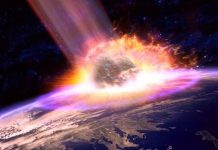
Forget a crater. It would create a hole of utter devastation miles wide. If it hit a city like London, New York, or Tokyo… the city would simply cease to exist. Wiped from the map in a blinding flash of light and a shockwave that would flatten everything for a hundred miles in every direction.
And if it hit the ocean? Even worse. It would trigger a mega-tsunami, a wall of water hundreds of feet high that would scour coastlines clean across an entire continent. The death toll would be in the millions. The global economy would collapse. Chaos.
Suddenly, the odds they calculated—1 in 625—felt terrifyingly real. Those aren’t lottery odds. In the world of planetary defense, that is a five-alarm fire.
The Gravitational Keyhole: A Cosmic Tightrope
The date circled in red on calendars at NASA and the European Space Agency wasn’t the impact date itself. It was long before that. The real moment of truth was a “keyhole pass” scheduled for 2023.
What in the world is a gravitational keyhole?
Imagine you’re trying to throw a marble and hit a specific spot on a wall 20 years from now. Impossible, right? But what if there’s a tiny, invisible gateway floating in the air between you and the wall? A small patch of space. If your marble passes through that exact gateway, its path will be bent *just so*, making it a dead certainty it will hit your target years later.
That gateway is a gravitational keyhole. It’s a tiny region of space, sometimes only a few hundred meters wide, located near a planet. If an asteroid passes through it, the planet’s gravity will tug on it in a very specific way, altering its orbit and putting it on a guaranteed collision course for a future pass.
For 2011 AG5, the keyhole was waiting in 2023. If the asteroid threaded that cosmic needle, its fate—and ours—would be sealed. The impact would be locked in for February 5, 2040.
Everything depended on missing that keyhole.
The Secret War to Save the Earth
With the stakes this high, the world’s space agencies didn’t just sit around and wait. The UN Action Team on Near-Earth Objects convened. You can imagine the scene. Tense meetings behind closed doors. Scientists and engineers, the best in the world, debating the fate of millions.
They weren’t just talking. They were planning. They were drawing up blueprints for missions that sound like they were ripped from a Hollywood script. How do you stop a 460-foot mountain of rock flying faster than a speeding bullet?
They had three main options on the table.
Option 1: The Kinetic Impactor
The brute force approach. Essentially, you build a big, heavy, dumb spacecraft and smash it into the asteroid at incredible speed. You’re not trying to blow it up; that would just create a deadly shotgun blast of smaller rocks. No, the goal is simpler. Nudge it. A cosmic game of pool.
The impact would act like a hammer blow, slightly changing the asteroid’s velocity. Even a tiny change, a few millimeters per second, would be enough. Over the many years before the 2023 keyhole pass, that tiny nudge would compound, causing the asteroid to arrive just a little early or a little late, missing the keyhole entirely. This is the very technology NASA successfully tested with its DART mission in 2022, proving that humanity can, in fact, move an asteroid.
Option 2: The Gravity Tractor
This is the elegant solution. The slow and steady approach. Instead of hitting the asteroid, you fly a heavy spacecraft *alongside* it. You don’t even touch it. You just park the ship nearby and let nature do the work.
Everything with mass has gravity, even a spacecraft. It’s a tiny amount, but it’s there. By hovering near 2011 AG5 for months or even years, the spacecraft’s minuscule gravitational pull would gently, persistently, tug the asteroid, pulling it ever so slightly off its original course. It’s the most precise method, but it’s also the slowest. It required time they might not have had.
Option 3: The Nuclear Option
This was the last resort. The do-or-die play. If all else failed, if we detected the threat too late, we might have to use our most powerful and controversial technology: nuclear weapons.
But again, the goal isn’t to blast it to bits. A nuclear-tipped missile would be sent to detonate a short distance *from* the asteroid’s surface, not on it. The immense wave of X-rays and radiation from the blast would vaporize a thin layer of the asteroid’s surface rock. This vaporized material would shoot off into space, creating a massive rocket-like thrust that would push the asteroid in the opposite direction. It’s messy. It’s risky. But in a pinch, it might be the only thing that could save a city from annihilation.
The Official Story: A Sigh of Relief
As the plans were being drawn up, astronomers around the world were racing against the clock. They needed more data. The asteroid was moving farther away from Earth, making it harder to see. They had to wait for it to swing back around on its orbit. Their next good chance to observe it wouldn’t be until late 2012 and into 2013.
The tension was palpable in the astronomical community. Finally, the observation window opened.
Telescopes in Hawaii and Chile locked onto the faint speck of light. They tracked it for weeks, gathering hundreds of new data points, refining its orbit with a precision they couldn’t achieve in 2011.
And then came the announcement. In late 2012, NASA’s Near-Earth Object Program Office at the Jet Propulsion Laboratory released their findings. The new data was conclusive. 2011 AG5 would miss the 2023 keyhole. And not by a little. It would miss it by over 500,000 miles.
The threat was gone. The probability of an impact in 2040 dropped from 1-in-625 to virtually zero. The world breathed a collective sigh of relief it didn’t even know it was holding.
Case closed. Right?
The Whispers Online: A Different Narrative
This is where the official story ends. A happy ending. A testament to science and international cooperation. But on the dark corners of the internet, in forums and on blogs dedicated to the unexplained, a different story began to take shape.
Was it really just a simple miscalculation?
The questions started small. The initial odds—1 in 625—were unusually high for an object with so little tracking data. Why was there such a push for deflection plans so early, with so much urgency, if they weren’t sure?
The theories began to fly. What if the threat was far more certain than they ever let on? What if the announcement of “new data” was a cover story to prevent global panic while they executed a top-secret mission?
What If They Already Moved It?
Think about it. The DART mission proved the kinetic impactor concept works. But DART was a public test. Who’s to say it was the *first* one? Is it so hard to believe that a classified mission, perhaps launched under the guise of a military or communications satellite, was sent to give 2011 AG5 a tiny, secret nudge long before 2012?
It would be the perfect cover-up. Execute the mission, “discover” new data that shows the asteroid is no longer a threat, and the public is never the wiser. No panic. No market crashes. No geopolitical instability. Just a quiet, clean solution.
A Rehearsal for Something Bigger?
Another theory suggests that the entire 2011 AG5 episode was a dry run. A live-fire exercise for the world’s planetary defense networks. They treated it as a real threat to test their detection systems, their international communication protocols, and their decision-making processes under pressure.
It makes a certain kind of cold, calculating sense. Why wait for a guaranteed killer rock to show up before you test your fire alarms? Maybe they always knew it would miss, but used the opportunity to prepare for the day when the threat is real and there’s no room for error.
The Unseen Danger That Remains
Whether you believe the official story or the whispers of a cover-up, the story of 2011 AG5 teaches us one chilling lesson: We are not alone, and our neighborhood is not safe.
This rock, a potential city-killer, was only discovered a few decades before its potential impact. What about the ones we haven’t found yet? Scientists estimate that we have only found a fraction of the NEOs that are 140 meters or larger. Thousands of them are still out there, their orbits unknown, silently tumbling through the darkness.
The next one could be found tomorrow. Or next week. Or it could be found when it screams through our atmosphere with no warning at all.
The saga of 2011 AG5 wasn’t an ending. It was a warning shot. A reminder that our planet is a fragile island in a vast, indifferent cosmic ocean. The skies are not empty. And we should never stop watching them.