Monday, August 10, 2026
HomeUFOs & Alien LifeAlien LifeMars rover finds water ! - alien life next ?

Mars rover finds water ! – alien life next ?

They Lied About Mars.

That’s the only conclusion you can draw.

For decades, we were fed a single, simple story. Mars is the Red Planet. A dead planet. A silent, rust-covered graveyard floating in space, interesting to scientists but ultimately, lifeless. A cosmic fossil.

They showed us pictures of endless craters and dust. They told us the atmosphere was too thin, the temperature too cold, the water long gone, boiled away into the vacuum of space billions of years ago.

But a funny thing happened on the way to the funeral. Whispers turned into data. Data turned into undeniable proof. And the story we were told started to crumble, revealing a truth far stranger, far more exciting, and maybe, just maybe, a little more terrifying.

The truth begins with one simple, life-giving molecule. Water.

The Red Dirt Is Soaking Wet

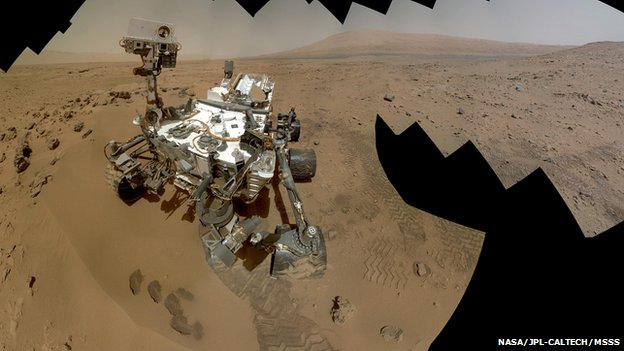
It sounds like science fiction, but it’s hard reality, beamed back from a six-wheeled nuclear-powered laboratory we sent to crawl across the alien landscape. When NASA’s Curiosity rover took its first real taste of Martian soil, the results sent a jolt through the scientific community. They scooped up a pinch of that iconic red dust, sealed it in an onboard oven, and cranked up the heat.

What came out was a ghost. A vapor. The single most sought-after substance in the solar system.

Water. Lots of it.

According to Laurie Leshin, one of the brilliant minds behind the rover’s mission, the dusty, seemingly bone-dry surface of Mars is a hidden reservoir. The soil holds about 2% water by weight. That number sounds small, doesn’t it? Almost insignificant. But let’s put that into perspective. As Dr. Leshin explained, “If you think about a cubic foot of this dirt and you just heat it a little bit… you’ll actually get off about two pints of water.”

Two pints. Two full water bottles, like the kind you’d take to the gym. From a single, small cube of ordinary Martian dirt that you could dig up with a garden spade.

This isn’t locked away in some deep polar ice cap. This is everywhere. It’s in the soil under the rover’s wheels, right now. It means the entire planet is a potential oasis. The key wasn’t finding a special spot. The key was just to scoop and bake.

A Deep Dive: The Long, Thirsty Hunt for Martian Water

The search for water on Mars is a story of obsession, ridicule, and eventual, shocking vindication. It began over a century ago with an astronomer named Percival Lowell, a man who peered through his telescope and saw a world crisscrossed with canals. Canals! He was convinced he was seeing a massive, planet-spanning irrigation system, built by a dying civilization to ferry water from the poles to their desert cities. He was mocked. Laughed out of serious scientific circles. Called a fantasist.

Then came our first real robotic eyes. The Mariner missions of the 60s and 70s flew by and saw… nothing. Just a cratered, moon-like wasteland. Then the Viking landers touched down in 1976. They sent back the first images from the surface: a desolate rock-strewn desert under a pale pink sky. The dream died. Lowell was wrong. Mars was dead.

Or was it?

For decades, hints kept trickling in. Orbital probes spotted what looked like ancient, dried-up riverbeds. Massive outflow channels that could have only been carved by catastrophic floods. Evidence of a past life, but a past life only. Then, in 2008, the Phoenix lander touched down near the northern pole. It scraped away a few inches of topsoil and there it was. Bright, white ice, glistening in the alien sun. Direct, physical proof. Water existed on Mars.

But even that was seen as a regional quirk. Just some ice at the frozen poles. The rest of the planet was still considered a desert. Curiosity’s discovery changed everything. It proved the water wasn’t just at the poles. It was chemically bound into the very soil of the entire planet. A global resource, waiting to be tapped.

The story shifted overnight. Mars wasn’t a world that *used* to have water. It’s a world that *has* water. Right now. Just below the surface.

Building an Empire on Martian Mud

So what? A little damp dirt, big deal, right? Wrong. This is the single biggest key to our future in space. It’s everything.

Sending anything to Mars is astronomically expensive. Every pound of payload costs a fortune. Imagine having to ship all the water needed for a human crew to drink, grow food, and operate for years. It’s a logistical nightmare. It’s a barrier that has kept manned missions in the realm of dreams.

But what if you don’t have to pack your water? What if the gas station is already there, waiting for you?

With this discovery, a future Martian outpost doesn’t need to be resupplied from Earth. Astronauts could essentially “bake” the soil in large ovens, condensing the water vapor, and have a virtually unlimited supply. Drinkable water. Water for hydroponic farms growing food millions of miles from home. But it gets even better. Using a simple process called electrolysis, you can split water (H2O) into its component parts: hydrogen and oxygen.

Oxygen, you can breathe. Hydrogen, when combined with oxygen, is one of the most powerful rocket fuels known to man. Suddenly, Mars isn’t just a destination. It’s a refueling depot. A base of operations for the entire solar system. You can land on Mars, make your own air to breathe, water to drink, and fuel to get back home. Or to go somewhere else.

This single discovery turned Mars from a dead end into a launchpad.

If Water is Hiding, What Else Is?

This is where the story takes a sharp turn. Away from the clean, sanitized press releases from NASA and into the murky world of shadows and suspicion. If they were wrong about the water for so long, what else are they wrong about?

Think about it. The official narrative was shattered by their own rover. But the rovers aren’t just sending back chemical analysis. They’re sending back pictures. Thousands upon thousands of high-resolution images. And while the scientists point their cameras at rocks to study geology, sometimes… they capture something else. Something that doesn’t fit. Something that sends the internet into a frenzy. Something that whispers of an entirely different Martian history.

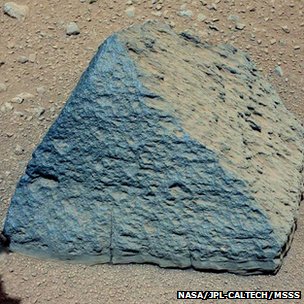
Something like a perfectly formed pyramid.

The Cydonian Anomaly: A Monument in the Dust

Look at this image. I mean, really *look* at it.

strange pyramid on mars

NASA will tell you this is a rock. They’ll use a fifty-dollar word for it, like “ventifact,” and explain that it’s just a regular boulder carved by billions of years of wind and sand. They want you to dismiss it. To see it as a coincidence. A trick of the light and shadow playing with our pattern-seeking brains.

But does that look like a random rock to you?

The symmetry is breathtaking. The clean lines, the sharp, intelligent angles. It doesn’t look like a product of random erosion. It looks like a product of design. It looks, for all the world, like a pyramid. The object, estimated to be about the size of a car, seems to be poking out of the Martian soil. Online researchers and digital sleuths have spent years analyzing this photo, enhancing it, trying to pull more detail from the pixels.

Their conclusion? This isn’t just a rock. They claim to see evidence of block-like construction. They argue its shape is too mathematically precise for nature to have created by chance. The most tantalizing theory? This isn’t the entire structure. It’s just the capstone. The very tip of a much, much larger pyramid buried beneath the sands of time.

Is This Just a Trick of the Mind?

The official explanation is a phenomenon called pareidolia. It’s the same psychological quirk that makes us see faces in the clouds or the man in the moon. Our brains are hardwired to find familiar patterns, especially faces and simple shapes, in random noise. And Mars, with its endless fields of rocks, is the ultimate Rorschach test.

The skeptics have a point. Mars is littered with strangely shaped rocks. But can pareidolia explain everything? The sheer number of anomalies photographed on the Martian surface over the years is staggering. At some point, you have to ask: Are we just seeing things? Or are we being told to ignore what’s right in front of our eyes?

The Red Planet’s Forbidden Photo Album

The pyramid is not an isolated incident. Not by a long shot. It’s just one piece in a much larger, and much weirder, puzzle. The Mars rovers have become accidental archaeologists, snapping pictures of things that defy easy explanation.

  • The Face on Mars: The original anomaly. A 1976 photo from the Viking 1 orbiter showed a mile-long mesa in a region called Cydonia that looked uncannily like a human face, staring up into the void. NASA dismissed it as a trick of light and shadow. Decades later, they sent another probe to take a higher-resolution picture, which showed a heavily eroded, natural-looking hill. Case closed? Not for everyone. Anomaly researchers argue the new photos were taken under different lighting conditions and from a different angle, intentionally obscuring the artificial features.
  • The Martian “Thigh Bone”: In 2014, Curiosity photographed a rock that looked so much like a fossilized femur, the internet exploded. It has the distinct shape of a thigh bone, complete with a joint-like knob at one end. NASA’s official line: it’s a rock, shaped by wind or water erosion. But the resemblance is so uncanny it makes you wonder.
  • The “Woman” on Mars: An image from the Spirit rover in 2007 contains a figure that looks for all the world like a cloaked woman sitting on a rock, perhaps gazing out over the landscape. It’s small, and the details are fuzzy. But the silhouette is undeniably humanoid. Is it a statue? Or something else?
  • Strange Spheres: The Opportunity rover found fields of tiny, perfectly spherical rocks nicknamed “blueberries.” Scientists say they are natural concretions formed by water. But other, larger, almost perfectly polished spheres have been spotted, some arranged in strange patterns that seem anything but natural.

One or two of these could be a coincidence. A dozen? It starts to feel like a pattern. A hundred? It starts to feel like a cover-up.

Connecting the Dots: A Ghost of a Blue Planet

Let’s step back and look at the whole picture. Let’s connect the dots that the mainstream narrative wants to keep separate.

Dot 1: We have absolute, undeniable proof that Mars was once a warm, wet planet. It had rivers, lakes, and possibly a massive ocean in its northern hemisphere. The conditions were, by all scientific accounts, perfect for life to begin.

Dot 2: We have absolute, undeniable proof that water is still there. Not just frozen at the poles, but locked into the soil across the entire planet. A vital ingredient for life is still present, everywhere.

Dot 3: We have a steady stream of photographic evidence showing inexplicable, geometric, and sometimes even biological-looking shapes scattered across the Martian landscape. These are dismissed one by one as tricks of the light, but they never stop coming.

What kind of picture do these dots create?

They paint a picture of a world that didn’t just have the *potential* for life. They suggest a world that may have been home to a civilization. A civilization that rose millions of years ago, under a blue sky and on the shores of a Martian sea. A civilization that built monuments, statues, and cities. And a civilization that was wiped out by a planetary cataclysm—the slow death of its atmosphere, the cooling of its core, the relentless solar winds stripping away its protection.

What if everything we are seeing—the pyramid, the face, the strange artifacts—are the last, sand-blasted ruins of that world? The shattered gravestones of a lost civilization, eroded by eons of wind and dust until they are barely recognizable. Not grand temples, but cosmic ghosts.

The Truth is in the Dirt

They told us Mars was a dead, red rock. They were wrong. They were, at best, mistaken, and at worst, they were lying.

They’ve now admitted to the water. A massive, world-changing truth they can no longer hide. But what about the other secrets buried in that red dust? What about the things their own cameras are showing us? Every new rover, with its more powerful cameras, sends back clearer and stranger pictures.

We are standing at a precipice. The official story is that Mars is a fascinating geological wonder that might one day host a human colony. But the forbidden story, the one whispered on internet forums and pieced together from anomalous photos, is infinitely more profound.

It’s the story of our lost twin. A world that lived and died. A civilization that may have looked to the stars and seen our own blue planet, never knowing that one day, their distant cousins would send robotic emissaries to photograph their tombs.

Keep your eyes on the images. Don’t just accept the easy explanations. The truth about Mars is screaming at us, a silent, static-filled scream across 100 million miles of space. And it’s only a matter of time before we hear it.

Amit Ghosh
Amit Ghoshhttps://coolinterestingnews.com
Aloha, I'm Amit Ghosh, a web entrepreneur and avid blogger. Bitten by entrepreneurial bug, I got kicked out from college and ended up being millionaire and running a digital media company named Aeron7 headquartered at Lithuania.
RELATED ARTICLES
- Advertisment -

Most Popular

Recent Comments

Warren Pan Abbott on The legend of the Devil Monkey !
chris davies on The McPherson Tape Mystery
Reed Reedly on ET has Internet!
Bea Houseoffashion on Proof Of Time Travellers – Gallery
Marcus2012 on ET has Internet!
Reed Reedly on ET has Internet!
LaughsAtConspiracyNuts on The 9/11 Conspiracy – Myths and Facts
Alex Sliverman on Did the ancients fly?
Doctor Wholigan on Time Traveler in 1938 film
chris davies on The McPherson Tape Mystery
Archie1954 on 10 secret UFO hideouts
chris davies on Ghosts of flight 401
Marcus2012 on ET has Internet!
jason Macdonald on Proof of Time Travel? – China
chris davies on Long-Lost Pyramids Found?
Reed Reedly on ET has Internet!
Milkman on Connected Universe
Tenmiles on Baigong Pipes Mystery
Simon Foster on Sirius – The Documentary
From the 1st April on 2013 – Alien Contact date ?
SkyWatcher on Is ET ignoring us?
I Come From The Future on Obama to make UFO Alien disclouser soon ?
ÛñK?øWn on 2013 – Alien Contact date ?
Just another person on 2013 – Alien Contact date ?
Malcolm Windowcleaner on The strange case of Rudolph Fentz
Mason Servio on Strange Things on Mars
Marke Wisdom Seeker on What will we find as arctic melts?
Andrea A Elisabeth Levyne on Aliens Captured in Varginha, Brazil
Mitch Grouyeki on Amazing Space Shuttle pictures