Did Ancient Aliens Visit Mars? The Mystery That Won’t Die
July 25, 1976. A date that should have changed human history forever. Or maybe it did, and we just weren’t told the whole truth. NASA’s Viking 1 orbiter was circling the Red Planet, snapping photos of the Cydonia region, looking for a place to park the Viking 2 lander. It was a routine survey mission. Boring stuff. Rock counting. Shadow measuring.
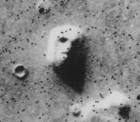
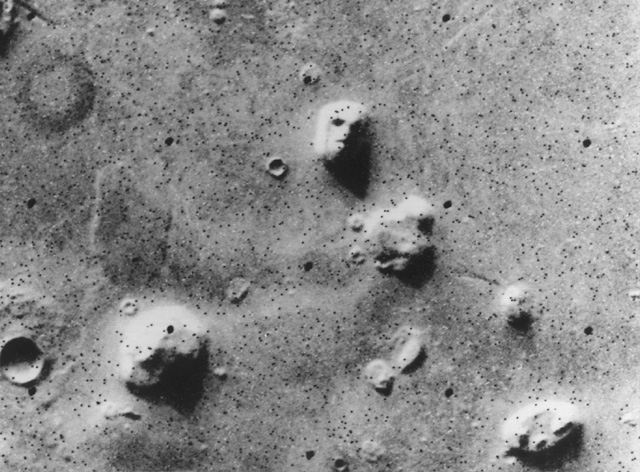
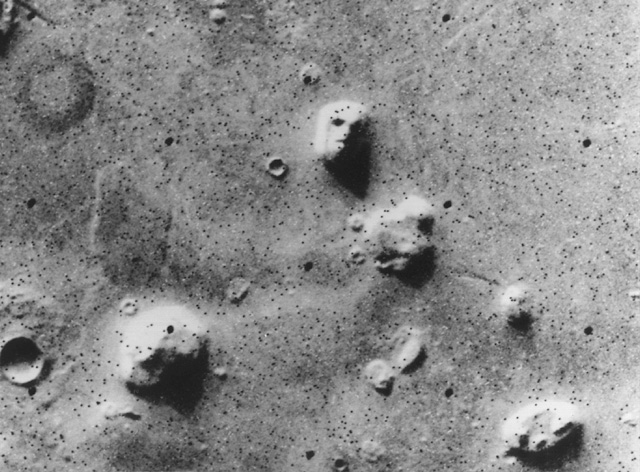
Then, frame 35A72 came through the feed.
A face. A human face. Staring blankly up into the cold, dead vacuum of space. It wasn’t a smudge. It wasn’t a blurry pixel mess. It had eyes. A nose. A mouth. It had a helmet or a headdress. It looked like a king. A warrior. A message.
The image above? That’s the one. That is the photo that launched a million arguments and kept conspiracy theorists up at night for decades. It looks undeniably artificial. Nature doesn’t make statues. Wind and erosion don’t carve symmetrical eyes and a mouth with that kind of precision. Or do they?
NASA released the image almost immediately. But here is the kicker. They released it with a disclaimer. A “nothing to see here” note. They called it a “trick of light and shadow.” They said if you took the photo a few hours later, the face would disappear. Just a rock formation. Just a mesa.
Really?
Move along, folks. Nothing to see but a pile of dirt that happens to look exactly like an Egyptian Pharaoh.
The Psychology of Seeing Things (Or Is It?)
Skeptics have a word for this. Pareidolia. It’s a fancy way of saying your brain is hardwired to find faces in everything. You see a face in the clouds. You see Jesus on a piece of burnt toast. You see a monster in the closet when it’s just a coat rack. It’s a survival instinct. We need to recognize faces to survive, so our brains are hyper-active pattern recognition machines.
So, the debunkers say the “Face on Mars” is just a psychological glitch. A shadow falls across a rock, and our monkey brains go, “Hey! That’s a guy!”
But that explanation feels too easy. It feels like a brush-off. Because when you look at the raw data, the dimensions are staggering. We aren’t talking about a small boulder. This thing is massive. It dominates the landscape. If it is a trick of the light, it is the most coincidental, mathematically improbable trick in the history of the solar system.
And it didn’t stop with the Viking mission. We went back.

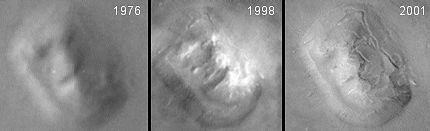
The Evolution of a Lie? Or the Truth Revealed?
Look at the progression above. This is the smoking gun for the skeptics. Over 25 years, technology improved. Cameras got better. Resolution sharpened. The Viking image on the left is grainy and low-res. The later images, taken by the Mars Global Surveyor and other modern probes, seem to show… a lumpy hill.
The eyes vanish. The mouth becomes a jagged crack. The symmetry falls apart.
NASA scientists did a victory lap. “See?” they said. “We told you. It’s just a mesa. It’s an eroded hill. No aliens. Go back to your day jobs.”
But hold on a second. Not everyone buys the clean-up job. Many independent researchers argue that the later images were processed heavily. Filters. Contrast adjustments. Smoothing algorithms. If you take a picture of a human face and run it through a high-contrast filter, you can make it look like a blob too.
Also, consider the erosion. If this structure is hundreds of thousands—or millions—of years old, of course it looks beat up. It’s been sitting in dust storms for eons. The Sphinx on Earth would look like a lump of melted butter if we didn’t keep digging it out and repairing it. Why do we expect a Martian monument to look pristine?
The Mystery Deepens: It’s Not Just a Face
Here is where things get really wild. If it was just the face, maybe—just maybe—you could write it off as a one-in-a-billion geological accident. A fluke of nature.
But the Face doesn’t sit alone.
Recent analysis of the Cydonia region has blown the “natural formation” theory out of the water for many experts. The Face is just one part of a massive complex. A layout. A design.
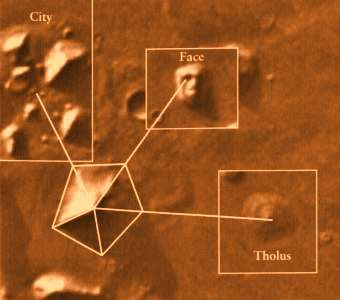
Just a few miles away from the Face, there are other structures. Structures that look suspiciously like pyramids. There is a cluster of features that researchers call “The City.” There is a massive five-sided pyramid called the D&M Pyramid (named after DiPietro and Molenaar, the guys who first found it). There is a “Fortress.”
Ancient alien theorists are screaming from the rooftops: Context matters!
If you found a statue of a head in the middle of the desert on Earth, you might think it’s a weird rock. But if you found that same head sitting five miles away from three pyramids and a ruined city, you wouldn’t call it a rock. You’d call it archaeology.
So why do we treat Mars differently?
Some claim these recent high-resolution pictures, despite NASA’s attempts to downplay them, actually show more evidence of artificiality. Straight lines. Geometric angles. 90-degree corners. Nature hates straight lines. Nature loves chaos. Cydonia is full of order.
Is this the final proof that aliens visited Mars in the distant past? Did they leave a message on Mars for future earthlings—us—to discover once we developed the technology to get off our own rock?
It is hoped the current and future Mars Rover missions will examine these features more closely. But don’t hold your breath waiting for the official press conference. If they find a door handle on a rock, do you think they’ll tell us? Or will it be “classified” for our own protection?
The Cydonia Layout: A Mathematics Lesson from Space?

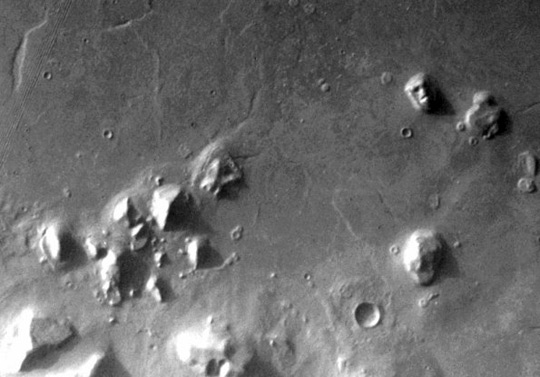
Let’s look at the map. The image above shows the layout of the Cydonia region. You have the Face. You have the City. You have the massive D&M Pyramid.
Detailed reviews of the layout reveal some very strange facts. The math is screaming at us. Researchers who have mapped the coordinates of these structures have found startling geometric alignments. We are talking about tetrahedral geometry. Relationships involving Pi and e.
The angles between the Face, the D&M Pyramid, and the City aren’t random. They form perfect geometric shapes. The odds of this happening by random erosion are astronomical. It’s like throwing a deck of cards on the floor and having them land in a perfect house of cards castle. It doesn’t happen.
The Egypt Connection: Mirror Worlds?
This is where the rabbit hole goes deep. Really deep.
When you look at the overhead images of the Cydonia pyramids as seen by Viking, and then look at aerial photos of the Egyptian pyramids at Giza, the similarity is slapping you in the face. They look strikingly similar. The layout. The spacing. The orientation.
Could the structures on both planets have been constructed by the same ancient civilization? This is the core of the “Ancient Astronaut” theory.
Proponents of the theory claim that the Face on Mars is similar in many respects to the Egyptian Sphinx. Think about it. The Sphinx is a human head on a lion’s body. It’s a guardian. A marker. It sits right next to the Pyramids.
On Mars, we have a giant Face. Sitting right next to giant Pyramids.
Coincidence?
Was some ancient race of beings present on both Earth and Mars? Did the same race seed both planets with intelligent life? The possibility is staggering in its implications. If it were true, it would change everything we had previously believed about the origin of life on Earth. It would rewrite the history books. It would shatter our religious and scientific dogmas.
Maybe we aren’t from here. Maybe we are the Martians. Maybe Mars died, and we were the refugees who escaped to Earth, built the pyramids as a reminder of home, and then forgot our history over thousands of years of dark ages.
Who Built This Galactic Graveyard?
Let’s assume for a minute—just a minute—that the debunkers are wrong. Let’s assume the Face is real. Who built it? And more importantly, why?
Could the Face be a gigantic monument erected by an alien race? And if it were an alien race that built it, why did it look so human?
This is the “Anthropomorphic Problem.” If an octopus-like alien built a statue, it would look like an octopus. If an insectoid race built it, it would look like a bug. The Face on Mars looks like us.
This leaves us with two terrifying options:
- They look like us. Aliens are humanoid. This fits with thousands of abduction reports and ancient myths of “gods” walking among men.
- We look like them. We were created in their image. Genetic engineering. The “promethean” theory. We are the biological legacy of the builders.
Other discoveries near the Face on the Cydonia plateau were perhaps clues to the identity of the builders and their relationship to life on Earth. Just west of the Face is a collection of odd features that also looked like they might be artificial. There were pyramids and a complex of structures that advocates were calling “the city.”
Pyramids, of course, automatically make us think of ancient Egypt, which has long conveyed its own mystique. Even before the discovery of the pyramids on Mars, certain fringe groups theorized that the pyramids of Egypt were built by – or at least with the assistance of – aliens.
So when these pyramids were seen on Cydonia, the Face gained even more credibility in some circles. It was the missing puzzle piece. It connected the dots between the stars and the sand.
The Impossible Scale of Cydonia
Let’s talk size. Because on Mars, size matters.
What about the idea that it was built by the same beings who engineered the amazing structures at Giza? Is there any ancient monument on Earth that is built in the same way that the Martian Face supposedly was?
For one thing, the Face is huge. It measures roughly 1.5 miles (7,920 feet) long, 1.2 miles (6,336 feet) wide and is approximately 0.3 miles (1,584 feet) tall.
Let that sink in. A sculpture that is a mile and a half long.
By comparison, the base of the Great Pyramid at Giza measures just 756 feet on a side. You could fit multiple Great Pyramids inside the footprint of the Face. The sheer engineering required to carve a mountain into a face is beyond anything we can do today. We struggle to build skyscrapers that last 100 years. This thing has lasted an eternity.
Also, if the Mars Face were an artificial structure, it’s unusual in that looks straight up into the sky. On Earth, human likenesses in the form of statues and great carvings like the Sphinx were created in a standing or upright sitting position so they could be appreciated by viewers on the ground. You look at the Sphinx. You don’t fly over it.
On Mars, viewers of the face, partly because of its large dimensions, would have difficulty discerning its features from the ground. If you were standing at the chin, you wouldn’t know it was a face. It would just look like a wall.
So, who was it built for?
Because they couldn’t really see it, wouldn’t it have been virtually meaningless to them? Unless…
Unless it wasn’t meant to be seen from the ground.
What if it was meant to be seen from orbit? What if it was a beacon? A signpost? A “We Are Here” marker for incoming ships? Or perhaps, a “Do Not Enter” warning left by a dying civilization?
The Nuclear Theory: Did Mars Burn?
Modern internet theories have taken this a step darker. Physicist Dr. John Brandenburg has proposed a theory that sounds like science fiction but is backed by strange data. He suggests that the civilization on Mars didn’t just fade away. It was murdered.
He points to high concentrations of Xenon-129 in the Martian atmosphere. Xenon-129 is a signature isotope produced by nuclear explosions. Brandenburg argues that Cydonia and another region called Utopia show evidence of massive, planet-killing nuclear airbursts.
If true, the Face isn’t just a statue. It’s a tombstone.
It changes the way we look at the erosion. Maybe the Face looks melted not because of wind and time, but because it was blasted by a weapon of unimaginable power. The “City” nearby isn’t just a ruin; it’s a bombsite.
Final Thoughts: The Truth is Waiting
We are still sending robots to Mars. We are driving rovers around specifically looking for signs of ancient microbial life. NASA is obsessed with finding a fossilized bacteria.
But maybe they are looking too small. Maybe they should stop looking at the dirt and start looking at the mountains.
The Face on Mars remains one of the greatest unsolved mysteries of the space age. Whether it is a trick of the light, a pile of rocks, or the crumbling remains of a lost empire, it forces us to ask the big questions. Are we alone? Where did we come from? And what happened to our neighbors?
Until a human astronaut stands on the Cydonia plateau and touches the stone with their own gloved hand, we won’t know for sure. But the evidence is there. The photos are there. The geometry is there.
Keep your eyes on the skies. The truth is out there, and it might be staring right back at us.
Originally posted 2016-03-13 20:28:25. Republished by Blog Post Promoter
![face-on-mars-original[1]](https://coolinterestingnews.com/wp-content/uploads/2012/07/face-on-mars-original1.webp)