Something Is Happening on Mars
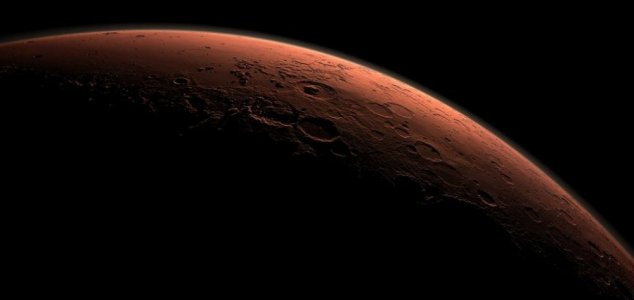
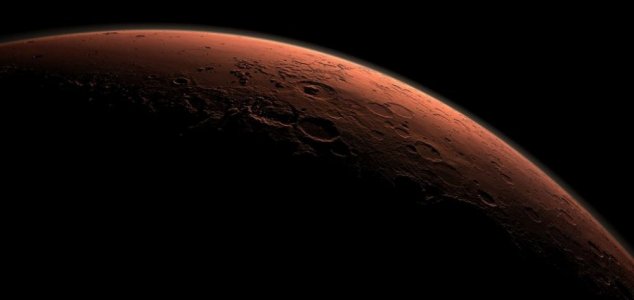
Forget what you think you know about the Red Planet. Forget the images of a cold, dusty, and silent world. For a few fleeting days, Mars showed us something else. Something impossible. Something that defies every model and calculation we have. A ghostly structure, bigger than a country, hanging impossibly high in an atmosphere that should be too thin to support it. Scientists have been left scrambling for answers. They have none.
But we have questions. So many questions.
This isn’t just a weather report from another planet. This is a cosmic mystery, a signal flare from a world we thought was sleeping, suggesting that either our understanding of planetary science is fundamentally broken, or something truly extraordinary is taking place just one planet over.
A Ghost in the Telescope: The 2012 Discovery
It didn’t begin in a sterile NASA lab with alarms blaring. No, this story starts, as so many great mysteries do, with a dedicated few staring into the darkness from their own backyards. It was March of 2012. Amateur astronomers, the sentinels of the night sky, were tracking Mars. And they saw something wrong.
A strange, hazy plume was erupting from the edge of the planet. A smudge. An anomaly. It shouldn’t have been there.
This wasn’t some tiny blemish. Over the course of about ten days, this phantom structure grew and morphed, a shapeshifting enigma against the blackness of space. Then, just as mysteriously as it appeared, it vanished. Gone. A month later, in April 2012, it came back. For another ten days, it danced on the limb of Mars before disappearing again, this time for good. A cosmic ghost seen twice, leaving behind a trail of utter confusion.
Just How Big Was This Thing?
Let’s get one thing straight. This was a monster. The feature stretched for over 600 miles (that’s 1,000 kilometers) across the Martian surface. To put that in perspective, that’s the distance from Paris to Berlin. Or the entire length of California. Now, imagine that structure not on the ground, but soaring vertically into the sky.
But the most mind-bending part? Its altitude.
The plume reached a staggering height of over 150 miles (about 250 kilometers). On Earth, that’s well into space. The International Space Station orbits at a similar altitude. The atmosphere there is virtually a vacuum. And Mars’s atmosphere is already 100 times thinner than Earth’s at sea level. At 250km high, the Martian atmosphere is almost non-existent. It’s a whisper in a void.
So how does a “cloud” the size of a European country form in a near-vacuum? The simple answer? It doesn’t.

Debunking the “Normal”: Why Mainstream Science is Stumped
When the professional scientific community finally got their hands on the data from the amateur stargazers, they did what they always do: they tried to fit the anomaly into a box of known phenomena. They ran the numbers. They checked the models. And every single time, the box broke.
Theory #1: The Impossible Cloud
The first, most obvious guess was a cloud. Mars has clouds. We’ve seen them. They are typically wispy formations of either water ice or frozen carbon dioxide (dry ice). Simple, right?
Wrong. Dead wrong.
Martian clouds have a very strict ceiling. They never, ever form above 60 miles (100km) in altitude. The atmosphere is just too thin and too warm at those higher elevations for ice crystals to condense. To have a cloud of water or CO2 ice at 150 miles high on Mars is like finding a snowman in the Sahara desert during a heatwave. It violates the fundamental laws of its environment.
So, the experts were stumped. They admitted it. In a paper published in the journal *Nature*, they concluded that the plume was “a challenge to our current understanding of Mars’s upper atmosphere.” That’s scientific code for “we have absolutely no idea what we’re looking at.”
Theory #2: An Aurora on Steroids?
Okay, so if it’s not a cloud, what else could glow high in a planet’s atmosphere? An aurora!
This theory is tantalizing. Mars doesn’t have a global magnetic field like Earth, but it has pockets of strong, localized magnetic fields embedded in its crust—relics from a time when its core was molten and active. The plume was spotted over a region known as Terra Cimmeria, which just so happens to be the site of one of these powerful magnetic anomalies.
Could a blast of solar particles have hit this magnetic pocket and lit up the thin atmosphere? It’s possible. It’s a great idea. Except for one gigantic, glaring problem.
The brightness.
Dr. Antonio Garcia Munoz, a planetary scientist who studied the event, put it bluntly: for this to be an aurora, it would need to be “1,000 times stronger than the strongest aurora” ever witnessed on Earth. Think about that. The most spectacular Northern Lights you’ve ever seen in a documentary? Multiply their energy and brightness by a thousand. It would be a cataclysmic light show, fueled by a solar storm of biblical proportions. And here’s the kicker: we were watching the sun at the time. There was no such storm. No massive solar flare was recorded that could explain such an insane energy discharge.
So, we have a cloud that can’t exist and an aurora that’s impossibly powerful. We’re off the map. We have officially entered the territory of the truly strange.
Venturing into the Unknown: The Theories They Don’t Talk About
When the official explanations crumble into dust, that’s where the real investigation begins. If it wasn’t a cloud and it wasn’t an aurora, what was it? What force could raise a structure of that magnitude into the near-vacuum of the Martian exosphere? This is where we have to ask the questions that make scientists uncomfortable.
Could Mars Still Be Alive? A Volcanic Explanation
We’re taught that Mars is geologically dead. A cold, dormant rock. But what if it’s not? What if, deep beneath the crimson dust, the planet’s heart still beats?
Imagine a massive, previously unknown super-volcano. Not a slow eruption of lava, but an explosive outgassing event. A colossal pocket of pressurized gas and dust from within the planet’s mantle suddenly bursting forth, firing a plume of material straight up like a cannon shot. Such a ballistic projection could, theoretically, reach those extreme altitudes before dissipating.
This theory is compelling because it doesn’t require rewriting the laws of physics, just our geological assumptions about Mars. The planet is home to Olympus Mons, the largest volcano in the solar system. The forces that created such a behemoth may not be entirely extinguished. Maybe Mars isn’t dead. Maybe it’s just sleeping. And maybe, in 2012, it briefly woke up.
A Scar from the Heavens: The Impact Theory
What if the plume wasn’t from Mars, but something that *happened* to Mars? The solar system is a cosmic shooting gallery. Perhaps a small comet or a large meteor grazed the upper atmosphere at an incredibly shallow angle. It wouldn’t need to hit the ground. The sheer kinetic energy and heat from its passage could have flash-vaporized its own material and super-heated the thin atmospheric gases, creating a temporary, glowing trail of debris that hung in space.
This would explain the sudden appearance and disappearance. A cosmic hit-and-run. The problem? The plume was observed for ten days on two separate occasions. A direct impact trail would likely dissipate much, much faster. It’s a plausible trigger, but it doesn’t quite explain the sustained nature of the event.
The Elephant in the Room: Was It Artificial?
You knew we were going here. When you eliminate the probable and the improbable, you have to start considering the truly paradigm-shifting possibilities that the internet has been buzzing about for years.
What if the plume wasn’t a natural phenomenon at all?
Think about it. A structure that maintains its form at an altitude where no natural cloud can exist. An energy signature that dwarfs any known natural aurora. This has all the hallmarks of a massive energy release. A technological event.
Could it have been the exhaust plume from a colossal, hidden spacecraft taking off or maneuvering? A discharge from some kind of massive power plant or terraforming atmospheric processor located in the Terra Cimmeria region? We are talking about a civilization, either ancient or current, with capabilities far beyond our own.
It sounds like science fiction. But is it any more fantastic than a cloud that defies physics or an aurora that breaks the energy scale? It’s an uncomfortable hypothesis, but it fits the visual evidence in ways the “natural” explanations simply don’t. It was a controlled, sustained event. Twice.
A Decade of Silence: The Mystery Endures
Perhaps the most unsettling part of this story is the silence. Since that second sighting in April 2012, the plume has not returned. It’s been over a decade. We have more advanced probes orbiting Mars than ever before. MAVEN arrived in 2014, specifically to study the upper atmosphere. The ExoMars Trace Gas Orbiter arrived in 2016. They’ve been watching. Constantly.
And they have seen nothing. Not a trace.
It’s as if a door to another reality opened for a brief moment, showed us something impossible, and then slammed shut forever. The event left no lingering clues, no atmospheric residue, no magnetic signature. Just a handful of grainy photos from Earth-bound telescopes and a set of data that makes no sense.
The mystery hasn’t been solved. It’s been buried by time and a lack of new evidence. The official investigation has gone cold, and the scientific community has moved on to other, more easily explainable Martian features. But the question mark remains, hanging over the Red Planet, bigger and more ominous than ever.
What Does the Martian Plume Mean for Us?
This isn’t just an academic puzzle. The 2012 Martian plume is a crack in the foundation of what we think we know. It tells us that our remote observations are incomplete, that our models are flawed, and that worlds we perceive as simple are anything but.
It’s a profound lesson in cosmic humility.
Whether it was a freakish natural event that rewrites the textbooks, a sign of a geologically active world, or something far, far stranger, the plume serves as a stark reminder. The universe is under no obligation to make sense to us. Mars has a secret. For twenty days, it showed us a glimpse of that secret, a puzzle piece that doesn’t fit in any box we have.
So the next time you look up at that tiny red dot in the night sky, remember what it showed us. It’s not just a destination for our rovers. It’s an active, dynamic world with profound mysteries still unfolding. And it might not be as quiet and empty as we’ve been led to believe.
Originally posted 2015-11-05 15:25:59. Republished by Blog Post Promoter