The Ghost Fleet of the Knights Templar: Solving the Greatest Heist in History
Picture this. The air is cold. It’s just before dawn on Friday, October 13th, 1307. Across France, a secret order is given. Soldiers of King Philip IV, the most powerful monarch in Europe, smash down doors. They drag men from their beds—bankers, warriors, holy men—all members of a single, legendary order. The Knights Templar.
The King’s plan was audacious. A coordinated, kingdom-wide strike to decapitate the organization that was richer and more powerful than he could ever hope to be. He wanted their gold. He wanted their land. He wanted their secrets.
His men stormed the Paris Temple, the Templar headquarters, a fortress of finance and power. They breached the treasury, expecting to find mountains of gold, chests overflowing with silver, priceless relics from the Holy Land.
But they found… almost nothing.
Dust. Echoes. The vast vaults were nearly bare. The legendary, unimaginable wealth of the Knights Templar had vanished. It was gone. And with it, a huge portion of the knights themselves, along with their formidable naval fleet. They didn’t just hide their treasure. They disappeared with it. This wasn’t just a robbery. It was the opening chapter in a mystery that stretches across 700 years, a mystery that points to a windswept, rebellious kingdom in the north: Scotland.
More Than Monks with Swords: The Rise of a Global Superpower
To understand the disappearance, you first have to understand what the Templars truly were. Forget the simple image of crusaders guarding pilgrims. That’s how they started in 1119, a humble mission. But that’s not what they became.
They became the world’s first multinational corporation.
Granted tax-exempt status by Pope Innocent II, they answered to no king, no bishop, only to the Pope himself. Donations poured in from every corner of Christendom. A nobleman heading to the Holy Land might donate his entire estate to the Order for safekeeping. They soon owned vast tracts of land, farms, vineyards, castles, and entire industries across Europe.
But their real genius? They invented international banking. A pilgrim in London could deposit his gold at the London Temple and receive a coded piece of parchment. He could then travel, unburdened by heavy, stealable coins, all the way to Jerusalem, present his note at the Temple there, and withdraw the exact same amount. It was revolutionary. It was secure. And it made them obscenely wealthy. They were the bankers to kings, popes, and merchants. They held the royal jewels of France as security on a loan. They ran Europe’s financial system.
They were untouchable. Or so they thought.
The King, The Debt, and The Dawn of a Smear Campaign
Power like that creates enemies. And their biggest enemy was their biggest client: King Philip IV of France, also known as Philip the Fair. Philip was a man drowning in a sea of red ink. He had costly wars to finance and a kingdom to run. And he owed the Templars a fortune. An astronomical, unpayable sum.
Paying them back was out of the question. So, he devised a more permanent solution.
He couldn’t just attack them. They were a holy order, protected by the Pope. So Philip launched one of the most successful smear campaigns in history. His agents spread whispers in the dark. Vicious rumors. They said the Templars weren’t Christians at all. That during their secret initiation ceremonies, they spat on the cross. That they denied Christ. That they worshipped a demonic bearded head named Baphomet. They were accused of heresy, idolatry, and all manner of unspeakable acts.
It was all lies. But lies, when repeated loud enough, start to sound like the truth. Philip pressured a weak and compliant Pope, Clement V, to go along with his brutal plan. The stage was set for the ambush.
Friday the 13th: The Day the World Turned Upside Down
The coordinated raids were a masterpiece of military precision. On that single morning, thousands of Templars in France were arrested. Their leader, Grand Master Jacques de Molay, was captured in Paris. What followed was a nightmare of imprisonment and torture. Under unimaginable pain, men confessed to anything their tormentors wanted to hear. Yes, they worshipped a cat. Yes, they spat on the cross. The confessions, extracted by fire and the rack, were all Philip needed to justify his actions to the world.
But as the King’s men counted their loot, a chilling realization dawned. This wasn’t it. The vast, liquid assets—the gold, silver, and jewels that formed the bulk of the Templar fortune—were gone. Someone had tipped them off. Someone knew the storm was coming.
And it wasn’t just the treasure that was missing.
The Phantom Fleet of La Rochelle
On the night of October 12th, the very night before the raids, the main Templar fleet was docked at their Atlantic port of La Rochelle. It was a formidable flotilla. Eighteen large ships, maybe more. By the morning of the 13th, as Templars across France were being dragged away in chains, the port was empty. The fleet had slipped its moorings under the cover of darkness and sailed into the unknown, taking with it an army of knights and, many believe, the treasure itself.
A ghost fleet. Eighteen ships. Gone. Vanished into the pre-dawn fog, taking with them the accumulated wealth of the most powerful organization on Earth.
Where could they have gone? For centuries, this question has haunted historians and treasure hunters. Some say they sailed to Portugal, where the King protected them and they simply changed their name to the “Order of Christ”—an order that, a century later, would fund the great Portuguese voyages of discovery. Did Templar gold pay for Vasco da Gama’s ships?
Others whisper of a much longer, much more secret voyage. A journey west. Across the Atlantic, more than 150 years before Columbus, to America. A wild theory? Maybe. But the question remains. Where did they go?
The Scottish Connection: A Rebel King’s Secret Haven
There is one destination that makes perfect, logical sense. A place where the long arm of the Pope and the King of France could not reach. A rogue state, a kingdom at war, led by a king who had been excommunicated by the very same Pope who had condemned the Templars.
Scotland.
Think about it. In 1307, Scotland, under the leadership of the legendary Robert the Bruce, was a pariah state. Bruce was locked in a desperate war for independence against England. He had been excommunicated for murdering his rival on holy ground. Papal bulls—like the one demanding the arrest of all Templars—meant nothing in Scotland. It was a lawless land in the eyes of the Church. It was the perfect sanctuary.
Did the Templar fleet sail north? Did they bring their treasure, their military expertise, and their remaining knights to the one king in Europe who would welcome them with open arms? The evidence is tantalizing.

The Miracle at Bannockburn
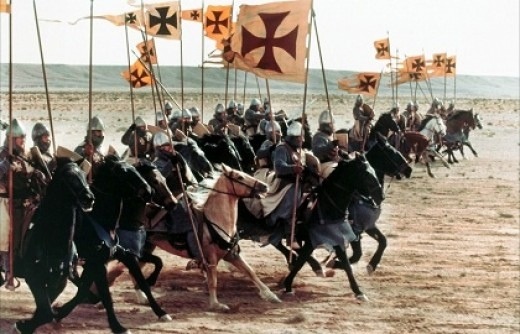
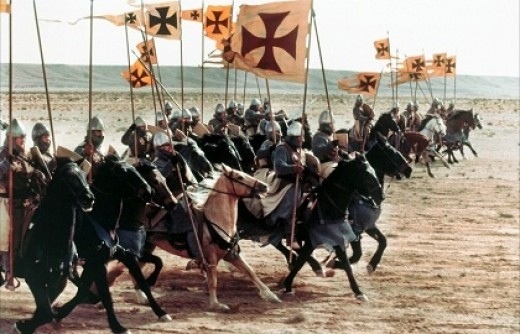
Fast forward seven years to 1314. The Battle of Bannockburn. Robert the Bruce’s small, gritty Scottish army faces a massive, heavily armored English force. The Scots are hopelessly outnumbered. By all military logic, they should have been crushed.
The battle raged for two days. On the final day, just as the Scottish lines were beginning to buckle, something extraordinary happened. A fresh, disciplined force of well-equipped cavalry appeared on the battlefield as if from nowhere. They weren’t part of the main Scottish army. They were a surprise. A devastating one.
Their charge shattered the English flank and triggered a total route. The English army collapsed. Scotland won its independence. But who were these mystery horsemen? Legends have long claimed they were a remnant of the Knights Templar, repaying Robert the Bruce for granting them sanctuary. Elite, battle-hardened warriors, a secret weapon unleashed at the most critical moment. Is this how the Templars paid for their safe harbor? With the blood, steel, and skill that had made them legends?
Rosslyn Chapel: A Stone Map to the Treasure?
Perhaps the most compelling piece of the Scottish puzzle is a strange, mystical chapel built a century later, just south of Edinburgh. Rosslyn Chapel. Built by William Sinclair, a nobleman whose family is said to have deep connections to the Knights Templar, this building is like nothing else in Europe. It’s not just a church; it’s a library of secrets carved in stone.
The entire chapel is covered in a riot of intricate carvings. There are pagan symbols like the Green Man, symbols from Norse mythology, and motifs that seem to defy history. Carvings of what appear to be ears of corn and aloe vera plants. How is this possible? These are New World plants, supposedly unknown in Europe until after Columbus’s voyages in 1492. Did the builders of Rosslyn know something about the world that the rest of Europe did not? Did the Templars’ secret voyages provide this knowledge?
The chapel is filled with Templar and Masonic symbolism. And deep beneath the floor lies a sealed underground vault, or crypt. For centuries, rumors have persisted that this vault holds something of immense importance. Is it the lost treasure? The gold and silver? Or something far more valuable?
What “Treasure” Are We Even Looking For?
When we say “Templar Treasure,” most people think of gold coins and shining jewels. And yes, a massive part of their wealth was just that. Untold billions, possibly even trillions in today’s currency, in precious metals, land deeds, and financial assets.
But many researchers believe the true treasure was something else entirely. Something they may have discovered during their long occupation of the Temple Mount in Jerusalem, the very site of Solomon’s Temple.
The Ultimate Relics
What if, while digging beneath the Temple Mount, they found something that could change history? Something that gave them their incredible power and influence? The theories are wild, and they strike at the very heart of Western history.
- The Ark of the Covenant: The holy chest said to contain the Ten Commandments. A direct line to God, and an artifact of unimaginable power.
- The Holy Grail: Not a cup, perhaps, but something far more profound. Some theories suggest the “Grail” was actually a collection of documents—lost gospels, or even the direct bloodline of Jesus Christ, a secret that would shatter the foundations of the Catholic Church.
- The Shroud of Turin: The reputed burial cloth of Jesus. The Templars are known to have possessed it at one point. Could it be part of the hidden cache?
If the Templars possessed even one of these items, it explains everything. It explains their rapid rise to power. It explains why the Church would turn on them so violently—to reclaim or suppress a truth they could not control. And it explains why such a “treasure” would have to be hidden with more care than any amount of gold.
The Modern Hunt and a Shocking Vatican Secret
The search for the Templar legacy continues today. Ground-penetrating radar has been used at Rosslyn Chapel, revealing tantalizing anomalies in the ground beneath the sealed crypt. Online forums and communities of amateur historians spend countless hours connecting dots, trying to decipher a 700-year-old mystery.
The story has been supercharged by popular culture, from books like *The Da Vinci Code* to video games like *Assassin’s Creed*, all drawing on the deep well of Templar mythology. But the most shocking recent discovery wasn’t made by a treasure hunter with a shovel, but by a historian in the Vatican’s Secret Archives.
In 2002, a document was found that had been misfiled for centuries. The Chinon Parchment. It was the official record of the Pope’s investigation into the Templar leadership in 1308. And its contents were stunning. The parchment revealed that Pope Clement V, after hearing their stories, found the Templars innocent of heresy. He formally absolved them of their “sins.”
Think of the implications. The Pope knew they were not heretics. But he was too weak, too politically cowed by King Philip, to make his findings public. He let them burn anyway. The entire persecution wasn’t a holy inquisition. It was a cold-blooded political assassination and the biggest heist in history, sanctioned by a Pope who knew the victims were innocent.
The treasure is still out there. Maybe it’s a physical hoard of gold buried beneath a Scottish chapel. Maybe it’s a collection of documents that could rewrite our past. Or maybe the real treasure was never gold or relics at all. Maybe it was their influence—a legacy of banking, exploration, and secret knowledge that never truly died, but simply… changed its name.
The ghost fleet that sailed from La Rochelle never reached a final destination in the history books. It sailed straight into legend. And somewhere, in the shadows of that legend, the truth is still waiting to be found.
![20131214-151100[1]](https://coolinterestingnews.com/wp-content/uploads/2013/12/20131214-1511001.webp)