Home Weird World Paranormal The strange Monster Of Lake Iliamna

The strange Monster Of Lake Iliamna

0
77

The Iliamna Lake Monster: Has Science Finally Solved Alaska’s Deepest, Darkest Secret?

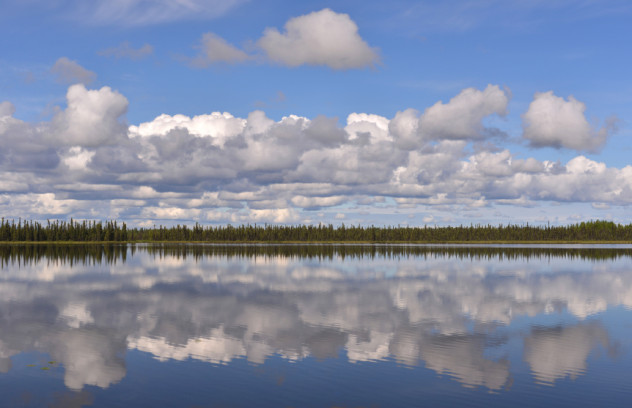
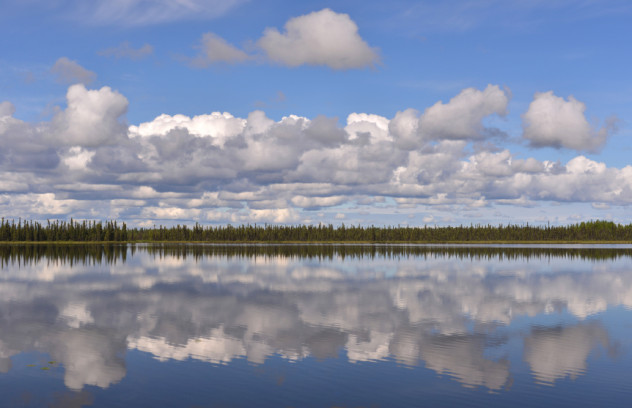
Out there. Beyond the roads, beyond the cities, beyond almost everything you know, lies a vast, wild expanse of raw, untamed nature. This is Alaska. A place of breathtaking beauty and bone-chilling cold. And in its heart sits a body of water so immense it defies belief.

Lake Iliamna.

It’s not just big. It’s a monster. Sprawling over a thousand square miles, this is the largest freshwater lake in Alaska, a colossal inland sea of glacial melt that could swallow the state of Rhode Island whole. Its waters are deep, frigid, and teeming with life. But for centuries, whispers have echoed from its shores. Whispers of something else living in those depths. Something ancient. Something enormous.

They call it Illie. Alaska’s answer to Loch Ness. A creature of legend, a phantom of the deep that has terrified local communities for generations and baffled investigators for decades. Is it a myth? A misidentification? Or is there a genuine, flesh-and-blood leviathan patrolling the freezing abyss of Lake Iliamna?

The answer might be more shocking than the legend itself.

Echoes from the Ice: The First Warnings

This isn’t a new story. This isn’t a tale born from grainy photos and internet forums. The fear of what lies beneath Iliamna’s waves is as old as the mountains that surround it. The indigenous peoples of the region—the Aleut, Yup’ik, and Tlingit—have stories that will make your blood run cold. They didn’t just tell tales of a big fish. They spoke of a creature they called the Gonakadet or other names, a fearsome water spirit that demanded respect. And avoidance.

For countless generations, experienced fishermen would not dare venture into certain parts of the lake. They wouldn’t even put their boats in the water if the conditions weren’t right. Why? They believed a creature dwelled there. A beast that could destroy canoes, capsize boats, and drag men down to a watery grave. These weren’t just campfire stories to scare children. They were practical warnings. A deep-seated cultural knowledge that some things in this world are best left alone. They warned of a massive, dark shape that would surface on calm days, a creature that was not a whale, not a seal, and certainly not any known fish.

Was this simple superstition? Or was it the wisdom of a people who knew their land, their water, and their monsters intimately?

Eyes in the Sky: The Modern Mystery Begins

The old stories might have remained just that—local lore—if it weren’t for the dawn of the aviation age. Suddenly, bush pilots were crisscrossing the Alaskan wilderness, seeing this vast landscape from a perspective no one ever had before. And in the 1940s, they started seeing… something.

From the air, the deep, clear waters of Lake Iliamna offered a stunning window into the world below. Pilots flying supply routes began reporting bizarre sightings of enormous, dark shapes moving purposefully through the water. These weren’t logs. They weren’t schools of fish. They were singular, massive objects, often described as looking like a “long, aluminum-colored submarine” moving just beneath the surface.

One of the most famous accounts comes from a pilot named Tim LaPorte. While flying over the lake, he and his passengers spotted a creature they estimated to be at least 30 feet long. It was dark, sleek, and powered by a large, vertical tail fin that moved side-to-side like a fish—not up-and-down like a whale or a dolphin. They watched, mesmerized, as this impossible creature cruised through the frigid depths. Others followed. Fishermen, missionaries, local residents—all came forward with tales that echoed the same strange details. A long, powerful body. A single fin. And a size that defied all logic.

image8

In 2011, the Anchorage Daily News even offered a $100,000 reward for verifiable proof of the beast. The mystery had officially gone mainstream. The hunt for Illie was on. But what, exactly, were they hunting for?

Deep Dive: Opening the Case Files on Illie

When you have a mystery this deep, you get a lot of theories. Some are plausible. Some are… not. But two prime suspects have risen to the top of the list, two creatures from the real world that are every bit as monstrous as the legend itself.

Case File #1: The Armored Ghost of the Deep

Imagine a living dinosaur. A fish wrapped in bony armor plating, a creature that can grow longer than a pickup truck and weigh more than a small car. It’s not a fantasy. It’s a White Sturgeon.

The White Sturgeon is North America’s largest freshwater fish. Historically, these river giants were known to reach lengths of 20 feet and weigh nearly 2,000 pounds. They are prehistoric survivors, an ancient lineage of fish that swam with the dinosaurs. They are bottom-dwellers, covered in rows of sharp, bony plates called scutes, and they look every bit the part of a primeval monster.

Could Illie be a relic population of gigantic White Sturgeon? The theory is compelling.

  • The Size Fits: A 20-foot sturgeon perfectly matches the upper estimates of Illie’s size.
  • The Look Fits: Their long, dark, torpedo-shaped bodies could easily be mistaken for a serpentine monster or even a small submarine from a distance.
  • The Behavior Fits: As bottom-feeders, they would spend most of their time in the crushing dark of the lake bed, explaining why they are so rarely seen.

There’s just one colossal problem. A deal-breaking, theory-sinking problem. No one has ever, in the entire history of modern fishing, caught or even definitively documented a White Sturgeon in Lake Iliamna or its connecting river system, the Kvichak River. Not one. Despite the lake being a world-class fishing destination, not a single sturgeon has ever been pulled from its waters. For a population of giant fish to exist, there would have to be smaller, juvenile fish. And none have ever turned up.

Is it possible they are just too deep, too rare, too smart to be caught? Perhaps. But for now, the sturgeon theory remains exactly that. A theory. A ghost story without a ghost.

Case File #2: The Jaws of the Arctic

This is where things get truly interesting. And terrifying. In recent years, a new suspect has emerged, one that makes the sturgeon look tame. A theory championed by biologist Bruce Wright suggests that the Iliamna Lake Monster might not be a fish at all. It might be a shark.

A Pacific Sleeper Shark, to be exact.

Don’t let the name fool you. These are not sluggish, gentle giants. The Pacific Sleeper Shark is a massive predator of the deep, cold oceans, growing up to—you guessed it—20 feet long or more. They are apex predators, stealthy hunters that patrol the near-freezing darkness, feeding on everything from giant squid to seals. Their appearance? Long, dark, and cylindrical. Sound familiar?

“But wait,” you’re thinking. “Sharks live in the ocean. Lake Iliamna is freshwater.”

Hold on. That’s the bombshell. While most sharks are saltwater creatures, we now have undeniable proof that some are not. On the other side of the continent, scientists were stunned to discover that the Greenland Shark—a very close cousin of the Pacific Sleeper Shark—regularly swims hundreds of miles up the St. Lawrence River, deep into Canada’s freshwater interior. They can and do survive in freshwater for extended periods. This was a game-changing discovery. It blew the doors wide open on what we thought was possible.

If the Greenland Shark can do it, why not the Pacific Sleeper Shark? The Kvichak River provides a direct, open highway from the Pacific Ocean straight into Lake Iliamna. And what’s waiting for them in the lake? One of the largest sockeye salmon runs on the entire planet. It’s a dinner bell. An all-you-can-eat buffet for a hungry, 20-foot-long predator. It’s not just possible; it’s logical.

This theory explains so much. It explains the size. It explains the shape. It explains the “fish-like” tail movement reported by pilots. And it explains why they are so rarely seen—they are deep-water hunters, perfectly at home in the dark, cold abyss. Yet again, however, we’re left with that same nagging problem. No one has ever caught one in the lake. The evidence is all circumstantial. A perfect fit on paper, but still missing that one crucial piece of proof.

Chasing Shadows: The Search Continues

The mystery of Lake Iliamna has attracted more than just casual observers. It has been the subject of serious investigation. Television shows like Jeremy Wade’s “River Monsters” have ventured into these waters, deploying advanced sonar and deep-water cameras in an attempt to capture something, anything, on film.

What did they find? The sonar screens lit up with tantalizing targets—large, singular objects in the deep that were bigger than any known salmon or trout. But every time they lowered the cameras, the targets would vanish into the murky depths, leaving only questions behind. Wade himself concluded that the sleeper shark theory was the most plausible explanation, a truly mind-bending possibility that a creature we associate with the ocean abyss could be secretly living in an Alaskan lake.

The internet, of course, has run wild with the story. Reddit threads dissect old pilot sightings. YouTube channels analyze shaky footage taken by tourists, claiming to see a dark shape moving against the current. People pore over Google Earth images, hoping to spot an anomaly in the pixels. The search for Illie has gone digital, a 21st-century monster hunt for an age-old legend.

And what if it’s neither a sturgeon nor a shark? Could a pod of Beluga Whales have navigated the river and become trapped, establishing a freshwater population? It’s possible, but their white color and mammal-like tail movement don’t quite fit most sightings. Or could it be what the true cryptozoology believers have always hoped for? A genuine, undiscovered species. A creature that science has yet to name, a relic from a bygone era, surviving in the cold, isolated sanctuary of this massive lake.

The Water Keeps Its Secrets

So, where does that leave us? Standing on the shore of a vast, mysterious lake, staring out at the choppy, grey water. We are armed with ancient legends, modern eyewitness accounts, and a pair of scientific theories so perfect they seem almost undeniable.

Yet, the final piece of the puzzle remains elusive. Hidden. The lake is not talking. Whether a giant sturgeon, a rogue shark, or something else entirely, the creature remains a phantom.

Maybe that’s the point. In a world that feels increasingly mapped, measured, and known, places like Lake Iliamna remind us that there are still dark corners on the map. That there are still mysteries left to solve. That monsters might not just be in our imaginations. As the sun sets over the Alaskan wilderness and the deep waters of the lake turn black, one thing is for certain.

Something is down there.

Originally posted 2015-12-21 15:07:03. Republished by Blog Post Promoter