Thursday, July 9, 2026
HomeFilms & DocumentariesIs This Our Asteroid Armageddon?

Is This Our Asteroid Armageddon?

Armageddon: The Shocking Truth Behind Hollywood’s Most Audacious Lie

What if I told you that one of the biggest, loudest, most explosive blockbusters of the 1990s wasn’t just a movie? What if it was a message? A test. Or maybe, just maybe, a gigantic, star-spangled lie sold to the world to cover up something far more real.

We’re talking about Armageddon.

Yes, that Armageddon. The 1998 Michael Bay masterpiece of mayhem. The film where Bruce Willis and a team of blue-collar oil drillers get launched into space to nuke an asteroid the size of Texas. It sounds absurd. It sounds impossible. And on the surface, it is. But for decades, whispers in the deep corners of the internet and forgotten archives have asked a chilling question: Why did they make this movie? And why now?

Forget what you think you know. We’re not here to just review a movie. We’re here to pull the pin on a grenade of hidden history, cinematic conspiracies, and a reality that might be stranger, and a lot more terrifying, than anything Jerry Bruckheimer could ever dream up. Buckle up. This is the real story.

The Great Asteroid War of 1998

You can’t talk about Armageddon without talking about its shadow. Its quiet, more thoughtful twin that arrived just months earlier: Deep Impact. In the spring and summer of 1998, Hollywood declared war on planet Earth, twice. It wasn’t a coincidence. It was a showdown.

Deep Impact was the scientist’s choice. It was somber. It dealt with the politics, the panic, the human drama of facing extinction. It had Morgan Freeman as the calm, reassuring President we all wished we had. Astronomers begrudgingly admitted it was… well, more accurate. The plan to deflect the comet felt plausible, and the devastating consequences of failure felt gut-wrenchingly real.

Then came Michael Bay.

Armageddon burst onto the scene like a firework in a library. It was loud. It was dumb. It was unapologetically American. It didn’t care about science. It cared about heroes. While Deep Impact gave us tearful goodbyes and lotteries for who gets to survive in a bunker, Armageddon gave us Bruce Willis in a sweaty tank top, a crew of misfits demanding lifetime tax exemption, and a bomb to solve the problem. One movie said, “We’re probably all going to die.” The other said, “Hold my beer.”

Guess which one made more money? By a landslide.

But ask yourself this: why did two major studios greenlight two nearly identical concepts at the exact same time? Insiders will tell you it was a classic Hollywood race, a script sold by one person and then ripped off by another. But the conspiracy-minded see a different pattern. Was this a massive, coordinated social experiment? Release two versions of the apocalypse story. One, the realistic, sobering path. The other, the fantasy of brute force and heroism. See which one the public rallies behind. The results could tell a government everything it needs to know about how to manage public perception in a real crisis.

The Plot: A Symphony of Explosions

To understand the madness, you have to relive it. The story of Armageddon isn’t just a sequence of events; it’s a full-frontal assault on logic and physics, and it is glorious.

Countdown to Zero

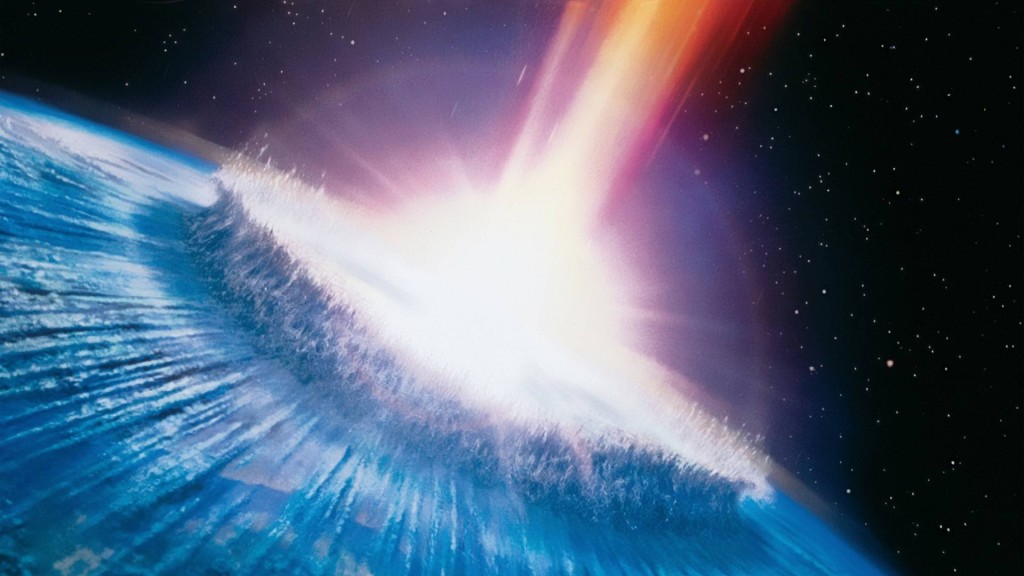
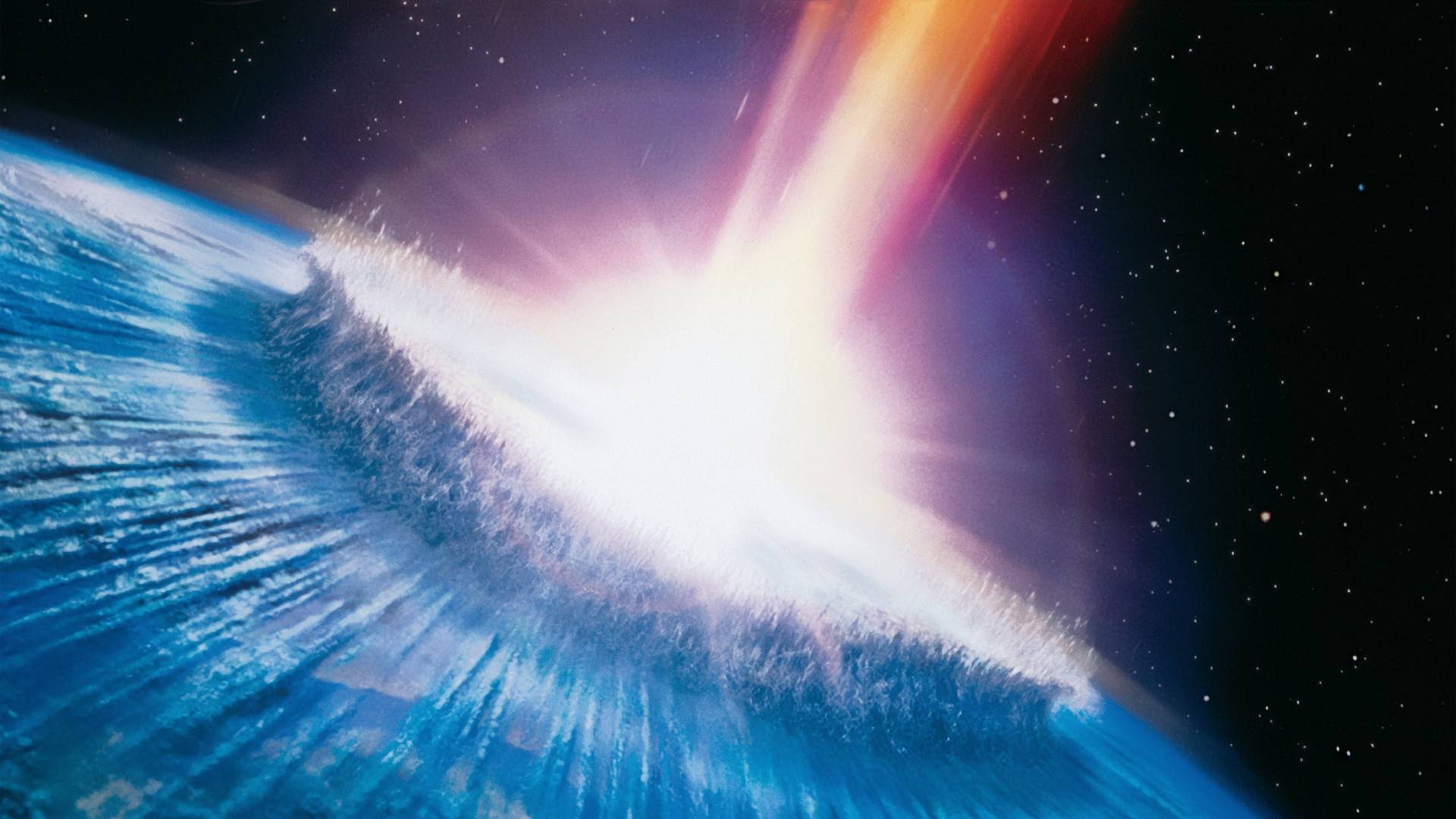
It starts with a bang. Of course it does. A meteor shower, out of nowhere, obliterates the Space Shuttle Atlantis. It’s a rain of fire and cosmic shrapnel that tears across the globe, culminating in the absolute leveling of New York City. The images are seared into our minds: skyscrapers turned to dust, a crater where a city used to be. It’s chaos. It’s terror.

At NASA, the eggheads are freaking out. Billy Bob Thornton, as the stoic NASA administrator Dan Truman, gets the worst news a person can get. This wasn’t the main event. This was just the appetizer. The main course? An asteroid the size of Texas is on a direct collision course with Earth. It will hit in 18 days. And when it does, it’s not just the end of humanity. It’s the end of everything. Even bacteria.

Game over.

The plan they concoct is desperate. Insane. It’s a Hail Mary pass on a planetary scale. They can’t just blow it up on the surface. That would just create a bunch of smaller, continent-killing rocks. No, they have to get *inside*. They need to drill a hole 800 feet deep, drop a nuclear bomb in, and split the rock perfectly in two, sending the halves screaming past our fragile blue marble.

There’s just one problem. NASA doesn’t know how to drill. But they know who does.

ui58q

Assembling the A-Team of Misfits

Enter Harry Stamper, played by Bruce Willis at the absolute peak of his everyman-savior powers. Harry is the best deep-sea oil driller on the planet. He’s a hard-living, hard-working guy who trusts his gut and his crew, and nobody else. NASA brings him in, and he immediately lays it out for them: their plan is impossible without his people.

And what a crew it is. A.J. Frost (Ben Affleck), the hot-headed young gun who is secretly dating Harry’s daughter (Liv Tyler). Rockhound (Steve Buscemi), a genius geologist with a serious case of “space dementia.” Bear (Michael Clarke Duncan), a gentle giant. Oscar (Owen Wilson), a space-cowboy philosopher. And a handful of other lovable degenerates. They’re not astronauts. They’re not soldiers. They’re oil-stained roughnecks who, when told they have to save the world, first hand the government a list of demands that includes never paying taxes again.

What follows is one of the most absurd and entertaining training montages in film history. A dozen days of psychological tests, G-force training, and technical briefings that turn these guys from drillers into astronauts. It’s a joke. But it’s a fun joke.

Hell is a Place in Space

Two shuttles, Freedom and Independence, blast off. Their mission: stop at the rickety Russian space station Mir for a top-up of liquid oxygen, slingshot around the moon, and land on the back of a rock hurtling through space at 22,000 miles per hour.

Simple, right?

Wrong. The stop at the Mir goes sideways almost immediately. A fire breaks out during refueling, and the entire station explodes in a glorious ball of fire, with the shuttles barely escaping. Then comes the approach to the asteroid. The wake of the giant rock is a minefield of smaller debris. Independence is torn to shreds and crashes, leaving everyone on Earth to believe that half the team, including A.J., is dead.

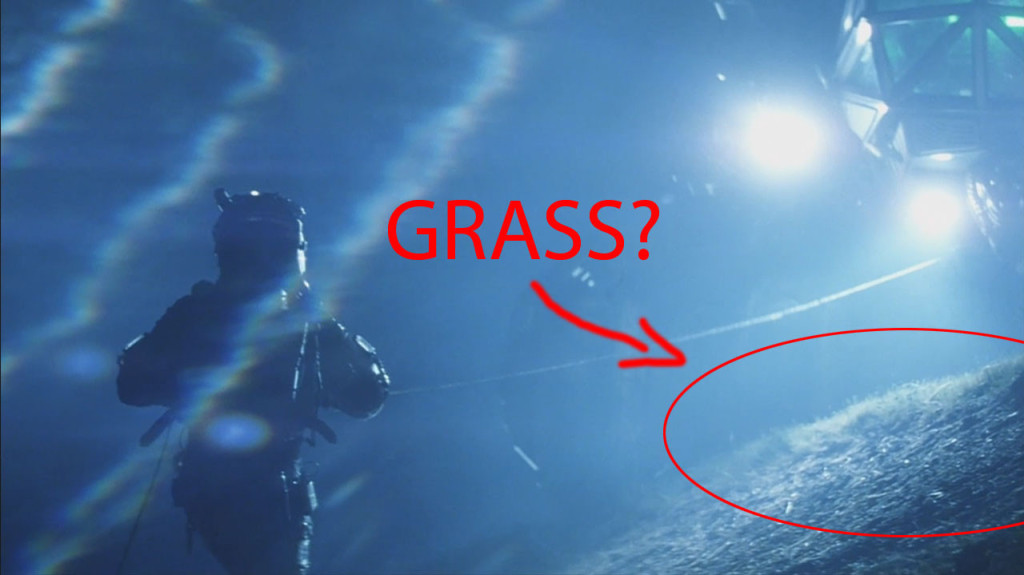
The landing of Freedom is just as bad. They miss their target zone—a soft, predictable spot perfect for drilling—and instead touch down on a field of solid iron. It’s a driller’s nightmare. The clock is ticking down, their drill bits are breaking, and back on Earth, the military is getting antsy. They have a backup plan: “Secondary Protocol.” Just detonate the bomb on the surface. Harry and Truman know this will do nothing but make things worse, but a trigger-happy general has his finger on the button.

maxresdefault (5)

One Man, One Button, One Choice

All hope seems lost. Paris gets wiped out by another fragment. The mission is a failure. But then, a miracle. Over the horizon comes the Armadillo, the mobile driller from the crashed Independence. A.J., Lev, and Bear survived. They made it.

With A.J.’s help, they finally hit the 800-foot depth. They lower the bomb. They are ready. And then, disaster strikes again. The asteroid shifts, sending a shower of debris that destroys the remote detonator. Someone has to stay behind. Someone has to push the button.

They draw straws. A.J. loses. He’s the one who has to make the ultimate sacrifice. But Harry isn’t having it. In a heartbreaking moment of paternal love, he rips A.J.’s air hose, shoves him back into the airlock, and takes his place. He gives A.J. his blessing to marry his daughter, a final tearful goodbye over a crackling comms link to Grace, and prepares to die.

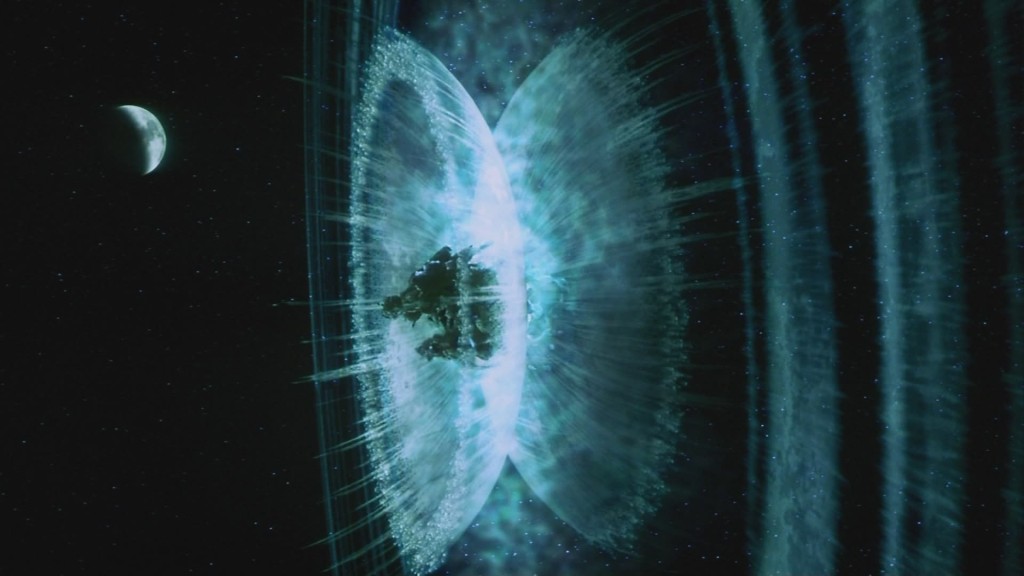
With seconds to spare, as the Earth fills the sky below him, Harry Stamper pushes the button. The asteroid cracks open like an egg, the two halves flying harmlessly past Earth. The world is saved.

The surviving crew return as heroes. A.J. and Grace get married. But the victory is bittersweet, paid for with the life of a hero who was, at the end of the day, just a damn good driller.

splode

The Conspiracy Deep Dive: What They Aren’t Telling You

Okay, great story. But it’s just a movie, right? That’s what they want you to think. Let’s look closer. Let’s peel back the layers of Hollywood gloss and see the machinery working underneath.

The Ben Affleck Question That Breaks The Entire Movie

The biggest crack in the official story comes from one of its stars. During the filming, a young Ben Affleck grew increasingly perplexed by the central premise. He finally went to Michael Bay and asked a simple, devastatingly logical question: “Wouldn’t it be easier for NASA to train astronauts how to drill, rather than train oil drillers how to be astronauts?”

Michael Bay’s alleged response? He told Affleck to shut up. The story is now legendary, often played for laughs. But what if it isn’t funny? What if the movie’s illogical premise is the entire point?

Think about it. The film isn’t about the most practical solution. It’s about selling an idea. The idea that when the chips are down, you don’t need intellectuals or government elites. You need grit. You need common sense. You need a blue-collar hero. It’s a powerful piece of populist propaganda wrapped in an action movie. It tells the average person that they—not some Ph.D. in a lab coat—are the ones who can really save the day. A very useful message to promote, isn’t it?

Predictive Programming or Just a Popcorn Flick?

For years, researchers have talked about “predictive programming”—the theory that governments and other shadowy powers use fictional media to introduce concepts to the public, softening them up for future events. When a real crisis occurs, the public has already been subconsciously primed for the official explanation or the proposed solution, because they’ve seen it in a movie.

Could Armageddon be a prime example? The late 90s saw a surge in public interest and government funding for “Planetary Defense.” Suddenly, after decades of being a niche concern for astronomers, near-earth objects (NEOs) were a hot topic. Then, this movie comes out, presenting a very specific (and very military-industrial complex-friendly) solution: launch a mission, use a nuclear device. It plants the seed that such a mission is not only possible, but heroic.

Is it a coincidence that just over two decades later, the world watched as NASA successfully executed the DART mission?

Life Imitates Art: The DART Mission

On September 26, 2022, something incredible happened. The NASA Double Asteroid Redirection Test (DART) spacecraft intentionally slammed into the asteroid Dimorphos, successfully altering its orbit. It was the world’s first-ever planetary defense test. Humanity, for the first time, proved it could move a celestial object.

The mission was far more elegant than Armageddon’s brute-force approach. It was a kinetic impactor, not a nuclear bomb. It was a tiny, unmanned probe, not two massive space shuttles. And its target was a small moonlet, not a “Texas-sized” behemoth.

But the core idea… the principle of it… is eerily familiar. The news reports were filled with references to Armageddon. NASA officials even played along. Was this life imitating art? Or was the art a prelude to the life we are now living, a way to make a multi-billion dollar planetary defense program seem cool and necessary to the taxpayers who would eventually fund it?

The line between science fiction and science fact has never been blurrier. And as we develop more sophisticated ways to protect our planet, we have to wonder how many of those ideas were first tested not in a lab, but on a focus group in a movie theater.

So, What Was Armageddon, Really?

You can watch Armageddon as a dumb, loud, scientifically impossible but incredibly entertaining movie. You can enjoy the Aerosmith soundtrack, the cheesy one-liners, and the sheer spectacle of it all.

Or.

You can see it as something more. A cultural artifact that reveals a deep truth about who we want to be in a crisis. A piece of propaganda that champions individualism and brute force over science and collaboration. A potential dry run for a real-world psychological operation, testing our reactions to the end of the world.

Was it a warning? A blueprint? Or just the most expensive and explosive lie ever told? The screen has gone dark, but the questions linger in the vacuum of space. And the answer might be the most terrifying thing of all.

Arindam Mukherjee
Arindam Mukherjee
Arindam loves aliens, mysteries and pursing his interest in the area of hacking as a technical writer at 'Planet wank'. You can catch him at his social profiles anytime.
RELATED ARTICLES

20 COMMENTS

- Advertisment -

Most Popular

Recent Comments

Warren Pan Abbott on The legend of the Devil Monkey !
chris davies on The McPherson Tape Mystery
Reed Reedly on ET has Internet!
Bea Houseoffashion on Proof Of Time Travellers – Gallery
Marcus2012 on ET has Internet!
Reed Reedly on ET has Internet!
LaughsAtConspiracyNuts on The 9/11 Conspiracy – Myths and Facts
Alex Sliverman on Did the ancients fly?
Doctor Wholigan on Time Traveler in 1938 film
chris davies on The McPherson Tape Mystery
Archie1954 on 10 secret UFO hideouts
chris davies on Ghosts of flight 401
Marcus2012 on ET has Internet!
jason Macdonald on Proof of Time Travel? – China
chris davies on Long-Lost Pyramids Found?
Reed Reedly on ET has Internet!
Milkman on Connected Universe
Tenmiles on Baigong Pipes Mystery
Simon Foster on Sirius – The Documentary
From the 1st April on 2013 – Alien Contact date ?
SkyWatcher on Is ET ignoring us?
I Come From The Future on Obama to make UFO Alien disclouser soon ?
Just another person on 2013 – Alien Contact date ?
Malcolm Windowcleaner on The strange case of Rudolph Fentz
Mason Servio on Strange Things on Mars
Marke Wisdom Seeker on What will we find as arctic melts?
Andrea A Elisabeth Levyne on Aliens Captured in Varginha, Brazil
Mitch Grouyeki on Amazing Space Shuttle pictures