The Loch Ness Enigma: Have We Been Asking the Wrong Questions?
Forget everything you think you know. Forget the blurry photos. Forget the tourist traps. Forget the easy dismissals of so-called experts.
Let’s talk about the water.
It’s dark. Colder than a tomb. And deeper than you can imagine. Loch Ness isn’t just a lake; it’s a wound in the earth, a 23-mile-long gash filled with black, peat-stained water that swallows light whole. Down there, visibility is zero. Sonar gets confused. It’s a place that holds its secrets close. It is the perfect place to hide.
For nearly a century, the world has been obsessed with what might be hiding in that crushing blackness. A monster. A relic from a lost time. A creature we affectionately call Nessie.
But what if the real mystery isn’t what’s *in* the loch, but why, after all these years, we simply can’t look away?
1933: The Year a Monster Was Born
History tells us the legend exploded in 1933. But why then? What happened?
Simple. A road.
Before 1933, the shores of Loch Ness were remote, accessible mostly by rough tracks. But then they finished the A82, a new coastal road that finally opened up the mysterious loch to the modern world. For the first time, people in motorcars could drive right along the edge of this vast, brooding body of water. More eyes meant more chances to see… *something*.
And see something they did.
On April 14, 1933, a local couple saw an enormous animal, a “frightful-looking beast,” rolling and plunging on the surface. Their story made it to Alex Campbell, a local water bailiff and part-time journalist. Writing for the Inverness Courier on May 2nd, he recounted their tale. In that article, he used a single, world-changing word. A word that took a local story and lit a fire that would spread across the globe.
He called it a “monster.”
The floodgates opened.
A Dragon on the Roadside
Just a few months later, in July, a London businessman named George Spicer and his wife were driving down that very same new road. Suddenly, they slammed on the brakes. What they saw would become the foundation of the modern Nessie legend. It wasn’t in the water. It was on the land.
Trudging across the road in front of them was an abomination. A creature unlike anything they had ever seen. It was, in Spicer’s own words, “the nearest approach to a dragon or pre-historic animal that I have ever seen in my life.”
Think about that. Not a big fish. Not a weird seal. A dragon.
They described a long, serpentine neck, a huge, lumbering body, and no visible limbs. It moved in a strange, lurching gait as it slid across the asphalt and disappeared into the bracken, heading for the safety of the loch. In its mouth, Spicer claimed, it was carrying a small animal, like a lamb.
The story was a sensation. It went national, then international. The idea of a “Loch Ness Monster” was no longer a local rumor. It was a global phenomenon. And everyone wanted a piece of it.

The Photograph That Fooled the World
With global attention came hunters. Not with guns, but with cameras. The Daily Mail even sent a big-game hunter named Marmaduke Wetherell to the loch to find evidence.
He found some footprints. Big ones. He made plaster casts and sent them to the Natural History Museum for analysis. The world held its breath. Was this it? The proof?
No. The museum experts quickly announced the tracks were a hoax, made with a dried hippo’s foot, likely from an umbrella stand or ashtray. Wetherell was humiliated, a national laughingstock.
But the story doesn’t end there. It gets stranger.
In April 1934, the picture that would define the monster for generations was published. Taken by a highly respected London surgeon, Colonel Robert Wilson, it appeared to show the head and long neck of a creature rising gracefully from the water. It was elegant. It was mysterious. It was perfect.
This was it. The “Surgeon’s Photograph.”

For sixty years, this image was the undisputed proof. The smoking gun. Believers pointed to it as undeniable evidence. Skeptics struggled to explain it away. It became an icon of the unexplained.
Deep Dive: The Confession
Then, in 1994, the truth came out. And it was a story of pure, petty revenge.
A man named Christian Spurling, on his deathbed, confessed the entire plot. He was the stepson of none other than Marmaduke Wetherell, the hunter who had been humiliated by the hippo-foot hoax. Wetherell wanted to get back at the Daily Mail for making him look like a fool. So he devised a plan.
He, Spurling, and a few others bought a toy submarine. To it, Spurling sculpted a head and neck out of plastic wood. They took their little model out to a quiet bay on the loch, photographed it, and then got a respectable middle-man—the surgeon, Robert Wilson—to claim he took the picture. The plan worked better than they could have ever imagined. The photo wasn’t just published; it became legend.
The exposure of the Surgeon’s Photograph as a hoax was a body blow to the Nessie phenomenon. But a question remains. Does one proven fake invalidate a thousand eyewitness accounts?
Echoes from an Ancient Past
The modern story starts in 1933, but if you dig deeper, the whispers of a creature in the loch are much, much older. You have to go back. Way back.
To the 6th century A.D.
The first-ever written account of a beast in the area comes from the biography of an Irish monk, St. Columba. The story goes that in 565 A.D., Columba was visiting the land of the Picts. He came upon some locals burying a man by the River Ness (the river that flows out of the loch).
They told him the man had been mauled and killed by a “water beast.”
Unfazed, Columba ordered one of his followers to swim across the river. As the man swam, the beast surfaced, roaring, and charged with its mouth open. The locals screamed in terror. But St. Columba calmly made the sign of the cross and commanded the creature, “Go no further. Do not touch the man. Go back at once.”
According to the text, the beast “fled back in terror more quickly than if it had been dragged by ropes.”
Skeptics dismiss this as a standard trope. Saints in those days were always taming wild animals to show the power of their faith. But believers see something more. They see a 1,500-year-old sighting, a thread of truth woven into a religious tale, suggesting that *something* has been in that water for a very, very long time.
What Lurks Below? The Prime Suspects
So, if we assume people are seeing *something*, what could it be? The theories range from the prehistoric to the mundane.
Exhibit A: The Last Plesiosaur
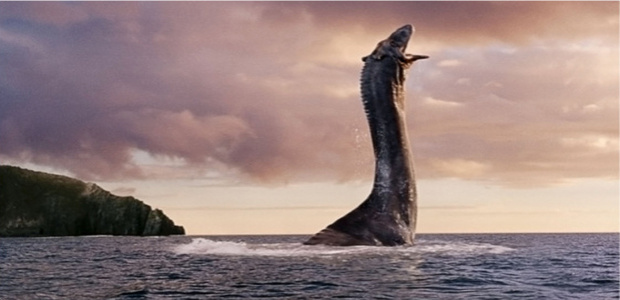
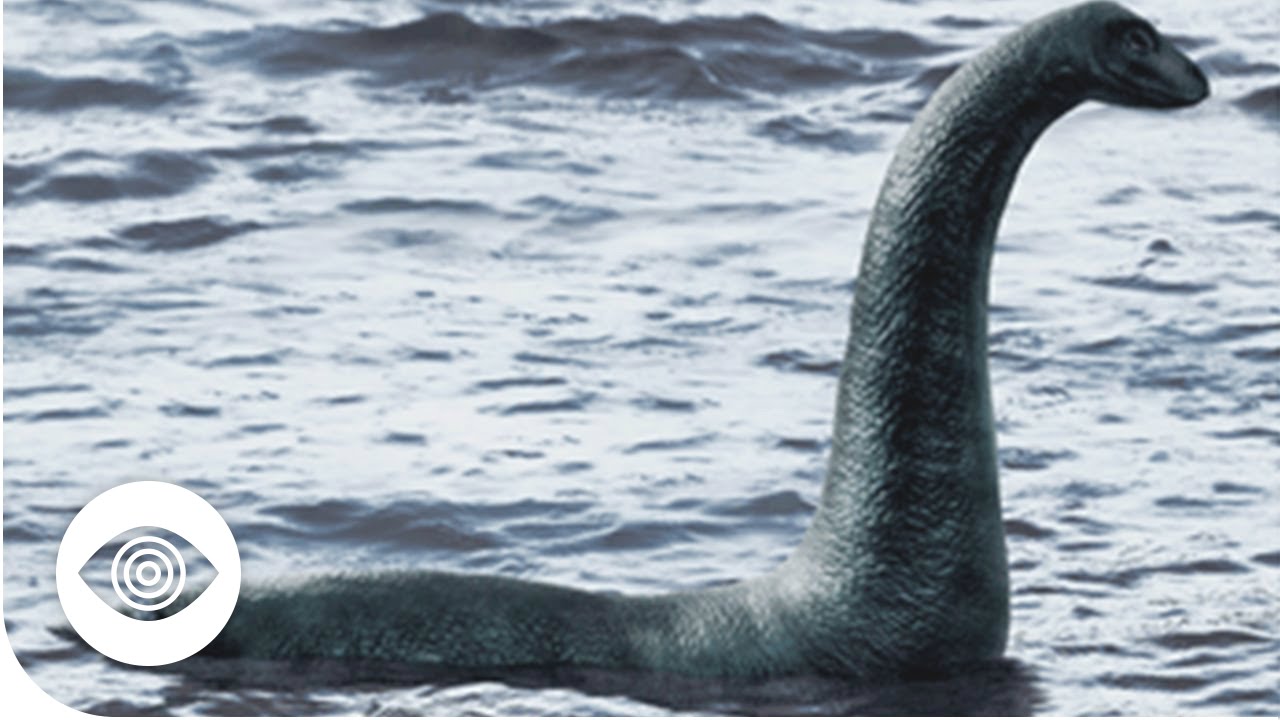
This is the classic theory. The one everyone knows. The idea that Nessie is a lone survivor, or a small breeding colony, of plesiosaurs—long-necked marine reptiles that were supposed to have died out with the dinosaurs 65 million years ago. The Surgeon’s Photograph cemented this image in the public mind. It fits the long neck and humped back described in many sightings.
But the problems are huge. For one, Loch Ness was carved by glaciers and only filled with water around 10,000 years ago. So how did an ancient sea reptile get in there? And how did it survive? Plesiosaurs were air-breathing reptiles. They would need to surface constantly, making them easy to spot. The loch’s water is also freezing cold, not ideal for a cold-blooded reptile. And most scientists agree there simply isn’t enough fish in the loch to sustain a single creature of that size, let alone a breeding population.
Exhibit B: The Giant Eel Theory
This is one of the more recent, “scientific” explanations. In 2018, a team of researchers conducted a massive environmental DNA survey of Loch Ness. They took water samples from all over the loch to see what living things left their genetic fingerprints behind. They found no DNA from plesiosaurs, sharks, or giant catfish. But they found one thing in absolute abundance.
Eel DNA.
Could Nessie just be a monstrously overgrown European eel? It’s possible. They can grow large, and their shape could account for the long, neck-like sightings. Could a genetic mutation allow one to grow to 20 or 30 feet long? It’s a stretch, but it’s a theory grounded in some actual data from the loch itself.
Exhibit C: The Case of Mistaken Identity
This is the explanation for the killjoys. The professional debunkers. They argue that every single sighting can be explained away.
- Floating Logs: A water-logged log, like a Scots Pine, can surface and sink with changing gas pressure, sometimes looking eerily like a head and neck.
- Boat Wakes: The wake of a boat can interact with other waves on the loch, creating strange humps that appear to move against the wind.
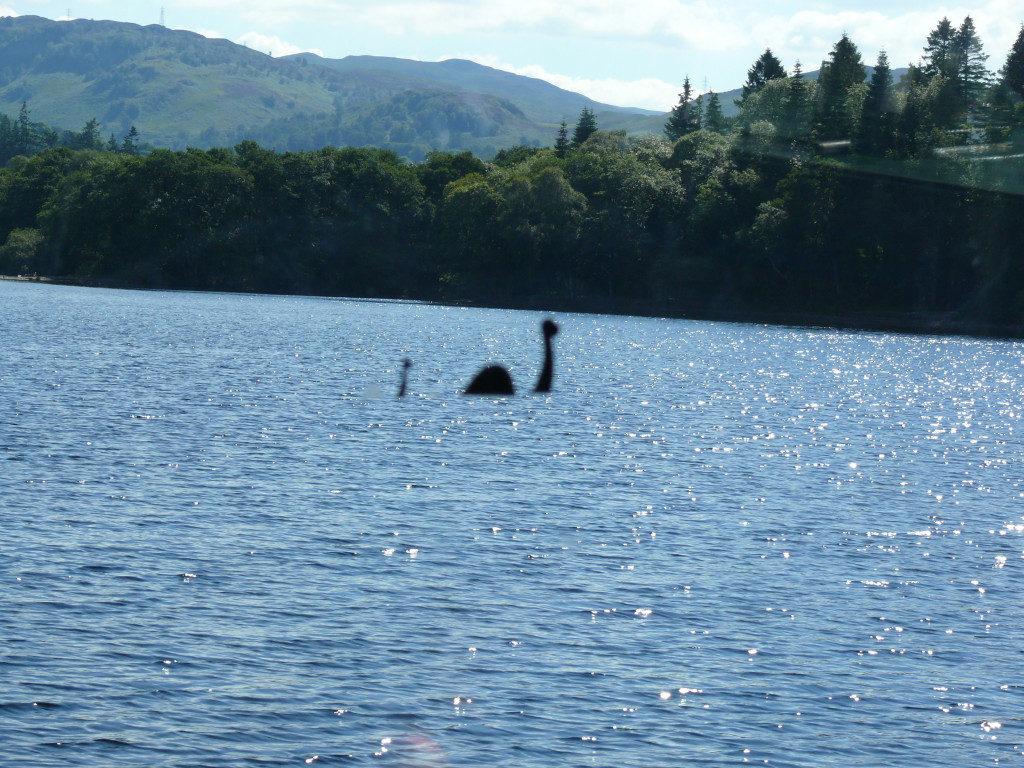
- Swimming Animals: People have mistaken swimming deer, otters, and even birds for the monster. There’s even a wild theory that in the 1930s, a traveling circus used to let its elephants swim in the loch, and their trunks and backs looked just like the classic Nessie shape.
- Atmospheric Tricks: The unique geography of the Great Glen can create strange light effects and mirages over the water.
The Hunt: Chasing Shadows with Science
Belief is one thing. Proof is another. Over the decades, hundreds of expeditions have descended on Loch Ness, armed with everything from yellow submarines to high-tech sonar arrays.
The most famous was Operation Deepscan in 1987. A fleet of 24 boats was lined up across the width of the loch, creating an “acoustic curtain” of sonar. They swept the entire length of the loch over a weekend. The results were tantalizing.
They got three significant sonar contacts. One, in particular, was described by the project leader as “an object of unusual size and strength.” It was detected at a depth of nearly 600 feet. It was much larger than any known fish in the loch. When a boat went to investigate, the object moved away and disappeared. Was it Nessie? Or just a school of fish that the sonar misinterpreted?

The hunt continues today. Webcams now monitor the loch 24/7, allowing armchair monster hunters from around the world to watch for a disturbance on the surface. But despite all our technology, the loch refuses to give up its biggest secret.
Maybe the Mystery Is the Point
We’ve had sonar. We’ve had DNA tests. We’ve had hoaxes and deathbed confessions. And yet, the sightings continue. People still flock to the shores of Loch Ness, cameras ready, hoping to catch a glimpse.
Why?
Perhaps it’s because, in a world that feels fully mapped, fully explained, and fully controlled, we need a little patch of darkness on the map. We need a place where monsters can still exist. The Loch Ness Monster isn’t just a cryptid anymore; it’s a cultural icon, a multi-million-pound tourism industry, and a symbol of the enduring power of the unknown.
The water is deep, dark, and cold. It has guarded its secrets for 10,000 years. Whether there is a living dinosaur, a giant eel, or nothing at all down in that blackness, one thing is certain.
The legend of Nessie will live on. The search will continue. And we will keep watching the water.